Summary
Editor's rating
Value: feels pricey for what it actually does
Design: looks good, but it’s not as invisible as I hoped
Battery: acceptable but not mind-blowing for such a small device
Comfort: fine for most of the day, slightly annoying for workouts and sleep
Durability: tough frame, but software decisions are the real risk
Performance: health tracking is okay, but feels limited for the price
What this Galaxy Ring actually is (and isn’t)
Pros
- Discreet, solid titanium design that looks like a normal ring
- Decent sleep and basic activity tracking with simple Energy Score summaries
- No subscription fee and tight integration with Samsung Health on Galaxy phones
Cons
- Expensive for the feature set; many smartwatches do more for the same or less money
- Limited workout and heart-rate tracking, with some features affected by software updates
- Battery life and comfort are just okay, and you’re locked into the Samsung ecosystem

Specifications
View full product page →| Brand | Samsung |
A smart ring that looks cool but left me on the fence
I’ve been using the Samsung Galaxy Ring (Titanium Gold, size 7, UK version) for a bit now, paired with a recent Galaxy phone. I went in quite hyped, because I like the idea of tracking health without a chunky watch on my wrist 24/7. I also already use Samsung Health, so on paper this ring should have slotted in nicely. No subscription fee was a big selling point for me too, since I’m tired of gadgets that lock half the features behind monthly payments.
After actually living with it, my opinion is mixed. The hardware itself is pretty solid: small, light, and it doesn’t scream “tech gadget” like some watches do. But when you dig into what it really does day to day, it feels a bit limited, especially if you’ve used a decent smartwatch or an Oura ring before. The marketing talks a lot about AI-powered health, Energy Score, sleep coaching, and all that. In practice, it’s more like a slightly smarter step counter with some health summaries.
One thing that bugged me early on was how much the phone app still has to do. The ring is basically a sensor that feeds Samsung Health, and the “Galaxy AI” part is just the app crunching your data into a single score and some tips. That’s fine, but it’s easy to overestimate what the ring itself brings compared to just wearing a Galaxy Watch or even keeping your phone on you. Some of the recent complaints online about features being removed (like heart rate monitoring changes after updates) made me a bit nervous too.
So overall, first impression: it’s a decent little gadget if you really hate wearing a watch and you’re already deep in the Samsung ecosystem. But for the price, and given the current feature set, I’d say it’s far from essential. It does some things well, but it doesn’t replace a proper smartwatch, and the value for money really depends on how badly you want tracking in ring form instead of on your wrist.
Value: feels pricey for what it actually does
This is where the Galaxy Ring struggles the most for me: price versus what you get. On Amazon, it’s not cheap, and you’re basically paying premium money for a health tracker that, in practice, does less than many mid-range smartwatches. There’s no screen, no GPS, no notifications, and limited workout intelligence. What you’re paying for is mainly the ring form factor, the Samsung brand, and the integration with Samsung Health.
Some Amazon reviews hit the same point: one person straight up said it’s “over priced” and another said they didn’t think it was worth the money. I’m pretty much in that camp. The no-subscription aspect is nice, especially compared to some rings that charge monthly for full features, but that doesn’t fully make up for the high upfront cost. If you compare it to a Galaxy Watch or even a cheaper fitness band, the ring often gives you less functionality for more money.
Where the value makes a bit more sense is for a very specific user: someone already on a Samsung phone, who hates wearing watches, wants 24/7 passive tracking, and doesn’t care much about workout stats or smart features beyond basic health summaries. For that person, paying a premium for comfort and discretion might be acceptable. It’s also a bit more discreet than a watch if you work in an environment where flashy tech on the wrist looks out of place.
But for most people, especially if you’re even slightly into fitness or want clear bang for your buck, I’d say the Galaxy Ring is decent but overpriced. You can get more features and flexibility for the same money or less with other devices. Unless you’re specifically sold on the ring form factor and okay with its limits, I’d consider alternatives first. The 3.6/5 Amazon rating kind of sums it up: not terrible, but clearly not living up to its price for a lot of buyers.
Design: looks good, but it’s not as invisible as I hoped
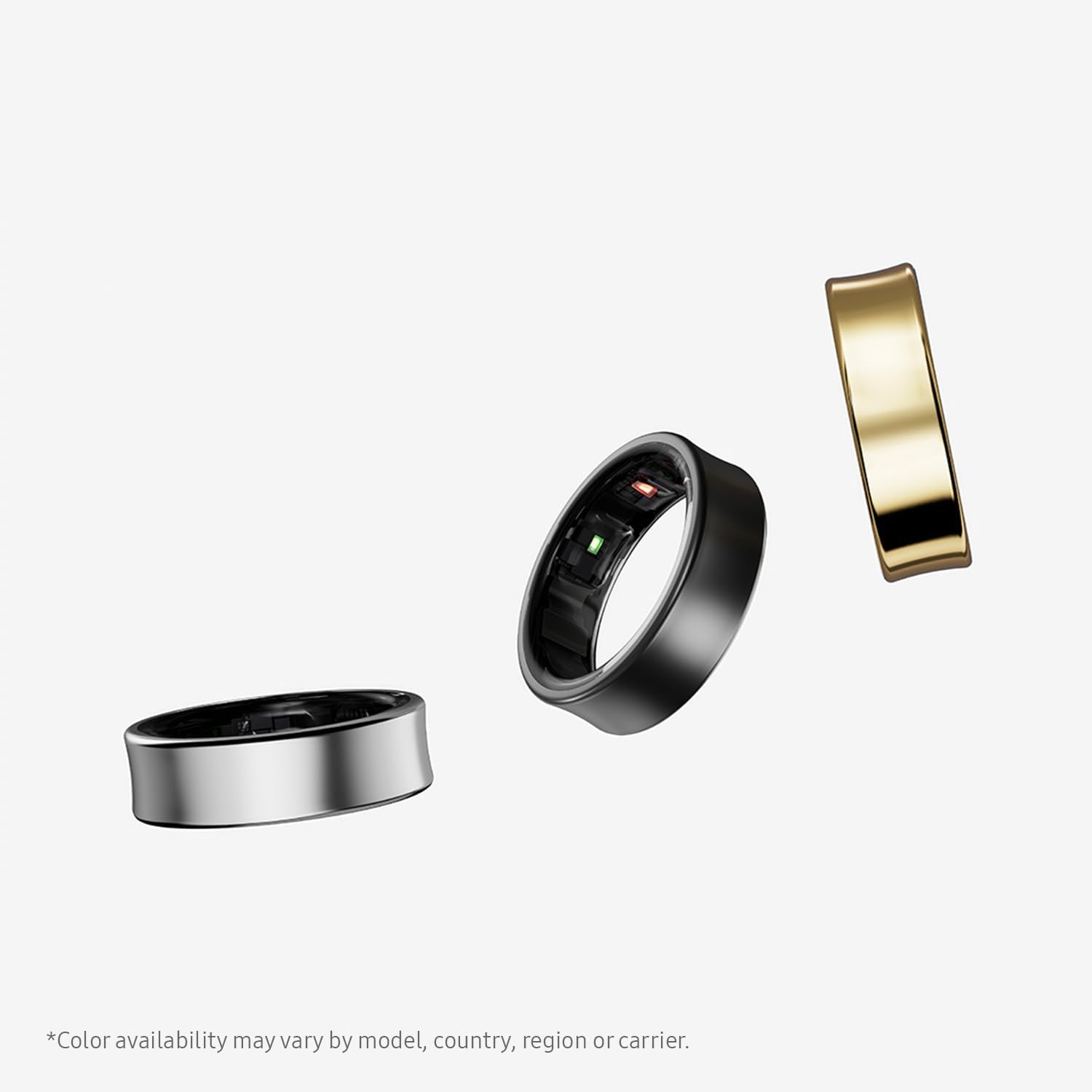
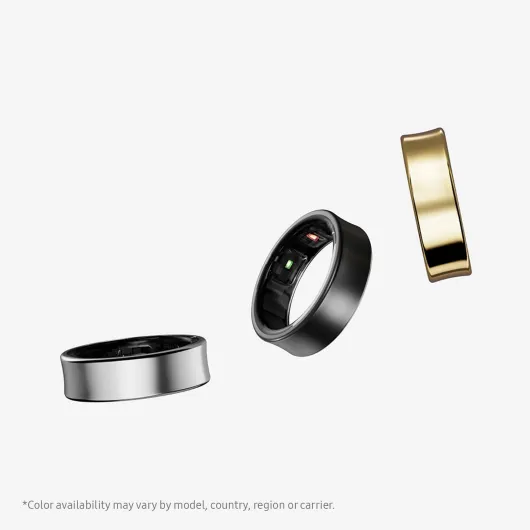
Design-wise, I actually liked the Galaxy Ring more than I thought I would. The concave shape and Titanium Gold finish look decent in real life. It doesn’t scream “fitness tracker”; it just looks like a slightly chunky ring. The concave profile means the outer surface dips inward a bit, which helps hide small scratches and makes it feel less bulky visually. If you’re used to slim jewellery, though, you’ll still notice it’s thicker than a normal ring.
On my hand, size 7 felt snug but not tight once I got used to it. The inner side has small bumps and sensor windows, but they don’t dig into the skin too much if you pick the right size. I’d strongly recommend going to a shop (like Currys, as one reviewer mentioned) to try the sizing kit, because getting the wrong size will ruin the experience. Too tight and it’s annoying, too loose and the sensors will give dodgy readings and the ring will twist around.
Visually, the Titanium Gold colour is more of a muted gold than a flashy yellow. It blends in fine for everyday use, both with casual clothes and more formal outfits. There’s no flashy logo on the outside, which I liked. All the tech bits are hidden on the inside, so from a distance it just looks like a normal ring with a modern design. That’s a big plus if you don’t want your tech visible all the time.
On the downside, it’s still a bit bulky compared to a plain metal band. I noticed it catching slightly when I put my hands in tight pockets or when lifting weights with a barbell. It’s not terrible, but if you’re picky about rings, it won’t feel totally invisible. Also, unlike a watch that you can slide up your wrist, you’re stuck with the fit on your finger — if your fingers swell a bit in heat, you’ll feel it. Overall, the design is pretty solid and discreet, but don’t expect it to disappear completely like a thin wedding band.
Battery: acceptable but not mind-blowing for such a small device
The ring uses a small 17 mAh battery, so I wasn’t expecting miracles. In day-to-day use with continuous tracking on, I was getting around 3 to 4 days before needing to charge it. That’s with sleep tracking every night and normal notifications on the phone. It’s better than charging a smartwatch every day, but it’s not the “charge once a week and forget it” experience some people might hope for when they see a simple ring.
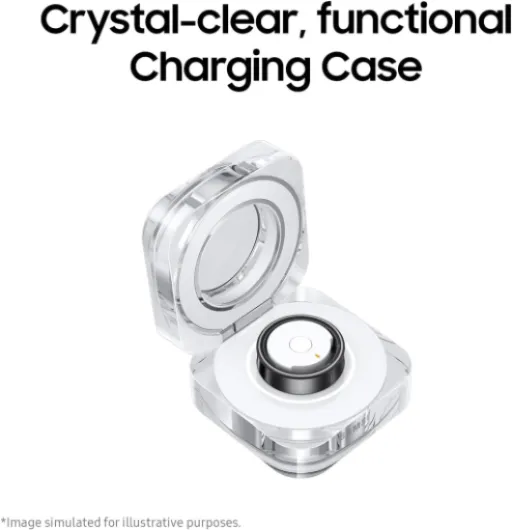
Charging itself is quick and pretty painless. You drop the ring on the little charging cradle, and in under an hour it’s basically full. The issue is more about the timing: since it’s meant to track sleep and daily activity, there’s no obvious dead time to charge it unless you remember to do it while you’re sitting at your desk or showering. I ended up doing small top-ups rather than full cycles, just to avoid missing a night of sleep data. Not a big deal, but it does require a bit of habit-building.
If you turn off some features or reduce how often it logs data, you can stretch the battery a bit more, but then you’re paying a high price for something you’re not fully using. On the flip side, if Samsung adds or re-enables more constant tracking features via updates, it might reduce battery life. So you’re in this weird zone where more features mean less endurance, and fewer features make the ring feel too limited for the cost.
Overall, I’d say the battery life is okay for a smart ring, just not impressive enough to be a major selling point. It’s better than a typical smartwatch but worse than some other health rings on the market that can push closer to a full week. If you’re fine with plugging it in every 3–4 days and planning around that a bit, you’ll manage. If you wanted something you truly forget about for long stretches, this might disappoint you.
Comfort: fine for most of the day, slightly annoying for workouts and sleep
Comfort is a big deal with a smart ring, because you’re supposed to wear it 24/7. For regular daytime use, I’d say the Galaxy Ring is comfortable enough, but not completely forgettable. After a couple of days, I mostly stopped noticing it while typing, carrying bags, or doing basic chores. The inner surface is smooth with rounded edges, and I didn’t get any skin irritation, even with some light sweating.
Where it started to bother me was during workouts and sleep. For workouts, especially anything involving weights or gripping (dumbbells, barbell, pull-up bar), the ring gets between your fingers and the equipment. It’s the same issue as wearing a normal ring at the gym, just a bit worse because this one is thicker. I ended up taking it off a few times because it felt like it could pinch or get scratched. If you do a lot of strength training or climbing, you’ll probably end up removing it for those sessions, which is a bit ironic for a “health tracker”.
For sleep, it’s a mixed bag. The ring is lighter than a watch, so in that sense it’s better. You don’t have a big slab strapped to your wrist. But on the finger, I still felt it pressing a bit when I tucked my hand under the pillow or bent my fingers. First two nights, I woke up once or twice just because it felt weird. After a week, I got used to it, but I still wouldn’t say I completely forgot it was there. If you’re very sensitive to things on your hands when sleeping, this might bother you.
Overall, I’d rate comfort as decent but not perfect. If you already wear rings daily, you’ll adapt quickly. If you never wear rings, expect a few days of adjustment and some minor annoyance during more intense activities. The ring works best if you leave it on all the time, but realistically, I found myself taking it off for some tasks, which means you lose bits of data here and there.
Durability: tough frame, but software decisions are the real risk
The ring is made with a titanium frame, and that does help with durability. Physically, it feels solid. I bumped it on door handles, countertops, and a few metal objects without any major damage. You’ll still get micro-scratches over time, especially on the inner edges, but nothing worse than a normal metal ring. The concave design helps hide some wear on the outer surface, so it doesn’t look battered after a few weeks.
Water resistance is enough for everyday life: washing hands, doing dishes, getting caught in the rain. I didn’t swim with it for hours, but it handled splashes and short exposure fine. It never freaked out or disconnected just because it got a bit wet. For sweat, same story: no real issues. The sensors still worked, and I didn’t see any corrosion or odd marks. So on the hardware side, I’m not worried about it falling apart quickly if you treat it like a normal piece of jewellery.
Where I do worry is the software and long-term support. One Amazon reviewer mentioned an update that apparently removed or changed heart rate monitoring, basically turning their ring into an expensive step counter. That’s the kind of thing that makes me hesitant to fully trust the product. You’re at the mercy of Samsung’s software decisions: if they decide to tweak features, you don’t really have a say. The listing even shows “guaranteed software updates until: unknown”, which doesn’t inspire much confidence in long-term support.
So, durability-wise: the hardware is robust, and the 2-year manufacturer extended warranty in the UK is a plus for hardware defects. But in terms of feature durability, it’s more fragile. You might buy it for certain functions and see them reduced or changed later. That’s honestly the part that would make me think twice before buying it as a long-term health companion. If you’re okay with that risk and just want basic tracking, you’ll be fine. If you’re expecting stable, long-term features, it’s a bit of a gamble.
Performance: health tracking is okay, but feels limited for the price
Let’s talk about how well it actually tracks stuff, because that’s the main reason to buy this. In my use, step counting was in the right ballpark compared to my phone and a Galaxy Watch. Sometimes it was a bit generous, sometimes a bit low, but never wildly off. For general daily movement, it’s fine. For more specific workouts, it’s much less impressive. You often have to manually start activities in the app, and it doesn’t automatically recognise workouts as reliably as a watch.
Heart rate and stress tracking are where things get messy. Depending on software updates and region, some people report that continuous heart rate has been toned down or changed. In my case, resting heart rate and general trends looked believable, but it wasn’t as responsive as a watch during short bursts of activity. For stress, it’s basically a heart rate variability estimate. It gave me rough stress levels, but I wouldn’t take it too seriously — more like a hint than a diagnosis. One Amazon reviewer was clearly angry that a recent update removed heart rate features they relied on, which shows how vulnerable this product is to software decisions from Samsung.
Sleep tracking is probably the best part. It captures sleep duration, wake-ups, and rough sleep stages (light, deep, REM). The data matched pretty well with my watch and my own sense of how I slept. The Sleep Coaching tips are basic (“avoid screens before bed”, “try to keep a regular schedule”), nothing you haven’t heard before, but having it tied to your own data is at least somewhat motivating. The Energy Score is a single number summarising how rested and active you are. It’s helpful for a quick glance, but again, not life-changing. It’s more of a nudge than a detailed analysis.
In short, performance is good enough for casual tracking, but if you’re serious about fitness or want detailed workout stats, this ring is underwhelming. It feels like a companion to Samsung Health rather than a full-blown fitness tool. Considering the price, I expected more autonomy and smarter automatic tracking. Right now, it’s fine for trends and general wellbeing, but not great for people who want proper training metrics or reliable, detailed heart rate data during exercise.
What this Galaxy Ring actually is (and isn’t)
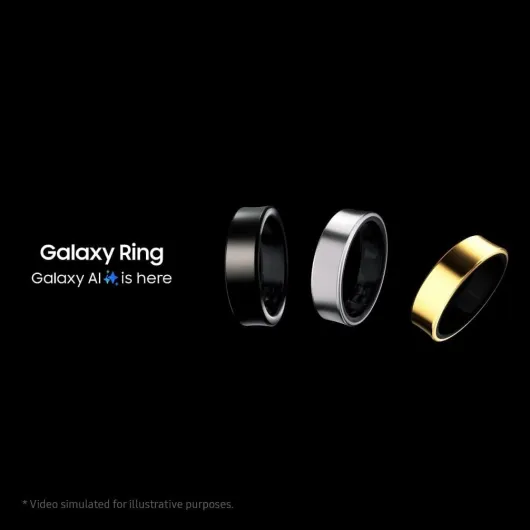
On the box and in the product page, Samsung sells this as an AI-powered health ring with no subscription, focused on sleep, heart rate, stress, and cycle tracking. In reality, think of it as a compact activity tracker with sensors for heart rate and skin temperature, plus some algorithms that spit out an overall Energy Score. There’s no screen, no GPS, no standalone usage — it lives and dies by the Samsung Health app on your phone.
Daily, it tracks things like steps, heart rate (depending on software version and region), sleep duration and stages, and basic stress estimates. The cool sounding bits like Energy Score and Sleep Coaching are basically summaries: it looks at your sleep quality, activity level, and heart rate patterns to give you one number and a few suggestions like “go to bed earlier” or “light activity recommended today”. Useful, but not exactly magic. A lot of this feels similar to what Samsung watches already do.
There are also cycle tracking features using skin temperature to estimate fertile windows. This is nice if you already log your period and symptoms in Samsung Health, but you still have to enter some things manually. It’s not a medical device and you shouldn’t rely on it alone for contraception or anything serious. The ring just adds more data points; the app still expects you to fill in the gaps.
If you’re expecting something that replaces a smartwatch, this isn’t it. There are no notifications, no music control, no time display, nothing like that. It’s basically a background tracker. If you’re already using a Galaxy Watch, the ring feels redundant. If you hate watches and just want passive tracking and some health scores, then the Galaxy Ring makes more sense. But you need to go in knowing it’s a sensor accessory, not a full-featured wearable on its own.
Pros
- Discreet, solid titanium design that looks like a normal ring
- Decent sleep and basic activity tracking with simple Energy Score summaries
- No subscription fee and tight integration with Samsung Health on Galaxy phones
Cons
- Expensive for the feature set; many smartwatches do more for the same or less money
- Limited workout and heart-rate tracking, with some features affected by software updates
- Battery life and comfort are just okay, and you’re locked into the Samsung ecosystem
Conclusion
Editor's rating
Overall, the Samsung Galaxy Ring is a nice idea with uneven execution. The hardware looks good, feels solid, and is more discreet than a smartwatch. Sleep tracking and general activity tracking work fine, and the Energy Score and Sleep Coaching features are mildly useful if you like having your health data summarised into simple tips. No subscription fee is a genuine plus, and the titanium build should hold up well over time.
But once the novelty wears off, you’re left with a product that feels limited for the price. It doesn’t replace a smartwatch, offers basic workout tracking at best, and depends heavily on Samsung’s software decisions, which can change features overnight. Heart rate and stress tracking are okay for trends but not great for serious fitness use. Battery life is acceptable, not impressive. When you add it all up, it’s more of a comfort-focused accessory for Samsung fans who hate wearing watches than a strong all-round health device.
If you’re deep into the Samsung ecosystem, want passive health tracking in a discreet form, and are okay paying a premium for that convenience, you might like it. If you mainly care about value, detailed fitness features, or long-term software stability, I’d skip it and look at a Galaxy Watch or another health ring instead.