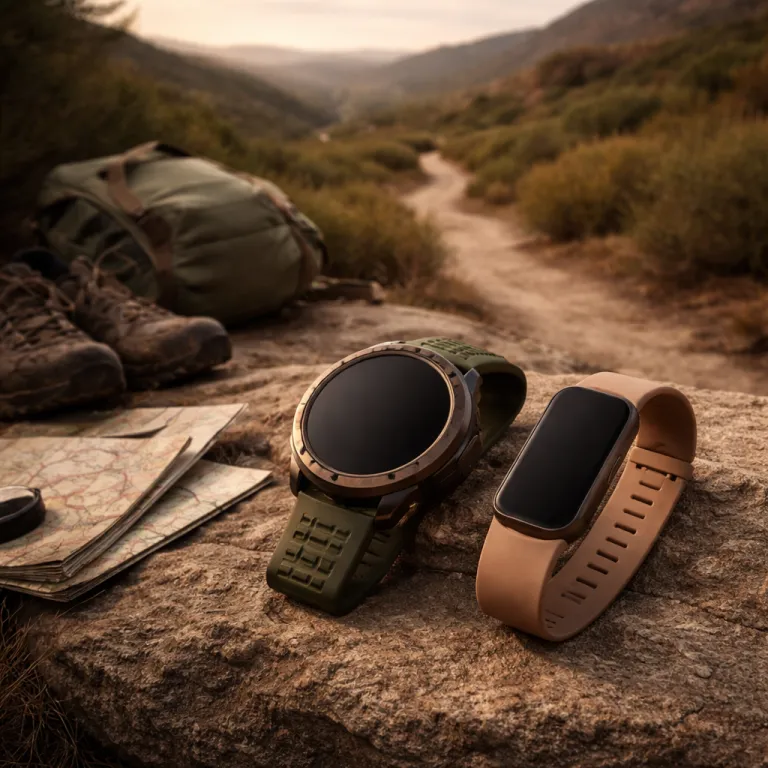
Garmin vs Fitbit as daily companions, not just gadgets on your wrist
When people compare Garmin vs Fitbit, they usually start with sensors, specs and headline features. The real question is simpler yet deeper, which fitness tracker ecosystem will still feel genuinely helpful on your wrist three months from now. A watch that nags, overwhelms you with data or confuses you will end up in a drawer, no matter how advanced its fitness tracking looks on paper.
As of 2024, Garmin leans into the training tool mentality, even on lifestyle watches like the Garmin Venu and Garmin Vivoactive series. Fitbit, especially with Fitbit Sense and Fitbit Versa models, behaves more like a gentle coach focused on health wellness, stress and sleep rather than your next training load. If you mainly care about long term health, heart rate stability, sleep tracking and a clear sleep score, that softer Fitbit approach can feel more sustainable in daily life.
On your wrist, a Garmin watch usually feels busier, with more data fields, more widgets and more detailed fitness tracking screens. A Fitbit watch or band keeps the interface cleaner, surfacing steps, heart rate and tracking sleep insights with fewer taps and less scrolling. For many people who are not athletes, that calmer presentation of health and sleep data makes Fitbit the best starting point when they first buy a fitness tracker.
Hardware feel: watches, materials, displays and battery life
Hold a recent Garmin watch next to a Fitbit watch and the design priorities jump out immediately. Garmin tends to build slightly thicker watches with larger bezels, while Fitbit Sense and Fitbit Versa models chase a sleeker smartwatch look that competes visually with an Apple Watch. Both brands now use aluminium cases on many models, but Garmin usually prioritises durability and physical buttons over ultra minimal styling.
In the mid range, the Garmin Venu line and the Garmin Vivoactive line are the clearest examples of this split. A Garmin Venu with its AMOLED display and strong battery life feels like a true smartwatch that still behaves like a sports watch when you start a run. A Garmin Vivoactive, especially the latest generation available in 2024, pushes further toward fitness tracking and training load metrics, while still offering smartwatch features like music control, contactless payments and notifications.
Fitbit Sense and Fitbit Versa watches feel lighter and more jewellery like, which many people prefer for sleep tracking and all day wear. Their AMOLED displays are bright and colourful, and if you care about vivid screens you should also look at other top fitness trackers with AMOLED display options in the broader market. Battery life is where Garmin usually wins, because even lifestyle models like the Garmin Venu often last close to a week, while many Fitbit watches land closer to four or five days when you enable always on display and continuous tracking sleep features.
| Model family | Typical battery (days) | Key health sensors | Offline music | Subscription for full insights |
|---|---|---|---|---|
| Garmin Venu | 5–7 with mixed use | Optical HR, SpO2, GPS | Yes on selected models | No ongoing fee |
| Garmin Vivoactive | 5–7 with mixed use | Optical HR, SpO2, GPS | Yes on music variants | No ongoing fee |
| Fitbit Sense | 4–6 with mixed use | Optical HR, ECG, SpO2, EDA | Limited offline music on older models | Fitbit Premium for advanced data |
| Fitbit Versa | 4–6 with mixed use | Optical HR, SpO2 (ECG on Versa 4 not available) | Offline music only on selected earlier versions | Fitbit Premium for advanced data |
Subscriptions, price gaps and the real cost of ownership
Price is where Garmin vs Fitbit stops being a simple spec comparison and becomes a question about how you value data. A Fitbit Charge or Fitbit Sense often looks cheaper at checkout, but the most advanced insights sit behind Fitbit Premium, which adds a recurring subscription cost to your fitness tracker. Garmin, by contrast, keeps almost all metrics, including training load, Body Battery and advanced fitness tracking, free once you buy the watch.
Take a typical pairing, a Fitbit Sense versus a Garmin Venu or Garmin Vivoactive model at retail price. The Fitbit watch will usually cost less upfront, but if you keep Fitbit Premium for sleep score breakdowns, skin temperature trends and deeper health wellness reports, the long term cost narrows quickly. Garmin watches like the Garmin Venu or a mid range Vivoactive may feel expensive to buy, yet they avoid the subscription trap that now affects many fitness ecosystems.
This difference matters if you plan to wear the same fitness tracker for several years and care about total cost of ownership. Before you buy, it is worth reading about how subscription fees are reshaping the market for wearables and changing what you actually get for your money. When you add up the price of the watch, any subscription and the expected battery life over time, Garmin often ends up cheaper for heavy users, while Fitbit can still be the best value for casual users who skip Premium.
Health, sleep and stress: where Fitbit still feels more human
If your priority is health, sleep and stress rather than running intervals, Fitbit still has an edge in how it tells the story of your body. The combination of sleep score, skin temperature tracking, heart rate variability and resting heart rate trends in Fitbit Premium paints a clear picture of recovery. For many people, that simple nightly score is easier to act on than Garmin’s more technical Training Readiness or training load graphs.
Fitbit Sense models add an ECG app for atrial fibrillation checks, skin temperature sensors and stress management scores that combine heart rate, electrodermal activity and sleep. Selected Fitbit Versa generations focus more on everyday wellness, with heart rate, SpO2 and stress tools but without ECG on the latest Versa 4 at the time of writing. These features turn the watch into more than a step counter, especially for people monitoring long term health wellness rather than chasing race times. Garmin has caught up on sleep tracking and now offers tracking sleep stages, naps and Body Battery, but its interface still feels more like a sports dashboard than a health diary.
For sleep obsessives, wearing a lighter Fitbit watch or band overnight often feels more comfortable than a bulkier Garmin watch, especially on smaller wrists. The trade off is that Garmin’s battery life lets you track sleep for many nights without recharging, while some Fitbit watches need more frequent top ups if you use always on display and continuous SpO2. If you want to go deeper into how a watch fits into your evening routine, even down to how you handle strap changes or repairs, it can help to think about your broader fitness tracking lifestyle and how much friction you are willing to tolerate.
Smartwatch features, phone compatibility and third party ecosystems
On the smartwatch side, Garmin vs Fitbit is no longer a two way fight, because Apple and Google now sit in the middle. An Apple Watch paired with an iPhone still offers the richest smartwatch features, from calls and messages to third party apps and music streaming. Fitbit watches integrate tightly with Android and Google services, while Garmin focuses more on reliable notifications, basic music control and long battery life.
If you live inside the Google ecosystem, a Fitbit Sense or Fitbit Versa will talk nicely to Google Wallet, Google Maps and Google Assistant on your phone. Garmin watches can sync some data to Google Fit through third party bridges, but the experience is clunkier and you often lose detail in the transfer. Apple Watch remains the best choice for iPhone users who want deep smartwatch features, but its battery life and sleep tracking still lag behind Garmin and Fitbit for multi day wear.
Music handling is another split, because some Garmin Venu and Garmin Vivoactive models let you store playlists offline, while many Fitbit watches lean on your phone for audio. If you run or walk without your phone, that difference matters more than you might expect in daily life. When you add in app quality, notification handling and how often each watch interrupts you with prompts, Garmin feels like a training partner, Fitbit like a wellness coach and Apple like a tiny phone on your wrist.
Data, training load and the pain of switching ecosystems
Once you have worn a fitness tracker for a year, the most valuable thing is not the watch itself but the history stored in the app. Garmin Connect and the Fitbit app both hold years of heart rate, sleep tracking, fitness tracking and training load data that show how your health has changed. Moving from Garmin to Fitbit or from Fitbit to Garmin usually means leaving most of that history behind, because the two ecosystems do not share data cleanly.
Garmin Connect can export some files and sync basic activity summaries to third party platforms, but you rarely get full sleep score histories or detailed training load graphs into another app. Fitbit data can flow into Google Fit and some other services, yet the deeper Fitbit Premium insights, such as skin temperature trends or detailed sleep score components, usually stay locked inside Fitbit’s own ecosystem. Apple Watch users face similar issues when they try to move long term health data out of Apple Health into Garmin or Fitbit, even with third party tools.
This lack of portability means your first serious fitness tracker choice often locks you into a brand for years. Before you buy a Garmin watch, a Fitbit Sense or an Apple Watch, think about which app you are willing to live with every day and which graphs actually motivate you. The best fitness tracker is the one whose data you will keep reading, not just the one with the most sensors or the longest battery life on the spec sheet.
How to choose between Garmin and Fitbit for your body and budget
Choosing between Garmin vs Fitbit starts with a blunt question, are you an athlete in disguise or a health and sleep optimizer. If you care about structured workouts, VO2max, training load and long outdoor sessions, a Garmin Venu or Garmin Vivoactive will serve you better than a Fitbit Sense or Fitbit Versa. If you mainly want better sleep, calmer days and simple health wellness nudges, Fitbit’s softer coaching and clear sleep score will feel more supportive.
Budget matters, because a mid range Garmin watch often costs twice as much as a basic Fitbit fitness tracker. A Fitbit Charge paired with Fitbit Premium can still be the best value for someone who walks daily, tracks sleep and occasionally checks an ECG app reading on a compatible model, without needing deep training metrics. For people willing to invest more upfront and skip subscriptions, a Garmin watch with strong battery life, robust fitness tracking and free training load metrics will usually pay off over several years.
To make this concrete, imagine two users. One is a marathon hopeful who trains five days a week, runs with their phone at home and hates monthly fees. The other is a busy professional who walks for stress relief, wants gentle reminders to unwind and loves guided sleep programs. The first person will almost always get more from a Garmin Venu or Vivoactive, while the second will likely feel more supported by a Fitbit Sense or Fitbit Versa with Fitbit Premium.
Whichever brand you choose, focus on comfort, strap quality and how the watch feels during sleep, not just during workouts. A fitness tracker only improves your life if you actually wear it, day and night, through good weeks and stressful ones. In the end, it is not the step count that changes your health, but what you do with the story your watch tells you about your body.
Key figures on fitness trackers, health and sleep
- Global smartwatch and fitness tracker shipments exceeded 200 million units in a recent year, showing how mainstream wrist based health tracking has become for everyday life (based on industry estimates from Counterpoint Research and similar analyst firms, 2022–2023).
- Studies published by the American Heart Association and related journals have found that continuous heart rate monitoring from consumer wearables can detect atrial fibrillation with sensitivities often above 90 %, although accuracy varies by device, study design and usage conditions (for example, large scale trials reported between 2018 and 2021).
- Research from organisations such as the National Sleep Foundation suggests that adults who regularly track sleep and adjust habits based on feedback can gain roughly 15 to 30 minutes of additional nightly sleep on average over several months, according to summaries released in the late 2010s.
- Battery life claims from major brands usually assume limited use of always on display, GPS and music playback, and independent real world testing frequently shows reductions of around 20 to 40 % compared with marketing numbers when all smartwatch features are enabled, based on reviews published between 2020 and 2024.
- Surveys by market analysts such as IDC indicate that more than half of fitness tracker owners keep their primary device for at least two years, which makes long term app support, data retention policies and subscription models as important as the initial hardware features (IDC wearables reports from around 2021–2023).
These figures are aggregated from public reports and large scale studies; individual experiences will vary depending on the exact watch model, firmware version, how tightly the device fits, how often you use GPS or music, and how consistently you wear the tracker during sleep.
FAQ about Garmin vs Fitbit and fitness trackers
Is Garmin or Fitbit better for sleep tracking and recovery ?
Fitbit still offers the clearest sleep score, skin temperature trends and stress metrics for non athletes, especially when paired with Fitbit Premium. Garmin has improved sleep tracking accuracy and adds Body Battery and Training Readiness, which are powerful for people who also train regularly. If your main goal is understanding sleep and daily stress, Fitbit usually feels more approachable, while Garmin suits users who want recovery data tied directly to training load.
Which brand has better battery life, Garmin or Fitbit ?
Garmin generally wins on battery life, especially on models like the Garmin Venu and Garmin Vivoactive that can last close to a week with mixed use. Fitbit watches such as Fitbit Sense and Fitbit Versa typically manage four to six days, but heavy use of always on display and continuous SpO2 can shorten that. For people who hate charging, Garmin’s longer endurance makes it easier to track sleep and fitness continuously without planning around a charger.
How does an Apple Watch compare to Garmin and Fitbit for health tracking ?
Apple Watch offers the richest smartwatch features and the strongest third party app ecosystem, with solid heart rate tracking and an ECG app for heart rhythm checks. Its battery life is shorter than most Garmin and Fitbit watches, which makes round the clock sleep tracking less convenient. If you value deep integration with an iPhone and advanced smartwatch features more than multi day wear, Apple Watch is compelling, but Garmin and Fitbit still lead for long term fitness tracking and sleep.
Do I need a subscription like Fitbit Premium for useful insights ?
You can use a Fitbit without Fitbit Premium, but many of the most detailed insights, such as advanced sleep score breakdowns and long term health wellness reports, sit behind the subscription. Garmin does not charge extra for training load, VO2max, Body Battery or most fitness tracking metrics, which keeps ongoing costs lower. If you dislike subscriptions, Garmin may be a better fit, while Fitbit Premium can be worthwhile if you love guided programs and deeper health reports.
What should I consider before switching from Garmin to Fitbit or vice versa ?
The biggest issue is data portability, because Garmin Connect and the Fitbit app do not share full histories of heart rate, sleep tracking or training load. You may lose years of trends, badges and personal records when you move ecosystems, even if some basic activity data can be exported to third party services. Before switching, decide whether the new watch’s features, price and daily experience outweigh the loss of your existing health history.