Summary
Editor's rating
Is it worth the money?
Looks more like a Tag than a gadget (for better and worse)
Battery life: strong, but forget the marketing numbers
Comfort and everyday wear: fine during the day, decent at night
Tracking, notifications and real-life usability
What this watch actually does (and doesn’t do)
Sleep, temperature and health insights: actually the strong side
Pros
- Looks like a real steel watch, not a gadget, so it fits well in work and dress settings
- Battery easily lasts around 1–2 weeks in real use, far better than most full smartwatches
- Strong health and sleep tracking ecosystem with a clear, useful Withings app
Cons
- Notifications are basic, easy to miss, and there is no real history on the watch
- ECG and SpO2 can be finicky and sometimes fail, which is frustrating
- Price is on the high side considering limited smart features and no built-in GPS

Specifications
View full product page →| Brand | Withings |
A smartwatch for people who hate smartwatches
I’ve been wearing the Withings ScanWatch Nova (black, medium) daily for a few weeks, swapping it with my usual Garmin and an old Apple Watch. I wanted something that looks like a normal watch, doesn’t need charging every other day, but still tracks health stuff properly. On paper, this ticks all the boxes: ECG, SpO2, temperature, sleep, notifications, and a big claim of up to 35 days of battery life.
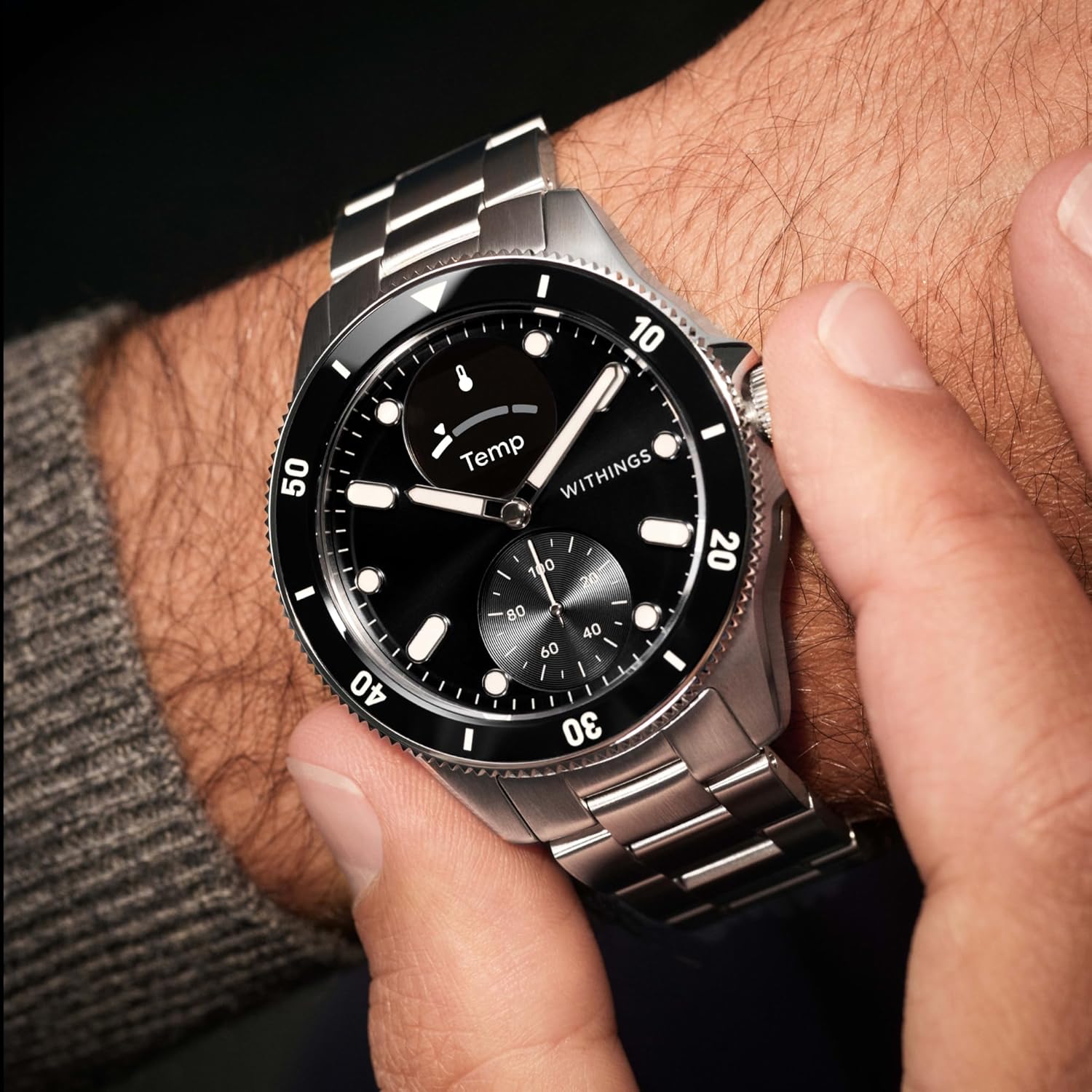
In practice, it sits somewhere between a classic watch and a basic smartwatch. It doesn’t replace a full-on smartwatch like an Apple Watch or Garmin Epix in terms of interaction and features, but it’s way less annoying for everyday life because you’re not stuck staring at a big bright screen or charging all the time. You get a small OLED window, real hands, and a stainless-steel case that looks more like a dive watch than a gadget.
What surprised me most is how much the experience depends on your expectations. If you come from a “dumb” watch, this feels packed with features. If you come from a high-end Garmin or Apple Watch, you will probably see it as a compromise with some rough edges. Things like notifications, ECG reliability, and the menu system are clearly not perfect, and some Amazon reviewers are not wrong when they call out those issues.
Overall, I’d describe it as a good-looking health tracker with smartwatch extras, not a full-featured smartwatch. It’s strong on long-term health tracking and battery, decent for daily notifications, and a bit clunky on anything that needs fast interaction. If you’re okay with that trade-off, it can fit very well into a normal, non-tech-obsessed routine.
Is it worth the money?
Price-wise, the ScanWatch Nova sits in the upper mid-range of wearables. It’s more expensive than basic fitness bands and some simpler hybrids, and can get close to entry-level Apple Watch or Garmin models depending on discounts. One Amazon reviewer said it’s expensive and they would have liked a cheaper version without the clinical-grade stuff. I kind of agree: a stripped-down model with the same design and battery but fewer medical features at a lower price would hit a sweet spot for many people.
What you’re paying for here is mainly: the design (steel, watch-like look), the long battery life compared to full smartwatches, and the health-focused ecosystem (Withings app, integration with scales, etc.). If those three things matter to you, the value is decent. You get a watch that looks good in most situations, doesn’t need constant charging, and gives you a pretty complete picture of your health over time. If you already own a Withings scale, it makes even more sense because everything syncs into one app.
On the other hand, if you’re more into sports performance, navigation, contactless payments, smart replies, music control, and all the usual smartwatch tricks, you can get more capable devices for similar money from Garmin, Apple, or Samsung. They just won’t look as classic or last as long on a charge. Also, if you’re super picky about notifications and ECG reliability, the weak points here will annoy you enough that the price will feel too high.
So, I’d call the value good but not outstanding, very dependent on your profile. For someone who wants a dressy watch with solid health tracking and can accept some quirks, the price is defendable. For someone who wants a pure smartwatch or a pure sports watch, there are better options for the same or less money.
Looks more like a Tag than a gadget (for better and worse)
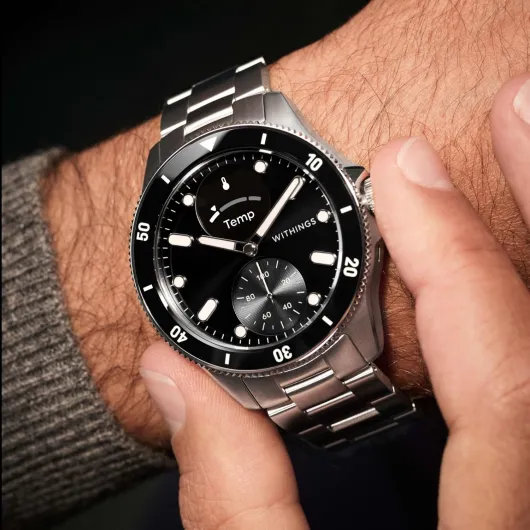
Design-wise, this is where the ScanWatch Nova really stands out. It looks like a proper steel dive watch, not like a tiny phone on your wrist. The black version I used has a stainless-steel case, rotating-style bezel look, and a classic round dial with analog hands plus a small sub-dial for activity progress. Straight out of the box, it feels like a premium watch in the hand: weighty but not brick-heavy, and the finish is clean. One Amazon reviewer compared the vibe to Tag or Rolex, and while that’s a bit generous, I get what they mean: it looks like an actual watch, not a fitness tracker.
The trade-off is the tiny OLED screen. There’s this big, nice dial, and then a small black circle at the top where all the smart stuff lives. In daily life, it’s fine for quick glances: time, heart rate, notification sender and first few words. But if you’re used to full-screen watches, it feels cramped. Another reviewer mentioned they wish the OLED matched the dial color better; I agree. The contrast between the blue/black dial and the pure black OLED window makes the “smart” part look a bit like an afterthought stuck on top.
I do like that it doesn’t scream “tech”. In the office or with a shirt, it just passes as a normal dressy watch. People don’t immediately clock it as a smartwatch. That’s nice if you hate the gadget look. The downside is you lose some legibility: in low light, reading the analog hands can be trickier than a bright digital display, and the tiny OLED isn’t great for long texts. You’re not going to read full emails on this thing; you’ll just see enough to know if you should grab your phone.
Overall, the design is the main reason to buy it. If you want a stealthy health tracker that looks like a regular watch, it does that very well. If you care more about screen size, watch faces, and fancy animations, you’ll probably find the design too limiting and a bit stuck between two worlds.
Battery life: strong, but forget the marketing numbers
Battery life is one of the main selling points. Withings claims up to 35 days, which sounds great on the product page. Reality is a bit different, but still decent. In my case, with 24/7 heart rate, sleep tracking, notifications on, and a few workouts per week, I got around 12–16 days on a charge. That lines up with some of the positive Amazon reviews saying they get about two weeks, and also with the angry review saying 2 weeks max with HR on. So no, it’s not 35 days in normal smart use, but it’s still miles better than charging every night.
If you turn off some stuff – like limiting notifications, fewer workouts, maybe less frequent SpO2 checks – you can probably push it past two weeks easily. I didn’t baby it that much because I wanted to see how it behaves in a realistic scenario. Compared to an Apple Watch, it’s night and day. Compared to a Garmin with an efficient screen, it’s still worse, but acceptable, especially considering the hybrid design and constant sensors.
Charging is done via a little docking station with USB-C to USB-A cable. It’s simple enough: you drop the watch on it and it snaps into place. A full charge from low battery took a bit over an hour in my tests. Not lightning fast, but if you only do this every couple of weeks, it’s not a big deal. One thing: the charger is proprietary, so don’t lose it. This is the kind of watch where you could easily forget where you put the dock because you don’t use it often.
Overall, I’d call the battery pretty solid but oversold by the marketing. If you go in expecting a true 35 days with all features active, you’ll be disappointed. If you just want something you only charge every week and a half or two weeks instead of every day, it delivers that without much fuss.
Comfort and everyday wear: fine during the day, decent at night
On the wrist, the ScanWatch Nova feels like a mid-sized steel watch. Not ultra-light, not a tank. The medium size worked well for my average wrist. If you’re used to slim fitness bands, you’ll definitely notice the extra weight and thickness, especially when sleeping. One Amazon reviewer said it’s thicker than their old Nokia Steel, and I had the same impression compared to basic hybrids. The added sensors and metal case explain that. It’s not uncomfortable, but it’s not “disappear on the wrist” either.
The included steel bracelet is decent. It took me a few minutes and a bit of swearing to size it, but Withings at least includes the tools and spare links, which helps. Once adjusted, it sits fairly snug and doesn’t move too much. For sleep, though, I preferred swapping to a softer strap (like a silicone or leather band). With metal, you always feel it a bit more in bed, and if you care about sleep tracking, that matters. One reviewer mentioned pairing it with a tan leather strap, and I think that’s actually the sweet spot: dressy look during the day, more comfortable at night.
In daily life – typing, driving, washing dishes – it behaved like any other mid-sized steel watch. The IPX7 water resistance is okay for hand washing, rain, and probably casual swimming, but the “scuba diving / snorkeling” mention in the spec list feels optimistic to me given the 1m rating. Personally, I wouldn’t trust it for serious diving; I’d use a proper dive watch or something with a stronger water rating.
For all-day wear plus sleep, I’d rate comfort as good but not super light. If you already wear mechanical or steel watches, you’ll adapt quickly. If you’re coming from a tiny Fitbit, it might feel chunky at first. Swapping to a soft strap at night is, in my opinion, the best way to get the most out of the sleep and health features without getting annoyed by the weight.
Tracking, notifications and real-life usability
Let’s talk about how it behaves day to day. Activity and step tracking are generally fine. Steps were in the same ballpark as my Garmin and my phone, sometimes 3–5% off but nothing dramatic. Auto-recognition of walks and runs works most of the time, but like all trackers, it sometimes mislabels short bike rides or misses very short activities. For casual users, it’s good enough; if you’re a data freak, you’ll spot inaccuracies here and there.
Heart rate during the day is okay. It caught my resting heart rate correctly and followed spikes during stairs or runs roughly in line with my Garmin chest strap, but it does lag a bit on sudden changes, which is normal for wrist optical sensors. One Amazon reviewer slammed the heart monitor as “trash”; I wouldn’t go that far, but it’s definitely not pro-athlete level. For health trends, it’s fine. For high-intensity interval training, you’ll see some delay and occasional weird spikes.
Notifications are the weak point. You get calls, messages, and app alerts (if enabled), but there’s no proper history on the watch. If you miss the buzz and don’t look in time, that alert is basically gone from the watch. Also, the tiny screen means you often just see the app icon or sender and a short preview. Another reviewer called the notifications “temperamental”, and I had a few times where messages arrived late or didn’t show at all until I re-synced the app. It’s okay for basic awareness (phone ringing, new WhatsApp, etc.), but if you want to reply or read long texts from your wrist, this is not the device.
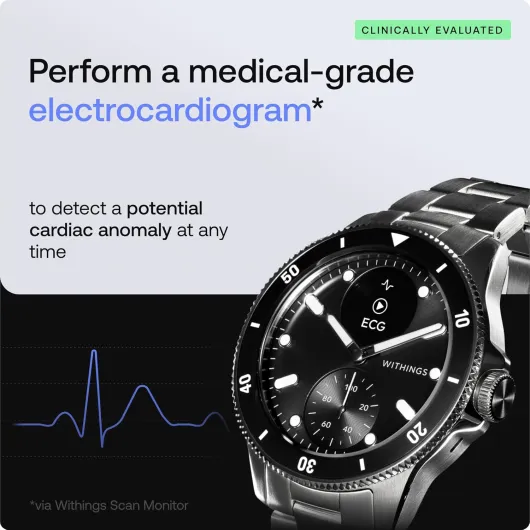
As for the “advanced” stuff: ECG and SpO2 do work, but they’re picky. You need to sit still, place your fingers exactly right, and sometimes the ECG fails and you have to restart. That matches the 1-star review complaining about 9/10 failures; I didn’t have it that bad, but I did get a few failed attempts in a row, which is annoying. SpO2 readings looked similar to a finger pulse oximeter I tested with, but again, you need to stay still. For occasional checks, it’s fine. If you expect hospital-grade reliability, you’ll be disappointed.
What this watch actually does (and doesn’t do)
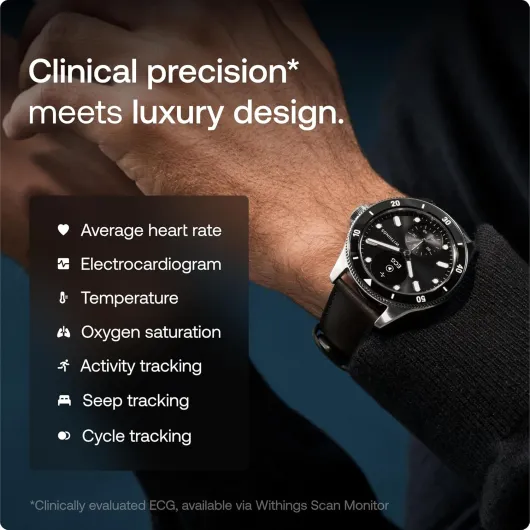
On the spec sheet, the ScanWatch Nova looks packed: ECG, SpO2, 24/7 heart rate, temperature tracking, sleep analysis, respiratory insights, VO2 max, connected GPS, and the usual steps and workouts. It’s marketed as a health-focused hybrid, and that part is mostly true. The watch auto-detects a bunch of activities (walking, running, cycling, etc.), tracks heart rate zones, and tries to estimate VO2 max based on your workouts. For sleep, it breaks down light/deep sleep, interruptions, and gives you a sleep score in the app.
Where it differs from regular smartwatches is the interface. You don’t get a big touchscreen; you get a tiny 0.4-inch OLED circle at the top of the dial and a crown/button on the side. Everything shows up in that little window: steps, heart rate, notifications, timers, workouts, ECG prompts, etc. It works, but it’s not something you want to fiddle with all day. If you miss a notification, there’s basically no proper log on the watch itself, which matches what one of the angry Amazon reviewers complained about. For anything detailed, you go back to the Withings app.
The app is actually one of the strong points. Data is clear, graphs are easy to read, and if you have other Withings gear like a Body Scan scale, everything ties together nicely. You see heart, sleep, weight, and temperature trends in one place. It feels more like a long-term health dashboard than a fitness watch trying to push you badges. That’s good if you care about monitoring health, less good if you want advanced sport metrics, training load, or navigation like on Garmin.
On the downside, not everything is as smooth as the spec list suggests. ECG and SpO2 need you to stay still, and yes, sometimes the ECG fails and you have to restart, which gets annoying fast. GPS is “connected GPS”, meaning it uses your phone; there’s no built-in GPS chip. So if you run without your phone, you just get distance from steps and wrist movement, which is less precise. The watch tries to do a lot, but you need to accept that some of it feels a bit basic or finicky compared to high-end sports watches.
Sleep, temperature and health insights: actually the strong side
Where the ScanWatch Nova grew on me is the long-term health and sleep side. The sleep tracking is not perfect, but it’s consistent. It logs sleep duration, light/deep sleep, interruptions, and gives you a daily sleep score. Compared with my Garmin and my own feeling in the morning, it was usually in the right ballpark. Nights where I woke up a lot got a lower score, and the app shows clear graphs so you can see patterns over the week or month. It’s more than just “you slept 7 hours”; it actually nudges you to look at regularity and quality.
The temperature feature (TempTech24/7) is more of a trend tool than an instant thermometer. It tracks your baseline and then shows deviations. I noticed that on days when I felt a bit off, the app showed a slight rise from my normal range. It’s not something I checked every day, but over time, it’s useful as an extra data point. For workouts, the “temp variation zones” are more of a geeky feature; interesting but not something I actively used to guide training.
Respiratory insights and overnight SpO2 are handy if you suspect breathing issues during sleep. You can see if there are frequent drops in oxygen or irregular patterns. I’m not a doctor, so I’m not going to pretend it’s a diagnostic tool, but as a way to spot potential problems to talk about with a professional, it’s decent. The same goes for ECG: when it works, it gives you a trace and can flag possible atrial fibrillation, but you should still see a doctor for anything serious.
In short, if your main interest is monitoring heart and sleep over months, the ScanWatch Nova does a good job. It’s less about quick interactions and more about building a health history. That’s where the Withings app shines compared to some fitness-focused platforms: it’s quieter, less about badges, more about trends. If you don’t care about that and just want detailed sport metrics, this will feel a bit overkill and slightly mis-aimed.
Pros
- Looks like a real steel watch, not a gadget, so it fits well in work and dress settings
- Battery easily lasts around 1–2 weeks in real use, far better than most full smartwatches
- Strong health and sleep tracking ecosystem with a clear, useful Withings app
Cons
- Notifications are basic, easy to miss, and there is no real history on the watch
- ECG and SpO2 can be finicky and sometimes fail, which is frustrating
- Price is on the high side considering limited smart features and no built-in GPS
Conclusion
Editor's rating
The Withings ScanWatch Nova is basically a health-focused dress watch with smart extras, not a full-blown smartwatch. It does best if you care about long-term tracking of heart, sleep, and general health, and you want something that looks like a normal steel watch rather than a tech gadget. The design is solid, the build quality feels good, and the battery life – while not as long as the marketing suggests – is still far better than most touchscreen smartwatches. Paired with the Withings app and maybe a Withings scale, it gives you a clear, central place to follow your health trends.
On the flip side, you need to accept some compromises. Notifications are basic and sometimes unreliable, the tiny OLED is not great for reading, the ECG and SpO2 can be fussy, and sports tracking is more “good enough” than serious-athlete level. If you’re coming from a Garmin Venu, Epix, or Apple Watch and you love all the smart functions, this will feel limited. If you mainly want steps, heart rate, sleep, and some alerts without living on your wrist screen, it makes more sense.
I’d recommend the ScanWatch Nova to people who: like classic watches, hate daily charging, and care about health metrics more than apps and smart replies. I’d say skip it if: you want full smartwatch features, heavy sports training tools, or you’re very sensitive to notification and ECG glitches. It’s a solid hybrid with clear strengths and some clear flaws – worth it for the right user, average for the wrong one.