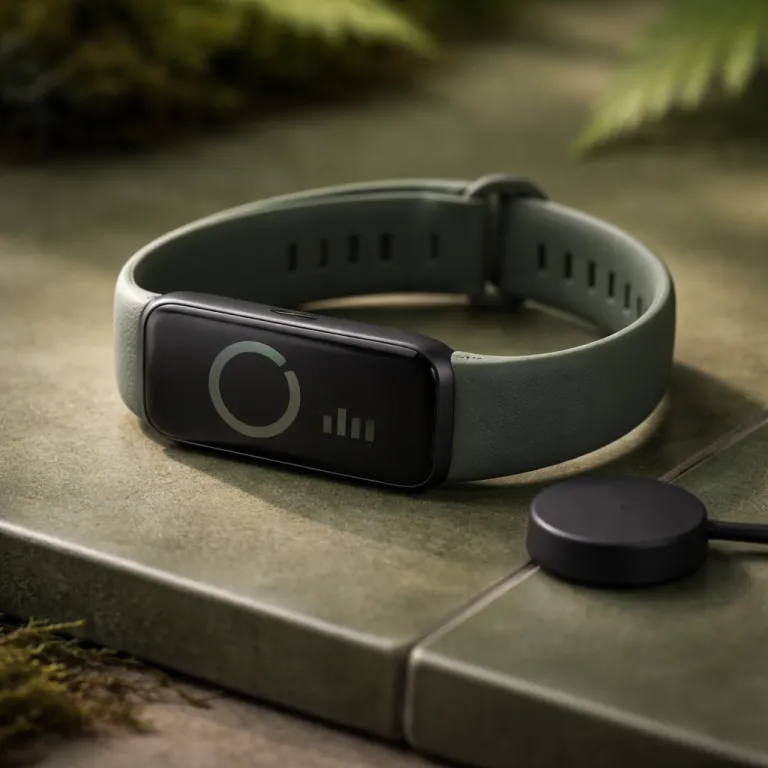
Section 1 – When an AI fitness coaching wearable actually feels like a coach
An AI fitness coaching wearable should feel like a calm coach on your wrist. When it works, the device translates messy wearable data into clear training decisions that respect your health and your life. When it fails, the same data becomes nagging noise that pushes you away from fitness rather than toward real progress.
Look at how Garmin handles this with Training Readiness and Body Battery on watches like the Forerunner 265 or Fenix 7. Garmin never shouts about an AI fitness coach, yet its adaptive training suggestions quietly adjust your plan based on sleep, HRV, and recovery, which is algorithmic coaching in everything but name. For a human athlete juggling work, family, and training plans, that kind of invisible service is often more useful than a chatty health coach avatar in a glossy app.
By contrast, many cheaper fitness trackers bolt on “AI” as a marketing sticker. They send generic training tips that ignore your medical records, your cycle tracking patterns, or even your recent injury history, which makes the guidance feel careless rather than personal. If an AI fitness coaching wearable cannot respect basic health context, it should not pretend to be a health coach at all.
The best implementations start with honest data. A serious fitness app will surface resting heart rate, HRV, and VO2max trends, then explain in plain language how these metrics relate to recovery and long term health. That is where an AI-driven smart coach earns trust, because it turns raw numbers into a realistic plan instead of a gamified step contest.
For runners and cyclists, the difference shows up on hard days. A good fitness coach algorithm will sometimes tell you to skip intervals, extend your recovery, and protect your health rather than chase a personal record. A bad one will continue to push “go harder” notifications because it only sees yesterday’s pace, not your disrupted sleep or elevated stress.
Apple Watch models such as the Apple Watch Series 10 and Apple Watch Ultra lean on Apple Intelligence to suggest more context aware reminders. The watch reads your fitness data, your calendar, and your sleep, then nudges you toward realistic training instead of arbitrary streaks. That is closer to a human coach who knows when to back off than to a generic health app that only cares about closing rings.
Fitbit takes a different route with its health premium features. On devices like the Fitbit Charge 6 or Fitbit Sense 2, the health premium subscription unlocks Daily Readiness Scores and deeper fitness nutrition guidance, which are early steps toward a full AI fitness coaching wearable experience. The promise is that the app will adapt your training plans and even your meal timing suggestions as your wearable data changes week by week.
However, the gap between promise and reality is still wide. Many users report that the same health app will repeat identical tips regardless of whether they are marathon training or barely walking 3 000 steps a day. When that happens, the AI-powered training system stops feeling like a personal coach and starts feeling like a recycled faqs blog in notification form.
Section 2 – Pixel Watch, Fitbit, Apple Watch and the new AI coaching arms race
Google has pushed the idea of an AI fitness coaching wearable further than most rivals. With the Pixel Watch line, especially the latest Pixel Watch 3, Google blends Fitbit algorithms with Gemini powered summaries that try to act as a true health coach. The watch ingests your wearable data, your training history, and your sleep, then offers adaptive training nudges that feel more conversational than the old card based tips.
Under the hood, this is still pattern recognition rather than magic. Google Health and Fitbit systems look at your heart rate, HRV, and activity data, then classify your state into buckets like “ready for high intensity training” or “focus on recovery”, which is not so different from Garmin’s Training Readiness. The difference is that Google wraps this in natural language, so the app will say things like “your body may benefit from lighter training today based on your recent sleep and stress”.
Apple Watch takes a more conservative but polished route. Instead of branding the device as an AI fitness coaching wearable, Apple Intelligence quietly powers proactive suggestions in the Workout app and the health app, which can surface patterns in your cycle tracking, sleep, and training load. For many users, this subtlety feels more trustworthy than a loud “AI coach” badge, because the watch behaves like a discreet fitness coach rather than a pushy chatbot.
Fitbit sits somewhere between these two philosophies. On devices such as the Fitbit Versa 4, the company promotes its health premium subscription as a way to unlock more personal training plans and fitness nutrition insights, but much of the guidance still feels template based. You might see the same recovery advice after a 5 km jog and a 20 km long run, which tells you the AI fitness coaching wearable is not yet reading the room.
Hardware still matters in this arms race. A rugged AMOLED fitness tracker with a strong battery, such as the military style smart watch tested in this military rugged smart watch review, can collect continuous SpO2 and heart rate data that feed any AI coach. But if the software layer cannot translate those signals into a coherent plan, the extra sensors and the long battery life do not automatically make it a better AI fitness coaching wearable.
Google’s rumored Fitbit Air concept, a screenless tracker discussed in early leaks and analysis, shows where this might go next. A device like Fitbit Air would rely almost entirely on the app and voice for coaching, which means the AI layer must be strong enough to act as a real fitness coach without constant screen prompts. If you are curious about how a screenless tracker could change everyday training, the detailed breakdown in this Fitbit Air leak analysis is worth reading.
For now, the most reliable coaching still comes from brands that under promise. Garmin rarely uses the phrase AI fitness coaching wearable, yet its adaptive training plans, recovery time estimates, and HRV based guidance on watches like the Forerunner 965 often feel more grounded than flashier rivals. When you care about every interval and every rest day, quiet accuracy beats loud ambition.
As a buyer, you should judge these systems by outcomes, not slogans. Ask whether the app will change your next workout in a way that respects your health, your schedule, and your long term goals, rather than just your last run. If the AI fitness coaching wearable cannot answer that question clearly, it is not yet ready to be your primary coach.
Section 3 – Data, privacy and the cost of “smart” coaching
Every AI fitness coaching wearable is hungry for data, and that hunger has consequences. To generate personal training plans and recovery advice, your watch or band must collect continuous heart rate, sleep stages, sometimes HRV, and often sensitive health data such as cycle tracking or stress scores. The more an AI fitness coaching wearable behaves like a health coach, the more it edges into territory that feels close to medical records.
That is why privacy policy documents matter more than marketing pages. When you sign up for a health premium tier or a premium subscription inside a health app, you are not just paying for extra graphs and a free trial period, you are also agreeing to new ways your wearable data can be processed. Some services keep most processing on device, while others send large chunks of your health history to the cloud for analysis.
On device processing, which Apple Watch leans toward with Apple Intelligence, keeps more of your health information on your wrist and your iPhone. This reduces exposure but can limit how complex the AI fitness coaching wearable can become, because the watch has less computing power than a data center. Cloud based systems, such as those used by Google Health and some Fitbit services, can run heavier models but require you to trust that the privacy policy and security practices are strong enough for long term storage of your health data.
For many recreational athletes, the trade off is acceptable if the coaching is genuinely helpful. If an AI fitness coaching wearable can reliably track progress, adjust training plans, and guide recovery in a way that reduces injuries, the value is clear. But if the app will only send generic fitness nutrition tips and recycled meal suggestions, handing over years of wearable data feels like a poor bargain.
One practical way to judge seriousness is to look at how a brand handles edge cases. Does the health app adapt when your cycle tracking shows hormonal shifts that affect training, or when your medical records indicate a chronic condition that changes safe heart rate zones. If the AI fitness coaching wearable ignores these signals, it is not acting like a responsible health coach, no matter how polished the interface looks.
Garmin’s Vivosmart 5, reviewed in depth in this Vivosmart 5 smart health tracker test, is a good example of a simpler device that still treats data with care. It does not market itself as a full AI fitness coaching wearable, yet its Body Battery and stress tracking features provide clear, actionable guidance without overclaiming. Sometimes a modest fitness tracker that respects your health data is a better choice than a flashy coach that overreaches.
Whatever you choose, read the privacy policy before you start a free trial or connect extra services. Check whether the company uses your wearable data to train general models, whether you can delete historical data, and how long backups are kept. An AI fitness coaching wearable that respects your right to walk away is far more trustworthy than one that buries critical details in a faqs blog.
Section 4 – Getting real value from AI coaching: training, nutrition and recovery
Once you have picked an AI fitness coaching wearable, the real work begins. The device will not magically make you fitter unless you treat it as a tool for structured training, smarter nutrition, and disciplined recovery. Used well, an AI fitness coaching wearable can become a personal coach that helps you track progress without obsessing over every single metric.
Start with training structure. Use adaptive training features, whether on a Garmin, a Pixel Watch, a Fitbit, or an Apple Watch, to build realistic training plans that fit your week, then let the app will adjust sessions based on sleep and stress. A good fitness coach algorithm will shorten intervals after a rough night, extend easy runs when recovery is strong, and nudge you toward rest when your wearable data shows mounting fatigue.
Next, layer in fitness nutrition and meal timing. Many health app ecosystems now offer basic meal logging, but the most useful AI fitness coaching wearable setups treat nutrition as part of training, not a separate chore. They connect your energy intake, your macronutrient balance, and your hydration to your training load, then explain how small changes can improve both performance and long term health.
Recovery is where most recreational athletes leave gains on the table. An AI fitness coaching wearable that tracks HRV, sleep stages, and resting heart rate can highlight when your nervous system is under strain, which is when a human coach would cut volume or intensity. If your watch or band keeps telling you that your recovery is poor and your training readiness is low, the smartest move is to listen rather than continue chasing a weekly mileage target.
Different devices excel in different roles here. A Pixel Watch with tight Google integration may be better for people who live inside Google services and want their calendar, maps, and Google Health data to inform training. An Apple Watch might suit those who prefer on device processing and a polished health app that blends fitness, cycle tracking, and general wellness into one coherent view.
Fitbit devices, including any future Fitbit Air style trackers, can work well for athletes who value simplicity and clear readiness scores over deep configuration. Just remember that an AI fitness coaching wearable is only as good as the habits you build around it, from charging it regularly to wearing it overnight so recovery metrics remain accurate. In the end, the most powerful feature is not the algorithmic coach on your wrist, but your willingness to act on its best insights.
Key figures shaping AI powered fitness coaching wearables
- The global wearable market was valued at roughly 85 billion US dollars recently, and industry forecasts suggest it could exceed 370 billion US dollars by the mid 2030s, with AI driven personalization cited as one of the main growth engines by multiple market research firms. These estimates are based on aggregated projections from large analysts such as IDC, Statista, and Grand View Research, which all highlight rapid growth in health focused devices.
- Surveys of recreational runners and cyclists from organizations such as Running USA and Strava show that more than half of respondents now use a fitness tracker or smartwatch to guide training decisions, up from roughly one third a decade ago, which underlines how central wearables have become to everyday coaching. In Strava’s annual Year in Sport reports, for example, the majority of logged runs now include heart rate or GPS data from a connected device.
- Independent tests of heart rate accuracy in popular devices, including Apple Watch, Garmin Forerunner, and Fitbit models, typically report average errors of 2 to 5 beats per minute at steady state but higher deviations during high intensity intervals, which limits how precise any AI fitness coaching wearable can be during sprints. Peer reviewed comparisons in sports science journals and controlled lab tests by reviewers such as DC Rainmaker and The Quantified Scientist broadly support these error ranges.
- Consumer surveys from privacy advocacy groups consistently find that a majority of users express concern about how health data from wearables is stored and shared, yet many still accept cloud processing in exchange for more advanced coaching features, highlighting the ongoing trade off between personalization and privacy. Reports from organizations like the Electronic Frontier Foundation and national data protection authorities frequently note this tension between convenience and control.