Summary
Editor's rating
Value for money: lots of features, a few compromises
Big, flashy, and definitely not discreet
Battery life: honest 7+ days if you don’t abuse it
Comfort: fine for daily use, metal strap gets heavy
Metal body, two straps – looks pricier than it is
Durability and waterproofing in real life
Daily performance, calls, and health tracking
What you actually get in the box
Pros
- Metal body and AMOLED screen make it look and feel more premium than most budget smartwatches
- Battery life of about 7 days with normal use, even with notifications and health tracking on
- Bluetooth calling and notifications work reliably once configured, good for quick calls and messages
Cons
- Bulky and quite flashy on the wrist, not ideal for small wrists or people who want a discreet watch
- App and software feel basic compared to big brands, with limited depth in health and sports data
- No built-in GPS, relies on phone for accurate outdoor tracking

Specifications
View full product page →| Brand | SOUYIE |
A chunky “do-it-all” watch on a budget
I’ve been wearing this SOUYIE military-style smartwatch daily for a bit over two weeks, swapping it in place of my usual mid-range Samsung watch. I used it for normal stuff: work, gym, walks, driving, calls, and sleeping with it on most nights. I paired it with an Android phone first, then briefly with an iPhone to see if anything broke in the process. So this is not lab testing, just real-life use.
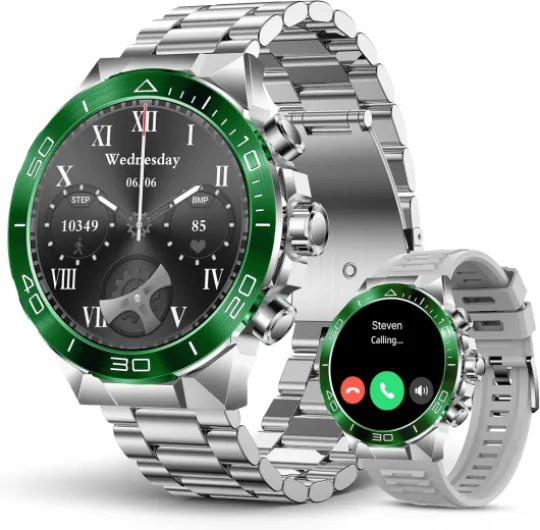
My first impression when I opened the box was basically: “ok, this thing is big and shiny”. It looks more like a chunky metal bracelet than a typical slim fitness band. If you like the whole tactical / military / G-Shock kind of look, it fits that lane. If you’re into small, discreet watches, this will feel huge on the wrist. I’ve got medium wrists and it definitely stands out.
I mainly focused on four things: screen quality, call and notification handling, health/fitness tracking, and battery life. Those are the points that matter most to me, and where cheap smartwatches usually cut corners. This one does some of those things pretty solidly and drops the ball on a few details, especially on the software side.
Overall, it’s not perfect, but for the price it’s clearly trying to give you a lot: metal body, two straps, AMOLED screen, Bluetooth calls, 100+ sports modes, and all the usual heart rate / SpO2 / sleep tracking. The real question is: does it work well enough day to day, or is it just specs on paper? That’s what I’ll break down below, without the sales pitch.
Value for money: lots of features, a few compromises
In terms of value, this SOUYIE watch sits in that budget-to-mid price range where expectations are tricky. You’re getting: a metal body, two straps, AMOLED screen, Bluetooth calling, a big battery, and the usual health tracking. On paper, that’s quite a lot compared to some brand-name watches that cost more and still skip metal or skip Bluetooth calls at this price point.
Where you feel the “budget” side is mainly in the software polish and the accuracy/seriousness of some health metrics. The Dafit app works but doesn’t feel as mature as Samsung Health, Apple Health, or Garmin Connect. The watch interface is usable but not super refined. Health data is good for a general idea of your day (steps, heart rate trends, sleep duration), but if you’re very picky about data accuracy, there are better – and more expensive – options out there.
Compared to other cheap smartwatches I’ve tried from random brands, this one does feel a notch higher in build quality, especially with the metal body and the AMOLED screen. The fact that the battery genuinely lasts close to a week with normal use is also a big plus. You’re not stuck to the charger every two days, which, for me, makes a big difference in day-to-day satisfaction. It’s the kind of watch you can forget about charging until the weekend.
So, value-wise: if you want something that looks more premium than a plastic fitness band, handles calls, shows notifications, and tracks your basic health stats without breaking the bank, this is a pretty solid deal. If you care more about brand ecosystem, deep health analytics, third‑party apps, or built-in GPS, then it makes more sense to save up for a bigger name. For what it costs, this SOUYIE watch gives you a lot, as long as you accept the compromises on the software and the “good enough” accuracy of some features.
Big, flashy, and definitely not discreet
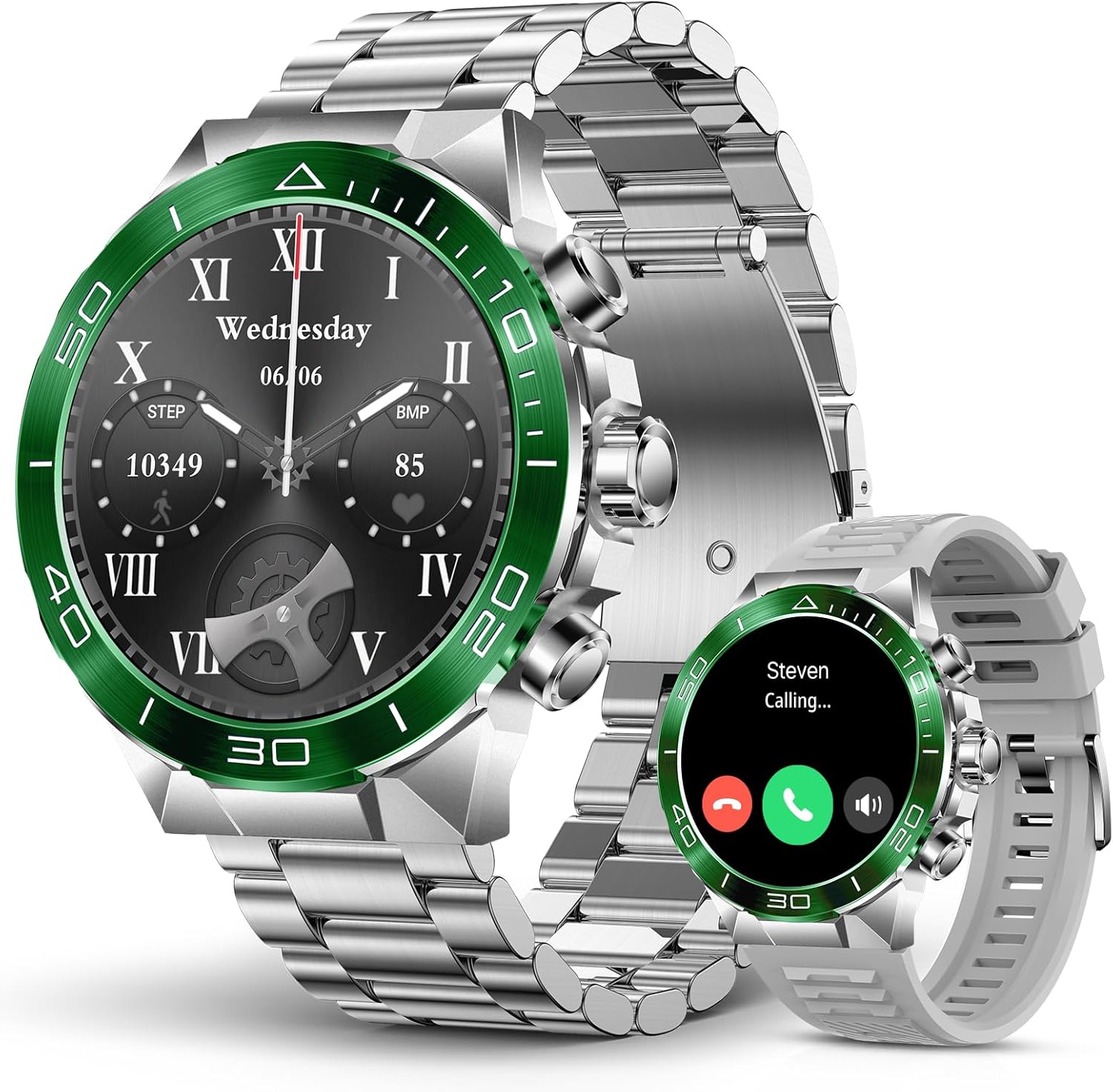
Design-wise, this watch is chunky and loud. The metal body has that shiny, almost chrome look in the silver version, and with the green accents it really leans into the “military rugged” marketing. On the wrist, it looks more like a metal bracelet with a screen than a slim smartwatch. If you wear shirts or suits, it will slide under a cuff only if the cuff is fairly loose; otherwise it gets stuck because of the thickness.
The round 1.43" AMOLED screen is actually one of the strong points here. The bezels are present but not huge, and the resolution (466x466) is sharp enough that text and icons look clean, not pixelated. The watch faces they include are a mix of decent and slightly tacky, but you can dig in the app and find more minimal ones if you want something calmer. There’s also the option to use a photo, which I tested with a simple black background and it looked pretty good.
There are physical buttons on the side that feel firm enough, not wobbly. The overall design screams “tough guy gadget” more than subtle smartwatch. I wore it to the gym, on a bike ride, and in the office. At the gym and outside, it fits in perfectly. In a more formal meeting, it looks a bit too flashy in my opinion, even with the metal strap. Some people will like that, some won’t. Just don’t expect a dress watch vibe; it’s more of a bold accessory.
One thing to note: it’s marketed as “military rugged”, but I’d call it more “chunky and solid” than truly rugged. It survived some bumps against door frames and weights at the gym without any visible damage. Still, there’s no official high-level shock rating mentioned, so I wouldn’t treat it like a hardcore outdoor tool. Design is definitely a strong selling point if you like big, aggressive-looking watches. If you prefer something low-key, this is probably not for you.
Battery life: honest 7+ days if you don’t abuse it
Battery was one of the points I really wanted to test because a lot of cheap watches promise crazy numbers and then die in three days. Here, with its 400mAh battery, I got pretty decent results. With always-on display off, brightness around 40–50%, about 80–100 notifications per day, a few short Bluetooth calls, and continuous heart rate + sleep tracking, I averaged a bit more than 7 days on a full charge. That matches the lower end of their 7–10 day claim, which is fair.
When I turned on the always-on display and played around more with watch faces and workouts, the battery obviously dropped faster. In that mode, I was closer to 4–5 days. So if you really want the screen always on, just know you’re trading battery life. Still, 4–7 days is much better than many full-featured watches that barely last two days with heavy use.
Charging is done via a small magnetic puck that snaps to the back. It’s not as strong as some big-brand chargers, so you have to place it on a flat surface and make sure it’s actually aligned, but once it’s set it charges fine. Going from around 15% to 100% took roughly 1 hour and 45 minutes in my test, which is close to their advertised 2 hours. No overheating or weird behavior during charging.
Standby time (just leaving the watch on a table with minimal notifications) is clearly longer; after a weekend of barely touching it, the battery barely moved. So if you’re a light user, you might reach their “up to 30 days standby”, but that’s with almost everything turned off. For real-world mixed use, I’d say plan on charging it once a week, which is pretty solid and one of the strong points of this watch compared to more power-hungry models.
Comfort: fine for daily use, metal strap gets heavy
In terms of comfort, this watch is okay but not invisible on the wrist. With the metal strap, you always feel its weight. For office work and casual walking, that didn’t bother me, but typing on a laptop with the metal strap made the watch knock on the desk edge quite often. I ended up switching to the silicone strap for most of the day because it’s lighter and sits a bit better on the wrist.
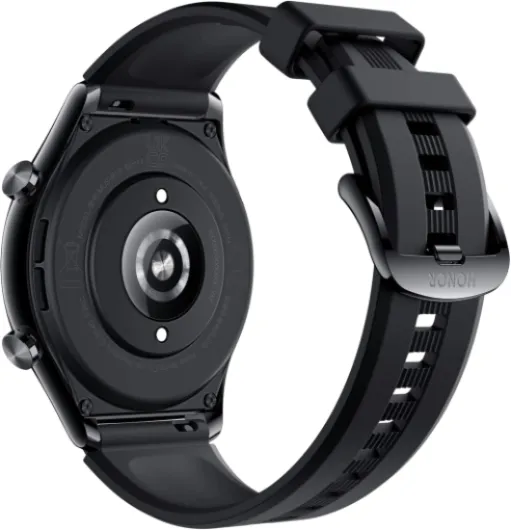
The underside of the watch is relatively flat with a small sensor bump. I didn’t get any irritation or marks after long days, even wearing it 16+ hours. During sleep, though, with the metal strap it was a bit annoying – the weight and the bulk woke me up a couple of times when I rolled over. With the silicone strap, sleeping was fine. So if you plan to use sleep tracking every night, I’d say just stick to the silicone band and forget the metal one in the evening.
The size is another point: if you have small wrists, this thing will look and feel massive. On my medium wrist, the lugs didn’t dig into the skin, but it does cover a big chunk of the wrist surface. Under tighter jackets or shirt cuffs, it can get stuck when you pull the sleeve up or down. For sports, I tightened the strap by one hole to stop it from bouncing, and it stayed in place without cutting off circulation or feeling too tight.
In practice, I’d rate the comfort as good enough, but not super light or forgettable. If you’re used to heavier analog watches, you’ll probably adapt quickly. If you’re coming from something like a slim Fitbit, the first few days will feel bulky until you get used to the weight and size. The upside is that the larger screen is easier to read during workouts and in bright light, so there’s a trade-off between comfort and readability.
Metal body, two straps – looks pricier than it is
The full metal body is honestly one of the nicer surprises. It doesn’t feel like cheap plastic painted silver; it has real weight and a cool touch to it. That also means the watch is not light – you feel it on your wrist, especially with the metal strap. For me, that’s fine and gives a sense of solidity, but if you’re used to featherweight fitness bands you’ll notice the difference right away.
The metal strap is decent for the price range. It’s not on the same level as a high-end stainless steel bracelet, but the links move smoothly enough and the double-button folding clasp worked without any accidental openings during my tests. I had to remove a couple of links using the included tool. The tool is basic, but it got the job done after a bit of fiddling. Once adjusted, the strap stayed at the right size with no weird clicking or rattling.
The silicone strap is more in the “standard Amazon watch strap” category. It’s soft enough, doesn’t rub the skin, and has plenty of adjustment holes. I used it for workouts and sleeping because it’s lighter than the metal one. The quick-release pins make swapping between straps easy; it takes less than a minute once you’ve done it once or twice. No need to go to a jeweler or buy extra tools.
On the back of the watch, the sensors are slightly raised, and the plastic there feels okay, not premium but not toy-like either. After sweating with it on and rinsing it under the tap, nothing peeled, discolored, or corroded in my tests. Overall, materials are pretty solid for the price, especially the metal shell. You’re not getting luxury watch finishing, but in the hand it feels more premium than a lot of cheap plastic fitness trackers in the same budget range.
Durability and waterproofing in real life
For durability, I didn’t throw it off a building, but I did wear it like I normally would: gym, bike rides, washing dishes, showers on purpose avoided because they clearly say it’s not for showers or swimming. The metal shell handled bumps against door frames, dumbbells, and my desk with no visible scratches in the first couple of weeks. Of course, long term it will scratch like any metal watch, but nothing alarming so far.
The watch is marketed as waterproof for handwashing and jogging in the rain, which is exactly how I treated it. I washed my hands several times a day with it on, rinsed it under the tap to clean sweat, and got caught in a light rain once. No fogging under the glass, no weird behavior afterwards. I didn’t test it in a pool or shower because the brand clearly says not to, and I’ve killed cheap watches before by ignoring that, so I didn’t push my luck.
The metal strap feels solid enough; the clasp didn’t open accidentally and the coating hasn’t chipped yet. The silicone strap held up fine to sweat and stretching; no cracks or sticky feeling. The only long-term concern I’d keep an eye on is the magnetic charging pins on the back – on some budget watches those can corrode over many months if you always put it on wet skin. After my testing window, they still looked clean and shiny.
Overall, I’d call the durability pretty solid for everyday abuse, as long as you respect its limitations: it’s not a dive watch, not a sauna buddy, and not a hardcore mountaineering device. For office, gym, commuting, and casual outdoor use, it seems sturdy enough, and the weight and metal body give some confidence it can take regular knocks without falling apart.
Daily performance, calls, and health tracking
On the performance side, the interface is responsive enough, but you can tell it’s not a high-end chip. Swiping between screens is generally smooth, with the occasional small hiccup when loading some widgets, but nothing that made it unusable. The menus are simple: swipe left/right for widgets (steps, heart rate, weather, etc.), swipe down for quick settings, and up for notifications. Once you learn where things are, it’s straightforward.
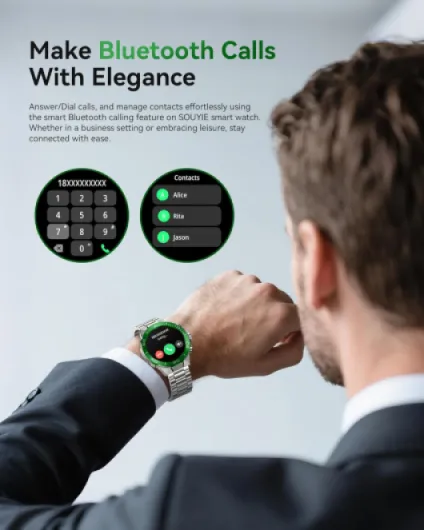
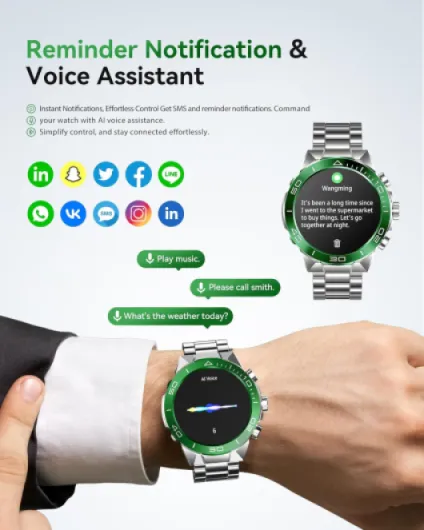
Bluetooth calls worked better than I expected. When my phone rang, the watch buzzed and I could answer directly from my wrist. The built-in speaker is loud enough indoors and in a car, but in a noisy street you have to bring it closer to your ear to hear clearly. The other person said my voice sounded a bit “tinny” but still understandable. It’s fine for quick calls, not ideal for long conversations. Notifications from WhatsApp, SMS, and email came through reliably as long as the app was allowed to run in the background and had all permissions.
For health tracking, heart rate readings were in the right ballpark compared to my reference watch, with small differences of a few bpm during steady activity. During high-intensity exercise, it lagged a bit when my heart rate changed quickly, which is normal for optical sensors but more visible here. Blood oxygen (SpO2) readings were mostly consistent, but I’d treat them as indicative only, not as medical-grade data. Blood pressure is there too, but like all wrist-based BP features at this price, I wouldn’t rely on it for anything serious – it’s more of a gadget feature.
Sports modes are plenty (100+ on paper), but most of them are just variations that track time, heart rate, and rough calories. For running and cycling, it uses your phone’s GPS, not built-in GPS, so you need to carry your phone if you want maps and accurate distance. For casual fitness tracking – steps, basic workouts, walking – it’s fine. If you’re a serious runner who wants split times, advanced metrics, and very accurate routes, this is not the right tool. As a daily companion that gives you a general idea of your activity, it does the job without major issues.
What you actually get in the box
Out of the box, you get quite a bit of stuff for the price: the watch itself, a metal strap, a silicone strap, a small metal tool to adjust the links on the metal band, a magnetic charger, and a basic user manual. Everything was already protected with plastic films, so no scratches or dings when I opened it. The packaging looks a bit like it’s trying to be premium, but at the end of the day it’s still a cardboard box – decent, nothing more.
Setup is straightforward: you scan the QR code in the manual, download the Dafit app, and pair it via Bluetooth. It took me around 5 minutes including the app install. The watch connected on the first try with my Android phone. To get calls and notifications working properly, you have to give the app a bunch of permissions and also connect the watch as an audio device in Bluetooth settings. If you skip that, calls won’t come through the watch speaker, which is confusing at first.
The app itself is functional but a bit clunky. The translation is okay, but some menus feel generic and not super polished. You can change watch faces, tweak notification settings, set alarms, and check basic health history (steps, sleep, heart rate, etc.). It does the job, but if you’re used to Garmin, Samsung, or Apple apps, this will feel like a downgrade. Sync speed is acceptable: a few seconds for steps and sleep data to update when you open the app.
In day-to-day use, I’d say the product experience is: hardware feels more premium than the price, software feels cheaper than the hardware. It’s usable, and once you’ve set it up you don’t need to live in the app anyway, but don’t expect a super smooth or fancy interface on the phone side. For someone who just wants to see steps, sleep and change a watch face from time to time, it’s fine. Power users will probably find it a bit limited.
Pros
- Metal body and AMOLED screen make it look and feel more premium than most budget smartwatches
- Battery life of about 7 days with normal use, even with notifications and health tracking on
- Bluetooth calling and notifications work reliably once configured, good for quick calls and messages
Cons
- Bulky and quite flashy on the wrist, not ideal for small wrists or people who want a discreet watch
- App and software feel basic compared to big brands, with limited depth in health and sports data
- No built-in GPS, relies on phone for accurate outdoor tracking
Conclusion
Editor's rating
After wearing the SOUYIE military rugged smartwatch for a couple of weeks, my overall feeling is: solid hardware, decent software, good value if your expectations are realistic. The metal body, AMOLED screen, and two included straps make it look more expensive than it is. Battery life around a week with normal use is a real plus, and Bluetooth calls and notifications work reliably once everything is set up properly.
On the flip side, the watch is big and quite flashy, so it’s not for people who prefer small, discreet devices. The app and interface are usable but a bit rough compared to the big brands, and the health metrics are fine for casual tracking but not something I’d base medical decisions on. Sports tracking is okay for basic workouts, but lack of built-in GPS and limited advanced metrics mean it’s not aimed at serious runners or data nerds.
I’d say this watch is for someone who wants a chunky, tough-looking smartwatch that handles calls, messages, and basic fitness without costing a fortune. It suits everyday wear, gym sessions, and casual outdoor use. If you care a lot about brand ecosystem, super accurate sports data, or a slimmer design, you should probably skip this and look at Samsung, Apple, or Garmin instead. For the price, though, it’s a pretty solid “does a bit of everything” option, with more strengths than weaknesses if you like the style.