Summary
Editor's rating
Value for money: good if you just want cheap and simple
Basic, discreet design that looks cheap but doesn’t scream toy
Battery life: one of the few things that really feels solid
Comfortable enough to forget it’s there most of the day
Activity tracking: okay for rough numbers, not for precision freaks
What you actually get with the Runlio band
Sleep tracking and notifications: useful, but don’t expect miracles
Pros
- Lightweight and comfortable enough to wear all day and night
- Battery easily lasts around a week on a single charge
- Built-in USB plug means no separate charging cable to lose
Cons
- Step counting can be quite inaccurate, especially with arm movements or driving
- Sleep tracking is very rough and often misses short wake-ups
- Cheap-feeling materials and a basic, clunky companion app

Specifications
View full product page →| Brand | Runlio |
A budget fitness band that does the basics… more or less
I’ve been using the Runlio Fitness Tracker (model ID115U) for a little over two weeks, wearing it pretty much all day: at work, walking the dog, a couple of runs, and at night for sleep tracking. I bought it because I didn’t want to drop serious money on a Fitbit or Garmin, and this one looked like a simple, cheap way to count steps and check my sleep. On paper it ticks a lot of boxes: steps, calories, sleep, notifications, IP67 water resistance, and no need for a separate charging cable thanks to the built-in USB plug.
In practice, it’s a mixed bag. It does track activity, it does buzz when I get calls or messages, and the battery life is actually pretty solid. But you can feel very quickly that this is a budget device. The step counter isn’t always accurate, the sleep data feels more like a rough guess than something you’d base health decisions on, and the app (VeryFitPro) looks and behaves like a basic companion app, nothing more.
Compared to more expensive trackers I’ve tried before, like older Fitbit models, the differences show up in the details: the screen is more basic, the interface is less smooth, and the tracking algorithms are clearly not as polished. It’s usable, but if you’re picky about data accuracy, this will bother you. If all you want is a rough idea of how much you move in a day, it’s okay, but you have to accept some nonsense step counts here and there.
So overall, this isn’t a disaster, but it’s not some hidden gem either. It’s a low-cost tracker that gets the job done at a basic level. If your expectations match the price, you might be happy. If you’re hoping for precise tracking or a polished experience, you’ll probably end up frustrated like some of the Amazon reviews mention. I’ll go through the main points: design, comfort, performance, sleep tracking, battery, and value for money.
Value for money: good if you just want cheap and simple
When you look at the price and the Amazon rating (around 3.9/5 with a couple thousand reviews), the Runlio sits in that middle zone where it’s neither great nor terrible. For what you pay, you get: basic step tracking, basic sleep tracking, notifications, a week of battery life, and a water-resistant band you can wear all day. If your goal is just to have something on your wrist that roughly tells you how active you are and buzzes when your phone rings, it’s hard to complain too much at this price level.
However, you do need to be honest about what you’re getting. The step count is not always accurate, especially with random arm movements or driving. The sleep tracking is more of a rough estimate than actual science. The materials feel cheap, and the app looks and behaves like a low-budget app. So if you’re expecting anything close to what you get from brands like Fitbit, Garmin, or even Xiaomi’s Mi Band series, you’ll probably feel a bit disappointed. Those usually cost more but also bring better sensors, better apps, and more consistent data.
Where it makes sense is for people who:
- Want a very cheap entry-level tracker to see if they’ll even use one
- Don’t care about precision to the last step or minute
- Just want call/message vibrations on the wrist and a rough idea of their daily movement
- Need something light and simple for walking, casual exercise, and sleep awareness
So overall, I’d say the value is good but not outstanding. You’re clearly buying at the low end of the market and you feel it, but it still does enough to justify the price if your expectations are realistic. If spending a bit more is an option for you, I’d seriously consider looking at slightly pricier bands with better accuracy. If your budget is tight and you just want something that “more or less” tracks things, this one is acceptable.
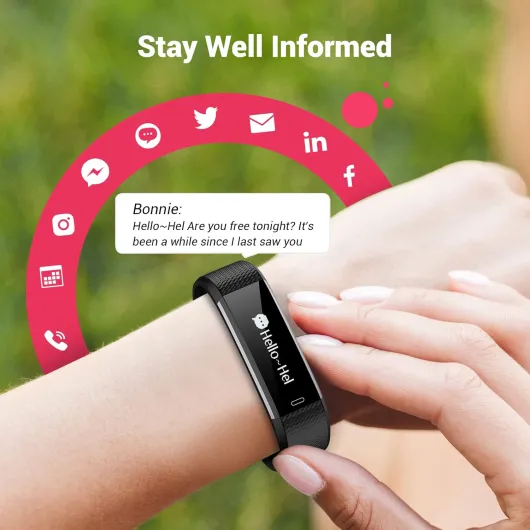
Basic, discreet design that looks cheap but doesn’t scream toy
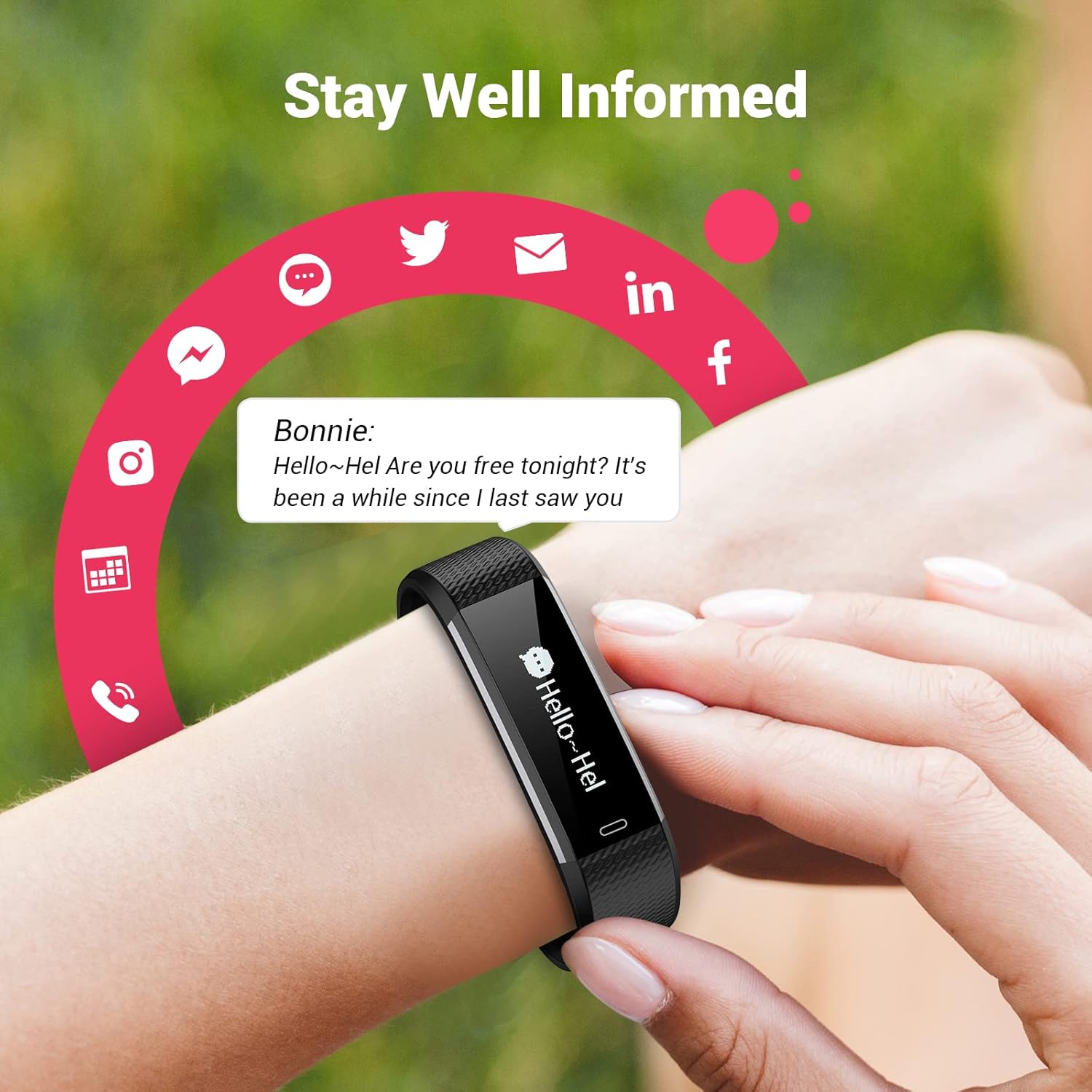
Design-wise, the Runlio is as simple as it gets. It’s a narrow rectangular module that clips into a rubbery strap. The look is very similar to a lot of generic fitness bands you see on Amazon. Black only, no metal accents, no fancy curves. On the wrist, it just looks like a plain fitness band. Personally, I don’t mind it: it’s discreet, and nobody really pays attention to it. But if you like watches with a bit of style or premium feel, this one is clearly on the budget side.
The screen is a small digital display (not actually 9.6 inches as the listing weirdly says). It’s enough to show time, steps, and basic icons, but it’s not very bright. Indoors it’s fine, but in direct sunlight I often had to tilt my wrist or shield it with my hand to read it. There’s a single touch/button area at the bottom of the screen that you tap to cycle through the menus. It’s simple to use, but sometimes it doesn’t register light taps, so you end up tapping twice or a bit harder.
One thing I did like is the size and weight. It’s very light (around 60 g for the whole thing according to the specs, but it feels even lighter), and the profile is thin enough that it doesn’t get caught on sleeves or pockets. I wore it while typing, carrying bags, and even sleeping, and it never really got in the way. The square-ish shape is standard for this type of band, and the overall footprint is small, which is nice if you have smaller wrists.
In short, the design is functional and low-key, but clearly cheap. No premium materials, no fancy watch faces, and the screen could be brighter. If you just want something that doesn’t look ridiculous and stays out of the way, it’s fine. If you care about design and want something that feels more like a proper watch, you’ll probably find it a bit too basic and plasticky.
Battery life: one of the few things that really feels solid
The battery life is actually one of the better points of this tracker. Runlio claims up to 7 days of use on a full charge, and in my case that was pretty accurate. With notifications on, sleep tracking every night, and checking the screen quite often, I got around 6–7 days before it dropped below 20% and I decided to charge it. If you use it more lightly and don’t have constant alerts, I can see it lasting a full week easily.
Charging is simple but a bit weird the first time. You have to pull off one side of the strap to reveal the built-in USB plug. Then you stick it directly into a USB port (PC, laptop, or USB wall charger). No cable needed, which is convenient because there’s nothing to lose or forget. The downside: if your USB ports are in a tight spot or vertical, the band can dangle awkwardly, and you might worry about bending it. But charging itself is quick: around 1–1.5 hours to go from low battery to full.
I tested it by letting it run from 100% to nearly empty twice. The discharge seems stable, no sudden drops. The app shows the battery level, and the watch gives you a low battery warning in time, so you’re not caught completely off guard. Given how light the device is, the battery performance is pretty decent for what it does. It’s not like a smartwatch that you have to charge every night.
So on this point, I’d say the Runlio actually delivers on its promise. One charge per week is realistic, which is nice if you don’t want another gadget that needs constant attention. If there’s one area where it doesn’t really feel “cheap”, it’s the battery life and the no-cable charging approach, even if the plug/strap system feels a bit fragile when you first pull it apart.
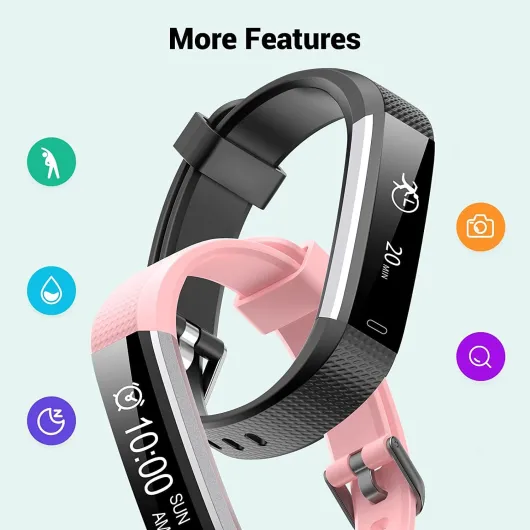
Comfortable enough to forget it’s there most of the day
On the comfort side, I was pleasantly surprised. The strap is basic silicone, nothing fancy, but it’s soft enough and flexible. The buckle style is like a regular watch, not those annoying pin-and-hole bands that can pop open. Once it’s on, it stays on. I wore it during workdays, walks, and sleep without it digging into my skin or leaving big marks. If you’re used to heavier watches, this will feel almost weightless.
For workouts, it’s okay. I did a few runs and some home workouts with it. It doesn’t flap around, and the band stays put even when you get sweaty. After a longer run where my wrist got quite sweaty, I did notice a bit of itchiness under the band, but that’s pretty standard with cheap silicone straps. Rinsing it and letting the skin breathe for a bit fixed it. I didn’t get any serious irritation or rash, which I sometimes do with cheaper bands, so that’s a plus.
Sleeping with it was also fine. It’s light and doesn’t have any big protruding bits, so it doesn’t poke you when you move around. I’m a side sleeper, and I didn’t wake up because of the watch. The vibration alarm in the morning is strong enough to wake me up without being aggressive. It’s more of a buzz than a shock, which I liked. You do feel it on the bone of your wrist, but it’s not painful or anything.
Overall, I’d say comfort is one of the better points of this tracker. It’s not premium, but it’s easy to wear all day and night. If you’re sensitive to rubber straps, it might still bother you a bit, but for most people it should be okay. The only real downside is that the strap feels cheap and I’m not sure how it will age in the long run, but out of the box and after a couple of weeks, it’s been perfectly usable.
Activity tracking: okay for rough numbers, not for precision freaks
This is where things get a bit mixed. The Runlio tracks steps, distance, and calories. For casual use, it’s fine, but if you look closely, you’ll notice some weird numbers. For example, I compared it to my phone’s step counter and an older Fitbit on a few days. On a normal workday with some walking, the Runlio was usually within ±10–15% of the other devices, which is acceptable for a cheap band. But on days when I did a lot of driving or arm movements without actually walking, it added steps that clearly weren’t real.
One morning I literally just got out of bed, went to the bathroom, and made coffee, and the watch already showed around 200 steps, which matches what some Amazon reviewers complained about. Also, when I drove to work (around 20 minutes), it sometimes added a couple of hundred steps even though my feet weren’t moving. So the motion detection is a bit too sensitive and counts certain wrist movements as walking. On the other hand, during a steady 30-minute walk, the count was in the right ballpark compared to my phone.
The distance and calories are just estimates based on steps and your height/weight. They’re not precise, and they jump around if the step count is off. If you’re using this just to see if you’re moving “more or less” than usual, it’s okay. If you want to log accurate training sessions or compare detailed workouts, it’s not the right tool. The sport modes are very basic: you can start an activity, and it will track time and steps, but there’s no GPS and no advanced metrics.
So, performance-wise, I’d sum it up like this: good enough for casual tracking and motivation, but not reliable for serious stats. If seeing 6,000 vs 7,000 steps roughly is enough for you, it works. If you’ll get annoyed by ghost steps or off numbers, you’ll quickly see its limits. For the price, I think it’s acceptable, but it’s clearly not on the same level as more expensive brands when it comes to tracking accuracy.
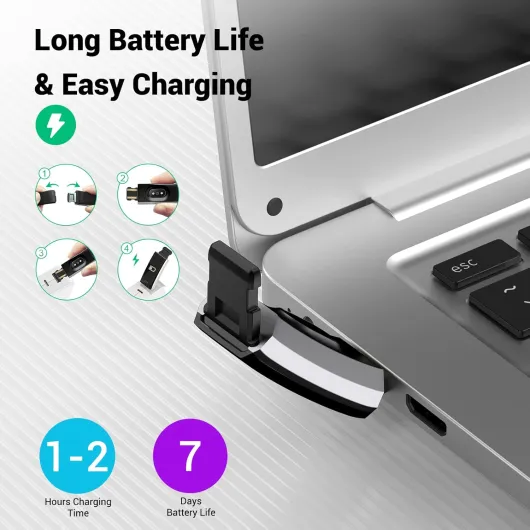
What you actually get with the Runlio band
Out of the box, you get the tracker module, the two-part silicone band, and a basic user manual. Technically, the description says charging cable is included, but in reality the charger is built into the tracker itself: you pull one side of the strap off and plug the USB end straight into a USB port. There’s no GPS, no fancy sensors, just the standard stuff: step counter, sleep tracking based on movement, and a vibration motor for alerts. It connects via Bluetooth to your phone and needs the VeryFitPro app, which is available on iOS and Android from version 7.1/4.4 upwards.
The setup is fairly simple. I installed the app, created an account, entered height/weight/age, and paired the tracker. The pairing worked on the first try on my Android phone, and syncing usually takes a few seconds when I open the app. The watch itself shows: time, date, steps, distance, calories, and some simple modes like stopwatch and sport. There’s no fancy watch faces or deep customization; it’s bare-bones, but easy to navigate once you get the hang of the single button/touch area.
Feature-wise, the tracker focuses on these main things:
- Daily activity tracking (steps, distance, calories)
- Sleep monitoring (light/deep sleep and total time)
- Notifications for calls, SMS, and common apps like WhatsApp and Facebook
- Sedentary reminders and basic alarms
- Stopwatch and simple sport modes
On paper, that’s plenty for the price range. The catch is that the quality of each feature varies. Some things work fine, some feel half-baked. If you treat it as a simple watch plus rough step counter and notification buzzer, you’ll probably be okay. If you expect a full fitness ecosystem like Fitbit or Garmin, you’re going to find it pretty limited and a bit clunky.
Sleep tracking and notifications: useful, but don’t expect miracles
The sleep monitor is one of the reasons I picked this tracker, and honestly, it’s more of a rough indicator than a reliable tool. It records when you fall asleep, wake up, and splits the night into “light” and “deep” sleep. Over two weeks, the total sleep time was often close to reality: if I went to bed around 11:30 pm and got up at 7:00 am, it would show something like 7 hours 15 or 7 hours 30, which is fine. But it often missed short wake-ups during the night. There were nights where I clearly remember being awake for 15–20 minutes, and the app still showed a perfectly continuous night of sleep.
The deep vs light sleep graph in the VeryFitPro app looks nice, but I wouldn’t take it too seriously. Some nights when I felt I slept badly, it gave me a “good” score with lots of deep sleep, and other nights when I felt fine, it showed mostly light sleep. It’s clearly relying on movement more than anything else, so as long as you don’t toss and turn too much, it assumes you’re in deep sleep. It’s okay if you just want a general idea of your sleep schedule, but not if you’re trying to fine-tune your sleep quality.
Notifications, on the other hand, work reasonably well. Once you give the app notification access, the tracker vibrates when you get calls, texts, and supported app alerts (WhatsApp, Facebook, etc.). You don’t see full messages, but you get enough info to know if it’s worth pulling out your phone. The vibration is strong enough that I didn’t miss calls even when my phone was on silent in my pocket. There is a bit of delay sometimes, but nothing dramatic.
Overall, in terms of effectiveness, I’d say: sleep tracking is basic and a bit optimistic, notifications are handy and fairly reliable. It’s fine if you just want a rough picture of your nights and a way to not miss calls. If you’re looking for medically useful sleep data or in-depth analysis, this isn’t it. But for a cheap fitness band, it still adds some value and helps you be a bit more aware of your habits.
Pros
- Lightweight and comfortable enough to wear all day and night
- Battery easily lasts around a week on a single charge
- Built-in USB plug means no separate charging cable to lose
Cons
- Step counting can be quite inaccurate, especially with arm movements or driving
- Sleep tracking is very rough and often misses short wake-ups
- Cheap-feeling materials and a basic, clunky companion app
Conclusion
Editor's rating
After a couple of weeks with the Runlio Fitness Tracker, my take is pretty straightforward: it’s a cheap, basic band that does the job at a surface level, but you have to accept its flaws. The step counter and sleep monitor give you a general idea of your activity and nights, but they’re not super accurate. You’ll see ghost steps from driving or waving your arms, and the sleep graphs often miss short wake-ups. On the positive side, it’s comfortable, light, and the battery life is actually solid, with around a week on a single charge. Notifications work well enough to keep your phone in your pocket more often.
I’d recommend this tracker for people who just want a low-cost way to get roughly motivated to move more and to see if wearing a band is something they’ll stick with. It’s fine if you’re not obsessed with precise numbers and just want a ballpark figure for steps and sleep. If you’re serious about training, tracking your progress in detail, or you get annoyed by inaccurate data, I’d skip this and save up for something a bit better. There are clearly better options out there, but for the price, and if you treat it as a simple gadget and not a medical tool, it’s a decent little device.