Summary
Editor's rating
Is the COROS PACE 3 worth the money?
Looks simple, feels like a sports tool
Battery life: the main reason to buy this thing
Lightweight and easy to forget on the wrist
How it holds up to daily abuse
GPS, heart rate, and training features in real life
What the COROS PACE 3 actually offers
Pros
- Very good battery life with 5–6 GPS workouts per week and still over a week between charges
- Lightweight and comfortable enough for 24/7 wear, including sleep tracking
- Solid dual-frequency GPS and heart rate accuracy for most running and cycling use
Cons
- Menu system and controls take time to learn and don’t feel very intuitive at first
- Music feature is outdated and awkward to use (manual MP3 transfer only)
- Navigation is basic breadcrumb-style without detailed maps, limited for heavy trail users

Specifications
View full product page →| Brand | COROS |
A running watch that actually keeps up with you
I’ve been using the COROS PACE 3 as my daily watch for a few weeks now, mainly for running and gym work, plus some casual cycling. I bought it after getting tired of charging my old smartwatch almost every day and constantly worrying if it would survive a long run with GPS on. With this one, the first shock was simple: the battery just doesn’t seem to die. I went through a full week with 5 runs, 2 strength sessions, sleep tracking every night, and it still had plenty of juice left.
My use is pretty basic but frequent: I run 4–6 times a week, with some intervals and tempo runs, and I like to see pace, heart rate, and distance clearly while I’m moving. I also wear the watch 24/7 for heart rate and sleep, and I keep notifications on. I’m not a triathlete or ultra runner, just a regular runner who wants solid data without babysitting the battery or fighting a complicated menu every time.
Compared to my previous watch (an older Apple Watch), the first feeling is that this one is clearly more of a sports tool and less of a mini smartphone on the wrist. You lose stuff like slick apps and fancy animations, but you gain battery life, lighter weight, and GPS that feels more reliable when you’re actually training. For me, that trade-off is worth it, but it depends what you expect from a watch.
Overall, my first impression is pretty positive: it’s not perfect, there are a few annoying details, but if your main focus is running, tracking workouts, and not charging every night, the PACE 3 hits those points very well. If you want a lifestyle smartwatch with polished smart features, this is going to feel a bit barebones and clunky in some areas.
Is the COROS PACE 3 worth the money?
In terms of value, the PACE 3 sits in a pretty sweet spot. It’s usually priced around the low-to-mid $200 range, which puts it below a lot of Garmin models with similar battery life and performance. For that price, you get very solid GPS, reliable heart rate tracking, strong battery life, and enough training features for most runners. You don’t get full maps or tons of smartwatch features, but if sports are your main focus, it feels like you’re paying for the right things.
Compared to an Apple Watch, you clearly lose the app ecosystem, bright AMOLED screen, and tighter phone integration. But you gain multi-day battery, better GPS for long runs, and a watch that feels built for workouts first. Compared to Garmin, you usually pay less for similar core sports features, but you might miss some of the more advanced navigation and mapping options if you’re into trail running in unknown areas.
What I liked is that the watch doesn’t try to be everything. It’s a straightforward training tool. The app is a bit plain, the interface isn’t the most polished, and the music feature (manual MP3 transfer) is basically outdated in 2026. But the core—GPS, battery, comfort, training metrics—is strong. So for the price, it feels like good value, especially if you’re upgrading from a basic fitness band or a smartwatch that dies halfway through your long runs.
If your priority list is: long battery, light on the wrist, good GPS, and clear workout tracking, then the price makes sense. If you want a watch that also replaces your phone for notifications, apps, and media, you might feel like you’re missing quite a few things and that another ecosystem would justify the extra cost better.
Looks simple, feels like a sports tool
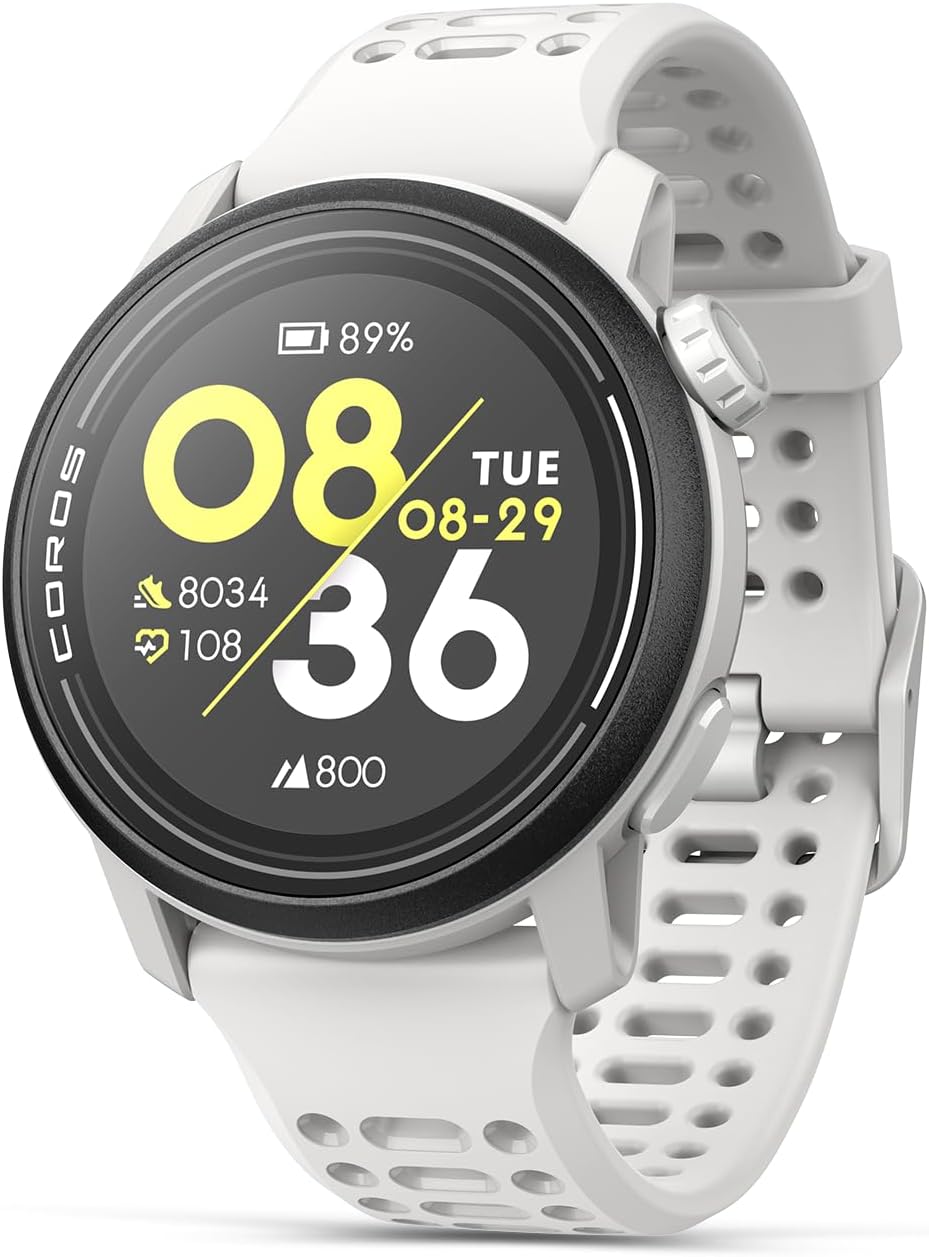
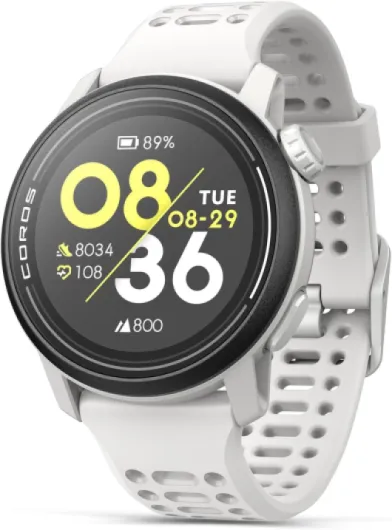
Design-wise, the COROS PACE 3 is pretty straightforward. I tested the white version with the silicone band, and the first thing you notice is how light it is. It doesn’t scream premium luxury watch; it looks like a clean, modern sports watch. The bezel is thin, the screen is fully round, and the buttons are minimal: one main rotating crown and one back button. No huge chunk of metal, no massive lugs sticking out, so it doesn’t feel like a brick on the wrist.
The 1.2-inch screen is fine for a sports watch. It’s not super sharp like an AMOLED smartwatch, but it’s readable. In bright daylight, it actually does well because of the transflective tech—sunlight makes it more visible instead of washing it out. Indoors it relies more on the backlight, and it can look a bit dull if you’re used to flashy displays. Personally, I prefer something I can read while running at noon over something that just looks pretty in the living room.
The rotating crown is a good idea, but it takes a few days to get used to. Scrolling through menus with it is quick, but I sometimes pressed it by mistake during workouts, especially when wearing gloves. You can lock it, but you have to remember to do that. The second button is simple and easy to find by touch, which is what you want during intervals when you don’t want to stare at the screen for too long.
Overall, the design is clean and functional. It doesn’t look cheap, but it also doesn’t look flashy. If you want a watch that doubles as a dress accessory, this probably isn’t it. If you want something that looks like a serious sports tool and basically disappears on your wrist when running, it does the job nicely.
Battery life: the main reason to buy this thing
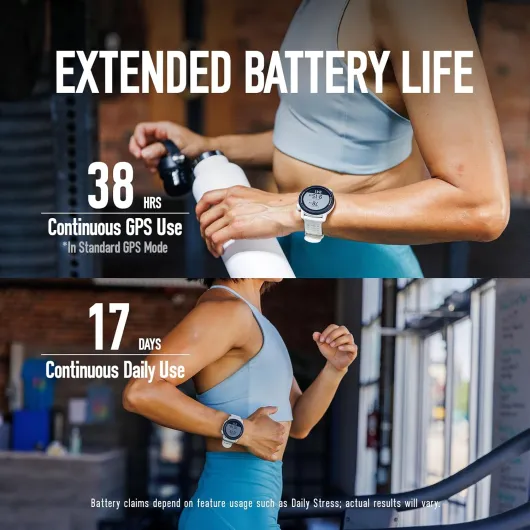
The battery is honestly the main reason I don’t regret buying the PACE 3. COROS claims up to 17–24 days of daily use and around 38 hours of GPS, and while I didn’t sit with a stopwatch, the real-world performance is close enough that I stopped worrying about it. With 5–6 GPS activities per week (30–60 minutes each), notifications on, heart rate and sleep tracking always enabled, I was charging roughly every 10–12 days. That’s a huge difference compared to watches that need a plug almost every night.
For long runs, I never once had battery anxiety. I did a 2.5-hour long run with GPS and heart rate on, and the battery drop was modest. You feel like you can just grab the watch and go, without checking the percentage every time. If you’re training for marathons or long hikes, this is a big relief. Even if you forget to charge for a few days, it usually still has plenty of reserve.
Charging itself is fast enough, but the charging cable is a bit annoying. You have to push it in firmly until it clicks, and the connector doesn’t feel as intuitive as a simple magnetic puck. Not a huge problem, but you do need to be sure it’s properly connected or you might wake up to a watch that didn’t charge. Also, it uses a proprietary cable, so you’ll want to keep track of it; lose it and you can’t just grab any random USB-C cable.
In short, the battery life is one of the strongest selling points. If you’re tired of babying your watch battery, this alone might justify picking the PACE 3 over something more feature-packed but shorter-lived. It’s not infinite, but for most people training regularly, charging once every week or two instead of every day is a very noticeable quality-of-life improvement.
Lightweight and easy to forget on the wrist
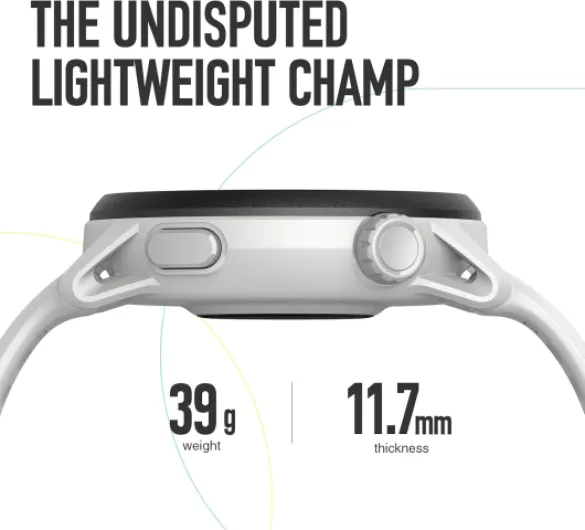
For comfort, this is where the PACE 3 really shines. It’s very light, especially if you go with the nylon band (I tried both, but mainly used the included silicone strap). Even with the silicone band, it feels much lighter than my old Apple Watch or most Garmin models I’ve tried. During long runs, I honestly forgot I was wearing it, which is exactly what I want. No bouncing, no feeling like I’m dragging a metal chunk around.
The case itself is slim enough that it doesn’t get caught on sleeves or jacket cuffs. I wore it under a running jacket and a hoodie, and it never felt bulky. At night, for sleep tracking, I didn’t feel the need to take it off, which is rare for me—I usually yank watches off before bed. The back of the watch sits flat against the wrist, and the sensor bump isn’t too aggressive, so it doesn’t dig into the skin.
Now, the silicone band is a bit of a mixed bag. It’s durable and holds well, but it doesn’t have much stretch. I have to wiggle my hand through the loop a bit, especially when my hands are sweaty after a run. Once on, it’s comfortable enough and doesn’t cause irritation, even when wet from sweat or swimming. But if you have bigger hands and smaller wrists, you might find it slightly annoying to put on and off daily. A bit more flexibility in the strap would have been nice.
For all-day wear, including office, training, and sleep, I’d rate comfort as very good. It’s not fancy, but it doesn’t rub, doesn’t feel heavy, and doesn’t heat up on the skin. If comfort and low weight are priorities for you—and especially if you’re doing long runs or wearing it 24/7—this is one of its strongest points.
How it holds up to daily abuse
On durability, I’ve been wearing the PACE 3 pretty much 24/7—runs, gym, showers, sleep, and random daily stuff. So far, the screen and case are holding up well. No big scratches or chips, just some tiny marks you can see only if you look closely under certain light. The bezel doesn’t seem to pick up damage easily, which is nice if you’re clumsy like me and bang your wrist into door frames and gym equipment.
The silicone strap feels tough. It hasn’t stretched out or cracked, and the holes haven’t torn despite tightening it for workouts and loosening it for casual wear. One thing to note: the white color can pick up some light discoloration if you work in a dirty environment (oil, dust, etc.), but that’s more cosmetic than structural. A quick clean usually fixes most of it, but don’t expect bright white to stay bright white forever.
I’ve used it in the rain and during sweaty summer runs, plus a few pool sessions. No issues with water resistance so far, buttons still feel clicky, and the crown hasn’t gotten sticky or gritty. The back sensor window hasn’t scratched in a way that affects readings. It’s not a metal tank, but for a lightweight plastic-bodied watch, it feels pretty solid.
Overall, I’d say durability is good for the price and weight. If you’re working in very rough conditions (construction, welding, etc.), you might see some cosmetic wear faster, but the watch itself seems to handle daily knocks and sweat without drama. If you want something that looks pristine forever, maybe go with a darker color or accept that a white sports watch will show its life after a while.
GPS, heart rate, and training features in real life
On performance, this is where the PACE 3 just quietly gets the job done. The dual-frequency GPS is solid. I tested it on routes with tall buildings and some tree cover, and the tracks on the map were generally clean: not perfect, but no crazy zig-zags or teleporting across streets. Distance matched pretty closely with known routes and other devices. On open roads and trails, it was spot on most of the time, and pace felt stable enough for workouts.
The heart rate sensor is surprisingly good for a wrist sensor. I compared it against a chest strap a few times on steady runs and intervals. On easy runs, it was pretty much identical most of the time. On intervals, it sometimes lagged a few seconds behind when my heart rate spiked, which is normal for wrist sensors, but it caught up quickly. For most people, it’s more than enough. If you’re super picky or doing very specific HR-based training, you can still pair an external strap via Bluetooth.
The training features are fairly complete: you can set up interval workouts, structured sessions, and sync plans from apps like TrainingPeaks or Runna. During workouts, the watch gives you clear prompts (pace, intervals, rest), and the vibration alerts are okay—not super strong, but I didn’t miss many cues. The navigation with breadcrumb routes is basic but useful: you see your path and where you should be heading, but don’t expect full maps or turn-by-turn like on high-end Garmins.
Overall, in practice the PACE 3 is very capable as a running tool. It tracks what you need, the data is consistent, and the app gives you enough metrics to analyze your training without drowning you in useless stuff. It’s not the most advanced navigation watch, and treadmill tracking is a bit off (like almost every watch), but for outdoor running and general training, it’s solid and reliable.
What the COROS PACE 3 actually offers
The COROS PACE 3 is basically a lightweight GPS sports watch focused on running and endurance sports. On paper, it covers a lot: dual-frequency GPS, optical heart rate sensor, sleep tracking, training plans, and a bunch of activity modes (run, trail run, bike, swim, strength, snowboard, ski, XC ski, etc.). So it’s not just for runners, but clearly that’s the main audience. The watch uses COROS’s own operating system, not Wear OS or Apple’s system, so everything is built around training and metrics, not random apps.
The watch has a 1.2-inch transflective screen, which means it’s not super bright and glossy like a smartphone, but it stays readable in daylight and doesn’t kill the battery. There’s a touchscreen, but you also get a rotating crown and a button, which I ended up using more than the touch. The case is pretty slim at around 11.7 mm and very light, especially with the nylon band (I tried the silicone one but also tested a nylon strap later).
Battery is one of the big points on the spec sheet: COROS claims around 38 hours of continuous GPS and up to 17–24 days of daily use depending on settings. In real life, it’s obviously less if you hammer GPS all the time, but it’s still way above what I was used to. You also get navigation with breadcrumb-style routes synced from the COROS app, which is handy for new routes even if it’s not full-color maps.
The COROS app is where you’ll see all your data: workouts, sleep, VO2 max estimate, running fitness, recovery suggestions, and so on. You can also sync with third-party services like TrainingPeaks and some training apps. It’s not the prettiest app, but it’s functional and fairly quick. Overall, the package is clearly geared toward people who care more about sports metrics and battery than about fancy visuals or app stores.
Pros
- Very good battery life with 5–6 GPS workouts per week and still over a week between charges
- Lightweight and comfortable enough for 24/7 wear, including sleep tracking
- Solid dual-frequency GPS and heart rate accuracy for most running and cycling use
Cons
- Menu system and controls take time to learn and don’t feel very intuitive at first
- Music feature is outdated and awkward to use (manual MP3 transfer only)
- Navigation is basic breadcrumb-style without detailed maps, limited for heavy trail users
Conclusion
Editor's rating
Overall, the COROS PACE 3 is a very solid running-focused watch that does the important stuff well: GPS accuracy, heart rate tracking, comfort, and especially battery life. It’s light enough that you forget it’s there, the battery comfortably handles a week or more of regular training, and the data you get from the watch and app is detailed enough for most runners and endurance athletes. It feels like a tool built for training, not a toy with random smart features.
It’s not perfect. The interface takes a bit of time to learn, the charging cable is slightly fiddly, and the music feature is outdated unless you still use MP3 files. Navigation is basic breadcrumb-style, so if you’re deep into trail running on unknown routes, you may want a model with full maps. And if you’re mainly looking for a smartwatch with bright display, lots of apps, and deep phone integration, this will feel a bit barebones and utilitarian.
If you’re a runner (from beginner to fairly serious) who wants reliable tracking, long battery, and a light watch without spending a fortune, the PACE 3 is a strong option. If you’re a heavy trail runner who needs advanced mapping or someone who cares more about smart features than training metrics, you should probably look at higher-end Garmin models or a smartwatch instead. For what it aims to be—a no-nonsense sports watch that you don’t have to charge every day—it hits the mark pretty well.