Summary
Editor's rating
Value for money: solid if you want basics and hate subscriptions
Design: looks like a normal ring, which is the whole point
Battery life: roughly 4–5 days, so you’re not charging it every night
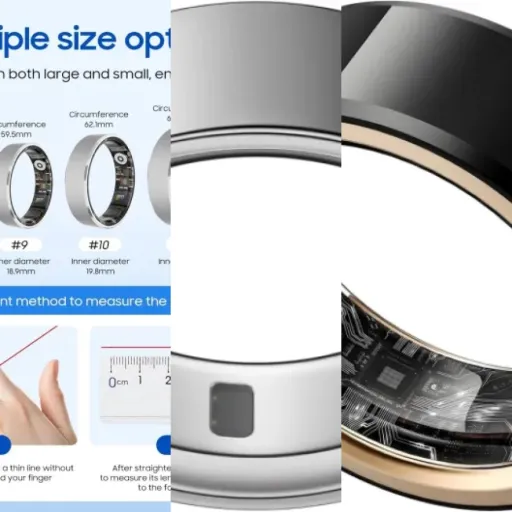
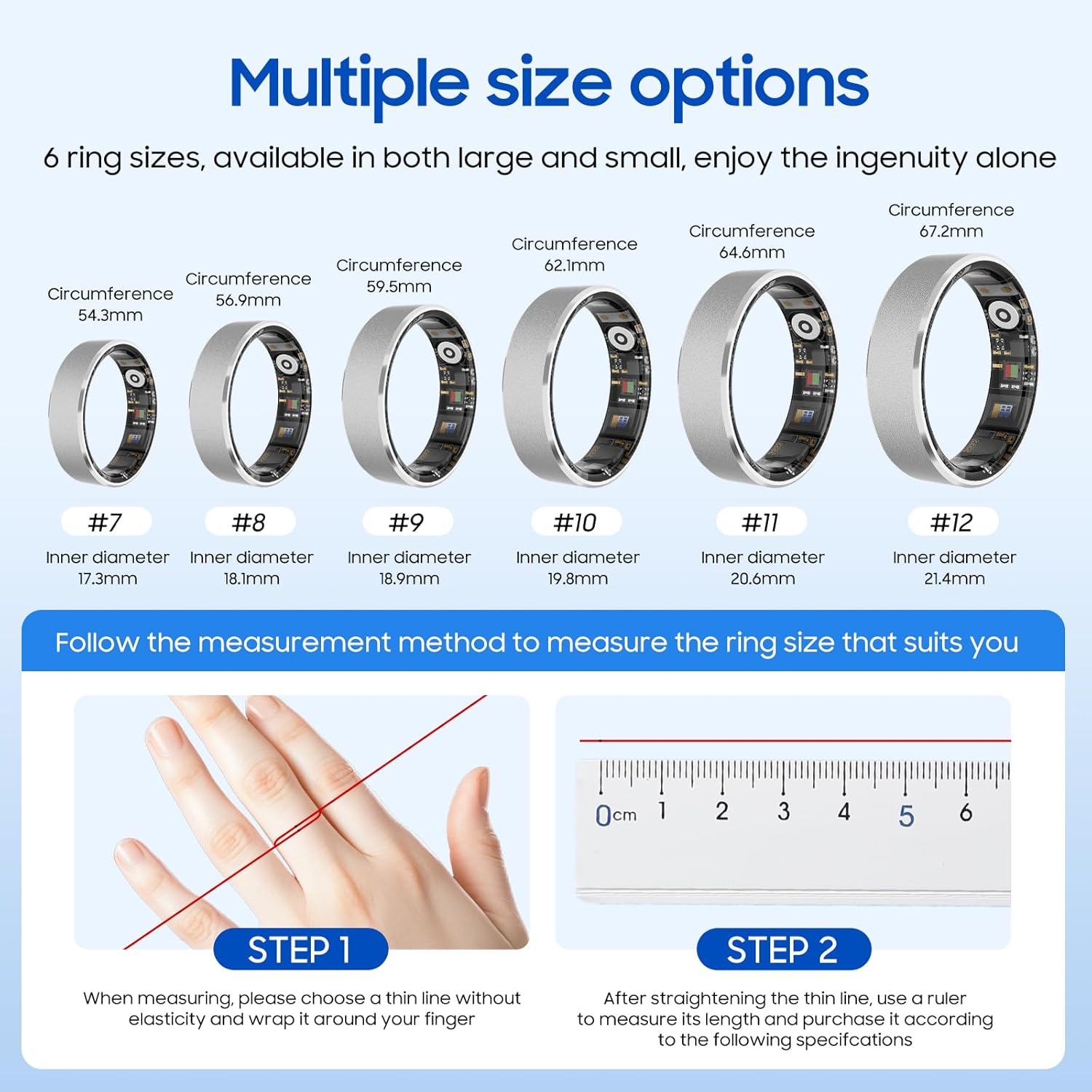
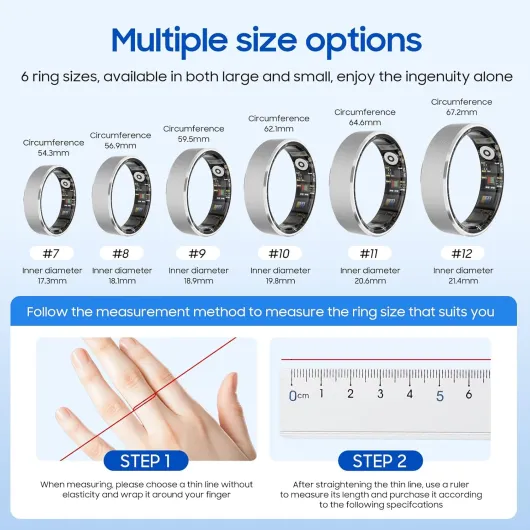
Comfort and sizing: great if you get the size right, annoying if you don’t
Durability and waterproofing: fine for daily life, but don’t abuse it
Tracking performance: decent accuracy, but don’t treat it like a medical device
What this smart ring actually offers (beyond the buzzwords)
Pros
- Discreet ring format that’s more comfortable and low-profile than a smartwatch for daily and nighttime wear
- No subscription fee: you pay once for the ring and get ongoing access to the app and data
- Solid battery life around 4–5 days with continuous use and sleep tracking
Cons
- App and metrics are more basic than those from bigger, more established brands
- Sizing is critical; if you don’t get the size right, comfort and sensor accuracy can suffer
- No GPS or advanced sports features, so it won’t replace a dedicated sports watch for serious training

Specifications
View full product page →| Brand | prxxhri |
A health tracker for people who hate smartwatches
I’ve been testing this prxxhri VR11 smart ring for a bit because I’m tired of wearing a chunky smartwatch 24/7. I wanted something that could track sleep, stress, and basic activity without feeling like I’m carrying a mini phone on my wrist. This ring seemed like a decent middle ground: cheaper than the big-name rings, no subscription, and it works with both iOS and Android. On paper, it ticks most of the boxes.
In daily use, the first thing I noticed is how quickly you forget you’re even wearing it. Compared to my watch, it’s much less in the way when I’m typing, cooking, or sleeping. I wore it almost non-stop: showers, workouts, nights, and just normal days at the office. The idea was to see if it could fully replace my watch for health tracking, or if it’s more of a casual gadget you play with for a week and then toss in a drawer.
My routine with it was simple: I synced it with the app in the morning to check sleep and in the evening to see my steps and heart data. I didn’t change my habits for it; I wanted to see how it fits into a “normal person” day. No crazy workouts, just walking, a bit of home exercise, and some stressy work calls. That’s where a product like this either makes sense or feels pointless.
Overall, it gets a lot of things right but it’s not perfect. The tracking is decent, the comfort is good, and the no-subscription part is a real plus. On the other hand, it’s from a brand nobody really knows, the app feels a bit basic compared to bigger players, and you really need to nail your ring size. If you’re expecting the same depth as the most expensive health rings, you’ll see the difference, but for the price, it’s a pretty solid attempt.
Value for money: solid if you want basics and hate subscriptions
For value, the key things here are: no subscription, decent tracking, and a discreet form factor. Compared to the big-name smart rings that cost quite a bit more and then sometimes ask for a monthly fee, this one is clearly aimed at people who want the concept without paying top-tier pricing. You’re not getting all the ultra-detailed metrics and super polished apps of the premium brands, but you’re also not bleeding money every month just to see your sleep score.
In day-to-day use, you get the essentials: steps, sleep analysis, basic stress/readiness info, and continuous wear thanks to decent comfort and battery life. For a lot of people, that’s all they really need. If your goal is “I want to know if I sleep badly and if I move enough,” this ring does that at a reasonable cost. You’re paying mostly for the hardware once, and the app is free. That’s a big selling point for anyone tired of subscriptions.
On the downside, you’re dealing with a relatively unknown brand. That means less certainty about long-term app support, firmware updates, or customer service. Also, the app experience is a bit simpler and less polished than what you’d get from the bigger brands. If those things matter a lot to you, you might feel that spending more on a big brand is safer in the long run. It’s basically a trade-off: lower initial cost and no subscription vs. slightly rougher ecosystem.
Overall, I’d say value for money is pretty solid if you go in with realistic expectations. You’re not buying a lab tool or a high-end sports watch replacement. You’re buying a simple, discreet health tracker that lives on your finger and covers the basics without locking you into monthly fees. For that use case, it makes sense. If you’re a data geek or a hardcore athlete, it’ll probably feel too limited and you’ll be happier putting your money into something more advanced.
Design: looks like a normal ring, which is the whole point
Design-wise, this thing is pretty low-key. Mine is the black size 9 version, and from a distance it just looks like a slightly chunky band ring. No big logos, no lights flashing, nothing that screams “I’m tracking my biometrics.” I actually liked that a lot. With smartwatches, everyone sees your screen lighting up; with this, nobody notices unless they stare at your hand. For work meetings and more formal situations, it blends in much better than a sporty watch.
The ring is round and fairly simple in shape, no odd edges or weird angles. It’s a bit thicker than a regular metal ring, obviously, because they had to cram sensors and a battery inside. But after a day, my brain just accepted the size. I wore it on my index finger most of the time; on the ring finger it felt a bit bulkier, but that’s personal preference. There are no physical buttons; everything is controlled via the app, which keeps the design clean but also means you can’t interact with it directly.
One thing to note: there’s no visible screen. The technical sheet mentions a 1 mm “standing screen display size”, but in reality, you don’t get a display you can read like a watch. This is more like a sensor ring that sends data to your phone. If you’re expecting to see notifications or time on the ring itself, that’s not what this is. Personally, I preferred it this way because it keeps the ring looking like normal jewelry instead of a tiny gadget.
In terms of style, it’s nothing fancy but effective. Black goes with everything, and since there are no shiny silver parts or big branding, you can wear it with casual clothes or even with a shirt and nobody will comment. If you like super stylish jewelry, this will feel pretty basic. But if you just want a discreet health tracker that doesn’t clash with your outfit, the design does the job.
Battery life: roughly 4–5 days, so you’re not charging it every night
The brand talks about around 5 days of battery life, and that’s pretty much what I saw in real life. With constant wear, sleep tracking every night, and syncing at least twice a day, I usually got between 4 and 5 days before needing to recharge. If I played a lot with the app and forced manual syncs all the time, it leaned closer to 4. If I just let it do its thing quietly, it hit 5 days more easily.
Charging is done via a small dock that the ring sits on. It’s not the prettiest accessory, but it works. From almost empty to full took about an hour and a half to two hours for me. I usually charged it while working at the computer or during a shower + breakfast combo, so it never really bothered me. The nice thing is that you don’t have to think about it every day like some smartwatches. You can go through most of the workweek on a single charge, which is a big plus if you’re lazy with charging (like I am).
One thing to keep in mind: if you want continuous sleep tracking, you need to plan when you charge it. The best moment is usually in the evening while watching TV or in the morning after waking up. If you forget, you might end up with a dead ring in the middle of the night and lose that night’s data. Not a disaster, but a bit annoying if you’re trying to monitor your sleep over several weeks.
Overall, battery life is one of the strong points here. It’s not “set it and forget it for weeks,” but it’s way more practical than a smartwatch that you have to plug in every night. For a small ring with sensors running 24/7, 4–5 days is pretty solid and fits well with normal life without turning you into the person who’s always hunting for a charger.
Comfort and sizing: great if you get the size right, annoying if you don’t
Comfort is where a smart ring either works or ends up in a drawer. Here, it’s pretty comfortable, but only if you nail the size. The brand really insists on checking the size chart, and they’re right. I first guessed my size based on another ring I own and it was slightly off. The ring was just tight enough that after a few hours at the computer, my finger felt squeezed, especially when it was warm. I ended up switching it to another finger and it felt much better. So yeah, take the sizing step seriously.
Once I had it on the right finger, I could wear it all day and night without thinking about it. Compared to a watch, it’s less annoying when typing on a keyboard or using a mouse. I also slept with it without issues; I usually end up taking my watch off at night because the strap bothers me, but the ring didn’t. The inside of the ring is smooth, no sharp edges or rough spots against the skin, so there was no irritation or redness for me, even after several days in a row.
During workouts, it stayed in place fine. I did some basic home workouts (push-ups, squats, light dumbbells) and it didn’t twist too much or dig into my finger. That said, if you do heavy lifting or sports where your hands are constantly gripping things (like pull-ups or rowing), any ring can become annoying. In that case, you might end up taking it off, which kind of breaks continuous tracking. For my level of activity, it was acceptable.
Overall, comfort is good but very size-dependent. If you’re between two sizes or your fingers swell a lot with heat, you might have days when it feels a bit snug. It’s not as adjustable as a watch strap, obviously. But once you find the right finger and you’re used to it, it’s easy to forget it’s there, which is exactly what you want from a health tracker you’re supposed to wear 24/7.
Durability and waterproofing: fine for daily life, but don’t abuse it
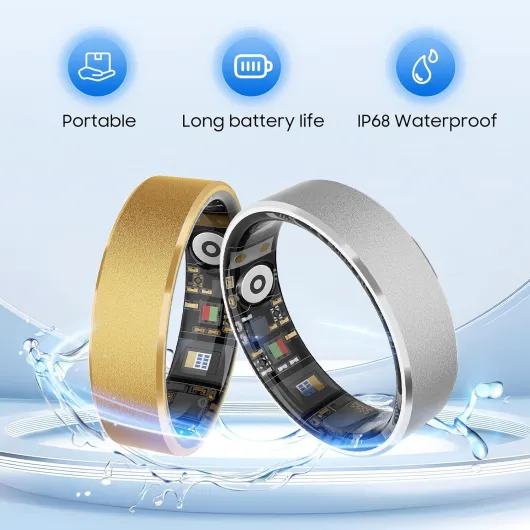
On the durability side, I treated this ring like I treat my normal jewelry: I didn’t baby it, but I also didn’t smash it against concrete on purpose. Over the test period, it handled showers, dishwashing, and a few accidental bumps against door handles and tables. The waterproof claim seems legit for everyday use. I didn’t see any fogging, weird behavior, or random disconnects after water exposure.
The finish held up decently. The black surface didn’t peel or chip, but I did notice a couple of tiny micro-scratches after a while, mostly on the outer edge. Nothing dramatic, you have to look closely to see them, but if you’re super picky about cosmetic marks, just know it’s not scratch-proof. To be honest, most metal rings end up with marks over time anyway, so this didn’t shock me. I’d just avoid wearing it if you’re doing something like heavy manual work or DIY with tools.
Inside the ring, the sensor area stayed clean and didn’t irritate my skin. I made a habit of rinsing it quickly under water and drying it after workouts or on very sweaty days, just to avoid grime build-up. That seemed to be enough. No corrosion, no weird discoloration. The Bluetooth connection stayed stable too; no random drops that would make me think something was failing hardware-wise.
I can’t speak for multi-year durability yet, obviously, but for a normal user over the first months, it feels solid enough. It’s not indestructible, but for regular daily use, including water exposure and a few accidental knocks, it holds its own. If you’re rough with your hands, maybe don’t expect miracles, but for office life, casual sports, and home chores, it behaves like a normal, decent-quality ring with electronics inside.
Tracking performance: decent accuracy, but don’t treat it like a medical device
In terms of health tracking performance, I’d say it’s solid for everyday people who just want an overview, but it’s not for data freaks. For steps, it was in the same ballpark as my smartwatch. On days when I wore both, the difference was usually a few hundred steps, which is normal for these devices. So if your goal is just to know whether you’ve been fairly active or totally lazy, it does the job well enough.
Sleep tracking is where I was the most curious. The ring gives you total sleep time, a breakdown into light and deep sleep, and a kind of sleep score. Compared to my watch, the total sleep duration was usually very close (within 10–20 minutes difference). The exact split between phases (light vs deep) is harder to judge, because honestly, we don’t have a lab to compare. But the trends made sense: on nights when I woke up a lot, the app showed more light sleep and a lower score. On nights when I crashed hard, the score was higher and there was more deep sleep. So for trend tracking, it’s fine.
The ring also gives stress or readiness-style feedback based on your heart data. It’s not presented as hardcore HRV graphs, more like a simple indicator of how recovered or stressed you are. Some days it matched how I felt: after a short night and a busy day, it clearly showed higher stress. Other days it felt a bit random. I’d say treat it as a rough guide, not a scientific truth. If you’re looking to fine-tune training cycles like a pro athlete, this will feel too basic.
One limitation: there’s no GPS, so for running or cycling it just tracks duration and heart-related stuff, not distance or route. If you already use your phone or another watch for that, you might not care. But if you hoped this ring would replace a sports watch fully, it won’t. Overall, performance is “good enough” for normal health tracking: steps, sleep, general stress. Just keep your expectations realistic.
What this smart ring actually offers (beyond the buzzwords)
On paper, the prxxhri VR11 is a smart health ring that focuses on sleep tracking, stress monitoring, and general activity tracking. It connects over Bluetooth to your phone, works on both iOS and Android, and doesn’t require a monthly subscription. That last point is important because some bigger brands charge you every month just to see detailed stats. Here, once you’ve bought the ring, that’s it. You just download the app and you’re good to go.
The product page talks about tracking sleep phases, daily activity, and basic health metrics. In practice, that means you get: sleep duration, light/deep sleep breakdown, resting heart rate, and step counting. There’s also stress or “readiness” style info based on heart rate patterns, but it’s more of a simple score than a full scientific report. The ring doesn’t have GPS, so don’t expect route tracking for your runs; it’s more for general health than for serious sports performance.
The ring is waterproof, so I kept it on in the shower and when washing dishes, and it survived fine. I didn’t go swimming with it for hours, but for daily water contact it behaved like a normal waterproof tracker. The battery is claimed to last around 5 days, and in my case it was roughly between 4 and 5 depending on how often I synced and played with the app. Charging is done with a small included dock; nothing fancy, but it works.
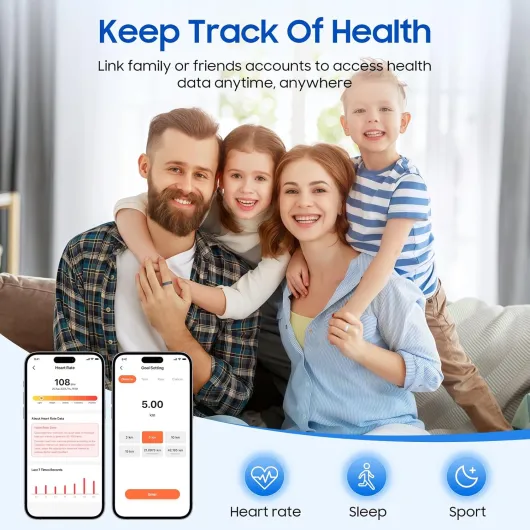
The app is pretty straightforward. You open it, it syncs, and you see a dashboard with sleep, steps, and heart-related data. Don’t expect super polished graphics or tons of advanced metrics like HRV charts over months. It’s more of a simple health overview tool. If you’re okay with that, it gets the job done. If you’re the kind of person who loves digging into detailed data, you’ll feel the limits fairly quickly.
Pros
- Discreet ring format that’s more comfortable and low-profile than a smartwatch for daily and nighttime wear
- No subscription fee: you pay once for the ring and get ongoing access to the app and data
- Solid battery life around 4–5 days with continuous use and sleep tracking
Cons
- App and metrics are more basic than those from bigger, more established brands
- Sizing is critical; if you don’t get the size right, comfort and sensor accuracy can suffer
- No GPS or advanced sports features, so it won’t replace a dedicated sports watch for serious training
Conclusion
Editor's rating
Overall, the prxxhri VR11 smart health ring is a good fit for people who want simple health tracking without wearing a big smartwatch and without paying subscriptions. It tracks steps, sleep, and basic stress or readiness in a way that’s easy to understand, and it does it in a very discreet format. The comfort is good once you get the size right, the battery lasts around 4–5 days, and you can keep it on for showers and everyday life without worrying too much. For everyday users who just want to know if they’re sleeping okay and moving enough, it gets the job done.
It’s not all perfect, though. The brand is relatively unknown, the app is a bit basic compared to the top competitors, and there’s no GPS or advanced sports features. If you’re a serious athlete, a data addict, or someone who wants super detailed health analysis and a very polished app, this will probably feel limited. In that case, paying more for a bigger brand or sticking with a high-end smartwatch might make more sense. But if you just want a low-profile, one-time purchase tracker that lives on your finger and gives you the main health info without extra fees, this ring is a pretty sensible option.