Summary
Editor's rating
Is it worth the money (and the subscription)?
Chunky but discreet: how it looks and feels on the hand
Battery life and charging: mostly lives up to the promise
Comfort and sizing: where things can get tricky
Titanium build: light, skin-friendly, but not scratch-proof
Tracking accuracy and app experience: solid data, fussy software
What you actually get and how it works day to day
Pros
- Very comfortable for 24/7 wear once sized correctly, especially for sleep compared to a watch
- Strong health tracking features (sleep, HR, HRV, temperature, SpO2) with generally solid accuracy
- Good battery life (around a week) and discreet design that looks like a normal ring
Cons
- High upfront cost plus mandatory subscription for full features
- Non-standard sizing with only whole sizes and no adjustability if your finger size changes
- App can feel cluttered and sometimes slow to show clear raw data and long-term insights

Specifications
View full product page →| Brand | OURA |
A health tracker for people who hate watches
I picked up the Oura Ring 4 in silver, size 11, mainly because I’m tired of wearing a chunky watch 24/7. I wanted something that could track sleep, heart rate, and general activity without lighting up my wrist at night or buzzing every five minutes. The ring idea sounded perfect: light, discreet, no screen, and supposedly up to 8 days of battery life. On paper, it ticks a lot of boxes.
I’ve been using it day and night for a few weeks, only taking it off for showers and when I’m doing anything that might scratch it badly, like yard work or lifting metal stuff. So this isn’t a quick unboxing impression; it’s based on actually living with it. I’ll be honest: it’s not perfect, and for the price plus subscription, you really start to notice the little annoyances.
What pushed me to try it over a smartwatch again was mainly sleep tracking and the fact it integrates with apps like Apple Health, Strava, and especially Natural Cycles. I wanted good sleep data and a better idea of recovery and stress without having a mini smartphone on my wrist. The ring promised all that, and most of the time it does deliver decent data.
But there are trade-offs: the sizing is weird, the app leans more towards pretty visuals than quick raw numbers, and the subscription feels a bit like a tax just to see your own health data properly. So in this review I’ll break down what actually works well, what’s just okay, and what annoyed me enough that I’d warn a friend about it before they spend their money.
Is it worth the money (and the subscription)?
This is where things get a bit harder to justify. The Oura Ring 4 is not cheap, especially once you add the ongoing membership fee. You’re paying a premium price for the hardware, and then you’re basically renting full access to your own health data every month. The first month is free, but after that, if you cancel, the ring loses a big chunk of its usefulness. So you’re not just buying a ring; you’re signing up for a long-term cost.
If you compare it to a decent smartwatch, you can often get similar tracking (sleep, HR, activity, SpO2) for the same or less money, usually without a mandatory subscription. On the other hand, those devices are on your wrist, bulkier, and more in-your-face. Where Oura has an edge is the form factor and the 24/7 comfort: if you hate sleeping with a watch and want something discreet that looks like normal jewelry, this fills that niche pretty well.
There are also other smart rings on the market now, some with no subscription and similar metrics, and even one that’s marketed as a medical-grade device. Those alternatives undercut Oura on price and ongoing fees, which makes Oura harder to defend purely on value. You’re basically paying extra for the brand, the app ecosystem, and the polished experience (even if the app isn’t perfect).
So, is it good value? I’d say it depends who you are. If you’re really into tracking sleep, recovery, and cycle data, and you specifically want a ring instead of a watch, then it can be worth it, even if it’s pricey. If you’re just casually curious about steps and sleep, it’s overkill. There are cheaper devices that will give you “good enough” data without locking you into a subscription and without the stress of weird sizing and expensive replacements if your finger size changes.
Chunky but discreet: how it looks and feels on the hand
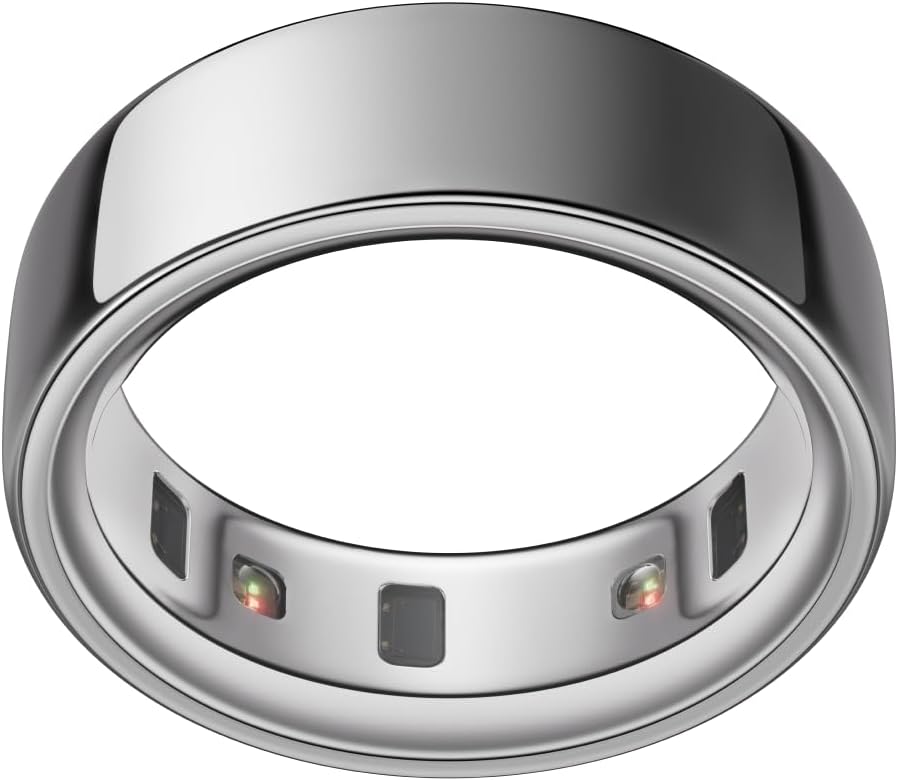
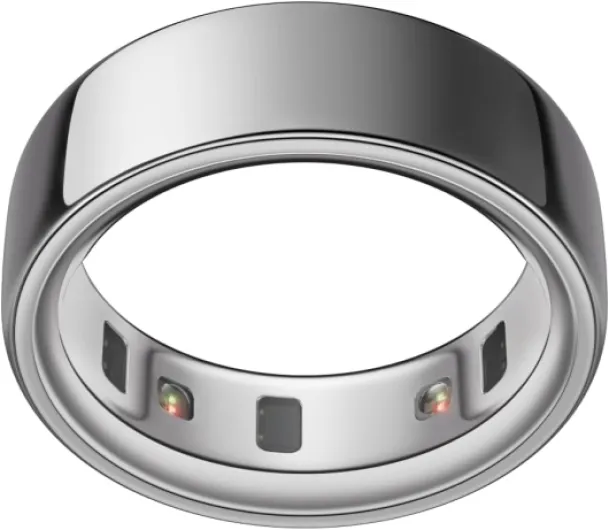
Design-wise, the Oura Ring 4 is basically a thick metal band with sensors on the inside. Mine is the silver model in size 11. It doesn’t scream “tech gadget” the way a smartwatch does. From a distance, it looks like a plain, slightly wide wedding band. Up close, you can see it’s a bit bulkier and not really a fashion piece, but it blends in fine. I’ve had a couple of people compliment it just as a ring, without realizing it’s a tracker.
The shape is fully round, and the interior has these small bumps and sensor windows that sit against the underside of your finger. It’s not razor-thin; if you’re used to very slim jewelry, you’ll notice the thickness for the first couple of days. After about a week, I mostly forgot about it unless I was gripping something tightly like weights or bike handlebars. It will press into your skin a bit in those situations, but not in a painful way, just noticeable.
The silver finish looks clean but does pick up scratches. After a couple of weeks of normal use (computer work, cooking, carrying bags, some light DIY stuff), I could already see fine scuffs. Nothing dramatic, but if you’re picky about keeping things pristine, this will annoy you. One user said it scratches pretty easily, and I agree. The marks aren’t super obvious unless you look closely, but it’s not going to stay perfect for long.
On the upside, because there’s no screen, there’s nothing to crack or shatter. It’s just a metal ring. The lack of lights and vibrations is nice too; it doesn’t flash or buzz during the day or night. If you like your tech quiet and low profile, the design does the job. Just go into it knowing it’s more “plain functional band” than “stylish jewelry piece,” especially in the silver color.
Battery life and charging: mostly lives up to the promise
Battery life is one of the reasons I went for this instead of a smartwatch, and here the Oura Ring 4 does a pretty good job. With 24/7 wear, including sleep tracking, I’ve been getting around 5–7 days per charge, depending on how much I sync and whether I play with the app a lot. The marketing says “up to 8 days,” and I think that’s possible if you’re more conservative and don’t constantly check data. Either way, it’s noticeably better than most watches that need charging every 1–3 days.
Charging is simple: you drop the ring onto the included charging puck, which is shaped so the ring only fits one way. A USB cable plugs into any standard charger. It doesn’t take very long to top up – roughly an hour or so to go from low to full in my experience. I usually just charge it while I’m at my desk once a week or while I shower and get ready. It’s easy to fit into your routine without feeling like you’re babysitting another gadget all the time.
One thing to keep in mind is that battery degradation over time can happen. There’s a review from someone whose daughter had her ring for about a year, and the battery dropped to just a few hours. To Oura’s credit, customer service replaced it, which is good to know, but it also shows that the long-term battery life isn’t guaranteed. You’re relying on support if something goes wrong after months of use.
Overall, I’m happy with the battery situation. It’s quiet, no buzzing or screen lighting up, and you don’t have to plan your life around charging like with some watches. Just factor in that if the battery does go bad after the warranty period, you’re stuck with an expensive dead ring, since you can’t swap the battery yourself.
Comfort and sizing: where things can get tricky
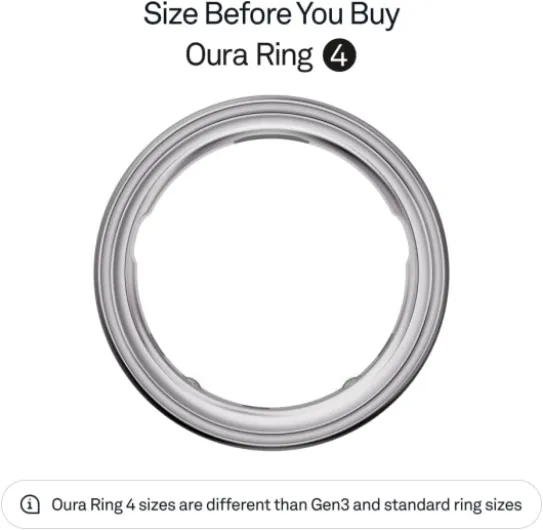
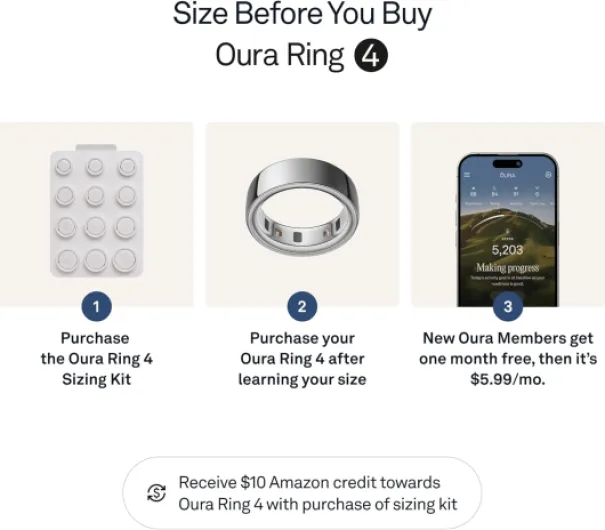
Comfort is mostly good once you nail the size, and that’s the catch. Oura’s sizing is not standard US ring sizing, and they only sell whole sizes, no half sizes. I used the official sizing kit first (which I strongly recommend) and wore two sample sizes over a few days, including overnight. Even with that, you notice that finger size changes during the day – mornings vs evenings, warm vs cold, etc. On some days my ring felt perfect, other times a bit tight or slightly loose.
When the fit is right, comfort is honestly pretty decent. I forget it’s there most of the time, including during sleep. It doesn’t dig into my skin, and I can clench my fist without pain, though if you’re lifting heavy weights or gripping tools, you’ll feel the ring press into your finger. For office work, walking, and sleeping, it’s basically a non-issue.
The problem is that hand swelling is real. If your weight fluctuates, or your hands swell with heat, salt, or manual work, you might end up with a ring that sometimes feels too tight or too loose. One reviewer pointed out that if your size changes, you’re stuck with a pretty expensive piece of hardware that may no longer fit, and that’s accurate. This isn’t like a watch band that you can just adjust a notch or two.
For sleep, I do find the ring more comfortable than a watch. No bulky case on the wrist, no strap marks. Rolling over at night doesn’t wake me up because of it. If you’ve tried sleeping with a smartwatch and hated it, this is a clear upgrade in that specific area. Just don’t skip the sizing kit, and be aware that even with it, some people will end up between sizes and have to live with “good enough” rather than perfect fit.
Titanium build: light, skin-friendly, but not scratch-proof
The ring is made from titanium, which is one of the selling points. In real life, that mainly means two things: it’s very light and generally friendly to sensitive skin. On the weight side, 5.2 grams is nothing; it feels lighter than most normal rings I’ve worn. I don’t get that heavy, clunky feeling you sometimes get with steel bands. If you’re coming from a smartwatch, the difference is big – suddenly your wrist is free and you just have this tiny ring doing the tracking.
On the skin side, I’ve had no irritation, redness, or weird reactions, and I wore it basically 24/7. I’m not hyper-sensitive to metals, but I do react to some cheap alloys. With this, nothing. The inner surface is smooth enough, and the sensors don’t dig into the skin. You can feel the raised sensor pieces if you slide the ring off, but on the finger it just feels like a normal band after a while.
Where titanium doesn’t save it is scratch resistance. The silver coating or finish marks faster than I expected for this price. I haven’t slammed it into concrete or anything, just normal life: typing, grabbing door handles, light housework. After a couple of weeks, I could see fine scratches and a few slightly deeper lines. It still looks okay, but if you’re expecting it to stay like new, that’s not happening unless you baby it and constantly take it off.
In terms of durability overall, I’m not worried about it breaking. No screen, no moving parts, and it’s water resistant, so sweat and hand washing are fine. I personally still take it off for showers and rough work just to minimize damage, but that’s me being cautious. If you want a tracker that doesn’t feel like a fragile gadget, this is pretty solid. Just accept cosmetic wear as part of the deal.
Tracking accuracy and app experience: solid data, fussy software
On the tracking side, the ring does a pretty good job with the core metrics. Resting heart rate, HRV trends, and sleep timing have been fairly close to what I’d expect. Comparing it to a chest strap for workouts or a decent smartwatch, heart rate is usually in the same ballpark. It’s not medical-grade, but for general health and fitness tracking, it’s reliable enough. Several users have said the same: the raw measurements like HR and SpO2 look accurate when compared to manual checks.
Sleep tracking is where Oura pushes hard, and overall I’d say it’s good but not perfect. It usually catches when I fall asleep and wake up pretty accurately. It breaks down light, deep, and REM sleep, plus gives a sleep score. The score often matches how I feel in the morning, which is what matters. That said, I’ve had nights where it misjudged when I actually fell asleep, especially if I was just lying still reading or watching something. One reviewer mentioned issues after recharging, like missing sleep data until the next day; I’ve seen smaller sync quirks like that, though not as extreme.
The app is where I have mixed feelings. It looks nice, but it’s a bit too focused on being pretty. If you want a quick, clean overview of all your numbers on one screen, you’ll be frustrated. You often have to tap into each section (Sleep, Readiness, Activity) to see more details, and some graphs (like SpO2 history) can be slow to appear or just not as clear as they should be. One long review compared it to having to read a whole book just to get the summary, and that’s a fair description.
The readiness and stress-style insights are hit or miss. Sometimes they line up with how I feel and are useful (“maybe take it easy today”), other days they feel generic. Also, some of the deeper insights only unlock after weeks or months of data, which is annoying when you’re still inside the return window and trying to decide if it’s worth keeping. Overall: the sensor hardware feels strong, the app experience is decent but a bit bloated and not as direct as I’d like.
What you actually get and how it works day to day
Out of the box, you get the ring itself, a small charging puck with a USB cable, and the usual quick start papers. Setup is pretty straightforward: install the Oura app, create an account, pair via Bluetooth, and let it update firmware. That part was smooth for me, maybe 10–15 minutes total including updates. First month of membership is free, then it’s a monthly or yearly fee if you want the full insights and history. Without membership, the ring becomes a lot less useful, so you basically have to factor that into the cost.
Function-wise, it’s built to track three main things: sleep, readiness/recovery, and activity. On top of that, it monitors heart rate, HRV, temperature trends, and blood oxygen (SpO2) during sleep. If you’re using it with things like Natural Cycles or Flo, it also helps with cycle tracking by giving continuous temperature data. Compared to a simple step counter, this is more like having a quiet coach in the background looking at trends instead of just daily steps.
In practice, you mostly interact with the app, not the ring. The ring just sits on your finger and collects data. The app shows sleep stages, how long you were in bed vs actually sleeping, resting heart rate, HRV, and some stress/“readiness” scores. It pushes suggestions like “take it easy today” or “you’re ready for a harder workout,” based mostly on sleep and recovery metrics. Some of that is helpful, some of it feels generic after a while.
One thing that bugged me is how the app is laid out. It looks polished, but if you’re the type who just wants to see raw numbers quickly, it can feel like you’re digging through multiple screens. A few users mentioned missing graphs (like SpO2 history not showing up properly) and I’ve had occasional sync quirks where sleep data took a while to appear correctly. It’s not broken, but it’s not as clean and direct as I’d like for something I’m paying a subscription for.
Pros
- Very comfortable for 24/7 wear once sized correctly, especially for sleep compared to a watch
- Strong health tracking features (sleep, HR, HRV, temperature, SpO2) with generally solid accuracy
- Good battery life (around a week) and discreet design that looks like a normal ring
Cons
- High upfront cost plus mandatory subscription for full features
- Non-standard sizing with only whole sizes and no adjustability if your finger size changes
- App can feel cluttered and sometimes slow to show clear raw data and long-term insights
Conclusion
Editor's rating
Overall, the Oura Ring 4 is a solid option if you specifically want a discreet health tracker that lives on your finger instead of your wrist. The hardware is light, comfortable once sized correctly, and tracks the main health metrics (sleep, heart rate, HRV, activity, temperature trends, SpO2) pretty reliably. Battery life is genuinely good at around a week, and the all-titanium build feels sturdy enough for everyday use, even if the silver finish scratches faster than you might like.
Where it stumbles is value and usability. The app looks polished but can be clumsy when you just want quick raw numbers, and some data or insights take weeks or months to unlock, which is annoying when you’re still deciding whether to keep it. The fact that you need a subscription to get the full experience adds a permanent cost on top of an already expensive ring. Add in the non-standard sizing, lack of half sizes, and the risk that finger size changes make the ring useless, and it’s not a simple “buy it and forget it” gadget.
I’d recommend this to people who: hate wearing watches, care a lot about sleep and recovery tracking, want strong integration with apps like Natural Cycles, and are okay paying a premium plus a subscription. If you’re just curious about fitness tracking, or you want the best value for money, I’d point you more towards a good smartwatch or one of the newer smart rings without a subscription. The Oura Ring 4 gets the job done and does some things very well, but it’s not the best choice for every budget or every type of user.