Summary
Editor's rating
Is the TICKR FIT worth the money?
Simple design that focuses on function, not looks
Battery life and charging: strong endurance, annoying cable
Comfort: better than a chest strap, but not totally forgettable
Build quality and how it holds up to sweat and abuse
Heart rate accuracy and connection: the part that actually matters
What the TICKR FIT actually is (and what it isn’t)
Pros
- Comfortable alternative to chest straps with good accuracy for running and cycling
- Very solid battery life (weeks of use between charges for most people)
- Reliable Bluetooth and ANT+ connections to watches, phones, and bike computers
Cons
- Strap can slip slightly during very sweaty or high-movement workouts
- Uses a proprietary charger and has a non-replaceable internal battery

Specifications
View full product page →| Brand | Wahoo Fitness |
A heart rate monitor for people who hate chest straps
I bought the Wahoo TICKR FIT because I was getting tired of chest straps and half-baked wrist readings from my watch. I do a mix of running, indoor cycling, and strength work, and I wanted something that was accurate enough for intervals but not as annoying as a chest band. The idea of an optical sensor on the forearm sounded like a decent compromise between comfort and reliability.
I’ve used it mainly with an Apple Watch and a phone (Strava and Wahoo app), plus a bike computer a few times. Pairing over Bluetooth and ANT+ is what sold me on it, because I like to swap devices depending on the workout. I’ve had it for several weeks, using it 4–5 times a week, mostly 45–90 minute sessions, so I’ve had time to see the good and the bad, not just a first impression out of the box.
In practice, the big question for me was simple: is this actually better than a chest strap for everyday use, and is it more reliable than the optical sensor on my wrist? Short answer: yes, on both points, but it’s not perfect. It does some things really well, and a few things are a bit annoying, especially around the strap and how it behaves when you’re really sweaty or moving a lot.
If you want a no-BS summary: the TICKR FIT is a pretty solid heart rate armband. It tracks well, battery life is strong, and it connects to pretty much everything. But the strap can slip during certain workouts, the charger is proprietary, and for the price there are now a couple of competitors worth looking at too. I’ll break it down section by section so you know exactly what you’re getting into.
Is the TICKR FIT worth the money?
Price-wise, the TICKR FIT sits in that mid-to-high range for heart rate accessories. It’s more expensive than a basic chest strap, and in the same ballpark as other armband-style monitors like the Polar Verity Sense or Scosche options. You’re basically paying for comfort and convenience over a bare-bones chest strap. If you’re on a tight budget and don’t mind the chest strap feel, there are cheaper options that track just as well or even slightly better.
Where it starts to feel like decent value is if you’re frustrated with your watch’s wrist sensor and you’re sick of chest straps. The TICKR FIT fills that gap nicely: good accuracy, very solid battery life, and wide compatibility. The fact that some people have used it for years before the battery gave out shows the engineering is not junk. But it’s also a product from 2018, and in 2026 there are more competitors, so it’s not alone in this space anymore.
Compared to cheaper knock-off armbands, I’d still lean toward this or another known brand. Heart rate data that drops out or jumps around is pointless, and the Amazon reviews for Wahoo are mostly positive (4.3/5 with a few thousand ratings), which matches my experience. If you train regularly and actually look at your numbers, paying a bit more for something that just works most of the time is worth it in my opinion.
If you only do light cardio a couple of times a month and don’t care about precision, this is probably overkill. Your watch sensor is probably enough. But if you’re doing intervals, structured training, or you just like having reliable data without fiddling with a chest strap, the TICKR FIT offers good value for that specific use case. Not a bargain, not overpriced, just fair for what it delivers.
Simple design that focuses on function, not looks
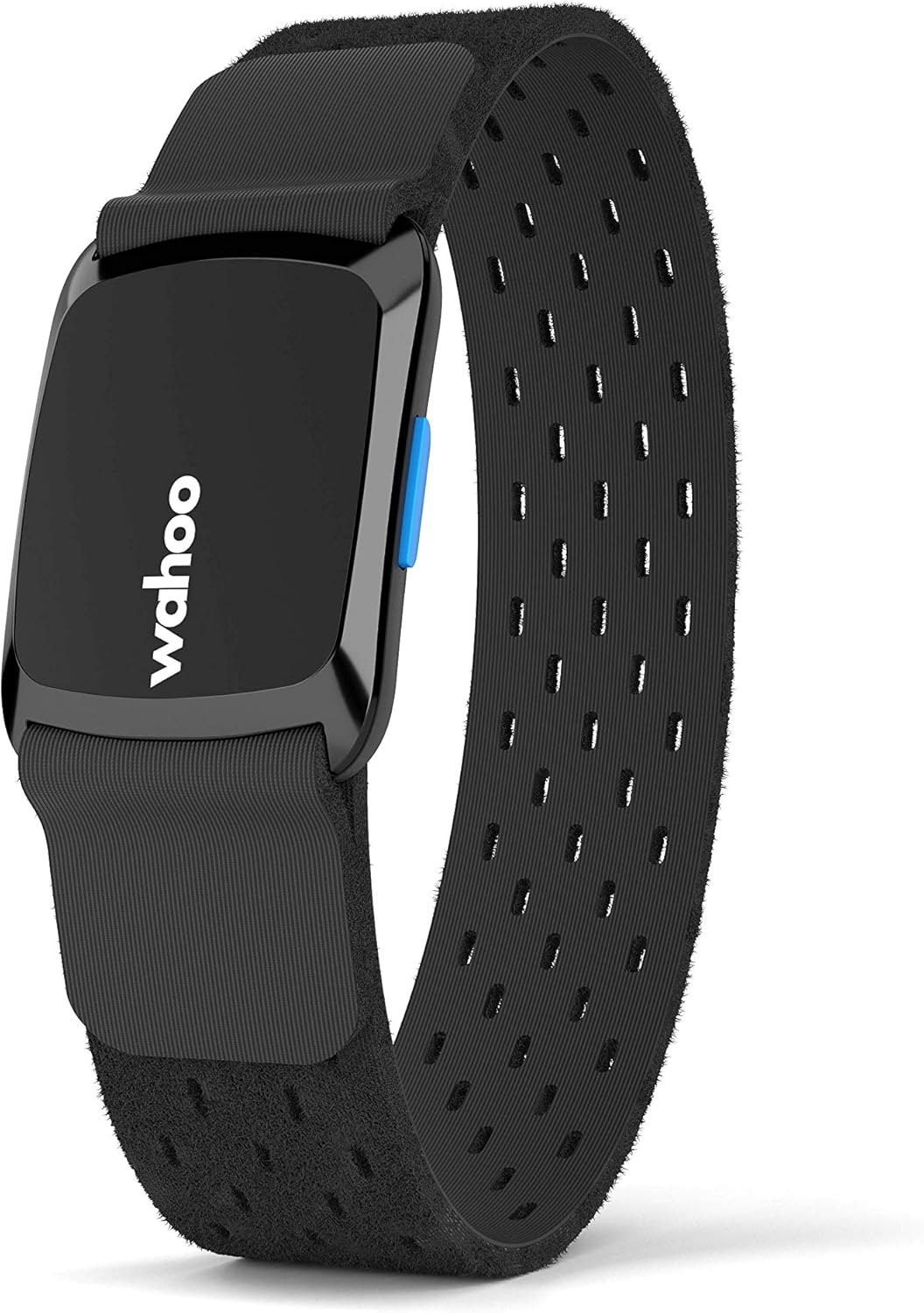
Design-wise, the TICKR FIT is very straightforward. The sensor is a small black plastic piece that snaps into the elastic band. No chrome, no flashy colors, just matte black. Honestly, it looks like a generic piece of gym gear, which is fine by me. Once it’s on your arm, you barely see it under a sleeve anyway. The main thing is that it’s compact and doesn’t stick out or catch on clothing.
There’s one button on the unit and one LED. That’s it. Press and hold to turn it on or off, the LED flashes to show what’s happening: searching, connected, battery getting low. I actually like this minimal approach. You don’t have to learn anything complicated. The only small downside is that you can’t see battery percentage on the unit itself, you have to check in an app or just recharge periodically. Not a deal-breaker, but it could be better.
The straps are Velcro-based, with enough length to fit skinny forearms and larger upper arms. You get two sizes in the box, which is a nice touch. The band is fairly thin and flexible, and the sensor sits flush enough that it doesn’t feel like a big lump on your arm. I usually wear it on the outside of my forearm, about an inch or two below the elbow, and it doesn’t interfere with push-ups, burpees, or holding handlebars.
One design thing worth mentioning: the charging system uses a proprietary magnetic clip that grabs onto the contacts on the back of the sensor. It’s neat and easy to use, but if you lose that cable, you’re stuck until you buy a replacement. I would have preferred USB-C directly, but that’s where we are. Overall, the design is practical: not pretty, not ugly, just focused on doing the job without getting in the way.
Battery life and charging: strong endurance, annoying cable
The battery is one of the strong points. Wahoo claims around 30–35 hours, and that lines up with my experience. I use it about 4–5 times a week, 45–90 minutes each session, and I can easily go several weeks before even thinking about charging. One Amazon reviewer said they got around four months at three sessions a week before needing a recharge, which sounds about right if you’re not hammering it every day.
There’s no screen with a battery percentage, so you either check it in the app or just recharge it every few weeks as a routine. The LED gives a hint when it’s low, but I prefer opening the Wahoo app once in a while to see the exact percentage. Charging itself takes roughly 1.5 hours from low to full, which is fine. You plug the USB into a charger or laptop, clip the magnetic charger onto the back of the unit, and that’s it.
The downside is that the charging cable is proprietary. Lose it, and you’re stuck until you get a replacement. No grabbing any random USB-C cable from your drawer. The charger works well and snaps into place easily, but I’d still prefer a standard port. Also, since the battery is internal, you can’t just swap it like you would with some chest straps that use coin cells. One reviewer mentioned their unit basically died after about five years when the battery stopped charging, which is kind of expected for this type of battery, but still something to keep in mind.
Overall, though, the battery life is very good in real use. You don’t feel like you’re constantly charging another gadget. If you’re doing long events (marathons, long rides), it will easily last through them. For day-to-day training, you basically forget about the battery for weeks at a time, which is exactly what you want from something that’s supposed to be boring and reliable.

Comfort: better than a chest strap, but not totally forgettable
Comfort is where the TICKR FIT really beats traditional chest straps. I’ve always found chest straps a bit annoying: they slide, they feel tight on the ribcage, and in winter they’re a pain to adjust under layers. With this, you just slide it onto your forearm or upper arm and go. No need to wet electrodes, no cold plastic on your chest, and no feeling like you’re wearing a bra band if you’re not into that.
On normal runs and bike rides, I honestly forget it’s there after a few minutes. The strap is soft enough and the sensor is light. The trick is to get the tightness right: snug but not cutting off circulation. The first two or three sessions I had to adjust it a bit to find the sweet spot. Too loose and it slides around when you sweat, too tight and your arm feels slightly compressed, especially on longer sessions over an hour.
During heavy sweat sessions (HIIT, rowing, or circuits with lots of arm movement), I did notice the strap could start to creep a little if I didn’t put it on quite tight. It’s not falling off, but it can rotate or slide a bit on very sweaty skin. One Amazon reviewer mentioned the same thing. Tightening the strap helps, but then you trade a bit of comfort. I ended up placing it slightly higher on the arm (closer to the biceps) for those workouts, which reduced the slipping.
Compared to a smartwatch optical sensor on the wrist, this feels about the same or slightly better in comfort, but the readings are more stable for me. Compared to a chest strap, it’s way less annoying day to day. So it’s not like you forget it exists 100% of the time, but for most workouts, I’d pick this over strapping something around my chest. If you absolutely hate any pressure on your arms, you might not love it, but for most people it’s a good compromise.
Build quality and how it holds up to sweat and abuse
In terms of durability, the TICKR FIT feels decent but not bulletproof. The sensor housing is plastic, but it doesn’t feel cheap or flimsy. I’ve sweated all over it, used it in the rain, and chucked it into my gym bag without babying it, and so far it hasn’t shown any real wear apart from some light marks on the plastic. The water resistance seems enough for heavy sweat and a quick rinse under the tap. One Amazon user even admitted to accidentally putting it through the wash and it survived after drying out, which is reassuring, even if I wouldn’t try that on purpose.
The strap is usually the weak point on this kind of gear, and here it’s okay but not amazing. The Velcro still grips fine on mine, and I like that they include two sizes. Over the long term, elastic always stretches a bit, so I wouldn’t be shocked if it needs replacing after a couple of years of regular use. The good news is that it’s a simple band design, so swapping it out shouldn’t be complicated if Wahoo or third-party sellers offer replacements.
The internal battery is the part that will eventually die. That’s just how lithium-ion works. One reviewer said their unit ran reliably for almost five years before the battery stopped charging. That’s honestly not bad for something that gets used and recharged regularly. Still, once the battery goes, you can’t replace it yourself, so the whole unit becomes electronic waste. If you’re the type who keeps devices for a decade, that might annoy you.
Overall, I’d say durability is good enough for regular athletes. It’s built to handle sweat, daily workouts, and a bit of abuse in a gym bag. Just don’t expect it to be indestructible or last forever, and try not to lose the charger. If you treat it like any other mid-range fitness gadget, it should give you several years of solid use.
Heart rate accuracy and connection: the part that actually matters
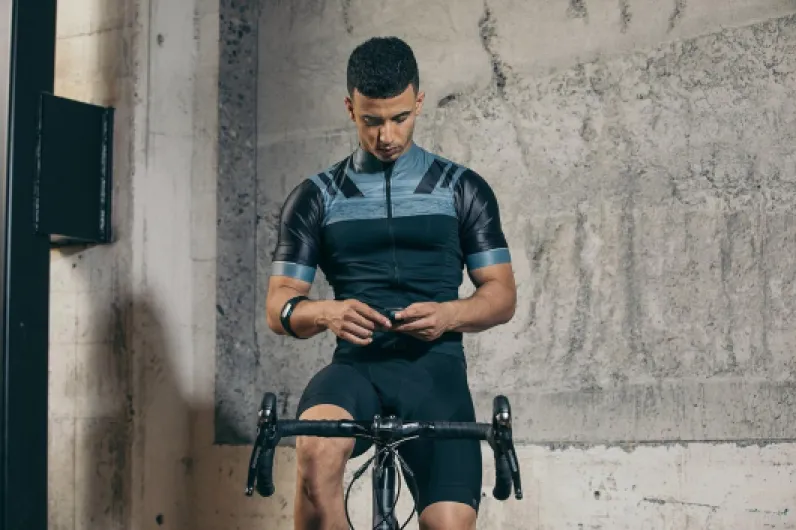
Performance-wise, the TICKR FIT is pretty solid for an optical sensor. I compared it against a chest strap on a few workouts (steady run, intervals, indoor cycling) and the numbers were usually within a couple of beats, sometimes dead on. Where wrist-based sensors often lag when your heart rate jumps up, this one reacts much faster. On intervals, I could see it climb and drop almost in sync with the chest strap, which is what you want if you care about training zones.
The big plus is the connection stability. Paired to my Apple Watch, it just works. I turn it on, start a workout, and it connects. I haven’t had dropouts in normal use. Same story with my phone using Strava and the Wahoo app. The LED makes it easy to see when it’s actually connected so you’re not halfway into a workout before realizing it wasn’t recording. People in the Amazon reviews say the same: once it’s paired, it tends to stay paired.
I did have one or two weird moments during heavy strength circuits with lots of arm flexing where the heart rate briefly spiked or dropped for a few seconds. That could be due to movement or the band shifting a bit. It wasn’t constant, more like a short glitch. For running and cycling, though, it’s been very reliable. If your main use is cardio, it’s good. If you do a lot of CrossFit-style stuff with fast arm movement, you might see the odd hiccup but nothing dramatic.
The other nice thing: it works with a bunch of apps. I used it with Wahoo, Strava, Apple Watch, and a Garmin head unit. No drama. It shows heart rate, calories, and duration correctly, and the data looks consistent from workout to workout. So in practice, if you want a no-fuss heart rate source that’s more accurate than your watch and more comfortable than a chest strap, this does the job well. Not perfect like an ECG strap, but close enough for most people who aren’t doing lab tests.
What the TICKR FIT actually is (and what it isn’t)
The Wahoo TICKR FIT is basically an optical heart rate sensor on an armband that you wear on your forearm or upper arm. It connects via Bluetooth and ANT+, so you can use it with phones, tablets, watches, bike computers, and most fitness apps. It doesn’t try to be a full watch or fitness tracker: there’s no screen with stats, no step count, no GPS. It’s just there to send heart rate data and calories to whatever device or app you’re already using.
In the box you get the sensor, two straps (small and large), and a magnetic USB charger. That’s it. The sensor itself is a small plastic module with a single button and a status LED. The LED shows whether it’s searching, connected, or reading heart rate. It sounds basic, but that’s actually enough: you can see at a glance if it’s on and paired without digging into menus on your watch or phone.
According to Wahoo, the battery life is up to around 30–35 hours, it’s water-resistant (not meant for swimming laps, but fine for sweat and rain), and it charges via a specific clip-on charger. No replaceable coin cell like a classic chest strap — this is a rechargeable lithium-ion battery. It also integrates well with the Wahoo Fitness app if you want to use that to record workouts directly.
So if you expect a full smartwatch, this isn’t it. Think of it as a dedicated heart rate accessory that feeds cleaner data into the devices you already own. That’s where it makes sense. If you like to track workouts with your phone, or you have an Apple Watch / Garmin that’s bad at high-intensity heart rate, this is the type of product that fills that gap. If you don’t care about heart rate or already love your chest strap, it’s probably not going to change your life.
Pros
- Comfortable alternative to chest straps with good accuracy for running and cycling
- Very solid battery life (weeks of use between charges for most people)
- Reliable Bluetooth and ANT+ connections to watches, phones, and bike computers
Cons
- Strap can slip slightly during very sweaty or high-movement workouts
- Uses a proprietary charger and has a non-replaceable internal battery
Conclusion
Editor's rating
The Wahoo TICKR FIT is a solid choice if you’re stuck between hating chest straps and not trusting your watch’s heart rate readings. It sits comfortably on the forearm or upper arm, connects reliably to phones, watches, and bike computers, and delivers heart rate data that’s close enough to a chest strap for most people. Battery life is one of its best points: you can go weeks without charging, and when you do, it’s done in about an hour and a half. For regular runners, cyclists, or gym users who actually look at their heart rate zones, it gets the job done without much fuss.
It’s not perfect. The strap can slip a bit when you’re really sweaty or doing a lot of arm-heavy movements, the proprietary charger is easy to misplace, and long-term you’re limited by the internal battery’s lifespan. There are also other armband options on the market now, so it’s not the only choice. But overall, it’s a reliable, comfortable middle ground between cheap wrist sensors and more annoying chest straps.
If you train several times a week, care about reasonably accurate heart rate during intervals, and want something you can forget about most of the time, the TICKR FIT is a good fit. If you’re on a budget, don’t mind chest straps, or only casually look at your heart rate, you can save money with a simpler strap or just stick with your watch and accept the limitations.