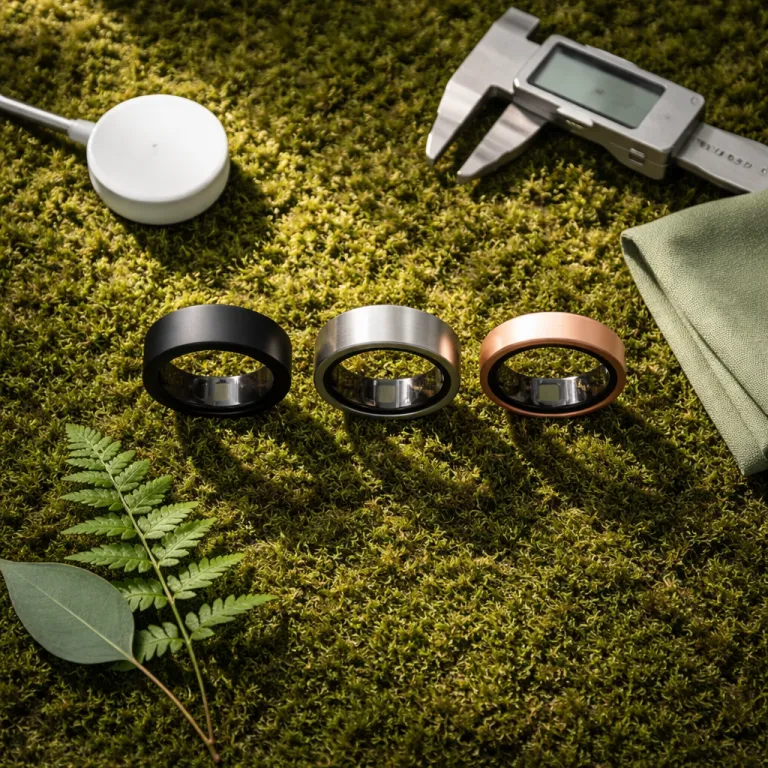
Why a smart ring might be the best fitness tracker for your life
A smart ring looks like simple jewellery but quietly behaves like a lab on your finger. For many people it is the best smart alternative to a chunky watch, especially if you care more about sleep and recovery than step trophies. If you already feel overwhelmed by fitness tracker options, narrowing your search to smart rings can instantly calm the noise.
Every modern smart ring uses optical sensors inside the ring to track heart rate, heart rate variability, skin temperature and movement during both day and night. Because the ring sits on arteries in your finger rather than on the bony wrist, these smart rings often collect cleaner data for sleep tracking and overnight health metrics than a typical fitness tracker band. That is why serious sleep researchers often treat the Oura Ring as a benchmark when they validate new devices against medical grade equipment.
The trade off is clear though, because no ring can replace a full sports watch or an Apple Watch for real time workout metrics. A ring smart device has no screen, no GPS and no wrist based controls, so you will not see pace, distance or live heart rate while you run or ride. If you want the best of both worlds, you can wear a smart ring for 24 hour health tracking and keep a watch or band only for training sessions.
Oura Ring 4: accuracy benchmark with an expensive subscription tail
The Oura Ring 4 is still the reference point when people ask about the best smart ring for sleep tracking accuracy. In independent validation studies its HRV data has reached a concordance correlation coefficient close to 0.99, which is unusually high for a consumer fitness tracker. In real life that means its nightly readiness and sleep scores usually match how your body actually feels when you wake up.
Oura’s app leans hard into health coaching, turning raw data from the ring into three daily scores for readiness, sleep and activity. The oura ring tracks heart rate, skin temperature, respiratory rate and movement, then uses that data to flag early signs of illness or overtraining across several days. For many buyers this is the best smart balance between deep health insights and a clean, simple interface that does not drown you in charts.
The catch is the subscription, which is no small detail once you add up the cost over time. Without an active Oura subscription you only see three basic scores from the ring and lose detailed sleep staging, long term trends and most advanced features. If you keep the oura ring for three years, the combination of the initial price and the ongoing subscription can easily exceed the cost of a high end Apple Watch or a premium Garmin fitness tracker with strong sleep tracking features, as detailed in many independent sleep tracker comparisons such as this overview of top fitness trackers with sleep tracking.
RingConn Gen 2 and Ultrahuman Ring Pro: no subscription, long battery life
If you hate subscriptions, RingConn Gen 2 and Ultrahuman Ring Pro are the main smart rings worth a close look. Both brands returned to the United States market after patent disputes with Oura, and both now offer serious alternatives for buyers who want the best smart ring without a monthly fee. In practice they trade a little polish for better value and longer battery life.
RingConn Gen 2 focuses on premium build quality, a comfortable ring size range and a generous charging case that doubles as a power bank. In testing the ringconn gen 2 battery has lasted up to seven days per charge, even with continuous heart rate and sleep tracking enabled. The RingConn app gives you detailed health data without a subscription, including stress scores, recovery indicators and multi day trends that rival what you see in the Oura app.
Ultrahuman Ring Pro takes a slightly different angle, leaning into metabolic health and pairing the ultrahuman ring with its optional continuous glucose monitoring service. In Chill Mode the ring air style design can last around fifteen days, while Turbo Mode with more frequent tracking drops battery life closer to twelve days. If you want a smart ring that nudges you about late night snacking, caffeine timing and circadian rhythm, Ultrahuman’s coaching style may feel more helpful than the more neutral tone of Oura or RingConn.
For buyers who care about bright displays on other wearables, it is worth noting that none of these rings have an AMOLED screen like the watches covered in this guide to top fitness trackers with AMOLED display. That is the trade you accept for tiny size, light weight and multi day battery life on your finger.
Samsung Galaxy Ring and the limits of smart ring features
The Samsung Galaxy Ring is the newest big brand entrant and it shows how fast this category is maturing. Paired with a recent Samsung Galaxy phone and a Galaxy Watch, the galaxy ring integrates tightly into Samsung Health, sharing sleep, heart rate and activity data across your devices. For Android users already deep in that ecosystem, this ring smart option can feel like the best smart extension of what they own.
There are caveats though, starting with platform lock in and ongoing patent pressure from Oura. The samsung galaxy ring currently works best with Samsung phones, and some health features are limited or unavailable if you pair it with other Android devices. On top of that, the legal battle with Oura over ring patents and design means availability and long term support still carry more uncertainty than with a mature oura ring or ringconn gen 2.
Feature wise, the Galaxy Ring still faces the same physical limits as every other smart ring. You get strong sleep tracking, continuous heart rate and skin temperature trends, but you do not get on device GPS, music control or the rich app ecosystem you see on an Apple Watch. If you want a single device that handles notifications, contactless payments and detailed workout tracking, a watch or band remains the better fitness tracker, while the smart ring stays focused on quiet, background health monitoring.
Sizing, comfort and battery life: what daily wear really feels like
Getting the right ring size is the most underrated part of buying any smart ring. A ring that is too loose will wobble and break the optical contact needed for accurate heart rate and sleep tracking, while a ring that is too tight will feel uncomfortable after several days of wear. That is why serious brands insist on sending a sizing kit before they ship your final ring.
Oura, RingConn and Ultrahuman all use a free sizing kit with plastic sample rings so you can test different sizes for a few days. You should wear the sample ring on your index or middle finger, both day and night, to see how the size feels during sleep, exercise and normal daily activity. Pay attention to how your fingers change size in the morning or in hot weather, because that will affect which ring size gives you both comfort and reliable tracking.
Battery life and charging habits also shape how invisible a smart ring feels in real life. Oura Ring 4 typically lasts four to six days per charge, RingConn Gen 2 often stretches to seven days and Ultrahuman Ring Pro can reach up to fifteen days in its most efficient mode. All three ship with a charging case or dock, but RingConn’s charging case doubles as a portable battery so you can top up the ring during travel without hunting for a cable.
What you gain and lose versus a watch, and who a smart ring suits best
Compared with an Apple Watch, a Garmin Forerunner or a Fitbit Charge, a smart ring gives you less control but more freedom. You lose the ability to glance at your wrist for pace, distance or live heart rate during a workout, and you cannot respond to notifications or calls from a ring. In exchange you gain a tiny device that vanishes on your finger, tracks sleep and health quietly and never tempts you to scroll.
For many people that trade is worth it, especially if their main goal is better sleep, lower stress and a clearer picture of long term health trends. Smart rings like the oura ring, ringconn gen 2 and ultrahuman ring excel at overnight metrics such as HRV, resting heart rate and skin temperature, which can flag illness or burnout before you feel obviously unwell. They also pair well with a simple analogue watch or a basic sports band, letting you separate health tracking from the constant buzz of notifications.
If you are deeply into structured training, interval workouts or outdoor navigation, a dedicated fitness tracker watch still makes more sense as your primary device. You can then add a smart ring as a second sensor focused on sleep tracking and recovery, using its data to fine tune how hard you push on any given day. For a deeper look at how different business models shape these devices, including subscription heavy platforms like Whoop, this analysis of the real value behind Whoop’s valuation in the fitness tracker industry is a useful companion read.
Key figures and trends in the smart ring market
- Market analysts estimate that global shipments of smart rings reached several million units recently, reflecting rapid growth from a niche category into a mainstream health accessory.
- Independent lab tests have shown that leading rings such as Oura can achieve heart rate variability correlations above 0.9 compared with medical grade equipment, which is unusually high for consumer wearables.
- Battery life across major smart rings typically ranges from four to fifteen days per charge, significantly longer than most full featured smartwatches that often need daily or near daily charging.
- Subscription costs for some smart ring platforms can add the equivalent of another device purchase over a three year period, which makes no subscription options financially attractive for budget conscious buyers.
- Studies comparing finger based and wrist based sensors suggest that rings often provide more reliable overnight heart rate and temperature readings, while wrist devices remain better suited to real time workout tracking.
FAQ about choosing the best smart ring
Is a smart ring more accurate than a smartwatch for sleep tracking ?
For sleep tracking and overnight metrics, many tests show that smart rings can be more accurate than wrist based devices. The sensors sit over arteries in the finger, which often gives cleaner heart rate and temperature signals. That said, accuracy still varies by brand, with Oura, RingConn and Ultrahuman generally performing better than cheaper, unbranded rings.
Can a smart ring replace my fitness watch for workouts ?
No, a smart ring cannot fully replace a dedicated sports watch or advanced fitness tracker for serious workouts. Rings do not have built in GPS, large displays or robust workout modes, so they cannot show pace, distance or live heart rate during intense sessions. Many people use a ring for 24 hour health tracking and keep a watch only for exercise.
How long does the battery life of a smart ring usually last ?
Battery life depends heavily on the model and how often it records data. Oura Ring 4 typically lasts four to six days, RingConn Gen 2 can reach around seven days and Ultrahuman Ring Pro can stretch up to fifteen days in its most efficient mode. All major brands include a compact charging case or dock to make topping up easier.
Do I really need a subscription with a smart ring ?
Some smart rings, such as Oura, lock many advanced insights and historical trends behind a monthly subscription. Without it you still get basic scores but lose detailed sleep stages, readiness breakdowns and long term analytics. Other brands like RingConn and Ultrahuman currently offer full access to your data without any subscription, which can save a lot over several years.
How should I choose the correct ring size for a smart ring ?
The safest approach is to use the free sizing kit that reputable brands send before shipping the actual ring. Wear the sample ring on your index or middle finger for several days, including overnight, to see how it feels in different temperatures and during activity. The correct ring size should slide on easily, feel snug but not tight and stay stable enough that the sensors maintain contact with your skin.
