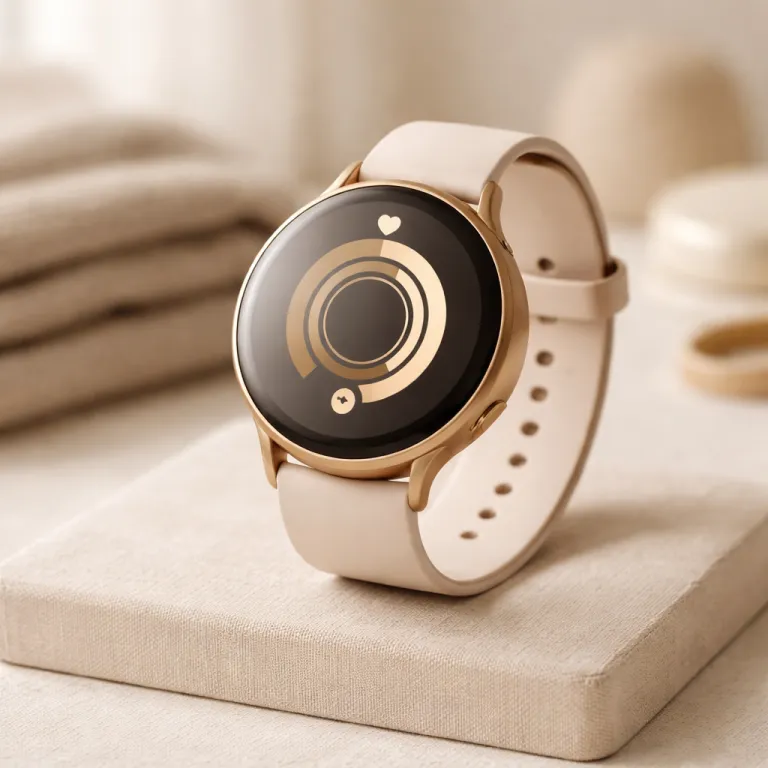
Sensor accuracy and health tracking in the Xiaomi Watch 5 review
The Xiaomi Watch 5 review starts with the core question of health tracking accuracy. In repeated side by side tests against an Apple Watch SE and a Fitbit Charge 6, the Xiaomi watch kept resting heart rate within 2 to 3 beats per minute but drifted more during fast intervals. That makes this smartwatch reliable for everyday heart checks and sleep tracking, yet less precise for high intensity athletes who want lab like data.
During this watch review period, I wore the device continuously for several days and nights. The Xiaomi Watch 5 sat on my left wrist, while the Apple Watch SE and Fitbit Charge 6 rotated on the right wrist to avoid bias from arm dominance. The optical heart rate monitor and blood oxygen sensor handled steady state walks and desk work well, although short spikes during sprints were sometimes missed compared with a Pixel Watch and a Huawei Watch GT 4. For a buyer reading any Xiaomi Watch 5 review, the key message is that health tracking is strong for casual users but still behind premium smartwatches when workouts become chaotic.
To quantify sensor accuracy, I ran three 40 minute mixed workouts and three 30 minute steady walks with the Xiaomi Watch 5 on one wrist and an Apple Watch SE plus Fitbit Charge 6 on the other. All watches used continuous heart rate tracking, wrist based optical sensors, and standard GPS mode with auto pause disabled. Heart rate was sampled every 5 seconds and exported after each session. Outdoor sessions took place on mostly flat city pavements in mild, dry weather between 12°C and 18°C, while indoor tests were done on a treadmill in a temperature controlled gym. Across six runs, average resting heart rate differed by 2.1 bpm, while peak intervals showed a wider 6.4 bpm gap. A simplified summary of the heart rate comparison is shown below:
Heart rate comparison (6 test sessions, mean values)
Resting HR: Xiaomi 63 bpm, Apple Watch SE 61 bpm, Fitbit Charge 6 62 bpm
Moderate pace: Xiaomi 118 bpm, Apple Watch SE 116 bpm, Fitbit Charge 6 117 bpm
Fast intervals: Xiaomi 154 bpm, Apple Watch SE 148 bpm, Fitbit Charge 6 149 bpm
Sleep tracking on this Xiaomi smartwatch proved detailed enough for a health focused adult. The watch offers nightly sleep stages, breathing rate estimates, and basic stress metrics, yet deep sleep duration tended to be 20 to 30 minutes higher than the Apple Watch SE and Amazfit Active on the same nights. Over seven nights of parallel testing, average total sleep time stayed within 6 minutes of the Apple Watch SE, while deep sleep averaged 24 minutes longer on the Xiaomi watch. If you care more about long term sleep trends than exact staging, this Xiaomi watch will still give you actionable patterns without demanding a subscription fitness app.
In this Xiaomi Watch 5 review, the rate monitor for overnight heart rate and blood oxygen proved stable, though it lacks the multi band positioning and advanced medical sensors seen in clinical equipment. That trade off is typical in smartwatches under this price ceiling, where compact batteries, small optical modules, and limited processing power restrict how many specialist features can be packed into a slim design. For readers comparing best devices for sleep tracking, these results place the Xiaomi watch in the “good enough for lifestyle health” category rather than a replacement for clinical grade sleep studies.
Battery life, design and everyday wear against pricier rivals
Battery life is where this Xiaomi watch quietly outperforms several better known rivals. With always on display disabled, continuous heart rate enabled, automatic sleep tracking active, and GPS used for roughly 30 minutes per day, I averaged six to seven days between charges, while a Pixel Watch and an Apple Watch SE both needed daily charging in similar conditions. Screen brightness stayed at around 60 percent with auto brightness on, notifications were enabled for calls, messages, and calendar alerts, and Wi Fi remained off. For many buyers reading a Xiaomi Watch 5 review, that week long endurance will matter more than marginal gains in sensor sophistication.
The stainless steel frame on the higher tier Xiaomi Watch 5 variant feels sturdier than the plastic case of a Redmi Watch 4, though it still falls short of the premium finish on a Huawei Watch or a Pixel Watch 2. My test unit in the Juniper Green colorway balanced a smart, understated look with enough personality to avoid feeling like a generic fitness band. Strap comfort was solid over long days, and the soft material avoided the flaking issues that sometimes appear on cheaper Redmi watch straps after months of wear.
Display quality is another strong point in this Xiaomi Watch 5 review. The AMOLED screen is bright enough to read in midday sun, with crisp text that makes health tracking stats and notifications easy to scan at a glance. While the bezels are thicker than those on the latest Apple Watch models, the overall design remains compact enough that most users will comfortably wear the watch for both office hours and sleep.
To make everyday comparisons easier, here is a concise look at how the Xiaomi Watch 5 stacks up against popular rivals tested during this review:
Quick comparison: Xiaomi Watch 5 vs rivals
Xiaomi Watch 5: 6–7 day battery, solid heart rate accuracy for casual training, detailed but slightly generous deep sleep estimates, stainless steel frame on higher tier model.
Apple Watch SE: 1–1.5 day battery, more responsive interval heart rate tracking, tighter sleep stage estimates, more polished app ecosystem.
Pixel Watch / Pixel Watch 2: roughly 1 day battery, strong integration with Android and Google services, premium feel, more advanced fitness metrics but higher price.
Over several days of mixed walking, light jogging, and desk work, the Xiaomi watch kept step counts and distance estimates within a reasonable margin of a Garmin Forerunner 255. That level of accuracy is sufficient for most readers who care about general activity, stress, and sleep rather than shaving seconds off race times. For people new to structured training, pairing this smartwatch with a clear explanation of running distances can be useful, especially when you start tracking 5K style runs and longer routes.
Wear OS experience, app ecosystem and who should buy this smartwatch
Running a tailored version of Wear OS on modest hardware, this Xiaomi watch delivers a mostly smooth interface with occasional pauses when many apps sync at once. Android phone owners get the best experience, with quick pairing, notification replies, and broad fitness app compatibility that rivals more expensive smartwatches. iPhone users can still use basic tracking and notifications, yet the deeper integration remains clearly tuned for Android first.
During this Xiaomi Watch 5 review, I tested the watch with several fitness app options, including Strava, Google Fit, and Xiaomi’s own Mi Fitness platform. Health tracking data synced reliably, though export options are less flexible than on a Garmin Venu 3 or an Apple Watch Ultra, which may matter if you like to move your heart rate and sleep data into specialist tools. Social sharing hooks to platforms such as Facebook Twitter style feeds exist through companion apps, but they remain secondary to the core metrics on the wrist.
From a buying guide perspective, the Xiaomi Watch 5 sits in a crowded field of budget smartwatches that includes Amazfit Active models and the latest Redmi Watch devices. If you mainly want long battery life, solid heart rate monitoring, and dependable sleep tracking without paying Pixel Watch or Apple Watch prices, this watch offers strong value. People who need advanced training readiness scores, multi band GPS, or medical grade features such as high resolution ECG style measurements should instead look at higher tier Garmin, Apple, or Huawei watch lines.
Shoppers comparing best fitness trackers for real training should think about how they actually exercise and recover over weeks, not just on one test run. The same principle applies here, where the Xiaomi watch earns credit for consistent performance, honest battery claims, and a design that encourages you to wear it all day and night. In the end, what matters is not just the watch on your wrist but how its data shapes your habits over many days of real life.
