Summary
Editor's rating
Value: strong watch, strong price, not for casual step counters
Big wrist presence, bright screen, and that orange band
Battery life: finally an AMOLED watch you don’t have to baby
Comfort: big watch, surprisingly wearable, but not for every wrist
Titanium, sapphire, and built like it’s meant to be abused
GPS, training tools, and everyday performance on the wrist
What this watch actually offers in real life
Pros
- Strong battery life even with bright AMOLED and regular GPS use
- Robust build with titanium bezel and sapphire glass, suitable for outdoor and sports abuse
- Very complete training, navigation, and health features including multi-band GPS and training readiness
Cons
- High price, especially if you won’t use the advanced sports and outdoor features
- Large 51 mm size can be uncomfortable or look oversized on smaller wrists
Specifications
View full product page →| Brand | Garmin |
| Operating System | Garmin OS |
| Memory Storage Capacity | 32 GB |
| Special Feature | Activity Tracker, GPS, Multisport Tracker, Notifications, Touchscreen |
| Battery Capacity | 500 Milliamp Hours |
| Connectivity Technology | Bluetooth, USB, Wi-Fi |
| Wireless Communication Standard | Bluetooth |
| Battery Cell Composition | Lithium Polymer |
Big, bright, and built for people who actually use their watch
I’ve been using the Garmin fēnix 8 (51 mm, AMOLED, titanium with the orange/graphite band) as my main watch for a few weeks. Before this, I was on a fēnix 6X Pro, so I’m not new to Garmin, and I mainly run, hike, and do some strength work, plus a bit of open-water swimming in summer. I’m not a sponsored athlete, just someone who likes having data that actually helps me train and not just another notification screen on my wrist.
The short version: this thing is big, bright, and loaded with features. Garmin pushed the smartwatch side a bit more (phone calls from the wrist, voice stuff, off-grid commands), but it still feels like a sports/outdoor watch first. If you’re looking for a slim, discreet smartwatch that slips under a shirt cuff, this is not it. On my medium wrist, the 51 mm case is very present, borderline overkill if you’re just walking and counting steps.
What really stands out in daily use is the AMOLED screen and the battery life. Most AMOLED watches I’ve tried (Apple Watch, Wear OS stuff) either die fast or need half the features turned off. Here, even with always-on display, GPS activities a few times a week, and constant notifications, it still goes well beyond what I expected. It’s not magic, but it’s clearly better optimized than most smartwatches I’ve used.
It’s not perfect though. The price is high, the software menus are still very “Garmin-ish” (lots of options buried in submenus), and if you’re not into training or outdoor navigation, a cheaper Forerunner or even something like a Venu will probably make more sense. But if you live outside, train a lot, or dive into detailed stats, this fēnix 8 starts to feel like a tool you actually use, not just a gadget you charge every night.
Value: strong watch, strong price, not for casual step counters
Let’s talk value for money. The fēnix 8 in this 51 mm titanium/sapphire/AMOLED version is clearly in the high price range. You’re paying for premium materials, long battery, and a huge list of features. If you only want step counting, simple notifications, and the odd 5K run, I’d say this is overkill and you’re better off with a cheaper Garmin or even a basic fitness tracker. The watch really makes sense if you actually use the training, navigation, and durability aspects.
Compared to cheaper Garmin lines like the Forerunner series, you’re basically paying extra for the tougher build, the flashlight, the dive rating, and the fēnix “do-everything” identity. If you’re not diving, not doing serious hiking with maps, and don’t care about titanium or sapphire, a high-end Forerunner will probably give you most of the core features for less money. On the other hand, if you want one device that covers running, cycling, hiking, maybe some diving, plus daily wear, this starts to justify itself more.
Against other brands (Apple Watch, Wear OS), the value depends on your priorities. If you’re deep into the Apple ecosystem and mostly want apps, fancy animations, and tight phone integration, the fēnix will feel a bit clunky. But if your priority is battery life, GPS accuracy, and training tools, I’d say this holds its own despite the price. You pay a lot once, but you get a watch you don’t feel the need to replace every year.
Personally, I think it’s good value for serious users, average value for casual ones. It’s not a bargain, and there are better deals if you don’t need everything it offers. But if you’re the type who runs, hikes, maybe dives, likes to geek out on training data, and wants a watch that can take a beating, then the high price is at least backed up by real, useful features and solid build quality, not just branding.
Big wrist presence, bright screen, and that orange band
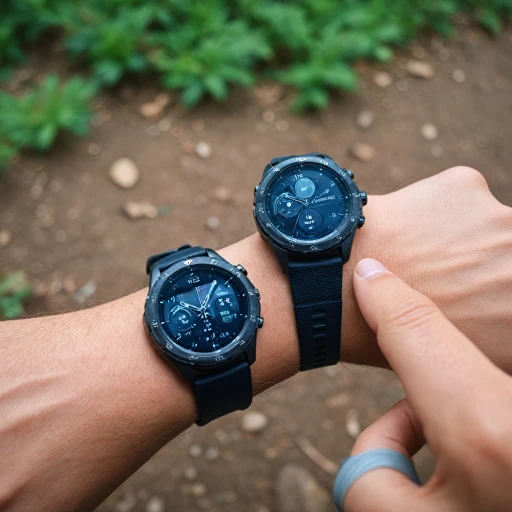
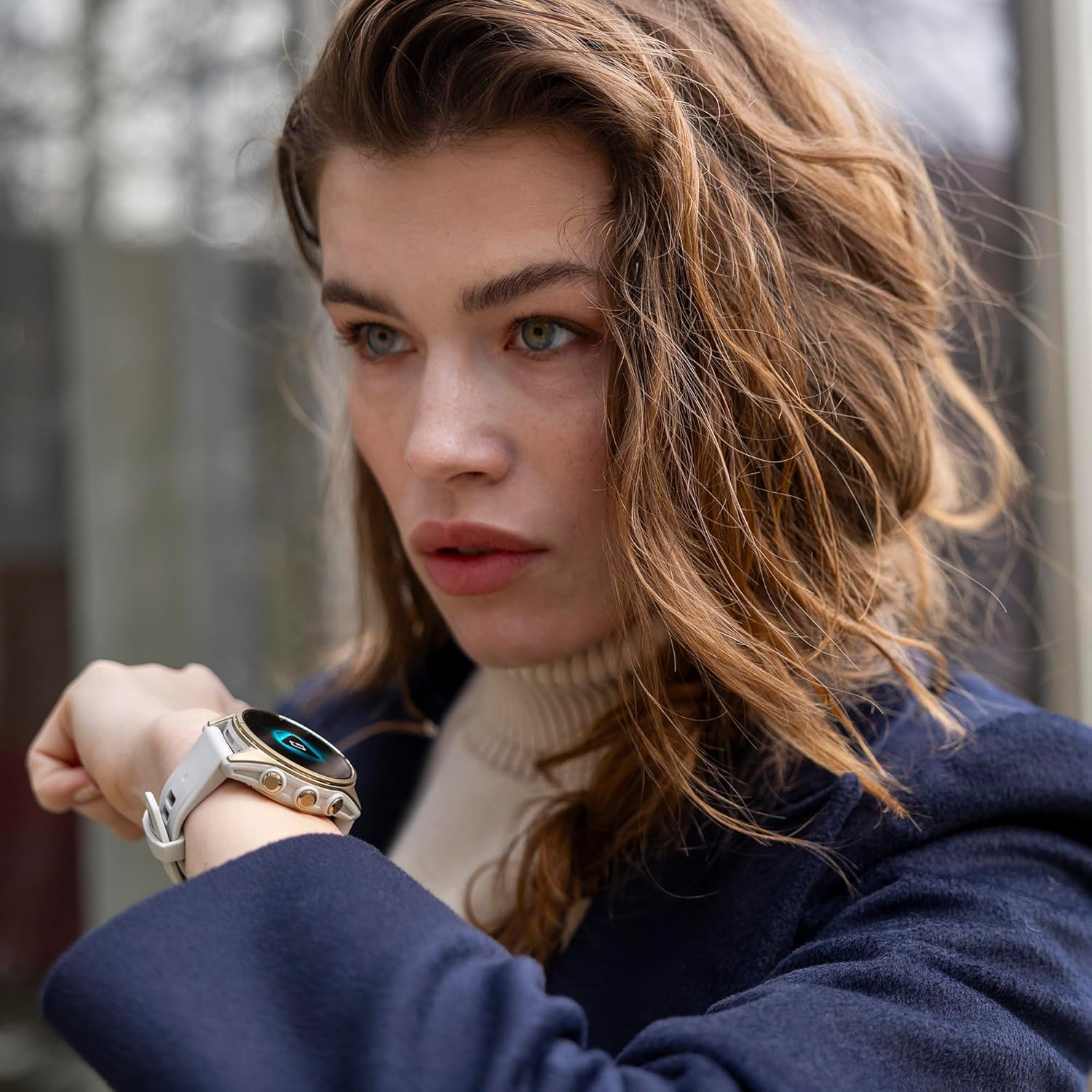
Design-wise, the 51 mm fēnix 8 is unapologetically large. On my 17 cm wrist, it covers a big chunk of the top. If you’re used to smaller watches or something like an Apple Watch 41/45 mm, this will feel like a tank at first. After a few days I got used to it, but it definitely looks like a sports/outdoor watch, not a dress piece. If you wear tighter shirts, the cuff will catch on it pretty often.
The AMOLED display is genuinely nice in daily use. Bright, sharp, and easy to read in full sun on a run. Compared to the old transflective screens on previous fēnix models, this is just easier on the eyes. Maps finally look decent, data fields are clean, and at night you don’t have to rely on a dim backlight. The downside is that it feels a bit more like a gadget visually, less “classic watch”, especially with colorful watch faces.
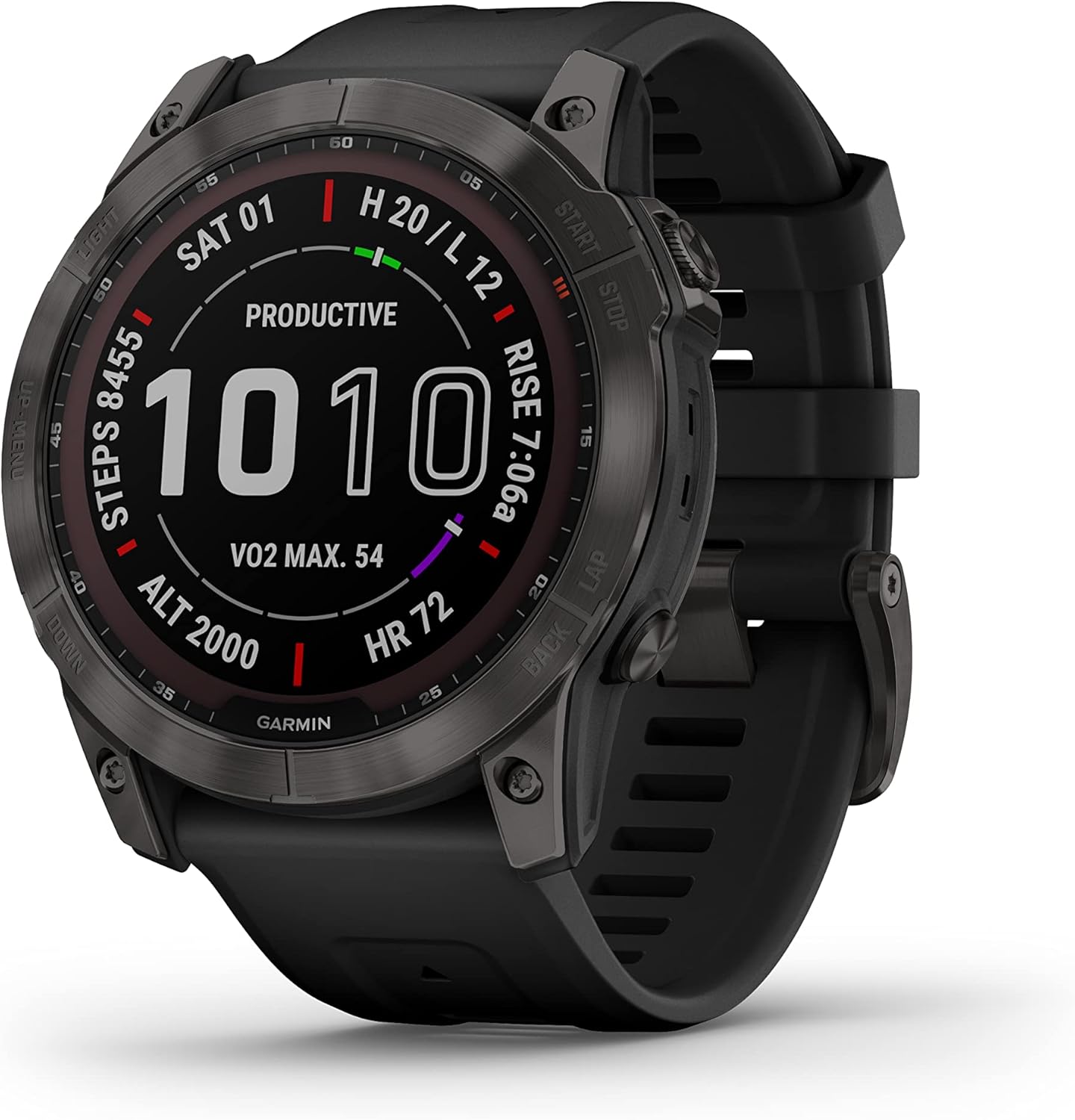
The titanium bezel with the orange/graphite band gives it a sporty look. I actually like the orange; it makes it clear it’s a training watch, not pretending to be a dress watch. The buttons are metal and feel solid, with good click feedback. No mushy feel, even with wet hands. Garmin also kept the five-button layout plus touchscreen, which I prefer to full touchscreen on serious sports watches. During a sweaty interval session or with gloves, buttons just work better.
In daily life, people do notice it. I had a couple of coworkers ask if it was some kind of military watch because of the size and the flashlight. If you want something low profile, this isn’t it. But if you like that “gear” look and want a watch that clearly signals you’re into outdoor stuff or endurance sports, the design fits that role pretty well.
Battery life: finally an AMOLED watch you don’t have to baby
Battery is one of the main reasons I stick with Garmin, and the fēnix 8 keeps that trend going even with the AMOLED screen. Garmin claims up to 29 days in smartwatch mode and up to 84 hours in GPS mode, obviously under ideal conditions. In my real use (always-on display, notifications on, about 4–5 hours of GPS activities per week, Pulse Ox off at night, occasional music over Bluetooth), I was getting around 14–16 days per charge. That’s still very good for an AMOLED watch.
On a weekend with heavy GPS use (two long runs and a hike, about 7 hours total GPS), the battery dropped faster but still didn’t feel stressful. I finished the weekend with more than half the battery left, which is a big difference from most smartwatches where a long GPS session kills half the battery in one shot. Multi-band GPS and SatIQ do eat a bit more, but the trade-off between accuracy and battery felt reasonable.
Charging is the usual Garmin proprietary cable. It’s not my favorite design, but it’s secure enough and charges fairly quickly. I usually plug it in while I’m at the computer for an hour or so and that’s enough to get several days back. Because the battery lasts this long, you don’t fall into the “charge every night” routine; you just top it up when it gets low or when you remember.
If you’re coming from something like an Apple Watch that needs daily or every-other-day charging, this feels like a relief. You can go on a week-long trip with GPS activities and not worry about carrying the charger if you start at 100%. It’s not endless, but for the amount of tech and the bright AMOLED screen, the battery life is one of the strong points here.
Comfort: big watch, surprisingly wearable, but not for every wrist
Let’s be honest: 51 mm is large, and you feel it. On the first day, the watch felt a bit like a small puck on my wrist. After about three days, my brain kind of adjusted, and it stopped feeling weird, but it still has presence. If you have a small wrist, I’d seriously consider the smaller sizes instead, because this one can look and feel oversized, especially for 24/7 wear.
Weight-wise, the titanium helps. It’s not feather-light, but for the size, it’s reasonable. I wore it all day, at the office, on runs, and while sleeping. During the day, comfort was fine; the band doesn’t pinch, and the case back sits flat. During sleep, you do notice it when you roll over and the watch presses between your wrist and the mattress. It’s not painful, just noticeable. If you’re super sensitive to having anything on your wrist at night, you might end up taking it off for sleep tracking.
The orange/graphite band is soft enough and flexible. No rubbing hotspots for me, even on sweaty long runs. The only time it bothered me a bit was doing barbell work where the watch presses against the back of the hand; but that’s the case with almost any big watch during lifting. I usually just slide it a bit higher or take it off for heavy sets. For normal daily wear and running, it’s fine.
In practice, I think comfort comes down to wrist size and expectations. If you’re used to big watches or older fēnix models, this will feel familiar, maybe a bit nicer because of the lighter titanium. If you’re coming from a slim fitness band, this will feel bulky at first. For me, it’s in the “comfortable enough to wear all the time” category, but I’m aware I’m wearing it, it doesn’t disappear on the wrist like a small tracker.
Titanium, sapphire, and built like it’s meant to be abused
On the materials side, this fēnix 8 version is pretty solid: titanium bezel, sapphire lens, and a tough polymer case. After a few weeks of use with runs, gym sessions, some light hiking, and the usual desk-banging incidents, the sapphire glass is still scratch-free. I’ve scraped the bezel on a door frame and a barbell rack; you can see tiny marks on the titanium if you look closely, but nothing dramatic. It feels like a watch you don’t have to baby.
The band in this combo is a silicone-style orange/graphite strap. It’s flexible, has enough holes to adjust easily, and dries quickly after a shower or swim. It’s not luxurious, but it’s practical. No skin irritation for me, and I wore it day and night, including while sleeping. The quick-release mechanism makes swapping bands easy; I tried it with a black nylon strap I already had, and it changed the look to something a bit more subdued for work.
The buttons are metal and sealed, and Garmin claims a 40 m dive rating plus leakproof buttons. I obviously didn’t go anywhere near 40 m, but I did use it in the pool and in the sea, and there were no issues with saltwater or button feel afterward. Rinsed it quickly under fresh water and it was fine. That’s more reassuring than some watches that feel like they might complain after a few swims.
Overall, in terms of build, this feels closer to a tool watch than a fashion watch. It’s not light as a feather, but the titanium does keep the weight reasonable for the size. If you’re clumsy, hit walls with your wrist, or plan to use it for proper hiking, trail running, or diving, the materials and construction feel ready for that. Not bulletproof, but clearly more robust than most generic smartwatches.
GPS, training tools, and everyday performance on the wrist
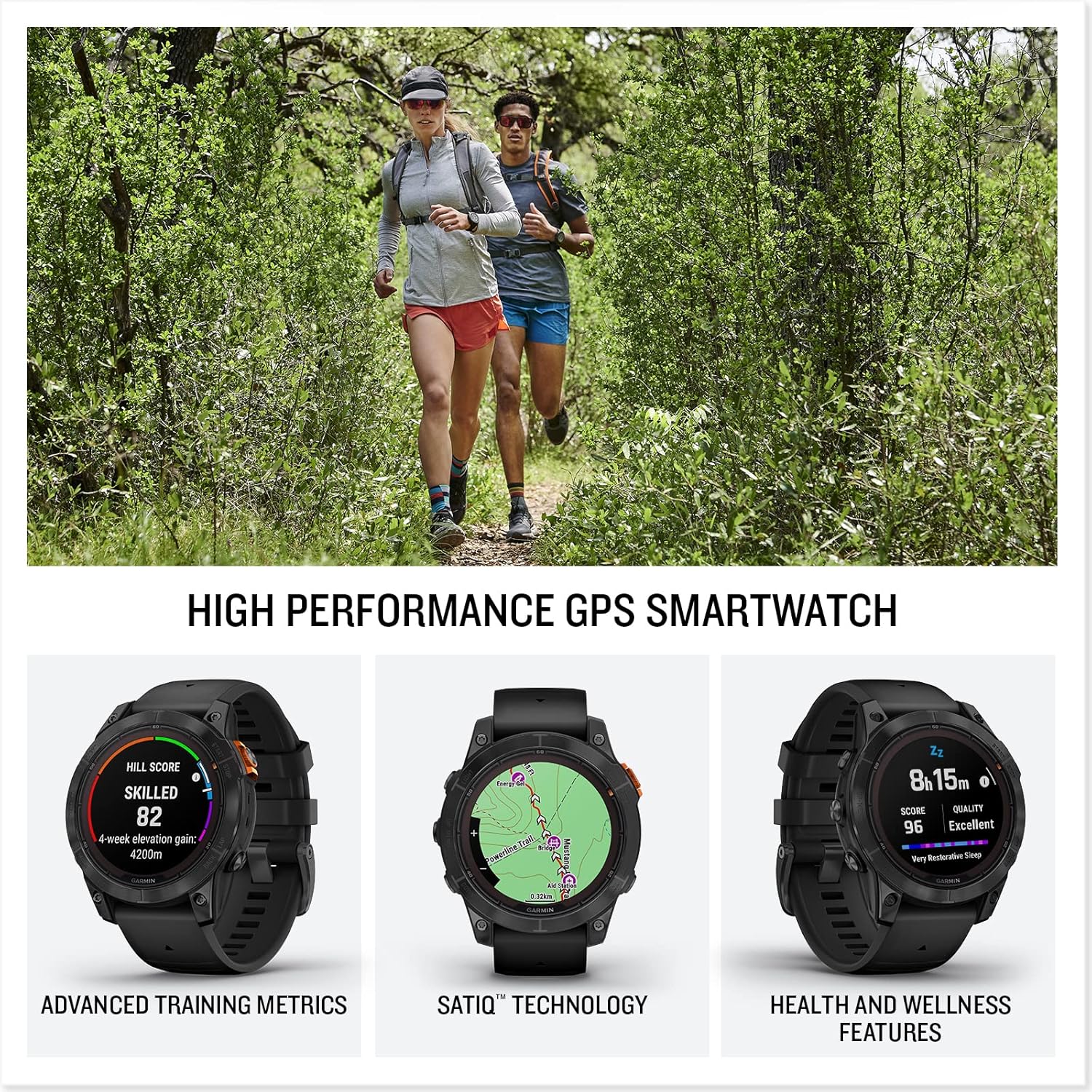
On GPS performance, the fēnix 8 with multi-band and SatIQ is solid. I tested it on my usual 10 km loop that has trees, buildings, and a tunnel. Compared to my old fēnix 6X and a friend’s Apple Watch, the 8 drew cleaner tracks, especially in the wooded section. The distance was consistent across runs, usually within a few meters of what I expect. SatIQ automatically switches between modes to save battery, and I didn’t have to think about it, which is nice.
The heart rate sensor has improved compared to older Garmins. For steady runs, it tracked close to a chest strap (usually within 2–3 bpm on average). For intervals, it still lags a bit on the first few seconds of a sprint, which is pretty standard for wrist sensors, but it caught up quickly. If you’re very picky about HR data, a chest strap is still better, but for most people this sensor is good enough for training zones and general monitoring.
The training features are where this watch actually helps. Training readiness, recovery, real-time stamina, and suggested workouts are not just gimmicks if you pay attention. After a late night and a hard session the day before, the watch clearly flagged low readiness and suggested an easy run. On days with good sleep and low load, it pushed more intense efforts. It’s not perfect, but it lines up with common sense and helped me avoid going too hard on tired days.
For daily performance, the interface is snappy enough, no big lag switching between widgets or starting activities. The built-in flashlight is more useful than I expected: I used it to find stuff in a dark room, on late walks, and to be more visible on night runs. It’s not a replacement for a headlamp, but as a quick light on the wrist, it’s pretty handy. Overall, the watch performs like a proper training tool with some decent quality-of-life extras, rather than a toy loaded with features you never touch.
What this watch actually offers in real life
On paper, the fēnix 8 51 mm is stacked: AMOLED 1.4" screen, sapphire glass, titanium bezel, 40 m dive rating, multi-band GPS with SatIQ, built-in LED flashlight, 32 GB storage, Bluetooth/Wi‑Fi/USB, plus ECG, Pulse Ox, and all the usual Garmin health stuff. In reality, you won’t use everything every day, but it’s nice knowing most sports or outdoor use cases are covered without needing extra gear.
The health and training side is pretty complete: 24/7 heart rate, advanced sleep tracking, HRV status, training readiness, training load, real-time stamina, strength training plans, and a ton of sport profiles. The training readiness metric is actually useful: if I had a bad night plus a heavy workout the day before, it clearly told me my score was low and maybe I should keep it easy. It’s not perfect science, but it lines up with how I feel more often than not.
Then you’ve got the smartwatch features: phone calls from the wrist when paired, notifications, music storage, Wi‑Fi sync, and voice assistant access through your phone. There’s also this off-grid voice command thing for basic controls even without a connection. I tried that during a trail run with my phone in the backpack; it works, but you need to remember the right commands, and I didn’t end up using it much after the novelty wore off.
Where it feels more like a serious outdoor device is the navigation and dive features. Multi-band GPS with SatIQ gave me cleaner tracks than my old fēnix 6X, especially in forests and near buildings. The 40 m dive rating and dedicated scuba/apnea modes are overkill for me personally (I only did shallow dives), but if you dive regularly, it’s a strong point. Overall, the watch is packed, but not everything will matter to everyone. If you only want basic steps and heart rate, you’re paying for a lot of stuff you’ll probably ignore.
Pros
- Strong battery life even with bright AMOLED and regular GPS use
- Robust build with titanium bezel and sapphire glass, suitable for outdoor and sports abuse
- Very complete training, navigation, and health features including multi-band GPS and training readiness
Cons
- High price, especially if you won’t use the advanced sports and outdoor features
- Large 51 mm size can be uncomfortable or look oversized on smaller wrists
Conclusion
Editor's rating
The Garmin fēnix 8 51 mm AMOLED in titanium with the orange/graphite band is a serious multisport/outdoor watch aimed at people who actually train and spend time outside. The mix of bright AMOLED, long battery life, strong GPS, and robust materials makes it feel like a proper tool rather than just another notification screen. The training metrics (training readiness, HRV, real-time stamina) are genuinely helpful if you follow them, and the battery life is good enough that you don’t have to think about charging every day, even with regular GPS use.
On the flip side, it’s big, not cheap, and probably too much for someone who just wants a simple fitness tracker. The menus are still a bit dense, you need some time to set it up the way you like, and the 51 mm size won’t suit every wrist. If you never use maps, don’t care about diving, and only do casual workouts, you’re paying for features that will sit idle. But if you’re into running, hiking, maybe some diving, and you want one watch that can handle rough use, detailed stats, and long trips without hunting for a charger, this fēnix 8 is a pretty solid pick.