Summary
Editor's rating
Is it good value or should you spend more?
Big rectangular screen, looks decent but clearly budget
Real battery life vs what’s advertised
Light and easy to wear, but the strap may annoy sensitive skin
Build quality, water resistance and how it handled daily abuse
Daily performance: decent for calls and notifications, sensors are basic
What you actually get for the price
Pros
- Good price for a smartwatch with Bluetooth calling and Alexa support
- Battery life of around 4–6 days in real use, with fast 1.5h charging
- Screen is bright and readable, with lots of customizable watch faces
Cons
- Health and sports tracking are basic and not very precise, no built-in GPS
- Default silicone strap can irritate sensitive skin and feels cheap
- Companion app is functional but clunky compared to bigger brands

Specifications
View full product page →| Brand | Cillso |
A budget smartwatch I actually kept on my wrist
I’ve been wearing the Cillso IDW26 Alexa Smart Watch on my wrist for a bit over two weeks now, basically 24/7 except for showers and charging. I went into it with pretty low expectations because of the price and the random brand name, and also because I’m used to mid‑range watches from bigger brands. I wanted something cheap that could handle calls, basic fitness tracking, and notifications without me worrying about losing or breaking it on the commute or at the gym.
In that context, this watch is honestly better than I expected, but far from perfect. It does the core stuff: it shows notifications, handles Bluetooth calls, tracks steps and sleep, and the Alexa voice assistant actually works most of the time. But you feel the low price in a few areas: the app is a bit clunky, the sensors aren’t super precise, and the overall finish is more “decent gadget” than “premium watch”.
I paired it with an Android phone (Pixel) and briefly tested it with an iPhone to see if there was any big difference. Connectivity was stable on both, but clearly the watch is built around the VeryFit app, and that app is okay at best. You can live with it, but if you’re used to Fitbit or Garmin level of polish, you’ll notice the gap right away.
If you’re expecting a cheap stand‑in for an Apple Watch or a high‑end Garmin, you’ll be disappointed. If you just want a straightforward smartwatch that covers the basics, doesn’t need charging every night, and you’re fine with a few rough edges, then it starts to make sense. That’s basically how I’ve been using it: a practical tool, not a fancy toy.
Is it good value or should you spend more?
For the price this thing sells at on Amazon, it’s hard to be too harsh. You’re getting Bluetooth calling, Alexa integration, a decent‑sized color screen, multi‑day battery life, and basic health tracking. If you’re coming from no smartwatch at all or from a very old fitness band, it will feel like a clear upgrade. It covers most casual needs: see who’s calling, check messages, count steps, track some workouts, and monitor roughly how you sleep.
That said, there are trade‑offs. No built‑in GPS, sensors that are okay but not very precise, a companion app that’s just “okay”, and a build quality that clearly sits in the budget category. If you care a lot about accurate training data or you want seamless integration with a bigger ecosystem (Apple, Samsung, Garmin), you’re better off saving more and going for a known brand, even a used or older model.
Where this watch makes sense is for people who don’t want to spend big money, or who are worried about losing or damaging a more expensive device. It’s also a good option as a first smartwatch, or as a “city watch” you’re not afraid to wear in crowded places. Compared to other generic Amazon smartwatches in the same price range, this one is pretty solid value because of the Alexa feature, the relatively clean interface, and the decent battery life.
In short: if you know its limits and just want a practical, low‑cost smartwatch that does the basics reliably, the value is good. If you’re picky about accuracy, design, or app quality, you’ll probably feel the compromises and might prefer to invest in something higher‑end.
Big rectangular screen, looks decent but clearly budget
The design is pretty straightforward: a rectangular 1.83" screen with rounded corners, one physical button on the side, and a black silicone strap. From a distance, it looks a bit like the usual generic smartwatches you see on Amazon. Up close, you notice the frame is plastic, not metal, and the finish is more “functional” than “premium”. It’s light on the wrist, which is nice for comfort, but also reminds you it’s a budget device.
The screen itself is actually not bad for this price range. The resolution (320x385) is sharp enough, icons are clear, and the colors are decent, even if it’s an LCD and not an OLED. Brightness is adjustable and I could read it fine outside on a sunny day, as long as I pushed the brightness up. Indoors, you can keep it lower to save battery. The bezels are visible but not horrible; again, it looks okay, just not high‑end.
You get more than 100 watch faces through the app, from very basic digital faces to more crowded ones with steps, heart rate, weather, etc. You can also set a custom wallpaper using a photo, which is a nice touch. Switching faces is quick and the watch doesn’t lag too much when flipping through menus, which I was honestly expecting from a cheap watch.
On the wrist, it looks like a typical modern smartwatch: nothing special, but it doesn’t scream “toy” either. If you’re used to Apple Watch or Galaxy Watch, you’ll notice the difference in build quality, but for a low‑cost device, the design is pretty solid and discreet. It blends in easily with casual clothes and gym gear; with a suit it looks a bit out of place, but that’s true for most plastic smartwatches anyway.
Real battery life vs what’s advertised
The brand claims 5–7 days of regular use and up to 30 days standby. Obviously, nobody really uses a smartwatch in pure standby, so I focused on normal daily usage. With all the usual stuff turned on (continuous heart rate, notifications for several apps, roughly 30–40 minutes of activity tracking per day, and some Bluetooth calls), I consistently got around 4.5 to 5 days before needing to recharge. That’s slightly below the top of the claim but still decent.
When I toned things down a bit—reduced screen brightness, limited notifications, and used heart rate monitoring in a less frequent mode—I managed to push it to almost 6 full days. On the other hand, one weekend I hammered it with multiple workouts, lots of screen‑on time, and several calls, and the battery dropped to 2.5 days. So the real range is something like 3–6 days depending on how you use it.
Charging is fairly quick. From roughly 10% to 100% took me about 1.5 hours with a regular USB charger, which matches the spec. The magnetic charger snaps on easily, but you have to place the watch correctly; if it’s slightly off, it won’t charge, so I always double‑checked that the charging icon appeared on the screen before walking away.
Compared to an Apple Watch that often needs daily charging, this feels a lot more relaxed. You can travel for a weekend without the charger and be fine, as long as you don’t abuse all features. But it’s still behind some fitness‑focused watches that can last 10+ days. For the price bracket, I’d say the battery life is pretty solid and practical, even if it doesn’t fully hit the most optimistic marketing numbers in real life.
Light and easy to wear, but the strap may annoy sensitive skin
On the comfort side, the first thing I noticed is how light the watch is. You almost forget it’s there after a while, which is good if you plan to sleep with it for tracking. The size is moderate: the 1.83" screen covers a decent part of the wrist but doesn’t feel like a brick. I have a medium wrist and it sat well; I also had someone with a smaller wrist try it and they could tighten the strap enough without it looking ridiculous.
The strap is a standard black silicone band. It’s soft and flexible, and at first it felt fine. After a few days of wearing it 24/7 (including workouts and overnight), my skin under the buckle area got a bit irritated. Nothing dramatic, but some redness, especially when I sweated a lot and didn’t clean the area. I saw one Amazon review mention a rash, so if you have sensitive skin or react easily to silicone, you might want to swap the band fairly quickly.
The good news is that the band uses a standard quick‑release pin system, so you can replace it with any compatible 22mm strap you like (silicone, leather, nylon, whatever). I tested it with another strap I had lying around and it fit without problems. With a different strap, comfort was better and the irritation disappeared after a couple of days.
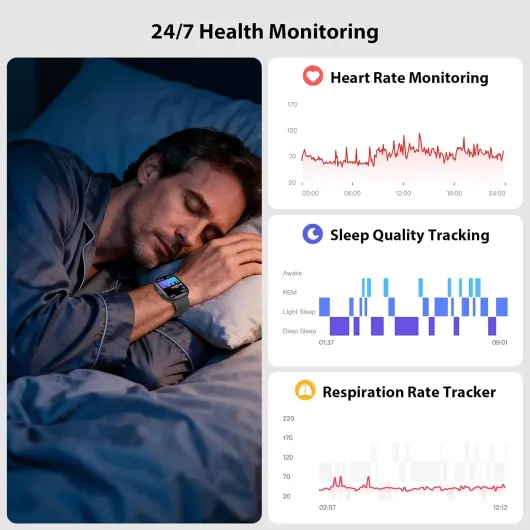
For sleep, it’s okay. Because it’s light and not too thick, it doesn’t press too much on the wrist when you lie on your side. The only mild annoyance is the screen lighting up when you move your wrist at night if you leave the “raise to wake” function on, so I ended up turning that off before bed. Overall, comfort is good enough for daily wear, but the default strap is the weak point if your skin is touchy.
Build quality, water resistance and how it handled daily abuse
Over these weeks, I didn’t baby the watch. I wore it at the gym, in the rain, washing dishes, and during a couple of light DIY tasks where it bumped into walls and furniture. The IP68 rating held up fine: no issues with sweat, splashes, or quick rinses under the tap. I didn’t go swimming with it, but it handled everyday water exposure without any sign of trouble.
The screen has “scratch‑resistant 3D glass” according to the product page. I wouldn’t push that too far, but after a couple of weeks of normal use, I didn’t see any major scratches, just some very light micro‑marks that you only notice under direct light. It’s still a cheap LCD with basic glass, so if you’re clumsy or work in a rough environment, I’d consider a cheap screen protector just to be safe.
The casing is plastic, which is a double‑edged sword. On the one hand, it keeps the watch light and comfortable. On the other, it doesn’t give you that solid, rugged feeling you get from metal‑framed watches. That said, the plastic didn’t crack or creak, and the single side button still feels clicky and responsive. No signs of water ingress or condensation under the glass.
The strap holes didn’t stretch too much and the buckle stayed secure. The only “durability” concern is more about skin reaction for some people than the strap itself falling apart. Overall, for a low‑cost watch, durability so far is reassuring enough. I wouldn’t take it on hardcore hikes or construction sites, but for office, home, gym, and commuting, it holds up without drama.
Daily performance: decent for calls and notifications, sensors are basic
In day‑to‑day use, the watch is responsive enough. Menus open quickly, swiping between screens is smooth most of the time, and I didn’t run into random freezes or reboots. The Bluetooth 5.3 connection was stable on my Pixel; I only lost connection once when I left my phone on a different floor, which is pretty normal. Reconnecting when back in range happens automatically within a few seconds.
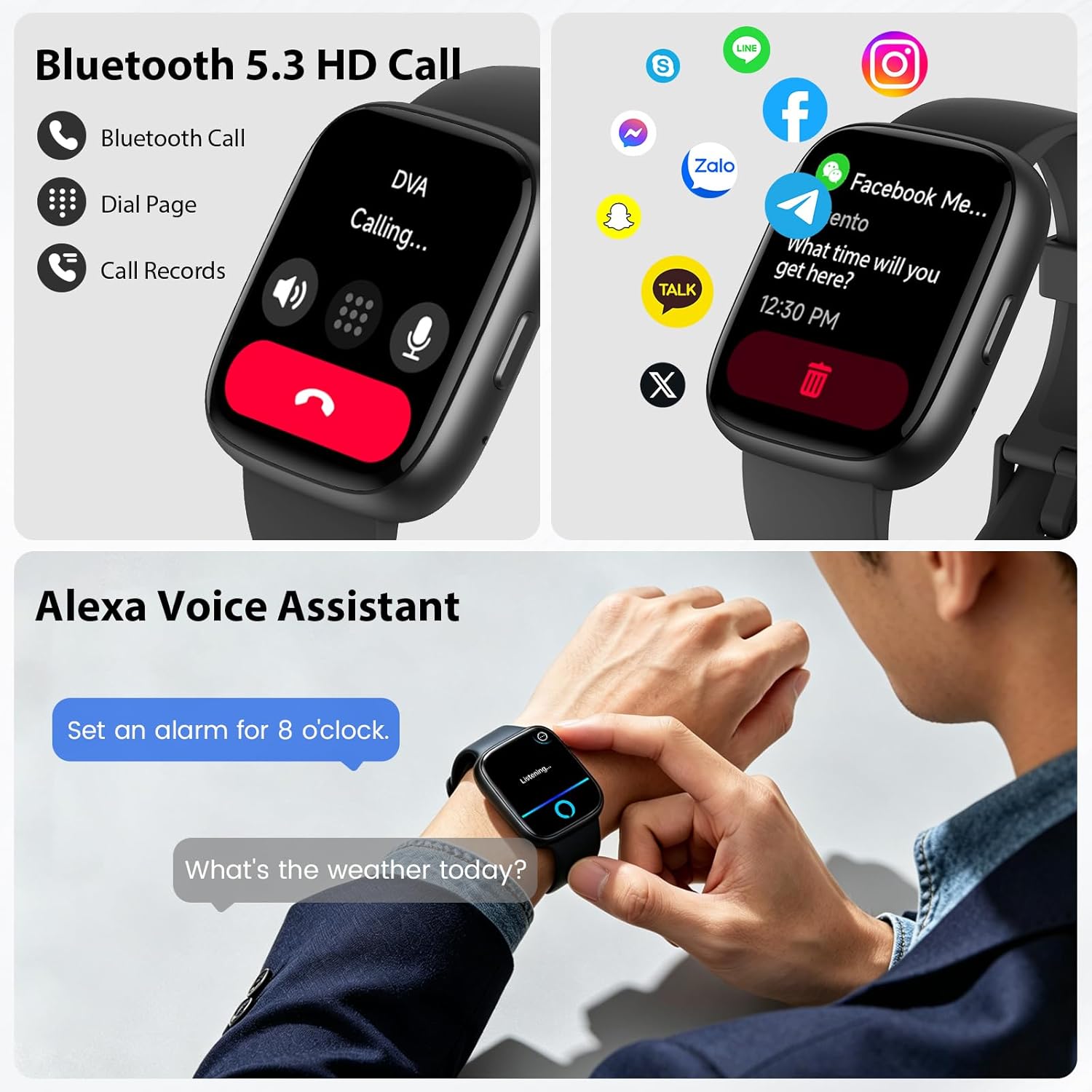
The Bluetooth calling works fine for short calls. The speaker is clear enough indoors; you can hear the other person without issues. Outside, in noisy streets, you have to bring the watch closer to your ear or just switch to your phone. The microphone is okay; people told me I sounded a bit “far away” but still understandable. It’s good for quick calls when your hands are busy, not ideal for long conversations.
For notifications, it gets the job done. WhatsApp, SMS, calls, email, and other apps came through reliably once I set permissions correctly in the app and disabled battery optimization for VeryFit. You can read messages on the screen, but you can’t reply directly from the watch, which is a bit limiting. Vibration strength is decent: I didn’t miss many notifications, even when walking or cycling.
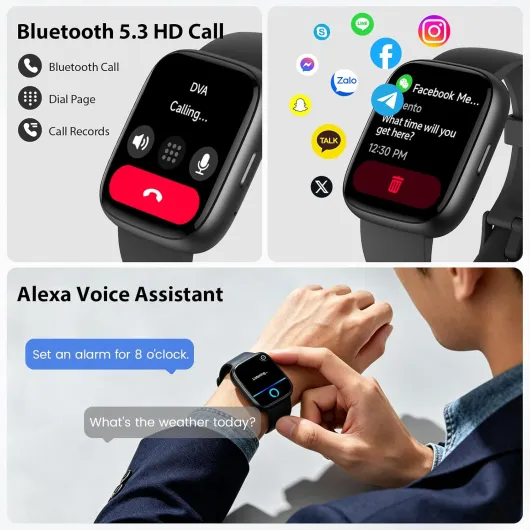
Health and sport performance is where you feel the budget side. Heart rate tracking is okay for everyday use (resting heart rate, rough idea during workouts), but not very precise during intense intervals. It tends to lag and sometimes show values that are clearly off for a minute or two. Step counting is fairly close to my phone and a Garmin I used as a reference, but it’s not perfect. Sleep tracking gives a general picture (bedtime, wake time, deep/light sleep), but I wouldn’t treat it as medical data. For casual tracking, it’s fine; for serious training or health monitoring, there are better options.
What you actually get for the price
Out of the box, it’s pretty simple: you get the watch, a magnetic USB charging cable, and a small user manual. No extra straps, no charging brick, nothing fancy. The manual is short but clear enough to get you going: scan the QR code, install the VeryFit app, pair via Bluetooth, done. It took me about 5–10 minutes to set everything up, including signing up in the app and tweaking notifications.
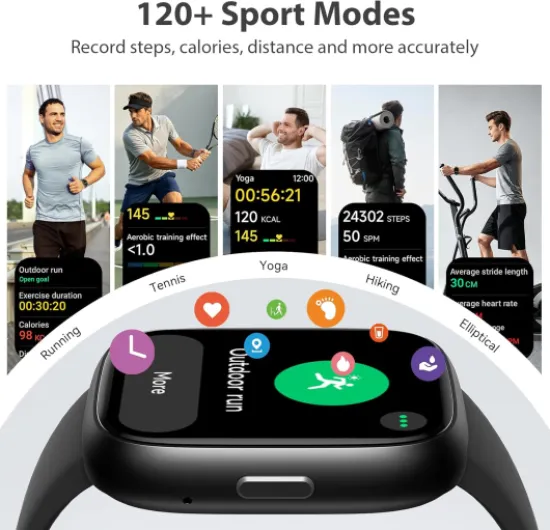
Feature-wise, on paper it’s packed: 1.83" LCD screen, Bluetooth calling, Alexa voice assistant, heart rate tracking, sleep monitoring, stress monitoring, 110+ sports modes, IP68 water resistance, and roughly 5–7 days of battery life with normal use. It doesn’t have built‑in GPS, so it relies on your phone for route tracking, which is important to know if you run or cycle outside a lot.
In practice, I mostly used it for: calls, notifications (WhatsApp, SMS, email, calendar), step counting, simple workouts (walking, indoor cycling, some bodyweight training), and sleep tracking. I also tried Alexa for setting timers and checking the weather, and used the music controls during workouts. Some of the 110+ sports modes are basically duplicates with different icons; it’s more marketing than real depth.
Overall, the watch does what it says on the tin, but don’t expect deep health analytics or pro‑level sports data. It’s more of a daily life companion than a serious training tool. For the price point, that’s reasonable, but it’s good to be clear about it from the start so you’re not disappointed later.
Pros
- Good price for a smartwatch with Bluetooth calling and Alexa support
- Battery life of around 4–6 days in real use, with fast 1.5h charging
- Screen is bright and readable, with lots of customizable watch faces
Cons
- Health and sports tracking are basic and not very precise, no built-in GPS
- Default silicone strap can irritate sensitive skin and feels cheap
- Companion app is functional but clunky compared to bigger brands
Conclusion
Editor's rating
After using the Cillso IDW26 as my main watch for a couple of weeks, my opinion is pretty straightforward: it’s a decent budget smartwatch that does what most people need, with a few rough edges that match the price. You get a big readable screen, stable Bluetooth connection, working call function, Alexa support, and multi‑day battery life. For basic health tracking and daily notifications, it gets the job done without forcing you to charge it every night.
On the other hand, it’s clearly not aiming at serious athletes or people obsessed with data accuracy. The heart rate and sleep tracking are fine for a general overview, but not super precise. The lack of built‑in GPS limits outdoor sports, and the app experience is just okay. The strap may also cause irritation for some, so budgeting for a replacement band is not a bad idea.
If you want a low‑cost watch for daily use, calls, and casual fitness, and you don’t care about having a big brand logo on your wrist, this is a good value for money option. If you’re deep into the Apple, Samsung, Fitbit, or Garmin world and you’re used to that level of polish and data quality, this will probably feel like a step down and you should look at spending more.