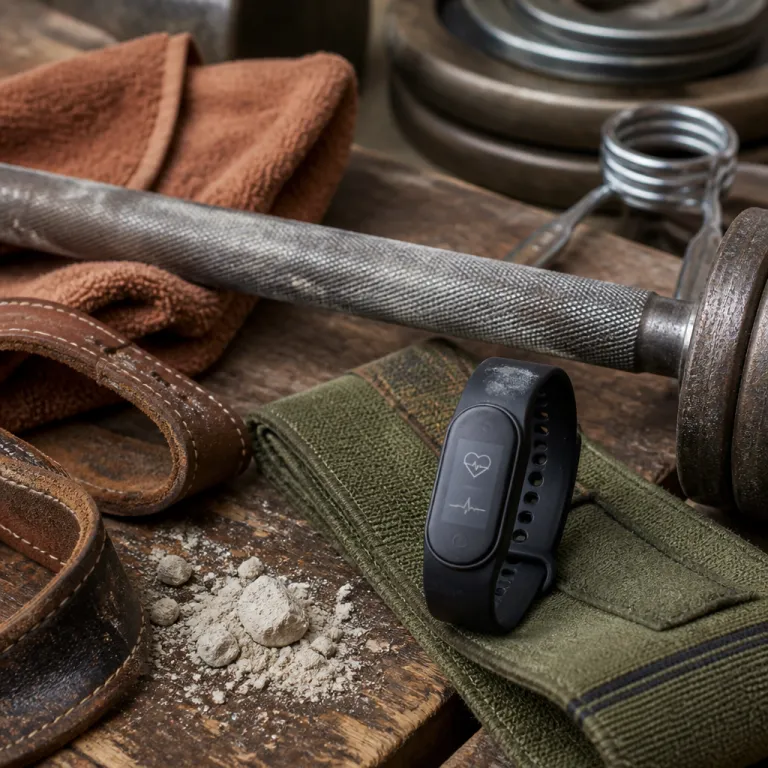
What a wrist tracker really sees during a gym workout
Walk into any gym workout area and you will see at least one fitness tracker on every rack. These devices promise precise workout tracking for strength training, yet most people never ask what the tiny accelerometer on the watch actually feels from your wrist. That gap between marketing and physics explains why your data sometimes looks impressive but does not match how hard you actually train.
During a classic dumbbell curl, the tracker on your watch follows a clean arc that makes rep counting easy. The sensor detects acceleration, deceleration, and direction changes, so the workout tracker can tag each exercise repetition and log it as part of your overall fitness routine. When you switch to heavy barbell squats or deadlifts, the wrist barely moves, so the same tracking features suddenly lose their magic and your best sets almost vanish from the data.
That is the core limitation of wrist based tracking for gym workouts. The accelerometer and gyroscope inside a fitness tracker are brilliant at capturing swinging movements, but they struggle with loaded compound exercises where the bar travels while the hands stay locked. You can still track the session as a strength training workout, yet the watch will undercount exercises and misinterpret the effort, which matters if you rely on the app to guide progressive overload and monitor long term progress.
Different brands lean on software tricks to patch this hardware reality. Apple uses machine learning in the apple watch to classify exercises, while Garmin and Samsung combine motion patterns with heart rate data to guess which training block you are in. These features look advanced in the marketing copy, but in the gym they still depend on how much your wrist actually moves, so a small change in grip or stance can confuse the algorithm and break the illusion of perfect tracking.
For the data driven athlete, that means you must treat every fitness app and its gym workout mode as an assistant, not a referee. Let the tracker handle time stamps, rest timer prompts, and basic workout tracking, then log key exercises and weight manually inside the app or on paper. The best lifters I see use the watch to track sets and heart rate, but they still write down the exact exercises, loads, and reps, because that is the only way to guarantee reliable data over months of training.
Rep counting, heart rate drift, and the limits of wrist sensors
Rep counting is the headline feature every fitness tracker advertises for strength training. In practice, rep detection works well for rhythmic exercises like biceps curls, shoulder presses, and machine rows, where the watch follows a repeatable path. Once you move to deadlifts, squats, hip thrusts, or any exercise where the bar path is vertical and your wrist stays rigid, the tracker loses its anchor and your carefully planned workouts turn into messy data.
During my own testing with an apple watch and a Garmin Forerunner in a mixed gym workout, rep accuracy hovered around ninety percent for curls and triceps pushdowns. The same devices dropped below fifty percent accuracy for heavy deadlifts and front squats, even when the workout planner in the fitness app knew which exercises I had selected. That is not a small miss, because it means half your hardest sets may never appear in the training log, which distorts both short term feedback and long term progress charts.
Heart rate tracking adds another layer of complexity. Wrist based PPG sensors measure blood volume changes under the watch, and during grip intensive exercises like heavy rows or pull ups, forearm tension restricts blood flow and the heart rate data drifts badly. You will often see the watch series devices lag by twenty to thirty beats per minute during the set, then overshoot during the rest period, which makes health tracking metrics like training load and recovery less reliable for lifters.
Independent testing has shown that steady state cardio usually keeps calorie error in the ten to twenty percent range, while strength training pushes that error toward thirty to forty percent or more across brands. That gap matters when you use a fitness tracker to manage weight changes, because the app may report a huge calorie burn from a short gym workout that felt hard but did not actually expend as much energy as a long run. If you are cutting or bulking, you should treat those calorie numbers as rough estimates, not precise macros guidance.
For serious lifters who want accurate exertion data, a chest strap still beats any wrist tracker. Pairing a strap with an apple watch or another compatible watch series model gives you the best of both worlds, because the watch handles workout tracking and apps while the strap feeds cleaner heart rate data into apple health or other health fitness platforms. If you prefer a more budget friendly option, some Android friendly trackers available through the app store or google play also support external sensors, but you must check the pros cons carefully before you buy.
One underrated factor is software quality. Many fitness apps ship a free version with limited features, then rely on frequent bug fixes to keep workout tracking stable, especially when new watch series hardware or a new operating system version arrives. Before you download an app or a companion workout tracker, read recent reviews that mention gym workout performance, rest timer reliability, and how well the app syncs sets, exercises, and weight data with your preferred health tracking platform.
If you want a concrete example of a device that leans heavily on call handling and everyday smart features while still offering broad fitness tracking, you can look at a modern smart watch with integrated calling and multiple sports modes such as this smart fitness watch for Android and iOS. Devices in that category often support dozens of sports profiles, but their strength training modes still inherit the same wrist sensor limitations, so you should judge them on comfort, battery life, and app stability as much as on rep counting promises. The more you understand what the hardware can and cannot see, the easier it becomes to separate marketing language from real gym performance.
Making sense of apps, platforms, and your training data
The real power of a fitness tracker for strength training in the gym does not live on your wrist. It lives in the app where your workouts, exercises, and health fitness metrics accumulate over weeks and months. That is where you can see whether your weight on the bar, your training volume, and your recovery are actually moving in the direction you want.
Apple health, Google Fit, Samsung Health, and Garmin Connect all act as hubs that collect data from your watch, your phone, and sometimes even your gym equipment. When you start a gym workout on an apple watch, the workout tracker sends heart rate, duration, and estimated calories into apple health, while third party apps can add exercise names, sets, and weight. Over time, this creates a layered picture of your training, but only if you are consistent about how you track and label each session.
Choosing the best fitness app for strength training means looking beyond glossy screenshots. You want an app that lets you build a clear workout planner with named exercises, target weight, and rest timer settings, then syncs that plan cleanly to your watch. The free version of many apps limits how many workouts you can save or how much historical data you can review, so check those pros cons before you commit your training history to a single platform.
On iOS, the app store is full of gym focused apps that promise advanced workout tracking, from simple set loggers to full coaching platforms. On Android, google play offers a similar spread, but integration with specific watch series models can vary, especially for smaller brands. Before you download an app, confirm that it supports your exact tracker, that it can track both strength training and cardio workouts, and that it exports data cleanly if you ever decide to switch platforms.
One practical strategy is to separate planning and tracking. Use a dedicated workout planner app to design your training blocks, then rely on the built in workout tracker on your watch to capture time, heart rate, and basic set counts, while you manually enter key exercises and weight afterward. This hybrid approach keeps your in gym experience simple but still gives you rich data for long term analysis, especially when combined with a robust health tracking platform.
If you are interested in how wearables handle more sensitive health data such as cycle tracking, there are detailed analyses that examine where accuracy claims meet reality, like this overview of cycle tracking on wearables and real world performance. The same skepticism you apply to those health features should guide how you interpret strength training metrics, because both rely on algorithms translating noisy sensor signals into clean looking charts. A polished interface does not guarantee accurate data, so always cross check the numbers against how your body feels and how your lifts are progressing.
Whatever ecosystem you choose, keep ownership of your data in mind. Export your training logs periodically, especially if you rely on a niche fitness app that might change its business model or remove its free version. Your progress in the gym is too valuable to lose to a forgotten login or an abandoned app, and a simple spreadsheet of exercises, sets, and weight can outlast any watch series or tracker generation.
How to use imperfect tracking without letting it rule your training
The question that matters most is not whether a wrist tracker is perfect for strength training in the gym. The question is whether its imperfect data still helps you train better, recover smarter, and stay consistent. Used well, a fitness tracker becomes a coach’s notebook on your wrist, but used blindly, it can turn into a noisy distraction that pulls you away from the bar.
Start by deciding what you actually want to track. If your primary goal is to manage weight and general fitness, then rough calorie estimates, daily activity, and simple workout logs from a fitness tracker are usually enough, especially when combined with a balanced diet and regular sleep. In that case, the exact rep count on your last set of squats matters less than the fact that you showed up for three strength training sessions this week and kept your heart rate elevated regularly.
If you are a data driven recreational athlete juggling running, cycling, and lifting, you probably care more about how gym work fits into your overall training load. Here, the watch can help you track how heavy lifting days affect your heart rate variability, resting heart rate, and sleep quality, even if it miscounts some reps. You might notice that a late night gym workout with heavy deadlifts pushes your heart rate higher overnight, which could signal the need for a lighter cardio session the next day.
To get the most from your device, lean on its strengths and patch its weaknesses. Use the watch as a precise timer for rest intervals, a consistent workout tracker for session duration, and a reliable log of how often you train, while you manually record key exercises and weight in the app. When your platform offers advanced features like training readiness or recovery scores, treat them as conversation starters with your own body, not as absolute rules that dictate whether you are allowed to lift.
Hardware choice still matters, especially if you care about all day health tracking beyond the gym. A well designed fitness tracker with continuous heart rate, sleep monitoring, and waterproof activity tracking, such as the type of 24/7 health tracking smart watch often reviewed on specialist sites, can give you a broader picture of stress and recovery that complements your lifting data. Just remember that even the best watch series model still relies on the same basic sensors, so its gym workout insights will always be an informed estimate rather than a lab grade measurement.
When you evaluate pros cons of any tracker or fitness app for strength training, focus on comfort, reliability, and how well it fits your life. A slightly less accurate device that you enjoy wearing all day will generate more useful data than a perfect sensor that lives in a drawer, because consistency beats precision in real world health fitness tracking. In the end, the value of a fitness tracker in the gym is not the number of metrics it can track, but how clearly it helps you see the story of your training and what you choose to do with that story.
Key figures on wrist trackers and strength training accuracy
- Independent analyses of wearable calorie estimates show that during steady state cardio, most wrist based trackers report energy expenditure with roughly ten to twenty percent mean absolute percentage error compared with laboratory measurements, while during strength training the error often rises to between twenty nine and forty percent or more across brands, which means lifters should treat calorie numbers as broad ranges rather than precise values.
- Studies examining wrist based heart rate during grip intensive exercises such as pull ups and heavy rows have found that optical sensors can under report true heart rate by twenty to thirty beats per minute during the working set, then overshoot during rest, because forearm muscle tension restricts blood flow under the sensor and disrupts the PPG signal.
- Research comparing chest strap heart rate monitors with wrist worn devices during mixed modality workouts has consistently shown that chest straps maintain accuracy within about three to five beats per minute across both cardio and resistance training, while wrist trackers show much larger deviations during high intensity lifting, which supports the recommendation that serious strength athletes pair a strap with their watch for more reliable exertion tracking.
- Consumer surveys of wearable owners indicate that a significant share of users who lift weights regularly still rely on manual logging for key exercises, with many reporting that automatic rep counting works well for simple arm movements but fails for complex compound lifts, which aligns with the known limitations of wrist accelerometers for movements where the hands remain relatively fixed.
- Market data on fitness apps shows that strength training focused applications with robust workout planner tools and clear rest timer features tend to have higher long term retention among recreational athletes, suggesting that structured planning and simple in gym guidance matter more for adherence than highly detailed but unreliable automatic exercise detection.