Summary
Editor's rating
Value for money: good if you hate subscriptions, less so if you’re workout‑focused
Design: looks like jewelry, behaves like a gadget
Battery life: close to the 14‑day claim, with a handy charging case
Comfort and sizing: great once right size, annoying if your fingers swell
Materials and build: titanium shell, no-nonsense construction
Health tracking performance: strong on sleep and stress, weak on workouts
What the RingConn Gen 3 actually does (and doesn’t do)
Pros
- Very good for sleep, resting heart rate, and stress/HRV tracking with clear trends
- Long battery life (around 10–12 days in real use) plus a practical charging case
- No subscription fees and a discreet titanium design that’s easy to wear 24/7
Cons
- Weak workout tracking and no GPS, not suitable as a main sports device
- Sizing can be tricky, and finger size changes can make the fit inconsistent

Specifications
View full product page →| Brand | RingConn |
A smart ring that actually replaces a fitness band?
I’ve been curious about smart rings for a while, mostly because I’m tired of sleeping with a chunky watch on my wrist. I tried the RingConn Gen 3 in Royal Gold for a few weeks to see if it could realistically replace my usual smartwatch for sleep, recovery, and daily health tracking. I wasn’t expecting miracles, just something that tracks the basics without bothering me all day.
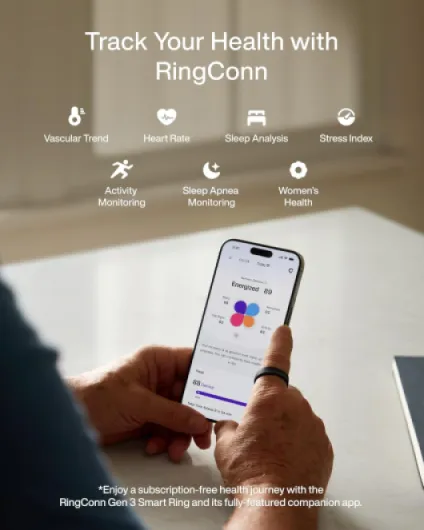
Right away, what stood out is that this thing is very much aimed at people who care about sleep, heart rate, and stress trends more than hardcore workout tracking. The app pushes a lot of data about your nights, your heart rate variability (HRV), and this “vascular load” trend they talk about. If you’re into running with GPS maps and detailed workout zones, this isn’t what it’s built for. If you mostly want to know how your body is doing in the background, it’s closer to that use case.
During the first three days, I wore it 24/7 except for one short charging break, and I focused on how comfortable it felt, how often I thought about it, and whether the data in the app made sense compared to my usual watch. I also paid attention to battery drain, because smart rings that die every three days are pointless. The good news: I didn’t feel like I had to babysit the battery, and the ring mostly stayed out of my way.
It’s not perfect. Some things are a bit clunky, like the sizing process and how it handles workouts and Apple Health. But overall, it feels like a pretty solid first step into smart rings if you mainly care about sleep and health trends and don’t want another subscription in your life. Just don’t expect it to fully replace an Apple Watch if you’re into structured workouts and detailed exercise tracking.
Value for money: good if you hate subscriptions, less so if you’re workout‑focused
In terms of value, you have to look at what you’re comparing it to. Against something like an Apple Watch, you lose a lot of workout features, a screen, GPS, notifications, and apps. But you gain better comfort for sleep, longer battery, and a more discreet form factor. Against other smart rings, the big plus here is no subscription fees. Many competitors lock advanced metrics behind a monthly subscription. RingConn doesn’t, so once you’ve paid for the ring, that’s it. If you plan to use it for a few years, that alone makes a difference.
The Amazon rating sits around 4.1/5, which matches how I feel: it’s good, but not flawless. Some people clearly love it for its comfort, build, and sleep tracking. Others are disappointed by the weak workout tracking and Apple Health integration. One reviewer said it doesn’t track workouts well and only links partially to Apple Health, which can be annoying if you like having everything in one place. So you have to be honest about your priorities before buying.
If your main goals are: track sleep, monitor resting heart rate and stress, occasionally glance at activity levels, and do it all in a discreet way with long battery and no subscription, then the price feels fair. The titanium build, IP68 rating, and 2‑year warranty help justify it too. If you’re a runner, cyclist, or gym nerd who wants detailed workout feedback, you’re better off spending the same money on a good sports watch and maybe skipping the ring entirely.
So I’d say the value is pretty solid for health‑first users, average for casual users who don’t care about all the extra metrics, and poor if you expect it to replace a full smartwatch. It’s a niche product that makes the most sense if you’re specifically looking for a subscription‑free, sleep‑centric smart ring and you understand its limits from the start.
Design: looks like jewelry, behaves like a gadget
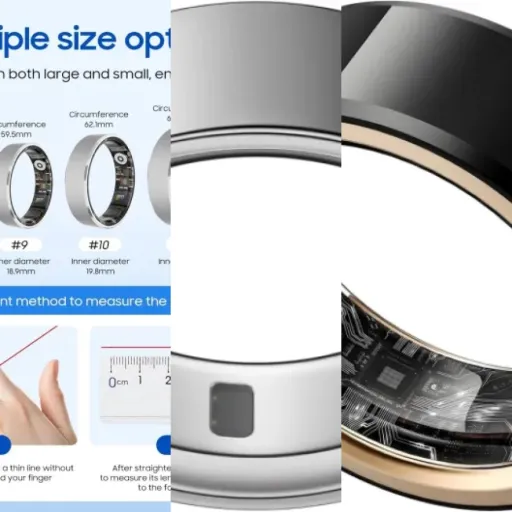
From a distance, the RingConn Gen 3 in Royal Gold just looks like a slightly chunky metal ring. There’s no display, no glowing LEDs, and no logo screaming “I’m a gadget.” That’s honestly one of the things I liked most: it doesn’t scream tech. The Royal Gold finish is more of a muted gold than a flashy bling color, so it blends in pretty well in normal day-to-day use, even in an office setting.
The shape is a smooth, rounded band with a flat inner side where the sensors sit. It’s not ultra-thin, but it doesn’t look cartoonish either. On my hand it looked a bit thicker than a normal wedding band, which is expected for a smart ring. One Amazon reviewer mentioned that it “weighs nothing,” and I won’t go that far, but it does feel light for a metal ring with electronics inside. After a few hours I mostly forgot it was there, except when I clenched my fist tightly or carried something heavy.
There are no visible buttons on the outside; everything is controlled through the app. The only “interaction” on the ring is the haptic vibration, which you can feel as short buzzes. Visually, it’s closer to a piece of jewelry than a gadget, which is a plus if you hate the look of rubbery fitness bands. The charging case is also fairly compact and looks more like a small earbud case than a charging dock, which keeps the whole setup clean on a desk or nightstand.
If I compare it to wearing a smartwatch, the ring is way more discreet. You can dress up, go out, or be in meetings and nobody will really notice it’s a tracker unless they recognize the brand. So from a design standpoint, I’d say it hits a nice middle ground: techy enough to do its job, but subtle enough that it just looks like a normal ring most of the time.
Battery life: close to the 14‑day claim, with a handy charging case
Battery life is one of the reasons to pick a ring over a watch, and the RingConn Gen 3 does pretty well here. The specs say an average of 14 days, and in real life I was getting roughly 10–12 days with 24/7 wear, sleep tracking every night, and Bluetooth sync on. That’s not far from the claim, and it’s still a lot better than charging a watch every one or two days. I never felt like I was constantly hunting for a charger.
The ring charges in a small case, similar to wireless earbuds. The case itself has its own battery, so you can drop the ring in, close the lid, and it charges even if the case isn’t plugged in at that moment. That’s handy if you travel or just don’t want another cable on your nightstand all the time. From almost empty to full, the ring took around an hour or so to charge for me, which is fine. You can top it up while you shower or during a short break and barely think about it.
The haptic vibration alerts include low-battery warnings, which I actually like. You get a gentle buzz on your finger instead of random app notifications you might miss. The app also shows the remaining battery for both the ring and the case, so you know when it’s time to plug the case in. I never managed to fully drain both ring and case to zero, which is a good sign for normal use.
If you’re coming from an Apple Watch or similar, going over a week without charging feels pretty freeing. It’s not infinite; you still have to remember it every week or so. But compared to nightly charging, it’s a big step up. For what it does—continuous heart rate, sleep tracking, and Bluetooth—the battery life is genuinely one of its stronger points.
Comfort and sizing: great once right size, annoying if your fingers swell
Comfort is where smart rings either work or end up in a drawer. The RingConn Gen 3 is light and smooth, so once you get the size right, it’s easy to forget you’re wearing it. I slept with it every night during testing and didn’t feel the urge to take it off, which is already better than most watches or bands for sleep. I didn’t get any skin irritation or sweating issues under the ring, even in warmer weather.
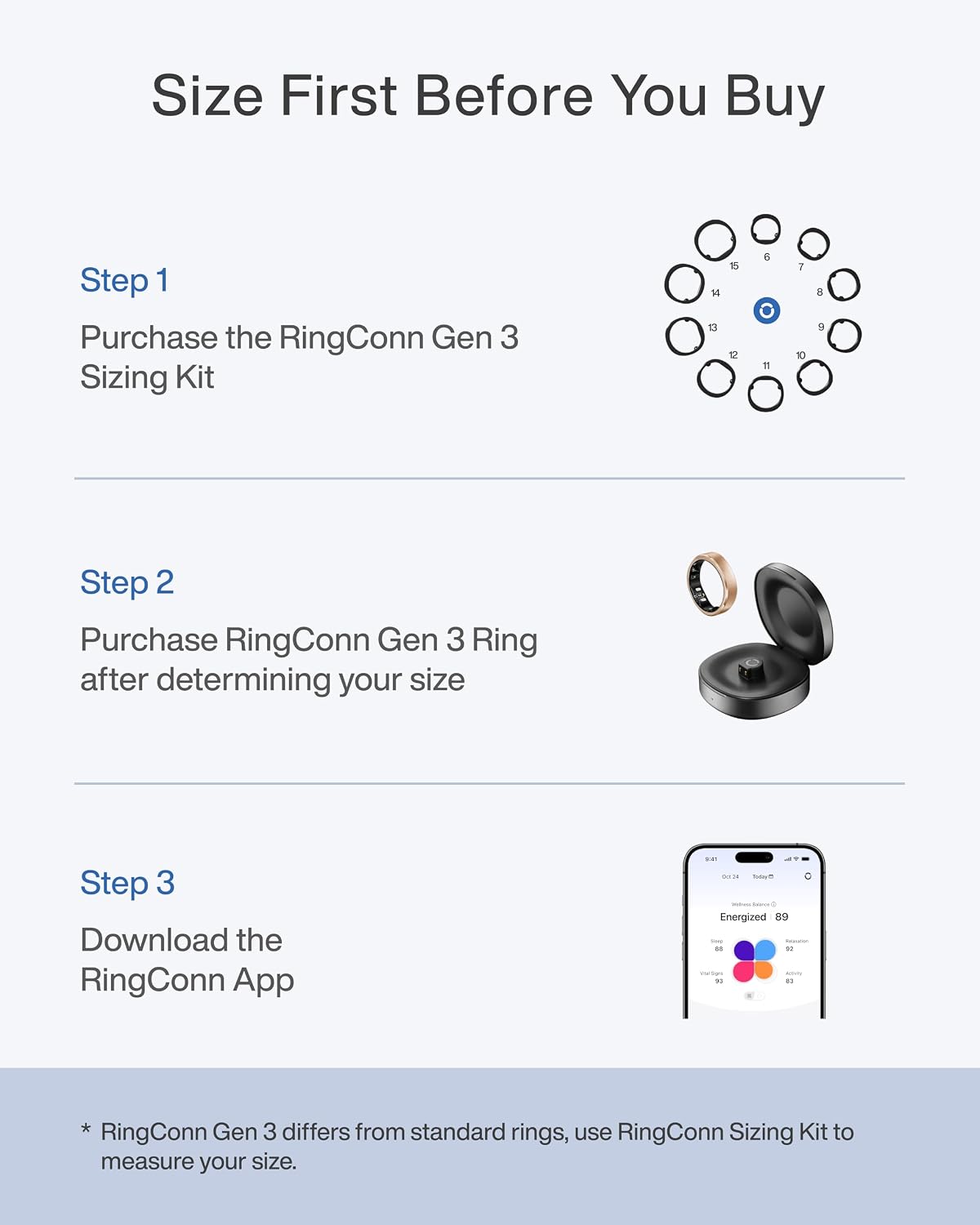
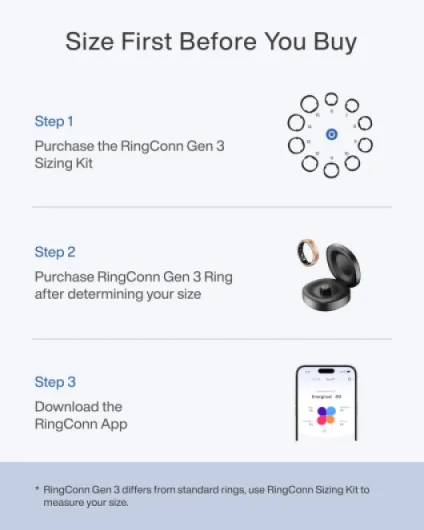
The catch is sizing. RingConn uses its own sizing kit because the inner sensors change how it fits compared to a normal ring. You’re supposed to order the kit, wear a plastic dummy ring for a bit, then pick your size and order the real one. When it works, it’s fine. One Amazon reviewer said the ring sizes matched the test kit exactly, and I had a similar experience. But if your fingers change size during the day (heat, salt, etc.), things get trickier. Another reviewer mentioned their fingers change size all the time, so sometimes the ring feels too loose, sometimes just right. I had a bit of that too, especially in the morning when my fingers were slightly swollen.
When the ring is slightly loose, it can rotate a bit, which might affect sensor contact. I noticed a couple of nights where the data looked a bit off, and I suspect the ring moved too much while I was sleeping. On the other hand, if you go too tight, it’s just uncomfortable and you’ll want to take it off. So you have to find that middle ground: snug but not cutting circulation. I’d say plan to spend a few days with the sizing kit and don’t rush it.
Day to day, comfort is good enough that I didn’t think about it much. Typing, using a mouse, lifting bags, all fine. The only times I really noticed it were doing pull-ups or grabbing thick bars at the gym, where any ring would feel awkward. If you already wear rings and don’t mind them, you’ll probably be fine. If you hate jewelry in general, a smart ring might annoy you no matter the brand.
Materials and build: titanium shell, no-nonsense construction
The ring is made of titanium, both the case and the band, according to the specs. That’s good news if you’re worried about durability and skin reactions. Titanium is light, strong, and usually fine for people who react badly to cheaper metals. I wore it in the shower, washing dishes, and even in a pool for a few days, and the IP68 rating held up: no water issues, no weird fogging, nothing. One reviewer even mentioned wearing it a week in a holiday pool and called it scratch-resistant, and my experience lines up with that so far.
After a couple of weeks of daily wear, I didn’t notice any major scratches on the Royal Gold coating, just some very tiny hairline marks you only see if you really look closely under bright light. So I’d say the finish is pretty solid for normal use. If you’re doing manual work or lifting metal weights all the time, you’ll probably mark it eventually, but for average desk, gym, and home use it holds up fine. It feels more premium than plastic fitness bands, which usually start looking tired after a few months.
Inside the ring, the sensors are slightly raised but not sharp. You can feel them if you run your finger along the inner surface, but they didn’t dig into my skin or leave marks. The edges of the ring are smooth, and I never had it catch on clothes or pockets. The included charging case also feels well built: the hinge is tight, the ring sits in its slot securely, and the USB‑C cable is standard, so you’re not dealing with some weird proprietary connector.
Given the price point and that it’s made in China by Shenzhen Ninenovo Technology, I was a bit cautious at first about build quality. But honestly, in hand it feels like a decent, well-built object, not a cheap gadget. If anything fails here, it’s more likely to be software or sensor accuracy than the physical shell itself. For materials and build, I don’t really have big complaints.
Health tracking performance: strong on sleep and stress, weak on workouts
On the health tracking side, the RingConn Gen 3 is clearly tuned for sleep and recovery rather than hardcore sports. Sleep detection was mostly accurate for me: bedtimes, wake-up times, and total sleep duration were close to what I remembered. When I compared it to my Apple Watch on a few nights, the total sleep time and resting heart rate were in the same ballpark, sometimes within a few minutes or a few beats per minute. Sleep stages (deep, light, REM) are always a bit fuzzy on any consumer device, but the patterns made sense: late nights and alcohol showed up as worse scores and higher resting heart rate.
Stress and HRV tracking are also interesting. The app gives you a stress index and HRV trends over days. On days when I had back-to-back meetings and too much coffee, the stress graph did go up, and my HRV dipped. On quieter days or after a good night’s sleep, it looked better. Nothing magical here, but it’s useful to see the trend instead of guessing. One German reviewer even mentioned the ring warning them in time before headaches, which might be linked to how it tracks changes in your metrics over a few days.
Where it falls short is workout tracking. There’s no built-in GPS, and the workout modes are pretty basic. If you’re used to tracking runs with pace, distance, splits, and zones, this will feel empty. One Amazon review said straight out that an Apple Watch is better for workouts and that RingConn is basically only good for sleep and telling you you’re stressed. I don’t fully agree, but I get the point: it doesn’t try to compete with a sports watch. It’s more like a background health monitor than a training tool.
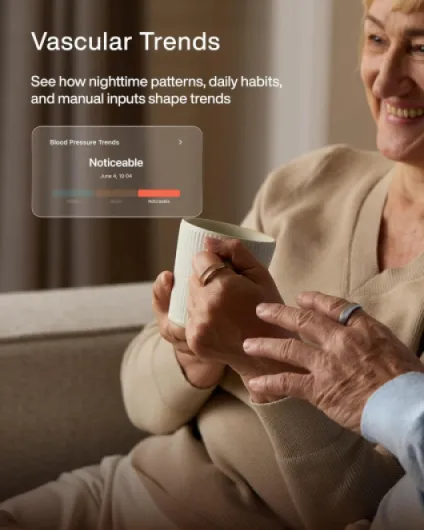
SpO₂ and the vascular load feature are interesting but not something I checked daily. SpO₂ readings were in the normal range for me, similar to what my other devices show. Vascular trends required a one-time calibration, and then you get a graph with increases and decreases over time. It’s more of a long-term indicator than an immediate feedback tool. If you like digging into graphs, you’ll enjoy it. If you just want simple yes/no answers, it might feel like overkill. Overall, performance is solid for passive health tracking, just don’t expect it to replace a full sports ecosystem.
What the RingConn Gen 3 actually does (and doesn’t do)
The RingConn Gen 3 is basically a small health tracker stuffed into a titanium ring. There’s no screen, just sensors inside and Bluetooth to sync with your phone. On paper it tracks: heart rate, HRV, sleep stages, SpO₂, activity, stress, and something they call vascular load. There’s also basic haptic vibration alerts and a 14‑day battery claim. No GPS, no flashy display, and no subscription to unlock features. Everything runs through the RingConn app on Android or iOS.
In practice, the main strengths are sleep tracking, 24/7 heart rate, and stress/HRV trends. The app gives you sleep duration, sleep stages, sleep score, and often it matches pretty well with how rested you feel. It also shows resting heart rate and HRV trends across days, which is useful if you’re trying to see how stress, alcohol, or late workouts affect you. The vascular trends part is a bit more niche: you do a one-time calibration, then it shows a graph of vascular load over time. It’s interesting, but honestly it feels more like an “extra metric” than something I checked every day.
On the flip side, workout tracking is limited. It doesn’t have GPS, and it’s not trying to be a sports watch. You can track basic activities and see heart rate during them, but if you’re used to detailed workout analytics like from an Apple Watch or Garmin, this will feel very bare-bones. One Amazon review even says straight up that it’s only really useful for sleep tracking and stress, and I kind of agree: that’s where it shines the most.
So overall, I’d describe the RingConn Gen 3 as a quiet background health tracker. It lives on your finger, sends data to the app, and you check it once or twice a day. If you want a daily coach yelling at you to hit splits and segments, this is not it. If you want a ring that watches your sleep, resting heart rate, and stress without a monthly fee, it fits that role pretty well.
Pros
- Very good for sleep, resting heart rate, and stress/HRV tracking with clear trends
- Long battery life (around 10–12 days in real use) plus a practical charging case
- No subscription fees and a discreet titanium design that’s easy to wear 24/7
Cons
- Weak workout tracking and no GPS, not suitable as a main sports device
- Sizing can be tricky, and finger size changes can make the fit inconsistent
Conclusion
Editor's rating
The RingConn Gen 3 is a solid option if you want a smart ring mainly for sleep, stress, and general health trends. It’s light, discreet, and comfortable enough to wear 24/7 once you get the sizing right. The titanium build feels durable, the Royal Gold finish looks decent without being too flashy, and the IP68 rating means you can keep it on in the shower or pool without worrying. Battery life is one of its best points: around 10–12 days in real use, with a handy charging case and no daily charging routine.
On the downside, it’s not a strong workout tracker. There’s no GPS, the exercise features are basic, and Apple Health integration isn’t perfect according to some users. If you’re used to detailed run stats or training metrics from an Apple Watch or Garmin, this will feel like a step back. Where it shines is passive tracking: sleep, resting heart rate, HRV, stress, and those longer-term vascular trends. The fact that all this comes without a subscription is a big plus compared to some competitors that charge you monthly for similar data.
So, who should buy it? People who care more about sleep quality and daily recovery than about split times and VO2 max. If you want something that quietly watches your health in the background, lasts over a week on a charge, and doesn’t lock features behind a paywall, the RingConn Gen 3 is a good fit. Who should skip it? Anyone mainly focused on workouts, GPS, or heavy Apple Health integration. In that case, you’re better off with a proper sports watch and maybe revisiting smart rings later.