Summary
Editor's rating
Value for money: good daily tracker, but know what you’re paying for
Design: looks nice, but you’ll fight with the strap at first
Battery life: finally something you don’t charge every night
Comfort: super light, but not everyone will love it for sleep
Durability & wear: fine so far, but the strap ages fast
Tracking performance: good enough, but the app can feel like overkill
What exactly is Fitbit Air supposed to do?
Pros
- Very light and discreet, easy to wear all day without noticing it much
- Battery life of around 6–7 days with quick charging
- Tracks steps, heart rate, and sleep reliably enough for everyday use
Cons
- App and AI coach feel busy and text-heavy, can be overwhelming
- Sleep stages and readiness score are not always consistent with how you feel
- Strap is fiddly to put on, ages quickly, and replacements are expensive

Specifications
View full product page →| Brand |
A screenless Fitbit in 2026… why?
I’ve been using the Google Fitbit Air on my wrist pretty much 24/7 for a bit over two weeks. Before this, I was using a smartwatch with a screen (Apple Watch SE) and, before that, a classic Fitbit band. So going back to a screenless tracker in 2026 felt a bit weird at first. No screen, just a tiny module and the app doing all the talking. If you’re used to checking your steps or heart rate with a wrist raise, this is a different mindset: you do everything in the app.
Google is pushing this thing mainly as a health tracker plus AI coach, not a mini smartwatch. You get 24/7 heart rate, sleep tracking, activity tracking and this Google Health Coach that tries to give you personalised advice. On paper, it’s pretty solid: up to 7 days of battery, super light (about 5 grams), works with iOS and Android, and no GPS on board. So it’s more for day-to-day health than hardcore running stats.
In practice, my feeling is mixed but mostly positive. The tracker itself is good: light, discreet, and the battery holds up. The app and the whole AI coaching thing are where opinions will split. Some people will like the constant feedback, others will find it noisy and a bit stressful. I fall somewhere in the middle: I like data, but I don’t want to feel judged by my wrist every morning.
If you want a simple, low-profile tracker that you barely feel on your wrist, the Fitbit Air does the job. If you’re expecting something that replaces a smartwatch or gives you super detailed training tools, you’ll probably be a bit disappointed. It’s more of a “quiet health companion” than a full-on sports computer, and you have to be okay with living inside the app.
Value for money: good daily tracker, but know what you’re paying for
On value, I’d say the Fitbit Air sits in a pretty reasonable spot if you want a simple health tracker and don’t care about having a screen. It ranks high in the activity tracker category and has a 4.1/5 rating, which matches my feeling: it’s good, but not flawless. You get solid battery life, decent tracking, and three months of AI coaching bundled in. If you compare it to an Apple Watch or a high-end Garmin, it’s cheaper and less overkill for someone who just wants steps, sleep, and heart rate.
Where it gets more nuanced is the app and coaching side. Some people will see real value in having an app that constantly nudges them and explains their data. Others will see it as noise and “AI slop”, as one reviewer called it. If you’re in the second group, you’re basically paying for features you don’t really like. Personally, I used the coach for the first week, then started ignoring most of the messages and just checked the raw stats.
You also need to consider the hidden costs: replacement straps around £35, and the fact that if you want more advanced sports metrics or GPS, you’ll need your phone or another device. There’s no built-in GPS, no screen, and the readiness score is hit or miss. If you’re a serious runner or cyclist, you’ll probably outgrow this pretty quickly and end up buying something more capable.
So in terms of value, I’d say it’s a good deal for casual users who mainly want a light, discreet band to track sleep and daily movement without a subscription wall in their face. If you’re already in the Fitbit ecosystem and just want something minimal, it makes sense. If you’re expecting full smartwatch features or pro-level sports tools, you’ll feel like you paid for half a product. It really depends what you’re comparing it to and what you actually use day-to-day.
Design: looks nice, but you’ll fight with the strap at first
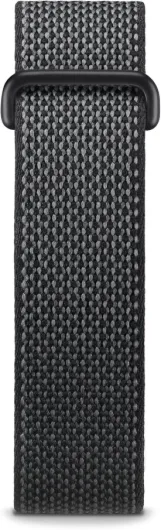
Design-wise, the Fitbit Air goes for the minimalist bracelet look. In Obsidian (basically a dark black/charcoal), it blends with pretty much anything: office clothes, gym gear, even sleepwear. It doesn’t scream “tech gadget”, which I actually liked. Compared to a chunky smartwatch, it looks more like a slim wristband than a device. If you don’t want people asking you about your watch all the time, this is a plus.
The main downside for me is the closure system. The strap is a bit fiddly to put on, especially the first few days. You have to line it up and push it through in a way that takes more attention than a classic watch buckle. Once it’s on, it feels secure and doesn’t move much, but those first mornings half-asleep, I definitely swore at it a bit. One Amazon user said the same: looks good, secure, but a bit annoying to attach. I agree with that.
There’s no screen, so there’s nothing to scratch or break visually, which is good. The body is small and light, and you forget it’s there most of the day. At 5 grams, it’s lighter than most standard watches, so under a hoodie or a jacket, it doesn’t get caught or feel bulky. For sleep, that’s also a plus, even if comfort is another topic I’ll get into later.
Overall, the design is clean and low-profile. It’s not going to impress anyone visually, but it does its job: stay out of the way. If you want something that looks flashy or like a classic watch, this is not it. If you like the idea of a discreet band that just sits there and tracks, the look is spot on. I just wish the strap system was slightly more user-friendly, especially for people who take it off often.
Battery life: finally something you don’t charge every night
Battery life is one of the strong points of the Fitbit Air. In my use, with 24/7 heart rate and sleep tracking on, I was getting around 6 to 7 days per charge, which is in line with what Google claims and what some Amazon reviewers reported. That’s with normal notifications off (since there’s no screen anyway), a few workouts per week, and syncing a couple of times a day. Compared to a smartwatch that dies every 1–2 days, it’s a relief.
Charging is pretty quick. Using a 20W USB charger (similar to the Apple one mentioned in a review), I went from around 15% to full in about an hour. So it’s easy to just plug it in while you shower and have breakfast and you’re basically good for another week. The charging cable in the box is simple and works fine. Just don’t lose it, because like always with these brands, replacement cables are not cheap and not universal.
What I appreciated is that with this battery life, sleep tracking becomes actually realistic. With my old smartwatch, I was always choosing between tracking sleep or having enough battery for the day. Here, you just wear it, and you only take it off once a week. That’s probably why my sleep data is relatively complete, even if the stages aren’t always perfect.
Overall, for battery, there’s not much to complain about. It fits the screenless concept: fewer features, but you gain endurance. If you’re tired of constantly charging your watch, this is a clear upgrade. Just keep in mind that as the battery ages over a year or two, you’ll probably see that 7 days drop a bit, like with every device.

Comfort: super light, but not everyone will love it for sleep
On the comfort side, I’d say the Fitbit Air is mostly very good, but not perfect. During the day, you honestly forget it’s on. It’s that light. I wore it while working at a desk, walking around town, and doing some light workouts, and it never really bothered me. No big pressure points, no rubbing issues when moving my wrist a lot. Compared to a heavier smartwatch, it’s night and day; you don’t get that sweaty feeling under a big watch face.
At night, opinions will vary. Personally, I could sleep with it, but I did feel it sometimes, especially when my wrist was bent or under the pillow. One Amazon reviewer said they can’t usually sleep with watches but had no problem with this one; another said it made their wrist itchy and even a bit inflamed. I’m somewhere between the two: not painful, but not fully “invisible” either. If you already hate sleeping with anything on your wrist, this won’t magically fix that.
The other thing is moisture and skin reaction. I showered with it a few times. The tracker itself is fine with water, but the band takes a while to dry, and if you don’t dry under it properly, your skin will feel a bit sticky. After a long hot day plus a shower, my skin under the band was slightly red once. Nothing dramatic, but I now make sure to slide it around or take it off for a few minutes to let the skin breathe and dry.
So for comfort, I’d say: daytime, almost perfect; nighttime, depends on your tolerance; wet conditions, you need to manage drying. If you’re sensitive or prone to skin irritation, keep an eye on it and don’t wear it too tight. If you’re already used to fitness bands, you’ll probably find this one a bit better than average thanks to the low weight.
Durability & wear: fine so far, but the strap ages fast
In terms of durability, I obviously haven’t had it for years, but after a couple of weeks of daily use, including workouts and showers, the tracker module itself looks basically new. No scratches, no marks, nothing weird. It’s light and doesn’t bang into things as much as a big watch, so that helps. From that side, I’m not too worried about its long-term survival, as long as you don’t smash it against a wall.
The strap is another story. Like one Amazon user mentioned, the synthetic band starts looking a bit gross pretty quickly, especially if you sweat a lot or shower with it. Dirt and skin oils build up, and the color (if you don’t get black) can fade or stain a bit. I had the dark color, so it hides it better, but you still see some shine and minor wear after a while. You can wash it with soap and water, which helps, but it’s something you need to do regularly if you don’t want it to look grimy.
Replacement straps are not cheap. People are reporting around £35 per strap, which is a bit steep for what is basically a rubber band. That’s something to factor into the long-term cost. If you plan to wear it for several years and like changing colors, the price of bands adds up quickly. I’d honestly stick to dark colors to hide wear and clean it often.
Water-wise, I had no issues showering with it, but like I said earlier, the band takes time to dry, and if you keep it glued to your skin while it’s damp, you might get irritation. So for durability and comfort, I’d say: the device itself seems robust enough, but the strap is the weak point. Not catastrophic, but you can tell it’s the part that will age first and cost you later if you’re picky about how it looks.
Tracking performance: good enough, but the app can feel like overkill
In terms of pure tracking, the Fitbit Air is pretty solid for daily use. Step counting matched fairly well with my phone and with what I know from previous devices. Heart rate during normal activity (walking, working, light workouts) looked realistic and stable. When I did a short run, the heart rate curve in the app made sense and reacted quickly to changes. For everyday users who just want to know if they’re moving enough and how their heart behaves, it does the job.
Sleep tracking is where it gets more mixed. Some nights, the graphs and stages (light, deep, REM) lined up with how I felt in the morning. Other nights, it said I had almost no REM, even though I remembered vivid dreams. That lines up with one Amazon review saying the sleep data felt a bit off sometimes. That’s pretty common with wrist trackers in general, but if you take every number as absolute truth, you might get frustrated. I see it more as a trend indicator than a medical report.
The readiness or recovery score also feels a bit arbitrary. Some mornings when I felt okay, it told me to take it easy. Other days when I felt tired, the score was weirdly positive. It’s clearly based on sleep, heart rate, and activity, but the logic isn’t always obvious. It can be useful as a rough guide, but I wouldn’t plan my whole training week around it. One user said it added anxiety for them, and I get that: if you’re sensitive to numbers telling you how you “should” feel, this can be more stress than help.
The other part of performance is the Google Health Coach. It does try to adapt to you over time, but there is a lot of text, and it repeats itself. Sometimes it’s helpful (“you’ve been sitting a lot this week, try adding a short walk after lunch”), sometimes it’s just filler. And yes, it keeps track of what you discuss, so don’t overshare if that bothers you. Overall, tracking performance is decent to good, but the app experience might feel cluttered if you just want the basics.
What exactly is Fitbit Air supposed to do?
The Fitbit Air is basically a tiny, screenless health tracker that lives on your wrist and sends everything to the Fitbit/Google Health app. No notifications, no calls, no music controls: just tracking. It covers the basics really well: steps, calories, 24/7 heart rate, and sleep. There’s no built-in GPS, so if you want maps of your runs or walks, you need to bring your phone and use connected GPS. If you’re used to a full smartwatch, this feels like going back to the basics, which can be good or frustrating depending on your expectations.
Google is clearly betting on Google Health Coach as the selling point. You get three months of personalised coaching included. The tracker collects data, and the coach tries to translate that into advice: when to rest more, when to move, how your sleep affects your day, etc. In reality, it’s a mix of stats, suggestions, and a lot of text bubbles. Some of it is helpful, like simple reminders about bedtime or walking more on lazy days. Some of it feels like generic AI chatter that repeats the same ideas with slightly different words.
One thing I liked: you don’t need to think about starting most activities. The automatic detection for walking and basic workouts is decent. I went for a few walks and light runs without starting anything, and the app still logged them fairly well. But if you want precise control over your sessions, you’ll end up digging in the app to start or tag workouts, which is less practical than pressing a button on a watch.
Overall, the product is positioned as a simple health wearable, not a tech toy. It’s clearly for people who care more about sleep and general wellbeing than about checking notifications on their wrist. If that’s you, the feature set is coherent. If you’re looking for a sports watch with interval timers and live stats, you’ll feel limited very quickly.
Pros
- Very light and discreet, easy to wear all day without noticing it much
- Battery life of around 6–7 days with quick charging
- Tracks steps, heart rate, and sleep reliably enough for everyday use
Cons
- App and AI coach feel busy and text-heavy, can be overwhelming
- Sleep stages and readiness score are not always consistent with how you feel
- Strap is fiddly to put on, ages quickly, and replacements are expensive
Conclusion
Editor's rating
After living with the Fitbit Air for a bit, my overall feeling is that it’s a solid, low-profile health tracker with some quirks. The hardware is light, discreet, and the battery life is genuinely practical. You can wear it all week, track sleep, heart rate, and basic activity without thinking about charging. For everyday health tracking, it gets the job done, and the app gives you plenty of data to look at.
The weak spots are mostly on the software and comfort edges. The app can feel cluttered and wordy, with an AI coach that sometimes helps and sometimes just talks too much. Sleep and readiness scores are okay as trends but not always aligned with how you actually feel. The strap is comfortable enough but a bit annoying to put on, and it can look worn or dirty faster than you’d like, with pricey replacements.
I’d recommend the Fitbit Air to people who want a simple, screenless band mainly for sleep, steps, and general wellbeing, and who don’t want to charge something every day. It’s also good if you dislike bulky watches and prefer something you barely notice. On the other hand, if you’re sensitive to health metrics stressing you out, if you hate reading long app messages, or if you want proper sports features and GPS, I’d skip this and look at a proper smartwatch or sports watch. Overall, it’s a good but not perfect option for casual health tracking.