Summary
Editor's rating
Value for money: good deal if you keep your expectations in check
Design: small, light, looks fine but feels budget
Battery: genuinely good endurance for a small tracker
Comfort: easy to forget on the wrist, good for sleep tracking
Materials and build: light but a bit cheap, strap is the weak point
Performance: solid on basics, rough on advanced health metrics
What this Spurkey tracker actually offers on paper
Pros
- Lightweight and comfortable to wear day and night
- Good battery life (about a week or more per charge in real use)
- Decent step and basic heart rate tracking for the price
- Clear 1.1" AMOLED screen with good brightness
Cons
- Blood pressure and sleep stage data are not very accurate
- Strap feels flimsy and tends to pick up dirt/colour from clothes
- Build quality and reliability are clearly budget level, with some reports of early failures

Specifications
View full product page →| Brand | Spurkey |
A cheap fitness tracker I grabbed on a whim
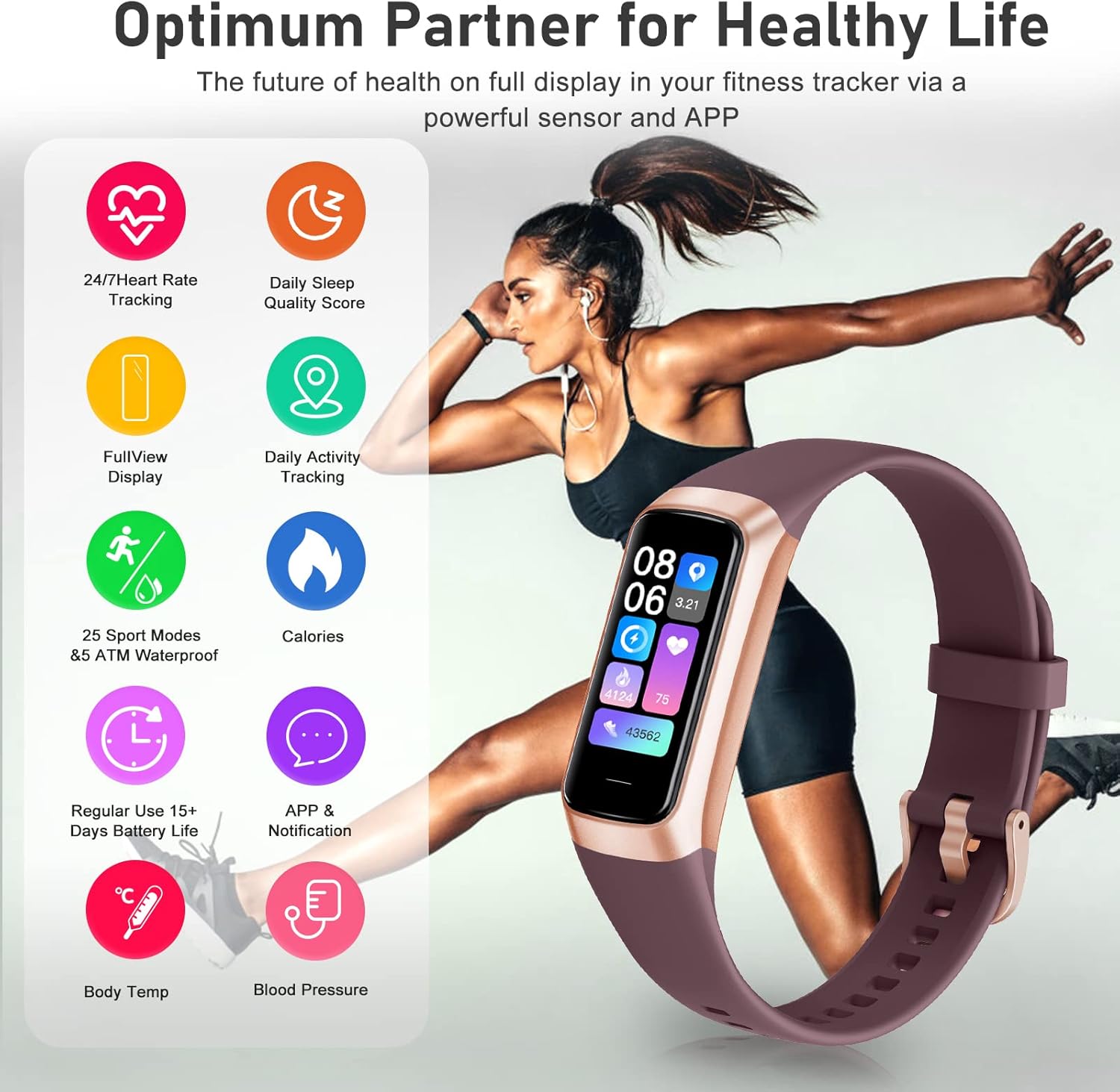
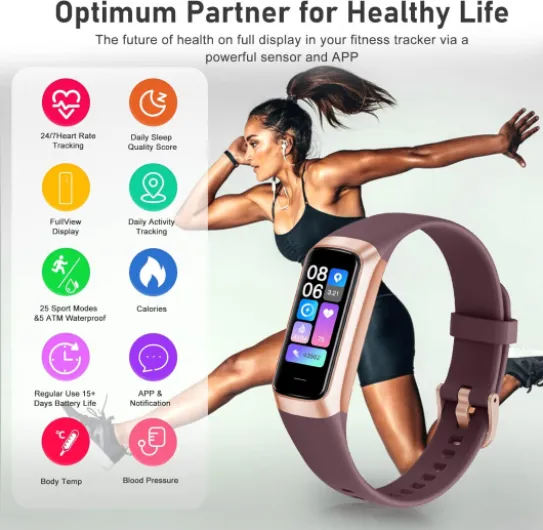
I picked up this Spurkey fitness tracker mainly because I wanted something cheap to count steps and check my heart rate without paying Apple or Fitbit prices. The product page throws a lot of stuff at you: 24/7 heart rate, blood oxygen, blood pressure, sleep tracking, temperature, 25 sport modes, IP68 waterproof, the whole package. For the price, it almost feels like they crammed every buzzword they could find into one watch. I went in with pretty low expectations, to be honest.
After wearing it daily, my feeling is simple: it does the basics fairly well, but you need to be realistic about what you're buying. This is a budget tracker, not a medical device and not a premium smartwatch. If you expect perfect blood pressure readings or pro-level sports tracking, you're going to be annoyed. If you just want steps, rough heart rate, notifications, and a watch that lasts more than a day on a charge, it’s actually not bad.
What surprised me most at first was the comfort and the screen. The band is light, the case is small, and the 1.1" AMOLED display is actually quite clear and bright for the price. Setup with the phone app was fairly quick, and I had steps, sleep and heart rate on my wrist within 10–15 minutes. No major headache there, which is already a win in this price range where apps are often a mess.
But it’s not perfect. You can see where they cut corners: the strap feels a bit cheap, the blood pressure and sleep data are more "rough idea" than reliable stats, and the build doesn’t give the same confidence as more expensive brands. So yeah, it’s good value if you know what you’re getting, but not some miracle gadget. In the rest of this review I’ll go through what worked for me, what felt off, and who I think this watch actually suits.
Value for money: good deal if you keep your expectations in check
For the price bracket this sits in (very much on the low end compared to big brands), the value is pretty solid as long as you know what you’re getting. You’re paying budget money and you’re getting: a decent AMOLED screen, reliable step counting, acceptable heart rate tracking, long battery life, basic notifications, and a lightweight watch that’s comfortable to wear all day. That’s already more than some no-name bands I’ve tried that barely sync or die after two days.
Where the value gets a bit more mixed is when you start looking at the long list of features: blood pressure, SpO2, temperature, detailed sleep stages, 25 sport modes. They’re nice to have, but not all of them are reliable. If you buy this thinking you’re getting a cheap medical device, you’ll be disappointed. If you treat these features as rough indicators and not serious diagnostics, then you still get good bang for your buck.
Compared to slightly more expensive trackers from better-known brands, you do lose some things: better app quality, more accurate sensors, more durable materials, and often cleaner design. One reviewer even said they bought a different watch for the same price that allowed answering calls directly from the watch. So, yes, there are alternatives that might give you a bit more in specific areas. But if your main goal is a simple tracker to try out the whole “fitness watch” thing without spending much, this Spurkey is a reasonable starting point.
To sum it up: good value if your budget is tight and you mainly want steps, basic heart rate, and long battery life. If you can stretch your budget a bit and care about more accurate health metrics or better build, it might be worth looking at better-known brands. This one is more "decent cheap tool" than "long-term investment".
Design: small, light, looks fine but feels budget
Design-wise, this tracker is pretty straightforward. It has a rectangular case with rounded corners and a fairly slim profile. On my wrist it looks more like a fitness band than a full-blown smartwatch, which I actually like. It doesn’t scream for attention and doesn’t look silly in the gym or at work. The Bordeaux colour gives it a slightly more stylish vibe than the usual black bands, but it’s still quite neutral and unisex.
The 1.1 inch AMOLED screen is the good surprise here. The resolution (390 x 390) is high for the size, so text and icons look sharp, not pixelated. Brightness is decent; I could read it outside in daylight without squinting all the time, although under strong sun you do need to tilt your wrist a bit. There are several watch faces in the app. Most are pretty basic, but you can at least choose between more “fitness” style ones with metrics and simpler ones that look more like a normal watch.
The case material is ABS plastic, and you can feel it. It doesn’t feel premium like metal or high-end composites. It’s light, which is nice, but also a bit "toy-like" if you’re used to heavier watches. The side button feels okay but not super solid; it works, but I wouldn’t abuse it. The bezel around the screen is noticeable, so don’t expect an edge-to-edge look. For this price, I wasn’t expecting anything fancy, and that’s exactly what you get: functional, not stylish.
Overall, I’d say the design is decent but clearly budget. It looks fine on the wrist, especially if you’re not obsessed with design details, but if you put it next to something like a Galaxy Watch or an Apple Watch, the difference in materials and finish is obvious. For a cheap fitness tracker you wear daily and maybe scratch at the gym, that didn’t bother me too much, but it’s worth knowing before you buy.
Battery: genuinely good endurance for a small tracker
The battery is one of the strong points. The brand claims 10–14 days of regular use and up to 30 days standby. In real life, with 24/7 heart rate on, a few SpO2 checks per day, notifications enabled, and a couple of workouts logged, I was landing more around 7–10 days per charge. That’s still pretty good. I didn’t find myself constantly worrying about the battery like with some smartwatches that barely last two days.
One Amazon user mentioned they had charged it once in four days and still had about 25% left, which matches my experience: the drain is fairly slow if you don’t abuse the screen brightness and continuous measurements. The small 90 mAh battery is clearly optimized for low power usage, and the simple interface doesn’t seem to hog energy too much. The AMOLED screen helps too, as black pixels don’t use much power.
Charging is done with a magnetic USB cable. You just snap it on the back, and it connects fairly easily. It’s not the strongest magnet in the world, but enough to hold if the watch lies flat. Charging from low battery to full takes roughly 1.5–2 hours in my case. Not lightning fast, but perfectly acceptable given how long it then lasts. I just charge it while I’m at my desk or watching TV, and it’s done.
There is one caveat: a 1-star review said their watch stopped turning on after about 12 hours and wouldn’t power up after charging. I didn’t run into that, but it shows there are probably some quality control issues. If you get a good unit, the battery life is one of the clear advantages of this tracker. If you’re unlucky and get a dud, that’s another story, but that’s more about reliability than battery performance itself.
Comfort: easy to forget on the wrist, good for sleep tracking
On comfort, I have almost nothing to complain about. The watch is very lightweight, which makes a big difference if you wear it 24/7. After a few hours, I basically forgot it was there. The silicone strap is soft on the skin and didn’t cause any irritation for me, even during sweaty workouts. Compared to chunkier smartwatches I’ve tried, this one is much less noticeable during push-ups, typing, or sleeping.
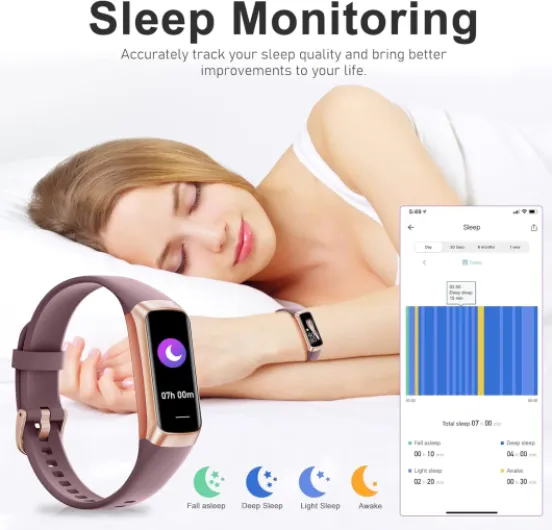
For sleep tracking, the small size is a real plus. Bigger watches often end up pressing into the wrist or getting caught in the blanket. This one just sits there quietly. I wore it several nights in a row and never felt the need to take it off because it was bothering me. The buckle doesn’t dig into the skin if you don’t overtighten it, and there are enough holes to adjust the fit properly for thinner or thicker wrists.
My only minor complaint is the strap quality versus comfort. It’s comfortable, yes, but because it’s a bit thin and cheap-feeling, I was always a bit careful when taking it off so I wouldn’t stretch it too much. Also, like one reviewer said, the material tends to pick up lint and colours from clothes. After a few days, the strap didn’t look super fresh anymore, especially around the edges. It’s a cosmetic issue more than a comfort one, but it’s still annoying if you like your gear to look clean.
In day-to-day life (work, walking, gym), I had no problem keeping it on all day. It fits nicely under sleeves, doesn’t snag on things, and the case isn’t bulky. So in terms of pure comfort, I’d say it’s pretty solid, especially if your priority is a light tracker you can wear night and day without thinking too much about it.
Materials and build: light but a bit cheap, strap is the weak point
The watch body is made of ABS plastic, and the strap is silicone. On the plus side, that makes the whole thing very light, so you barely feel it on the wrist. On the downside, it does feel a bit cheap compared to more solid brands. The plastic doesn’t creak or anything, but it doesn’t give that “this will last for years” impression. It’s more like: okay for daily casual use, but I wouldn’t smash it around in construction work or contact sports.
The strap is where you really notice the cost-cutting. It’s soft and flexible, which is comfortable, but it also feels a bit flimsy. One Amazon reviewer mentioned the strap being "quite flimsy", and I agree. It works, but I wouldn’t be shocked if it wears out or tears after a year or if you keep taking it on and off aggressively. Another user complained that the band (in pink) picked up colour from a jumper and looked dirty fast. My Bordeaux one also tends to catch marks and dust more than darker straps I’ve had before.
The buckle closure is standard and does its job. I never had it open by accident, which is important. The quick-release pins on the strap mean you can technically change bands if you find a compatible one, but you may have to hunt a bit since it’s not a big brand with tons of third-party accessories. Still, if the original strap annoys you, at least there’s a way out.
In terms of water resistance, it’s rated IP68 and 1.5 m depth. I used it under the shower and for washing hands without any issue. I didn’t go full-on diving with it, but for normal swimming and daily splashes it seems fine. Just keep in mind it’s still a plastic budget watch; I wouldn’t rely on it for repeated deep-water use. Overall, the build quality is acceptable for the price: light, functional, but not something you brag about.
Performance: solid on basics, rough on advanced health metrics
Let’s be clear: this watch is good enough for casual tracking, but not something I’d use to manage health conditions. For steps, it’s surprisingly decent. I compared it to my phone and another mid-range tracker during a few walks, and the difference was usually within a few hundred steps over 10,000, which is fine for everyday use. One Amazon reviewer also mentioned the step count being "pretty accurate", and I’m on the same page.
Heart rate is okay too for general use. At rest and during light exercise, it matched quite closely with another watch I have. During more intense workouts, it sometimes lagged a bit or showed slightly lower peaks than expected, but nothing shocking for a wrist-based optical sensor in this price range. For checking if you’re roughly in a certain zone (easy, moderate, hard), it does the job. For serious training based on heart rate zones, I’d still go for a chest strap or a higher-end watch.
Where things get more "meh" is sleep tracking and blood pressure. Sleep stages (deep, light, awake) are clearly not very precise. Like another reviewer said, it tends to show everything as light or deep sleep and almost never marks awake periods, even when I know I was awake for a while. So you get a general idea of when you slept and woke up, but I wouldn’t read too much into the detailed graph. Blood pressure readings were consistently lower than my cuff monitor. That matches the review saying it reads slightly low. For me it’s more like a toy feature than something useful.
Blood oxygen and temperature feel like bonus stats. They work, but there’s no clear explanation of how accurate they are, and values can jump a bit from one reading to another. For casual curiosity, it’s okay. For any medical concern, I’d ignore it. Overall, performance is fine for steps, basic heart rate, and notifications, but the more advanced health metrics are just rough estimates. If you treat them as that, you won’t be too disappointed.
What this Spurkey tracker actually offers on paper
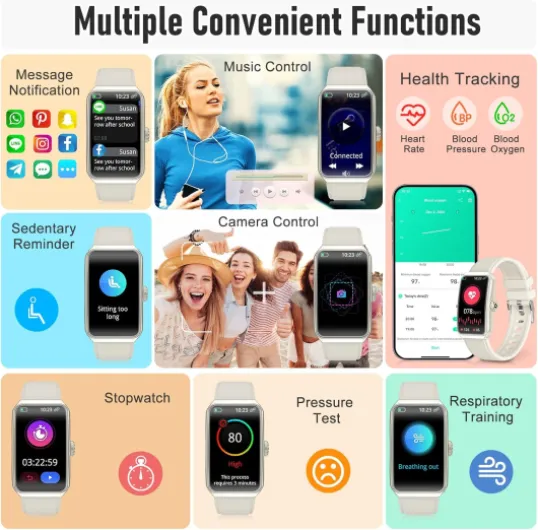
On paper, this Spurkey fitness tracker tries to tick almost every box. You get a 1.1 inch AMOLED touch screen with 390 x 390 resolution, which is actually quite sharp for such a small screen. It tracks heart rate 24/7, blood oxygen (SpO2), blood pressure, sleep stages, steps, calories, and even skin temperature. The brand claims up to 10–14 days of normal use and 30 days of standby thanks to a 90 mAh battery, with magnetic fast charging. It’s rated IP68, so you’re supposed to be able to shower, swim, or get caught in the rain without worrying.
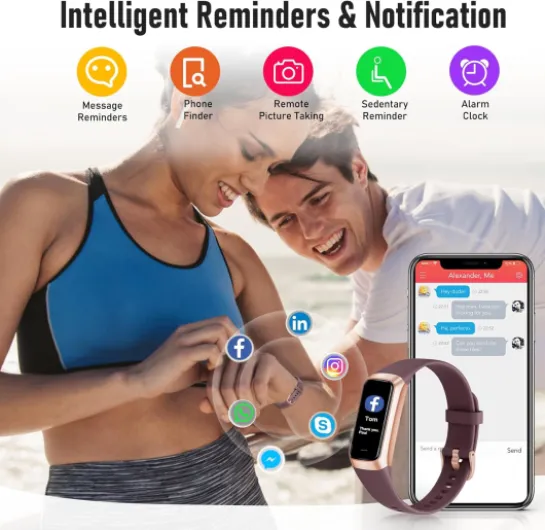
On the smart side, it connects to your phone via Bluetooth and works with Android and iOS. You can get notifications, control music, trigger your phone camera, check the weather, set alarms, and use things like sedentary reminders and water reminders. There’s even cycle tracking for women. Sports-wise, it advertises 25 sport modes (walking, running, cycling, etc.), with GPS relying on your phone (no built-in GPS, the watch just uses your phone’s location).
The box is pretty basic: the watch, a USB magnetic charging cable, and a user manual. Nothing fancy here. It’s clearly targeted at people who want a cheap all-in-one tracker rather than tech enthusiasts who obsess over sensors and metrics. The brand is not a big name, and that shows in the overall presentation: it feels more “Amazon brand” than something you’d find in a physical store with big marketing behind it.
In practice, the watch focuses more on giving you lots of features on a budget than on doing each one perfectly. That’s the key thing to keep in mind while reading the rest: it tries to do everything, but some features are definitely more convincing than others. For example, steps and heart rate are pretty decent, while blood pressure and sleep accuracy are more in the "rough estimate" category based on my use.
Pros
- Lightweight and comfortable to wear day and night
- Good battery life (about a week or more per charge in real use)
- Decent step and basic heart rate tracking for the price
- Clear 1.1" AMOLED screen with good brightness
Cons
- Blood pressure and sleep stage data are not very accurate
- Strap feels flimsy and tends to pick up dirt/colour from clothes
- Build quality and reliability are clearly budget level, with some reports of early failures
Conclusion
Editor's rating
After using this Spurkey fitness tracker, my conclusion is pretty straightforward: it’s a decent budget watch that covers the basics well enough, with a few rough edges you have to accept at this price. Steps, basic heart rate, notifications, and battery life are the strong points. The watch is light, comfortable, and the AMOLED screen is nicer than I expected for the money. For someone who just wants to track daily activity, see roughly how much they move, and get call/message alerts on the wrist, it does the job.
On the other hand, the more advanced features (blood pressure, detailed sleep stages, temperature) are not very reliable and should be taken as general indicators, not real measurements. The strap feels cheap and can pick up dirt and colour from clothes, and there are a few worrying reviews about units dying quickly, which suggests quality control is not perfect. So it’s not a product I’d rely on for health monitoring or long-term durability.
If you’re a beginner who wants to try a fitness tracker without spending much, or you just need a simple step counter with good battery and basic health info, this watch is a good value option. If you’re serious about training data, have medical concerns, or want a watch that feels more solid and polished, I’d say skip this and invest in a more established brand, even if it costs more. This Spurkey is fine as an entry-level tool, but it’s not the last tracker you’ll ever buy.