Summary
Editor's rating
Value for money: simple, good, but a bit pricey for what it is
Design: basic plastic brick, but practical
Battery and daily hassle: zero charging, just a coin cell
Durability and build: lightweight but tougher than it looks
Performance: step counting accuracy and real-life behavior
What you actually get in the box
Pros
- Very simple to use: no apps, no Bluetooth, just steps
- Large, clear display that’s easy to read while walking
- Decent accuracy thanks to 3D Tri-Axis sensor and 10-step filter
- Long battery life with standard CR2032 cell and auto-sleep mode
Cons
- Price is a bit high for a device that only counts steps
- Plain design and no extra metrics like distance or calories
- Not waterproof, only rain/splash resistant in practice

Specifications
View full product page →| Brand | 3DActive |
A step counter for people who are sick of apps and notifications
I picked up the 3DFitBud Simple Step Counter because I was tired of smartwatches nagging me, buzzing on my wrist, and needing yet another app on my phone. I just wanted something that counts steps, doesn’t need charging every night, and doesn’t try to be my life coach. This one shows up a lot in the pedometer rankings, so I gave it a go for a couple of weeks of daily use.
In practice, it really is as basic as advertised: it counts steps, that’s it. No distance, no calories, no time, no Bluetooth. You pull the battery tab, clip it on, and walk. If you’re expecting anything more advanced, you’ll be disappointed. But if you’re like me and just want a simple number at the end of the day, it’s pretty much what you’re looking for.
During my tests, I wore it clipped to my waistband, sometimes on the lanyard around my neck, and a few times just loose in my pocket. I did normal stuff: walking the dog, commuting, going up and down stairs at home, a couple of longer walks of around 40–60 minutes. I also compared it against my phone’s step counter and a manual tally counter on one walk to see how far off it was.
Overall, my feeling is that it’s a solid, no-frills step tracker. It’s not perfect and the price is a bit high for such a basic device, but it does what it says and doesn’t get in your way. If you want data overload, this is not for you. If you just want to know “how many steps did I roughly do today?”, it gets the job done without fuss.
Value for money: simple, good, but a bit pricey for what it is
Let’s talk about the price. This 3DFitBud usually costs more than some basic step counters and is often close to cheap fitness bands that do a lot more (heart rate, distance, sleep tracking, etc.). For a device that literally only counts steps, it feels a bit on the pricey side. You’re paying for simplicity, a decent sensor, and a known brand rather than a long list of features.
Compared to a no-name pedometer for half the price, you get better accuracy, a clearer screen, and a more reliable clip. Also, there’s a 2-year warranty, which is not nothing for such a small gadget. If you’re buying for an elderly parent or someone who hates tech, the extra cost is easier to justify because they’ll likely use it instead of leaving a complicated fitness band in a drawer.
On the other hand, if you’re even slightly tech-comfortable, you can find budget wrist trackers that do steps plus distance and calories for similar money. They’ll need charging every few days and they’re often less accurate, but in terms of pure “features per euro,” they beat this. So it depends what you care about more: no hassle and reliability, or lots of stats and lower price per function.
Personally, I think the value is good but not outstanding. It’s one of those products where you pay a bit more for a simple, trustworthy experience. If that simplicity is exactly what you need, you’ll feel it’s worth it. If you like tinkering with apps and graphs, you’ll probably look at the price and think, “That’s a lot for a plastic box that only shows one number.”
Design: basic plastic brick, but practical
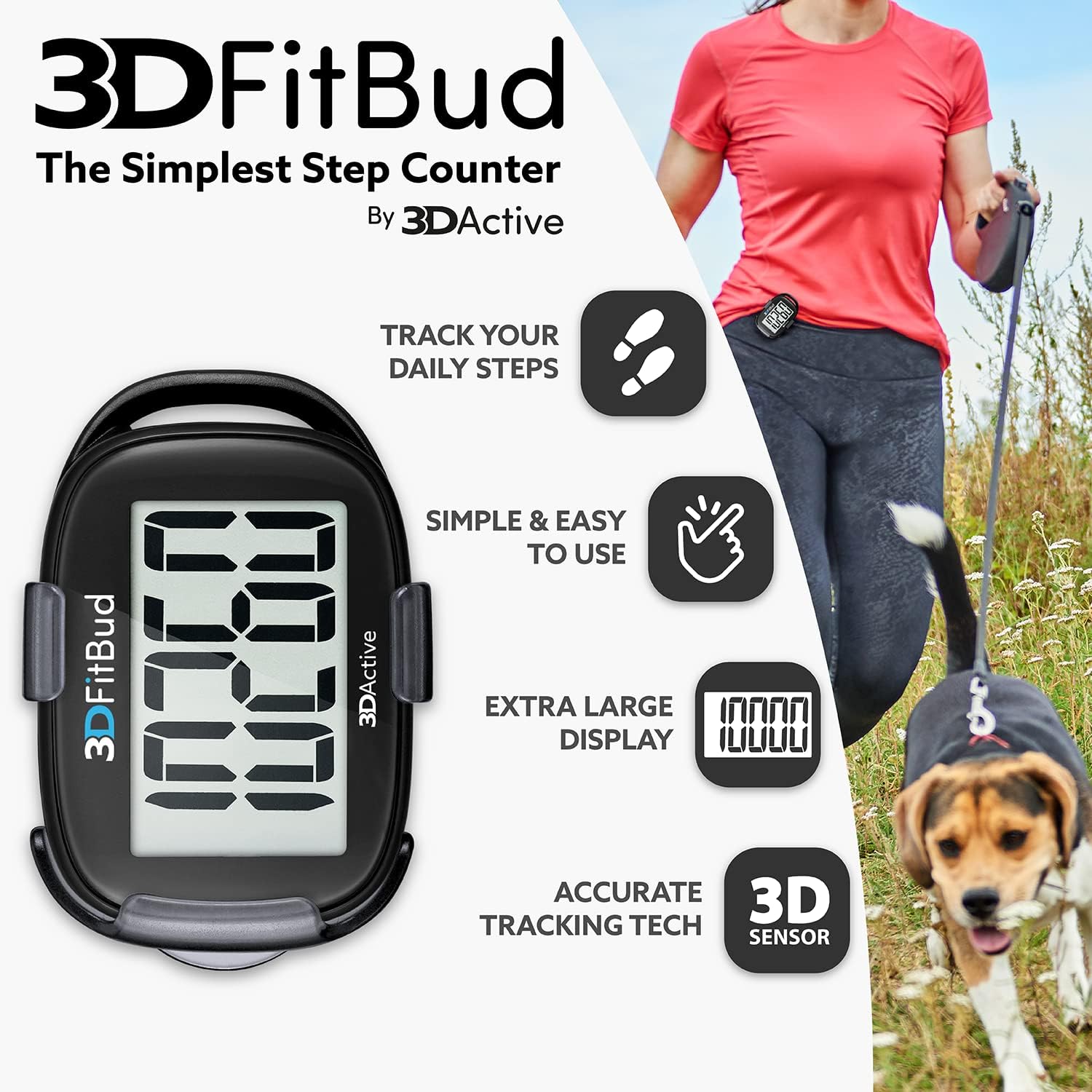
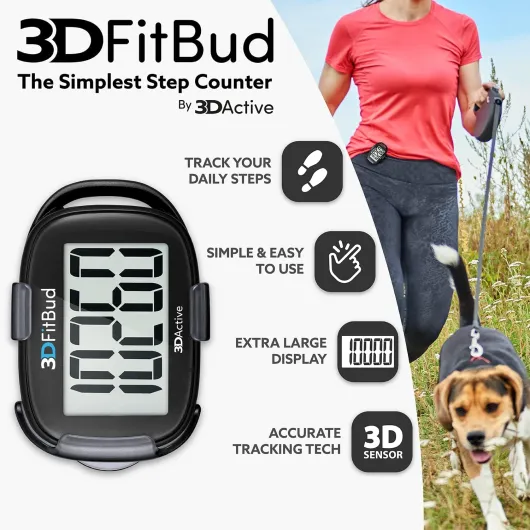
Design-wise, this thing is not going to impress anyone, and that’s fine. It’s a small black rectangle, about 6 x 4 x 1 cm, with a big step number on the front. No buttons on the front, just the display and the brand logo. On the back, you have the battery compartment and the reset button, which is recessed so you don’t hit it accidentally when it’s clipped to your belt or in your pocket.
The main design win is the large display. The digits are big and thick, and you can read them at a glance, even while walking. I tried it indoors, outdoors in bright sunlight, and in the evening. As long as you have some light, it’s easy to see. There’s no backlight, so in the dark you’ll have to tilt it toward a light source, but for normal daily use it’s fine. For older users or people with weaker eyesight, this big screen is a real plus compared to tiny smartwatch fonts.
The clip system is also thought through. The pedometer sits inside a plastic holder with a strong spring clip. The clip grabs onto jeans, leggings, or even a thin waistband pretty well. I tugged at it a few times and didn’t feel like it was going to fall off. You can also attach the lanyard to the top loop and wear it around your neck, which is probably the easiest option for seniors or kids. I tried it both ways and didn’t have any issues with it flipping around or failing to count steps.
On the downside, the design is very plain. If you care about style, this looks like a small pager from the 90s. Also, there’s only one color (black for this model), so no personalization. But if you’re buying this for function, not looks, the design is fine: compact, light, easy to read, and reasonably secure when clipped on. It’s clearly built around one idea: show steps, nothing else.
Battery and daily hassle: zero charging, just a coin cell
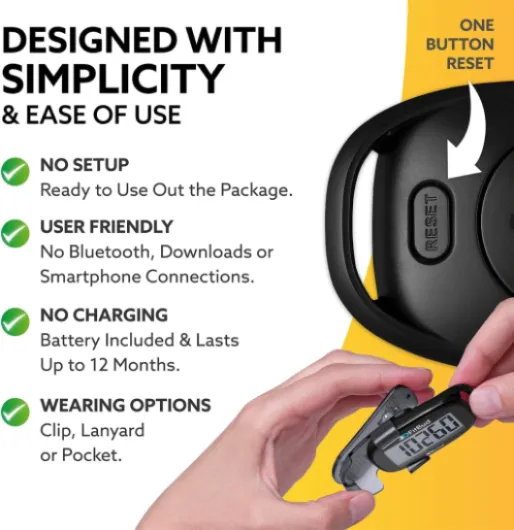
The battery setup is simple: it uses a standard CR2032 button cell, which is already installed. You just pull the plastic tab to activate it. The brand claims around 12 months of life, and based on similar devices I’ve used, that’s realistic if you’re not hammering it 24/7. I’ve only had it for a few weeks, so I can’t confirm a full year, but the battery indicator hasn’t budged and there’s no sign of weakness.
What I liked is that there’s no charging cable, no dock, no USB port. You don’t have to remember to plug it in. For something that’s meant to be simple and senior-friendly, that’s a big plus. It goes into auto sleep when you’re not moving, the screen turns off, and it wakes up again when you start walking. That obviously saves battery and avoids the whole “dead tracker at 3 pm” problem you get with some cheap wristbands.
When the battery eventually dies, you’ll need a small screwdriver to open the compartment on the back and swap the coin cell. The guide explains it, and CR2032 batteries are easy to find in supermarkets or online. If you’re not handy, you might ask someone to do it for you, but it’s not rocket science. I’d have liked a tiny screwdriver in the box, but that’s a detail.
Overall, on the battery side, it’s low-maintenance and practical. If you hate charging gadgets or you’re buying this for someone who never remembers to plug things in, this is one of the main reasons to pick a simple pedometer like this over a smartwatch or a fancy fitness band. You put in a new battery once a year, and that’s pretty much the whole story.
Durability and build: lightweight but tougher than it looks
The 3DFitBud is made of ABS plastic, and when you first pick it up, it feels very light and a bit toy-like. I was a bit skeptical about how long it would last. After a few weeks of daily use, including a couple of accidental drops from waist height onto hard floor, it’s still working fine, no cracks, no loose parts. The screen hasn’t scratched easily either, and I’ve tossed it into a bag with keys a few times (not recommended, but that’s real life).
The clip is solid, which is important. The spring has good tension, and the holder grips the pedometer well. I tried yanking it off my waistband a few times and it didn’t budge until I actually opened the clip. That gives some confidence that it won’t just pop off during a walk. The lanyard is basic but decent quality, with a simple loop and no fancy safety breakaway, so keep that in mind if you’re using it with kids.
I’ve also used it in light rain and it survived without any issues. It’s not sold as waterproof, and I wouldn’t shower or swim with it, but rain and sweat don’t seem to be a problem. A few users say they’ve used it in wet conditions and it kept going, which matches my experience so far. Just don’t expect IP-rated water resistance; treat it as splash-resistant at best.
Long term, the only real concern I see is the battery door and the clip spring if you’re very rough with it. But for normal daily walking, office use, dog walks, and errands, it feels sturdy enough. It’s not premium, but it’s not flimsy junk either. For the price point, I’d call the durability pretty solid, especially given how light it is.
Performance: step counting accuracy and real-life behavior
This is where it matters: does it actually count steps properly? I did a few tests. On one 40-minute walk, I used a handheld tally counter and counted my steps manually, while also running a step counter app on my phone. At the end, the tally counter and the 3DFitBud were very close (difference of a few dozen steps), while my phone was off by a few hundred. That lines up with what other users mention: it’s pretty solid for normal walking.
The 3D Tri-Axis sensor seems to handle different positions well. I wore it on my hip, in my pocket, and on the lanyard around my neck. The step counts were always in the same ballpark, only small variations. It doesn’t freak out in the car either. I tested it on a bumpy drive and it didn’t randomly rack up steps. Same thing when I was just fidgeting at my desk or shifting around on the sofa: it mostly stayed put at the same number, which is what you want.
The 10-step filter is important to understand. When you start walking, the screen doesn’t move until you hit step 11, then it jumps and adds all 11. If you only walk 3–4 steps and stop, it usually ignores them. This is why it doesn’t register every tiny move, but it also means very short bursts (e.g., walking 5 steps from your couch to the fridge and back) might not show up. For daily totals, that’s not a big deal, but if you’re obsessively tracking every little movement, this might annoy you.
In everyday use, I’d say the performance is reliable enough for general activity tracking, not for scientific precision. It keeps counting across days until you manually reset it, so you can use it for weekly totals too. It goes into sleep mode when you’re still, but wakes up by itself when you start walking again. I didn’t notice missed chunks of steps or weird jumps. For the price, the step counting behavior is decent and clearly better than most phone apps I’ve tried.
What you actually get in the box
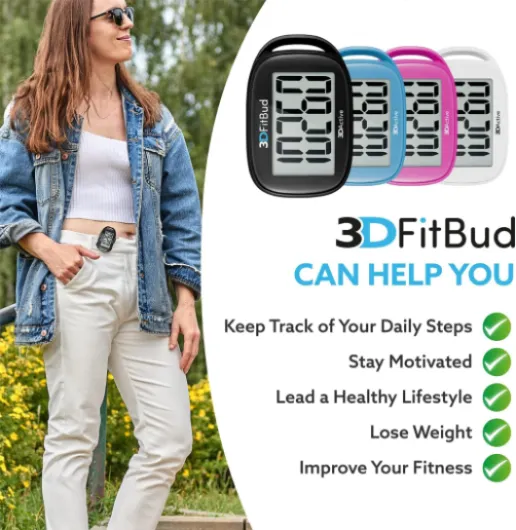
Out of the box, the 3DFitBud is very straightforward. You get the pedometer itself, a plastic clip holder, a neck lanyard, a CR2032 battery already installed, and a small user guide. No USB cable, no charger, no extras. The setup is basically: peel off the screen sticker, pull out the little plastic battery tab on the back, and it wakes up. Mine already showed a few test steps on the screen, which is normal, so I just used the reset button on the back to zero it.
The user guide is short but clear. It explains the main quirk: it ignores the first 10 steps, then if you keep walking, it adds them to the total. That’s meant to filter out random movements like shifting in your chair or walking two steps in the kitchen. It sounds odd, but in practice it works well. Once you know this, the device is basically self-explanatory. One big display on the front, one small reset button on the back that you won’t hit by accident.
In terms of first impression, it feels like a cheap but decent bit of kit. It’s very light (around 24 grams), made of ABS plastic, and small enough to disappear in a pocket. The clip is already attached to a holder that the pedometer slides into, and there’s a little loop on top if you want to run the lanyard through it. Nothing fancy, but everything you need to start using it is there, including the battery, which is key for something aimed at seniors and non-techy users.
So from a presentation point of view: simple, clear, and functional. No fancy packaging, no app QR codes, no registration screens. You open it, you read a one-page guide if you feel like it, and you’re walking in under two minutes. For this type of product, that’s exactly what I expect.
Pros
- Very simple to use: no apps, no Bluetooth, just steps
- Large, clear display that’s easy to read while walking
- Decent accuracy thanks to 3D Tri-Axis sensor and 10-step filter
- Long battery life with standard CR2032 cell and auto-sleep mode
Cons
- Price is a bit high for a device that only counts steps
- Plain design and no extra metrics like distance or calories
- Not waterproof, only rain/splash resistant in practice
Conclusion
Editor's rating
Overall, the 3DFitBud Simple Step Counter does exactly what it promises: it counts your steps, does it fairly accurately, and doesn’t bother you with apps, Bluetooth, or constant notifications. The big strengths are the large easy-to-read display, the reliable clip and lanyard options, and the long battery life with no charging hassle. For seniors, kids, or anyone who just wants a simple daily step target, it’s a very practical little device.
It’s not perfect though. The design is very plain, there’s only one function (steps), and the price is a bit high if you compare it to basic fitness bands that offer more features. Also, if you care about counting every single short movement, the 10-step filter might annoy you because very short walks sometimes don’t show up. But if you’re mainly interested in an honest, rough daily step count without the noise of extra metrics, it’s a good fit.
In short: I’d recommend this to people who hate fiddling with tech, older users, or anyone who just wants a simple and dependable step counter they can clip on and forget about. If you love graphs, detailed stats, or stylish wearables, you’re better off with a smartwatch or a fitness tracker. For pure, low-stress step counting, this one gets the job done and should last.