Summary
Editor's rating
Is it worth the money for what it offers?
Small screen, simple look, very low-key
Battery life that easily lasts several days
Light enough to forget you’re wearing it
Mostly plastic, but feels light and practical
Notifications, sports modes, and general responsiveness
What you actually get and how it works day to day
Tracking basics: decent for steps and sleep, mixed for heart rate
Pros
- Very light and comfortable to wear 24/7, including during sleep
- Battery life around 4–5 days with continuous heart rate and notifications
- Covers all basic functions: steps, heart rate, sleep, sports modes, and smart notifications
Cons
- Step counting can be inaccurate, especially with arm movements or while driving
- Heart rate tracking during intense activity is inconsistent and not suitable for serious training
- App is basic and can occasionally crash, and overall feel is clearly budget-level

Specifications
View full product page →| Brand | Cloudpoem |
A budget fitness watch I grabbed on a whim
I picked up the Cloudpoem fitness watch in pink mainly because I wanted something cheap to track steps and sleep without babying it. I’ve been using pricier brands before, so I was curious to see what a low-cost tracker like this could really do in day-to-day life. I wore it for about two weeks straight: during work at a desk, walking to commute, light runs, and at night for sleep tracking. No fancy testing lab, just normal use.
Right away, it’s clear this is not trying to compete with high-end smartwatches. The screen is small, the interface is basic, and you can feel it’s built to hit a low price point. But that’s not necessarily bad if all you want is something that counts steps, shows your heart rate, and buzzes when someone calls or texts you. That’s how I approached it: treat it as a simple tool, not a mini smartphone on the wrist.
I paired it with the GloryFit app on an Android phone. Setup was fairly quick: install app, register, search for device, done. No weird connection issues for me, though I did see the app crash once when I was digging through sleep stats. Nothing dramatic, but it matches some user complaints about the app being a bit flaky. Still, once it was paired, it stayed connected fine for me over the two weeks.
Overall first impression: it feels like a basic, functional fitness band that focuses on steps, heart rate, and notifications. It’s not perfect, and you can feel the compromises, especially on the accuracy side and the interface. But if you keep your expectations realistic and just want a cheap tracker to nudge you to move a bit more, it seems to get the job done.
Is it worth the money for what it offers?
For the price, this Cloudpoem watch sits clearly in the budget fitness tracker category. You’re not paying a lot, and you can feel that in some areas (materials, small screen, basic app), but you are getting a decent set of features: heart rate, sleep, steps, notifications, sports modes, and IP68 water resistance. If you compare it to big-name brands, you obviously lose some polish and accuracy, but you also keep a lot more money in your pocket.
Looking at the Amazon reviews (around 4/5 overall), it matches my feeling: most people are happy enough, with a few who had bad units or higher expectations. Some users complain about inaccurate steps and heart rate not working well – and they’re not wrong. The step counter can definitely be fooled by arm movements, and the heart rate is not consistent during intense activity. But again, for the price, I wasn’t expecting lab-grade sensors. For casual tracking and getting a general idea of your activity level, it’s okay.
Where the value is good is for beginners, kids, or people who just want the basics. If you’re getting your first fitness tracker and don’t want to spend a lot, this is a decent entry point. If it turns out you use it a lot and care about detailed stats, you can later upgrade to something better. If you barely use it, at least you didn’t sink a big budget into it. For a child or teen who just wants steps and notifications, it’s also a reasonable pick; one reviewer even mentioned it as a good buy for that purpose.
If you’re already used to mid-range or high-end devices, you might find this one too limited and a bit rough around the edges. In that case, I’d say it’s not the best value for you, because you’ll quickly hit its limits. But for someone who wants a cheap, light, and simple band that covers the basics, the price-to-features ratio is pretty solid.
Small screen, simple look, very low-key
Design-wise, this thing is pretty straightforward. The pink version I tested looks more like a slim wristband than a watch. The case is narrow (about 40 x 20 mm) with a rectangular display and a single touch area at the bottom (no physical buttons). The look is simple and discreet, not really a fashion accessory, but it doesn’t scream “cheap gadget” either from a distance. Up close, you can tell it’s plastic and budget, but it’s acceptable for the price.
The screen is 0.96 inches, so it’s small. You can read the time, steps, and basic notifications, but don’t expect to read long messages comfortably. For a quick glance, it’s fine. Brightness is OK indoors and still readable outside in daylight, though in direct sun you’ll need to tilt your wrist a bit. There’s no fancy always-on display; the screen only lights up when you raise your wrist or tap the touch area. The raise-to-wake gesture worked maybe 8 times out of 10 for me – not perfect, but good enough to not be annoying.
The interface is minimal: swipe through watch faces, steps, heart rate, sports modes, messages, and settings using that single touch area. Once you get the rhythm of short tap vs long press, it’s easy, but the first day I found it slightly confusing. There’s no haptic feedback except for vibrations on notifications and alarms. The vibration is noticeable enough to feel, but not super strong, which is fine for me; it didn’t wake me up in panic, but I didn’t miss calls either.
On the wrist, it doesn’t look bulky at all, especially on smaller wrists. On a bigger wrist, it might look a bit narrow and toy-like, but that’s the trade-off with this type of band. If you want something that looks like a classic watch, this isn’t it. If you just want a small, discreet tracker that doesn’t get in the way, the design fits that brief pretty well.
Battery life that easily lasts several days
The brand claims about 5 days of battery life, and that’s pretty much what I got in real use. With 24/7 heart rate, sleep tracking on, and notifications active for calls, SMS, WhatsApp, and a couple of other apps, I consistently got around 4.5 to 5 days before needing to recharge. If you turn off some notifications and maybe reduce the heart rate frequency, you could probably squeeze a bit more out of it.
Charging is done through a small magnetic cable that snaps to the back of the watch. The magnets are strong enough that it locks in place without much fiddling. It’s not as fancy as wireless charging, but it’s quick and simple. From around 10% to full, it took me roughly 1.5 to 2 hours, which matches the specs. I didn’t have the issue one reviewer mentioned about it not charging to 100%; in my case it hit 100% every time and held that for a while before dropping.
What I liked is that you don’t have to think about charging it every day. With some smartwatches, you end up putting them on the charger every night and then you lose sleep tracking. Here, you can easily charge it while showering, making dinner, or watching TV every few days and it’s enough. For travel or busy weeks, this is practical. You can toss the small cable in a bag and you’re covered for almost a week.
Overall, I’d say the battery life is one of the strengths of this watch. It’s not multi-week like some super basic bands, but 4–5 days with all features on is perfectly fine. If you’re the type who always forgets to charge things, this is still manageable. No major complaints on this front from me.
Light enough to forget you’re wearing it
Comfort is probably the strongest point of this watch. At 24 grams and with a slim profile, you barely feel it after a while. I wore it pretty much non-stop for two weeks: working at a computer, walking around, exercising lightly, and sleeping. It never dug into my wrist or felt heavy. Compared to bulkier smartwatches, this is honestly nicer to sleep with, because it doesn’t press against the wrist bone as much.
The strap is soft and flexible. I usually tighten it one notch for workouts and loosen it one notch for the rest of the day. Even when tighter, it didn’t pinch or trap hair, which is something I’ve had with some metal or stiffer straps. During runs, the watch stayed in place and didn’t slide up and down my arm, so the heart rate sensor had a decent contact most of the time. For office work, I barely noticed it was there, even while typing on a keyboard all day.
At night, it was also fine. Some trackers feel bulky or get caught on the sheets; this one is slim enough that I forgot about it after a few minutes. The only slight annoyance is the notification vibration during the night if you forget to turn off some app alerts. It’s not super loud, but when you’re half asleep, any vibration can wake you. You can tweak that in the app by limiting which apps can push notifications to the watch.
If you have very small wrists, the band still has enough adjustment holes to fit snugly. On very large wrists, it might sit a bit narrower than you’re used to, but it still works. Overall, in terms of comfort, I’d say it’s very easy to live with, especially if you plan to wear it 24/7 for step and sleep tracking. This is one of the reasons I think it suits beginners or people who hate bulky watches.
Mostly plastic, but feels light and practical
The watch uses a mix of plastic, PC, silicone, TPU, and a bit of metal on the underside and buckle. So yeah, it’s mostly plastic, which is exactly what I expected at this price. The front has a glass cover over the screen, the body is plastic, and the strap is a soft silicone style material. It’s not premium, but it doesn’t feel awful either. Think of it as similar to entry-level bands from big brands, just slightly less polished.
The strap is flexible and has enough holes to fit both thin and thicker wrists. The buckle is metal and held well; I didn’t have it pop open even during light runs or when pulling off a jacket. The inside of the band stayed comfortable, and I didn’t get any skin irritation, even wearing it 24/7 except for quick showers. I’m not super sensitive, but I’ve had cheap bands leave marks before; this one behaved fine on my skin.
The IP68 rating means it’s protected against dust and can handle immersion in water up to a certain depth (usually around 1.5m for up to 30 minutes). In real life, I wore it under the rain and while washing hands, and it handled that without any problem. I didn’t swim with it or shower with hot water, because the description clearly says no hot water or seawater. If you follow that, it’s good enough for sweat, rain, and daily splashes.
Overall, the materials feel cheap but functional. You’re not getting anything fancy, but it doesn’t feel like it’ll fall apart after a week. For a low-cost tracker, I’d say the materials are acceptable. Just don’t expect premium metals or glass that feels high-end. It’s a plastic fitness band that focuses on being light and practical, and on that front it delivers.
Notifications, sports modes, and general responsiveness
On the performance side, the watch runs pretty smoothly considering how basic it is. There’s no lag when switching screens, and the touch area responds well most of the time. Sometimes you need an extra tap if you miss the sweet spot, but after a day you get used to where to press. The menus are simple: scroll through icons, long-press to enter, short taps to move on. It’s not super intuitive at first, but once you know the order of icons, you can navigate without thinking too much.
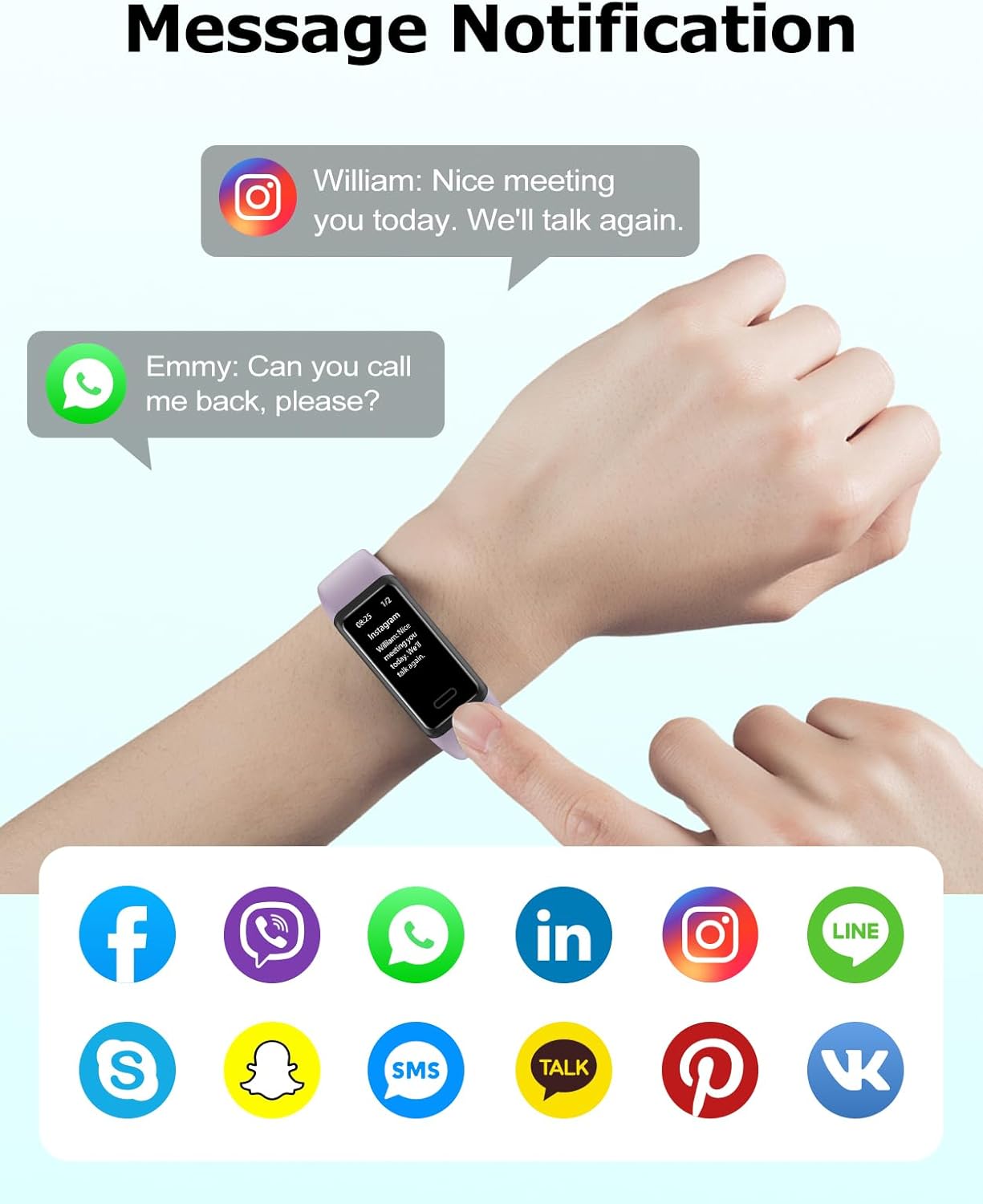
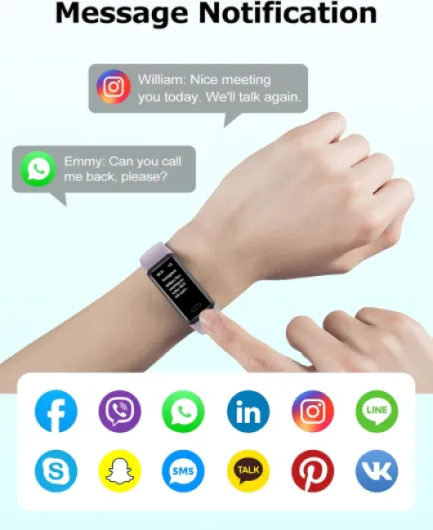
For notifications, it does the job: calls, SMS, WhatsApp, Facebook, Instagram, and a few others come through as vibrations with a small preview on the screen. You can’t reply from the watch; you just see who’s calling or what app pinged you. That’s fine for me; I mainly want to know if I need to grab the phone or can ignore it. Sometimes notifications came in with a 1–2 second delay compared to my phone, but nothing major. The vibration strength is enough to feel during a run or in a noisy place.
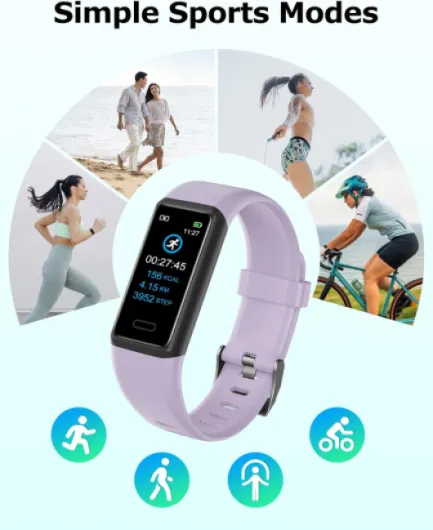
The sports modes are basic but functional. I tested walking, running, and cycling. They all track time, steps (for walking/running), and estimated distance/calories. There’s no built-in GPS, so all distance numbers are based on steps and stride estimates. That means they’re approximate. For casual runs or walks, it’s okay to get a ballpark figure, but it’s not precise enough for training plans. The watch does give you real-time heart rate during workouts, but again, that sensor is more for general guidance than detailed training zones.
Other small tools like the alarm, stopwatch, remote camera shutter, and sedentary reminder worked as expected. The alarm vibration was strong enough to wake me on most mornings, but if you’re a very heavy sleeper, you might still need your phone alarm. The sedentary reminder is handy if you sit at a desk all day; it buzzes gently and tells you to move. Overall, performance is stable and simple, which is what you want at this price. Just don’t expect advanced features or perfect tracking.
What you actually get and how it works day to day
Out of the box, you get the watch, a small magnetic charging cable, and a short manual. That’s it. No extra straps, no fancy stand, just the basics. The watch itself is very light (24 grams), which you notice immediately. It feels more like a slim bracelet than a watch, especially with the 0.96-inch screen. If you’re used to chunky smartwatches, this will feel almost toy-like at first, but in a good way for comfort.
Function-wise, it focuses on the essentials: steps, heart rate, sleep, calories, basic sports modes, and notifications. The sports modes are simple: walking, running, cycling, skipping rope, and a few others. Don’t expect GPS or advanced training metrics. It just tracks time, estimated distance (based on steps), and calories. For casual use, that’s fine, but if you’re a serious runner, you’ll probably find it too limited pretty fast.
The GloryFit app is where you see the detailed data: daily steps, heart rate graphs, and sleep stages. The layout is straightforward: big tiles for each metric, and you can tap into each one for more detail. It’s not the slickest app I’ve used, but it’s readable and does the job. I had one crash when checking historical data, and syncing sometimes took 10–20 seconds, but nothing unusable. Some users reported the app crashing more and charging issues; I didn’t get the charging issue, but it’s worth mentioning that quality control might be a bit uneven.
In daily life, I mostly used it for: checking steps, a quick look at heart rate after a short run, and seeing who was calling or texting without pulling out my phone. For that, it works fine. Just don’t expect miracles in terms of precision or smart features. It’s a basic activity tracker, and it behaves like one.
Tracking basics: decent for steps and sleep, mixed for heart rate
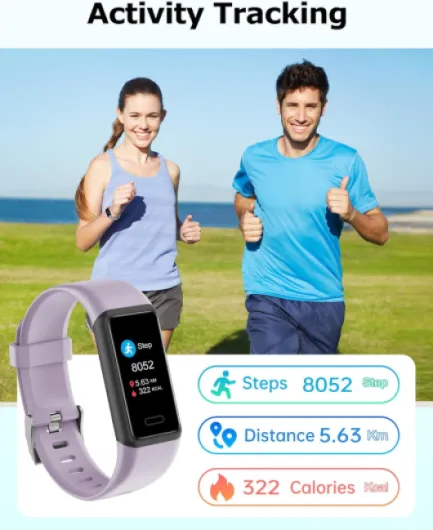
Let’s talk about how well it actually tracks stuff. For steps, I’d say it’s in the “good enough” category. On several days, I compared it with my phone’s step counter and another mid-range fitness watch. The Cloudpoem usually showed slightly higher numbers, especially on days where I moved my arms a lot without walking much (cooking, typing, carrying things). It’s clearly using arm motion, so it can miscount. One Amazon reviewer mentioned getting 2000 steps while driving; I didn’t get numbers that high in the car, but it did add some steps during bus rides and while sitting and gesturing. So, step count is fine for a rough idea, but not super precise.
For heart rate, it’s a bit more hit or miss. At rest, it was usually close to my other watch (within 3–5 bpm). During light activity like walking, it stayed fairly realistic. But during short runs or when my heart rate went up quickly, it sometimes lagged or showed numbers that felt off (too low or slow to react). One user said the heart rate rarely worked; I wouldn’t go that far, but it’s definitely not something I’d trust for serious training zones. For casual tracking – like checking if your heart rate is roughly normal – it’s okay.
The sleep tracking was surprisingly not bad for a cheap band. It correctly detected roughly when I fell asleep and woke up. The breakdown into deep/light/awake is always a bit of a guess on these cheaper devices, but the patterns (more deep sleep earlier in the night, light sleep closer to waking) looked believable. On nights where I woke up once or twice, the watch usually picked that up. I wouldn’t use these numbers for medical decisions, but for getting a general idea of how long and how regularly you sleep, it’s useful.
In short, the effectiveness is: fine for casual health awareness, not reliable enough for serious athletes or people who need medical-grade data. If you just want something to nudge you to move more and sleep a bit better, it’s okay. If you’re very picky about accuracy, especially for steps while driving or high-intensity workouts, this will probably frustrate you.
Pros
- Very light and comfortable to wear 24/7, including during sleep
- Battery life around 4–5 days with continuous heart rate and notifications
- Covers all basic functions: steps, heart rate, sleep, sports modes, and smart notifications
Cons
- Step counting can be inaccurate, especially with arm movements or while driving
- Heart rate tracking during intense activity is inconsistent and not suitable for serious training
- App is basic and can occasionally crash, and overall feel is clearly budget-level
Conclusion
Editor's rating
After using the Cloudpoem fitness watch for about two weeks, my overall take is that it’s a simple, budget-friendly tracker that gets the basics done, with some clear limits. It tracks steps, heart rate, and sleep reasonably well for casual use, sends call and app notifications, and lasts around 5 days on a charge. It’s light, comfortable, and the IP68 rating makes it fine for sweat, rain, and daily splashes. For a first fitness band or for someone who just wants a nudge to move more and sleep a bit better, it does the job without much fuss.
On the downside, accuracy is not its strong point. Steps can be inflated by arm movements (especially in the car or while gesturing), and heart rate during more intense activity isn’t very reliable. The app works but feels basic and can occasionally crash. The design and materials are clearly budget-level, and the small screen limits how much you can read at a glance. So, if you’re a serious runner, gym enthusiast, or very picky about data precision, I’d skip this and spend more on a better-known brand with stronger sensors and app support.
In short: it’s good value for casual users, kids, or beginners, especially if you keep your expectations realistic and treat it as a simple activity band, not a full smart watch. If you already know you want more advanced metrics, better accuracy, and a nicer screen, this isn’t for you. But if you just want a cheap, light tracker that covers the basics and you’re okay with “rough but usable” data, it’s a decent pick.