Summary
Editor's rating
Value: at promo price it’s hard to argue, at full price it’s just decent
Design: looks more expensive than it is, but you feel the budget side
Battery life: not bad at all for the price
Comfort: light on the wrist, strap is just okay
Durability and waterproofing: feels cheap but holds up so far
Performance and health tracking: fine for casual use, don’t treat it as medical gear
What you actually get out of the box
Pros
- Very low price on promo for a fully functional smartwatch with calls and notifications
- Battery life of around 5–7 days with normal use
- Step tracking and basic activity modes are usable for casual fitness
- Lightweight and comfortable enough for all-day and night use
Cons
- Sleep tracking and advanced health metrics are not very accurate
- Build quality and strap feel budget and may not age well
- App is basic and a bit clunky compared to bigger brands
- Charging cable magnets can disconnect easily if moved

Specifications
View full product page →| Brand | Jugeman |
A £9 smartwatch… seriously?
I grabbed this Jugeman P97 mainly out of curiosity. A smartwatch under a tenner on promo sounded a bit like a joke, so I wanted to see if it was just a toy or if it actually worked as a daily watch. I’ve been wearing it pretty much all day for about two weeks, paired with an Android phone, using it for calls, notifications and basic fitness tracking.
My expectations were low given the price, especially compared to the cheaper Amazfit or older Fitbit models I’ve owned. I was expecting laggy menus, random disconnects and a battery that dies by day two. In practice, it’s not that bad. It feels very much like a budget smartwatch, but it doesn’t feel like a total gadget-store gimmick either.
During these two weeks, I used it for normal stuff: checking the time, reading WhatsApp and SMS notifications, taking a couple of calls when my phone was in another room, tracking walks and a bit of indoor cycling, plus wearing it at night to test the sleep tracking. I also took it into the shower and in the rain to see if the IP68 claim holds up in normal use.
Overall, it’s a basic but usable watch. It has some rough edges and a few things that are clearly there for marketing more than accuracy, but if you keep your expectations realistic and treat it as a cheap helper rather than a serious sports watch, it actually gets the job done better than I expected.
Value: at promo price it’s hard to argue, at full price it’s just decent
Let’s be clear: the main reason this watch is interesting is the price. Several buyers, and myself included, picked it up around £8.99 on offer. At that price, it’s almost in the territory of a fancy keyring, not a smartwatch. For under a tenner, getting a device that actually shows notifications, tracks steps, handles calls via Bluetooth, and lasts almost a week on a charge is pretty solid. You’re not getting premium accuracy or premium materials, but you’re getting a lot of functions for almost nothing.
If the price goes up closer to what some other budget brands charge (say £25–£35), then the conversation changes. For that money, you start to find more polished options from brands like Xiaomi, Amazfit, or even older refurbished models from bigger names. Those will often have better apps, more reliable health tracking, and nicer screens. So for me, the Jugeman P97 is very good value at heavy discount, but only “okay” value if it’s at a higher regular price.
What I liked in terms of value is that it covers the basics without forcing you into an ecosystem. You don’t need subscriptions, and the app is free. You get lots of watch faces (100+ in the app), plenty of sport modes, and a speaker/mic for calls. For someone who just wants to try a smartwatch for cheap or give one to a kid or older relative without worrying too much, it makes sense.
On the downside, you do feel the corners that were cut: the app is basic, sleep tracking is meh, the materials are nothing special, and the long-term reliability is a question mark. But honestly, at £8.99, if it lasts you a year, you already got your money’s worth. So in terms of value for casual users at promo price, it’s hard to complain too much.
Design: looks more expensive than it is, but you feel the budget side
Visually, the P97 actually looks better than the price suggests. The 1.57" rectangular screen with black A-Black case gives off that generic modern smartwatch vibe, kind of like cheaper versions of Apple Watch style clones. On the wrist, at a quick glance, it doesn’t look like a toy. The bezels around the screen are there, but not completely ridiculous for this price range. If you’re not too picky, it passes as a normal smartwatch without drawing weird looks.
The screen itself is a TFT panel, not OLED, so blacks are more dark grey and colours aren’t super punchy, but the brightness is decent. Indoors it’s perfectly readable, and outdoors it’s okay as long as you bump the brightness up. In direct sun you need to angle your wrist a bit, but you can still see the time and basic info. Touch response is surprisingly decent: swipes and taps are recognized most of the time, with only occasional small lag when switching menus.
There’s one main button on the side that acts as a back/home button. It has a slightly cheap click feel, but it works. The rest of the navigation is via swipes. The UI is simple: swipe down for quick settings, up for notifications, left/right for widgets like heart rate, steps, weather, etc. Animations are basic but functional. You won’t sit there admiring the interface, but it’s not painful to use either.
Where you feel the low price is in the little details: the fonts and icons look generic, some translations in the menus are a bit off, and the watch faces look more like free app designs than polished brand work. Still, for something that can be bought for under £10 on offer, the overall design is pretty solid. It looks like a proper smartwatch from a distance, and if you’re not obsessed with premium finishes, it does the job visually.
Battery life: not bad at all for the price
The watch comes with a 300mAh battery and claims around 7 days of use and up to 30 days standby. In my real-world use, with notifications on, heart rate monitoring enabled, a couple of workouts tracked, and some Bluetooth calls, I got about 5–6 days before needing to charge. That’s actually pretty solid for such a cheap device. If you turn off constant heart rate, reduce screen brightness, and avoid too many calls from the watch, hitting 7 days seems realistic.
Charging is done with a small magnetic cable that snaps onto the back of the watch. The magnets are okay, but not perfect. A small bump can make it lose contact, which matches what one of the Amazon reviewers said about the cable sometimes slipping. I learned to place it flat and check the screen to confirm it’s actually charging before walking away. From empty to full, it took me roughly 1.5–2 hours, which aligns with the 2-hour charge time mentioned in the description.
Standby drain is low. I left the watch on a table for two days with Bluetooth off and it barely moved a few percent, so the power-saving algorithm seems decent. During normal use, the battery drops more on days when you take calls from the watch or keep the screen on high brightness. But even on my heavier days, I didn’t feel battery anxiety like with some older Wear OS watches that barely last a day.
Overall, battery life is one of the strong points of this watch for the price bracket. It’s not multi-week like some simple fitness bands, but having close to a week of use with all the smart features active is perfectly fine. The only thing I’d improve is the strength of the charging magnets, just to make the whole process a bit more idiot-proof.
Comfort: light on the wrist, strap is just okay
On the wrist, the Jugeman P97 is light and easy to forget, which is good if you plan to wear it all day and at night for sleep tracking. The case is thin enough and doesn’t dig into the skin, even when you tighten it slightly for heart rate readings. I wore it during work, walks, and a couple of light workouts, and it never felt heavy or annoying.
The strap is a basic silicone band. It’s soft enough, but you can tell it’s not high-end. It does the job: it holds the watch in place, doesn’t cause irritation for me, and cleans easily with water. The downside is that it feels a bit cheap and plasticky, and the buckle is also very simple. One of the Amazon reviews mentioned wanting a fabric strap option, and I agree. After a few days of sweating with it during exercise, it would be nicer to have a more breathable or fabric-style option.
Sleeping with it on is okay. Because it’s lightweight, you don’t really notice it after a while. The only slight annoyance is the screen lighting up if you lift your wrist at night, so I ended up turning off the raise-to-wake feature before bed. That’s a quick setting, but something to keep in mind if you’re sensitive to light when you sleep.
In terms of fit, the strap has a good range of holes, so it should suit both smaller and larger wrists. On my wrist, I had room on both sides. The watch doesn’t wobble much if you tighten it properly, which is important for heart rate tracking. Overall, comfort is decent: nothing special, but it doesn’t get in the way. The main improvement I’d like is better strap options out of the box.
Durability and waterproofing: feels cheap but holds up so far
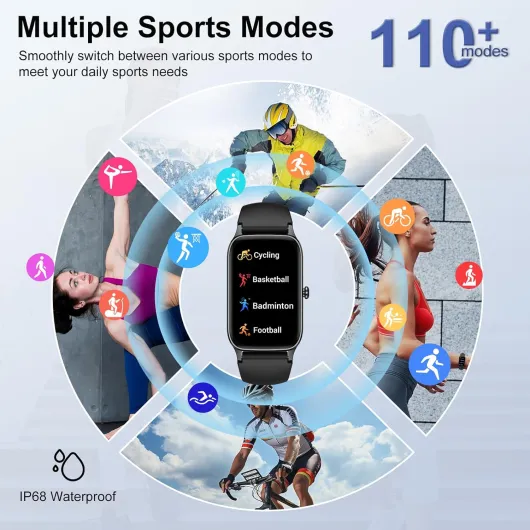
The watch is listed as IP68 waterproof, which basically means it can handle dust and being submerged in water for short periods. I didn’t go diving with it, but I did shower with it several times, washed dishes, and went out in heavy rain. No issues so far: no fog under the screen, no random restarts, and the touch still works fine when dry. For swimming, I’d say it’s probably okay for casual pool use, but I wouldn’t rely on it as a dedicated swim tracker.
Build quality is clearly budget. The casing is plastic, and while it doesn’t feel like it’s going to fall apart in your hands, it also doesn’t inspire huge confidence if you’re rough with your gear. I accidentally knocked it against a door frame once and it survived without visible damage, so it’s not made of glass, but I wouldn’t push my luck with repeated impacts. The screen doesn’t seem to have any special hardened glass coating, so I’d expect it to scratch faster than premium models if you’re careless.
The strap pins are standard-looking, which is good because if the original band breaks or annoys you, you can probably swap it with another compatible strap. The strap itself hasn’t shown any cracking or discoloration after two weeks, but that’s too short to judge long-term durability. Still, for a low-cost watch, it’s good to know you’re not stuck forever with the original band.
In short, durability feels acceptable for the price, but I wouldn’t treat it like a rugged sports watch. It’s fine for everyday use, office, walks, gym, some water exposure. If you work in a tough environment or tend to bang your watches around, I’d either be more careful with it or spend more on something built for abuse.
Performance and health tracking: fine for casual use, don’t treat it as medical gear
For daily performance, the P97 is good enough for casual tracking. Step counting is roughly in line with my phone and another mid-range smartwatch I use. Over a couple of days, the difference in step count was usually within a few hundred steps, which is normal. If you just want to know if you walked 5,000 or 10,000 steps, it’s fine. For serious training metrics, it’s not the right device, but that’s not really its target anyway.
The watch claims 110+ sports modes. In reality, most of these are just labels. I tested walking, running, and indoor cycling. It tracks time, estimated calories, and heart rate. There’s no built-in GPS, so distance comes from your phone’s GPS if you bring it along, or from step estimates. For my walks, the distance was reasonably close when connected to the phone, but I wouldn’t use it for pacing a race or anything precise. It’s more of a rough log of your activity.
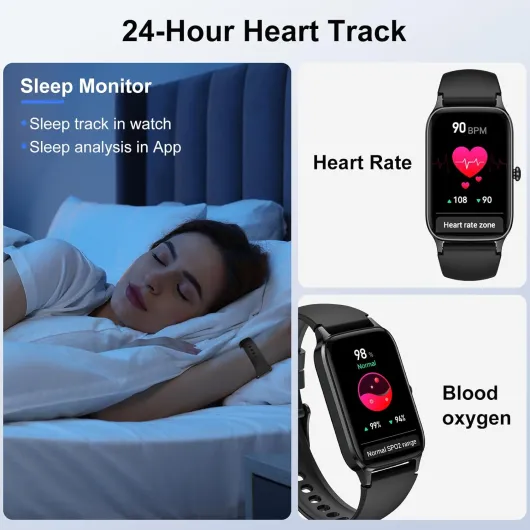
Heart rate is continuous and gives you a general idea of your effort. At rest, readings were close to what my other watch showed, usually within a couple of beats per minute. During exercise, it sometimes lagged or jumped a bit, especially during intervals. So again, it’s fine for a general picture (resting heart rate trend, basic zones), but not for serious training plans. SpO2 (oxygen saturation) readings also work, but I’d treat them as curiosity, not a health reference.
Sleep tracking is clearly the weak point. It does detect when you’re sleeping vs awake, but the breakdown between light and deep sleep felt random some nights. One Amazon review already mentioned the sleep tracking wasn’t accurate, and I agree. It’s okay if you just want to see roughly how long you slept, but I wouldn’t base lifestyle decisions on those graphs. In short: performance is decent at the basics (steps, simple workouts, notifications), but anything beyond that is more of a rough estimate than reliable data.
What you actually get out of the box
Out of the box, the Jugeman P97 keeps it simple: the watch, a magnetic charging cable, and a thin manual. That’s it. No spare straps, no fancy packaging. The box itself is basic cardboard, nothing that screams premium, but it’s fine and protects the watch well enough. For a product that sometimes sells around £8.99, I wasn’t expecting more, and honestly I’d rather they cut costs here than on the hardware.
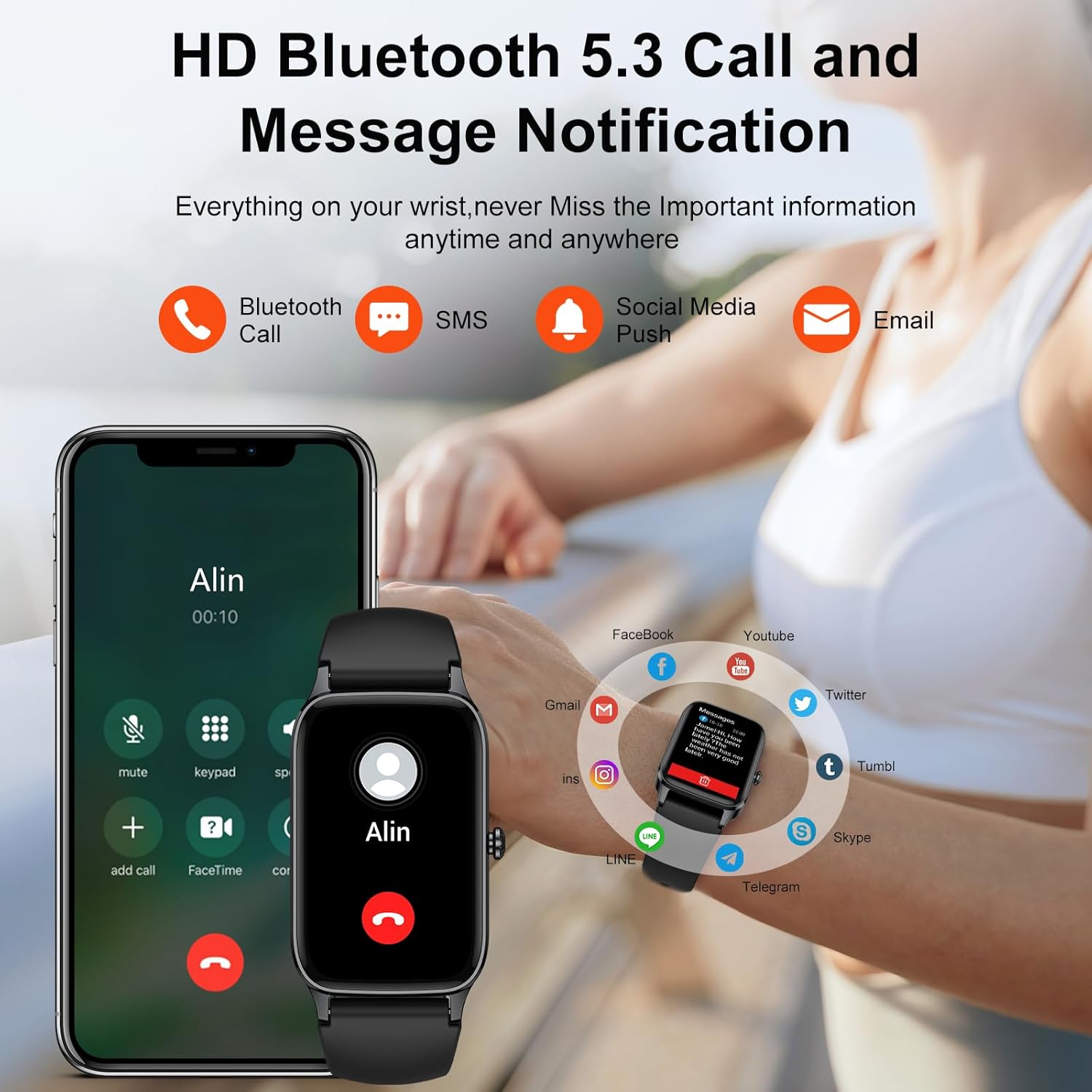
Setup is straightforward. You scan a QR code in the manual to download the companion app (a generic fitness app, not a big-brand one). The app is a bit clunky in terms of design, but pairing via Bluetooth 5.3 worked on the first try with my Android phone. It synced the time, let me pick a watch face, and I could already see steps and heart rate data. I also added a few contacts in the app so I could call them directly from the watch, which is handy when the phone is buried in a bag.
The watch menu is pretty packed: you’ve got 110+ sports modes, heart rate, SpO2, sleep data, weather, notifications, a calculator, camera shutter, music control, stopwatch, timer, breathing exercises, menstrual cycle tracking, and a bunch of settings. A lot of those sports modes are basically the same thing with a different icon, but they are there if you like to label your workouts. It’s not on the level of Garmin or Apple in terms of depth, but for a casual user, the list of features looks impressive on paper.
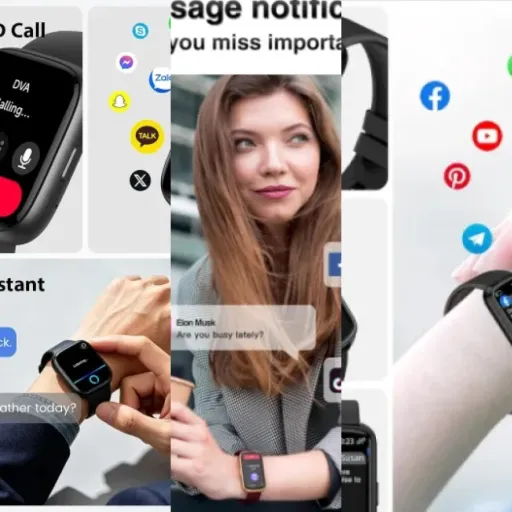
In daily use, the feature that feels the most useful is the call and notification handling. Messages from WhatsApp, SMS, and other apps pop up quickly, and calls ring on the watch with a surprisingly loud speaker. The health data is more of a rough guideline than a medical tool, but we’ll get into that later. Overall, the presentation is: lots of functions, basic packaging, and an app that’s not pretty but works once you’ve set it up.
Pros
- Very low price on promo for a fully functional smartwatch with calls and notifications
- Battery life of around 5–7 days with normal use
- Step tracking and basic activity modes are usable for casual fitness
- Lightweight and comfortable enough for all-day and night use
Cons
- Sleep tracking and advanced health metrics are not very accurate
- Build quality and strap feel budget and may not age well
- App is basic and a bit clunky compared to bigger brands
- Charging cable magnets can disconnect easily if moved
Conclusion
Editor's rating
The Jugeman P97 is a cheap, no-nonsense smartwatch that does the basics surprisingly well for what it costs on promo. You get notifications, Bluetooth calls, simple fitness tracking, sleep data (rough, but there), and decent battery life in a watch that doesn’t look ridiculous on the wrist. It’s light, reasonably comfortable, and the IP68 rating means you don’t need to panic if you forget to take it off in the shower or get caught in the rain.
It’s not perfect. The sleep tracking isn’t very accurate, the app feels generic, and the build quality clearly reflects the low price. Health metrics are fine as a rough guide but not something to base serious training or medical decisions on. The strap is okay but basic, and the charging cable magnets could be stronger. Still, for someone who just wants to test the smartwatch concept, keep an eye on steps and notifications, or give a low-risk gift, it does the job without costing much.
If you’re a runner, a data nerd, or you care a lot about polished software and premium materials, you should probably skip this and invest in a better-known brand. But if you caught it at that sub-£10 price and you only need the essentials, it’s good value for money and a decent everyday companion, as long as you keep your expectations realistic.