Summary
Editor's rating
Value: good tool, but the price will sting if you just jog twice a week
Design: big, tough, and not exactly subtle
Battery: strong for sports, but that 10-hour spec is confusing
Comfort: fine for sports, a bit bulky for 24/7 wear
Durability: feels like it can take a beating (and I tried)
Performance and tracking: serious tool for people who like numbers
What this thing actually is (beyond the marketing buzzwords)
Pros
- Very solid build with sapphire glass and military-grade durability
- Accurate dual-frequency GPS and good navigation with topo maps
- Strong training metrics and recovery analysis for serious athletes
Cons
- Bulky and fairly heavy, not ideal for small wrists or sleep comfort
- Limited smartwatch features compared to Apple, Garmin, or Wear OS
- High price considering some competitors offer similar sports features cheaper

Specifications
View full product page →| Brand | Polar |
A watch made for sweat and bad weather, not office meetings
I’ve been using the Polar Grit X2 Pro for a bit over three weeks now, mostly for trail running, hiking, and a couple of long bike rides. Before this, I was on a Garmin Fenix 6 and I’ve also tried a couple of Wear OS watches. So I’m not coming at this as a Polar fanboy, just someone who likes tracking workouts and not babying their watch in the rain or on rocky trails.
First thing to be clear: this is a sports watch first, smartwatch second. If you want slick animations, a million apps and to reply to WhatsApps from your wrist, this is not the right toy. If you want solid GPS, detailed training stats, and a watch you’re not afraid to slam against a rock by accident, then it starts to make sense. That’s really the mindset you need before even looking at it.
During these three weeks, I used it almost every day: runs, walks, gym sessions, plus a full-day hike with navigation and maps. I wore it at night too for sleep tracking and heart rate. I synced it with an Android phone (Pixel) and played with most of the main features: GPS, maps, training load, heart rate, and the Polar Flow app. I also compared it side by side with my Garmin on a few workouts to see how far off it was.
Overall, I’d say the Grit X2 Pro is pretty solid for serious outdoor and endurance use, but it’s not perfect. Some stuff is really good (screen, GPS accuracy, durability), some stuff is just okay (smart features, interface), and a couple of things annoyed me (size, price, and some menu quirks). I’ll break it down so you can see if it fits how you actually train, not just what’s written on the box.
Value: good tool, but the price will sting if you just jog twice a week
Let’s talk money and whether this thing is worth it. The Grit X2 Pro sits in the high-end price bracket, roughly in the same zone as a Garmin Fenix series. For that kind of cash, you expect serious performance, solid build, and software that doesn’t feel half-baked. On the build and tracking side, I think it delivers: you get sapphire glass, military-grade durability, dual-frequency GPS, maps, tons of training metrics, and decent battery life for an AMOLED sports watch. So from a hardware standpoint, the price isn’t totally crazy.
Where the value gets more debatable is on the "smartwatch" side. You don’t get things like music storage and playback on the watch (at least not in the same polished way as Garmin or Apple), no wrist payments in most regions, and the app ecosystem is basically non-existent compared to Wear OS or Apple Watch. You get notifications and some basic smart functions, but that’s about it. If you were hoping to replace your phone for a lot of daily stuff, this will feel limited. You’re basically paying for a serious sports tool, not an all-in-one gadget.
Another thing to consider is competition. Garmin, Coros, and even older Polar models offer a lot of similar features for less money, especially if you don’t care about AMOLED or dual-frequency GPS. If your use case is mainly running on the road and some gym, you can get 80–90% of what this watch does from cheaper models. The Grit X2 Pro makes more sense if you really use the maps, the GPS accuracy in tough conditions, and the advanced training/recovery stuff.
So in terms of value, I’d say it’s good but not amazing. It’s fairly priced for what it is, but what it is will only appeal to a certain type of user: someone who trains a lot outdoors, likes numbers, and doesn’t care too much about flashy smartwatch features. If you recognize yourself in that description, you’ll probably be happy with the purchase. If you’re more casual or more into techy features, you might feel you spent too much for what you actually use day to day.
Design: big, tough, and not exactly subtle
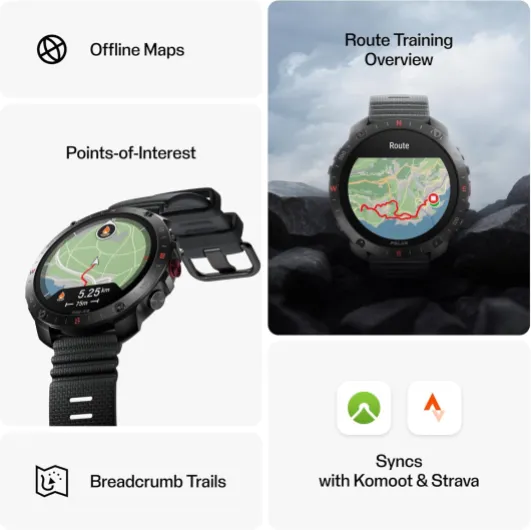
Design-wise, the Grit X2 Pro is clearly made to look like an outdoor watch. It’s big, round, and has that "I climb mountains" vibe even if you’re just going to the supermarket. The 49 x 51 mm footprint and 14 mm thickness are noticeable, especially if you have smaller wrists. On my medium wrist, it looks fine but definitely on the chunky side. If you’re used to slim smartwatches, this will feel like a brick at first. After a few days I got used to the size, but I still notice it more than my old Fenix, which already wasn’t small.
The bezel is stainless steel and the glass is sapphire, so at least the bulk has a reason: it’s built to take abuse. I did a couple of trail runs with branches hitting it, plus some gym sessions where I scraped it on a barbell rack. No marks so far, which is honestly what you want from this type of watch. The buttons are physical, not touch-sensitive bumps, and that’s good. They’re easy to find with gloves or sweaty hands. You still have a touchscreen, but you can do most things with buttons, which is nice when it’s wet or cold.
The screen itself is the part I liked the most about the design. The 1.39" AMOLED panel is sharp and bright, and the 454 x 454 resolution makes text and data fields easy to read during runs. Outdoors in sunlight it holds up well; I didn’t have to squint or shade the screen with my hand. Indoors it obviously looks even better. Compared to my older transflective Garmin, this is a big step up in clarity, especially for maps and detailed data screens.
On the downside, this is not a watch that hides under a shirt cuff. It grabs on sleeves, and you feel it when you sleep on your wrist. Also, the style is very "sporty" and a bit aggressive. If you want something that looks clean with a formal shirt, this isn’t it. It’s designed to look like gear, not jewelry. Personally I’m fine with that, but it’s worth knowing before you drop this much money on it.
Battery: strong for sports, but that 10-hour spec is confusing
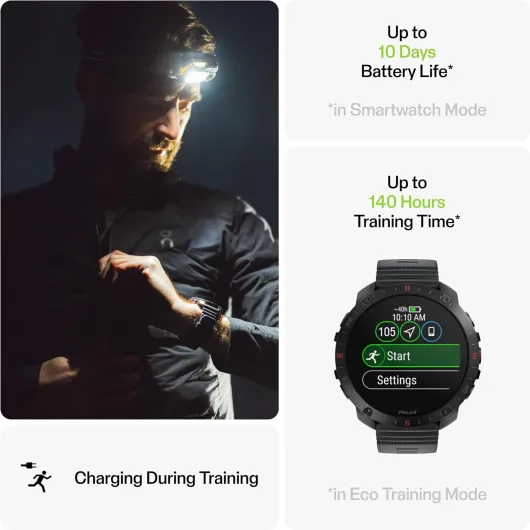
The battery story is a bit weird on paper versus in real life. The spec sheet says "Battery average life: 10 hours", which sounds terrible for a sports watch, but that clearly refers to some heavy usage scenario (probably full GPS + bright AMOLED at max). In practice, it’s a lot better than that. With mixed everyday use (always-on screen off, notifications on, a 45–60 min GPS workout almost every day), I was getting around 4–5 days per charge. If I turned down some stuff and skipped GPS a couple of days, I could push it closer to a week.
On the sports side, for long activities, I did a full-day hike (about 8 hours of recorded activity with GPS and maps) and still had enough battery left at the end of the day to get through the evening and night. Polar also has power-save and "Explore" modes that stretch GPS usage a lot more by lowering frequency and display behavior. I didn’t fully drain it in those modes, but based on the remaining percentage, multi-day hikes without daily charging seem realistic if you’re careful with settings.
Charging is done with the Polar Charge 2.0 USB‑C cable. It clicks on easily and felt more stable than some older Polar chargers I’ve seen. From roughly 15% to 100% took me around 1.5–2 hours plugged into a regular USB‑C charger. Not blazing fast, but not painful either. I usually just tossed it on the charger while showering and making dinner, and that topped it up enough for another day or two when I didn’t want a full charge.
If you compare it to something like a Garmin with a transflective screen, those can last longer in pure smartwatch mode, but the Grit X2 Pro is still way better than most Wear OS or Apple Watch type devices for multi-day trips. You can actually go away for a weekend of hiking and not bring a charger if you start at 100% and don’t abuse the screen. So yes, the 10-hour number is misleading, but in real life, battery performance is pretty solid for an AMOLED outdoor watch.
Comfort: fine for sports, a bit bulky for 24/7 wear
Comfort-wise, the Grit X2 Pro is a bit of a mixed bag. The silicone strap is decent: it’s soft enough, doesn’t itch, and has enough holes to fit both smaller and larger wrists. The standard 22 mm width and typical buckle make it feel like any other sports watch strap. During runs and rides, I didn’t have issues with it moving around too much or cutting into the skin. The watch stayed in place, which is important for heart rate readings. In that sense, it does its job.
Where I felt the limits was during sleep and all-day wear. At 79 g, it’s not ultralight. For long hikes or runs, I stopped noticing it after 10–15 minutes, but at night I was very aware I had a big chunk of metal and glass strapped to my wrist. I wore it for several nights in a row to test sleep tracking, and while I managed, it’s not what I’d call "forget it’s there" comfortable. If you’re used to light fitness bands or small smartwatches, this will feel heavy at first.
One thing I did appreciate is that the underside of the case is fairly smooth and doesn’t have sharp edges. Some watches dig into the wrist when you bend your hand back; this one is okay in that regard. The sensor bump is there but not too aggressive. The watch sits flat enough that it doesn’t create hot spots or red marks, at least not for me, and I wore it pretty snug for better heart rate accuracy. After long sweaty sessions, I didn’t get any rash or irritation, which is usually my main concern with silicone straps.
Overall, I’d say comfort is good enough for sports and okay for 24/7 wear, but not great. If you want something you forget about on the wrist, this isn’t it. If you accept that a rugged outdoor watch has some bulk and weight, then it’s perfectly usable. I wouldn’t buy it mainly for sleep tracking though; that’s more like a bonus you tolerate rather than a feature you enjoy using.
Durability: feels like it can take a beating (and I tried)
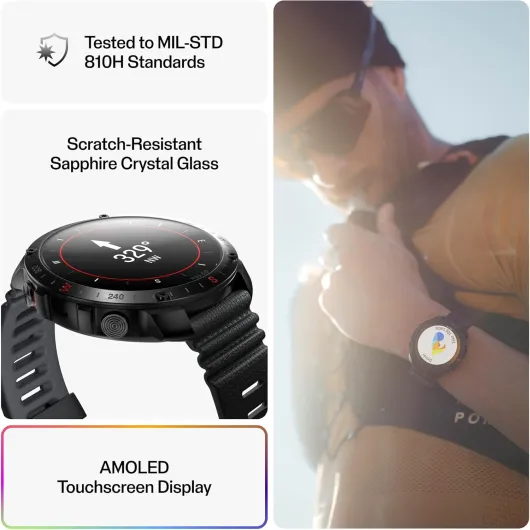
Durability is one of the main selling points of this watch, and here I think Polar did a good job. You get MIL-STD-810H military-grade certification, sapphire crystal glass, stainless steel bezel, and 50 m water resistance. In simpler terms: it’s built to survive rain, sweat, dust, and the usual knocks of outdoor sports. During my test, I didn’t baby it at all. I wore it in the shower, in the rain, during muddy trail runs, and in the gym where it scraped against metal and rubber surfaces. No visible scratches on the glass, no dings on the bezel.
The sapphire glass is the main reason for that. On cheaper watches, I often end up with micro-scratches after a couple of weeks, especially if I do strength training or climb. Here, after three weeks of not being careful, the screen still looks new. The stainless steel case will eventually show wear if you really beat it up, but that’s normal. At least it doesn’t feel fragile. The buttons also still click like day one, no mushiness or sticking despite sweat and chalk from the gym.
Water resistance at 50 m is enough for swimming and showering. I didn’t do deep diving with it, but I did wear it in the pool and under hot water in the shower, and there were no issues. No fogging under the glass, no weird behavior. The silicone strap also held up fine to sweat and soap, and it’s easy to rinse off after a muddy session. I didn’t see any discoloration or stretching in this short test period.
In short, if you’re rough on your gear, this watch can handle it. It feels more like a small piece of outdoor equipment than a fragile gadget. Obviously, time will tell how it looks after a year or two of real use, but based on the materials and my early abuse, I’d trust it a lot more than most glossy smartwatches with plain glass and polished cases.
Performance and tracking: serious tool for people who like numbers
On the performance and tracking side, this is where the Grit X2 Pro actually makes sense. The dual-frequency GPS is genuinely solid. I ran it alongside my Garmin on several runs (urban, forest, and open fields), and the tracks were very close, sometimes even cleaner around tall buildings. On a 15 km run, distance difference between the two watches was under 100 m, which is totally fine. On a full-day hike with some tree cover and narrow valleys, the Grit X2 Pro kept the trail pretty much on the path, no crazy zigzags.
Heart rate tracking from the wrist was also decent. It’s not perfect, especially during intervals or sudden sprints, but that’s true for most optical sensors. For steady runs and hikes, the values matched my chest strap quite well on average, with small differences on short spikes. The extra biosensors (SpO2, skin temperature) are more "nice to have" than life changing. You get extra graphs in the app, but I wouldn’t buy the watch for those alone. Where it shines more is in the training load and recovery analysis. Polar Flow gives you quite detailed info on how hard you’re pushing, how recovered you are, and whether you’re overdoing it or not training enough.
The sports profiles are very complete: running, trail running, cycling, hiking, strength training, and a bunch of others. You can customize data screens a lot, which I like. During workouts, the watch is responsive enough. There’s a small delay sometimes when switching screens, but nothing that ruins the experience. I also liked the vertical speed and running power metrics for hill workouts; they give you something more precise to work with than just pace, especially on trails.
As a whole, I’d say the tracking and performance side is the main reason to pick this watch. It feels like a tool made for people who actually care about structured training and not just closing rings. If you’re more into casual steps and occasional jogs, it’s probably overkill. But if you like to analyze your sessions, plan training blocks, and use GPS navigation properly, it does the job well.
What this thing actually is (beyond the marketing buzzwords)
On paper, the Polar Grit X2 Pro is sold as a "premium outdoor watch" with advanced navigation, strong GPS, and a bunch of biosensors. In real life, what you get is a big, rugged multisport watch with an AMOLED screen, dual-frequency GPS, and a bunch of training tools that are clearly aimed at people who care about performance: vertical speed, running power, training load, recovery metrics, etc. It’s more in the same family as a Garmin Fenix or Enduro than an Apple Watch.
The watch itself is fairly large: about 49 x 51 x 14 mm and around 79 g with the strap. So it’s not a discreet piece of jewelry, it’s a proper chunk of gear on your wrist. The band is 22 mm silicone with a standard buckle, and it comes with Polar’s newer USB‑C Charge 2.0 cable in the box. Memory is 32 GB, which is plenty for maps and data. You get 50 m water resistance (IP68) and a stainless steel case with sapphire glass, so you can swim, shower, and knock it around without stressing too much.
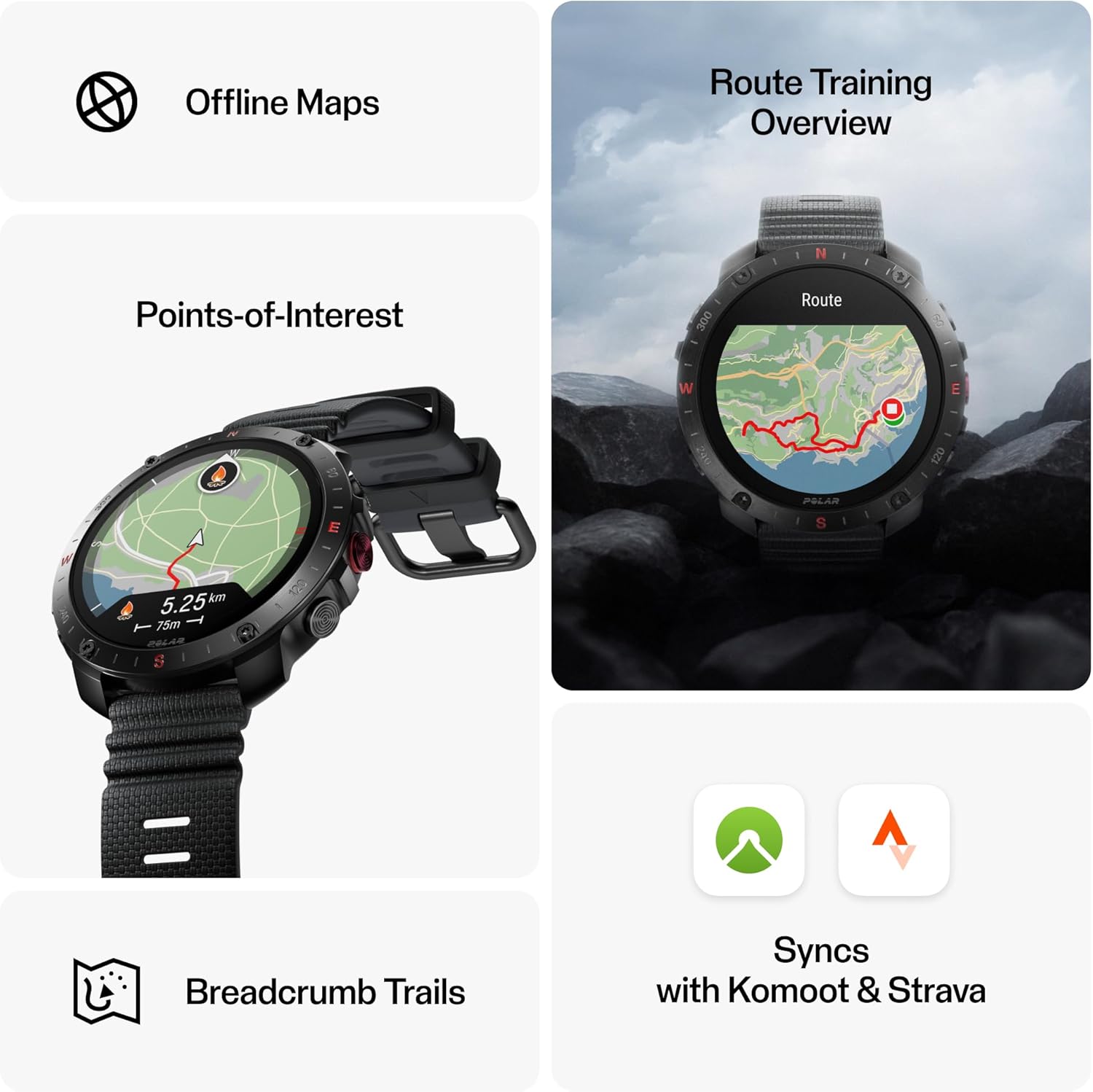
Feature-wise, it covers the basics you’d expect: built-in GPS, heart rate monitoring, SpO2, skin temperature, step and distance tracking, notifications from your phone, and support for a ton of sports profiles (running, cycling, hiking, gym, etc.). The big extra compared to older Polar models is the topographic maps and dual-frequency GPS, which are aimed at people who go off-road or in tricky signal areas. The AMOLED screen is 1.39" with 454 x 454 resolution and up to 400 nits brightness, so visibility is clearly a focus.
Compared to my old Garmin Fenix, the Grit X2 Pro feels a bit more focused on training guidance and recovery analysis, and a bit less on being a general outdoor gadget with maps, music, payments, and so on. It also doesn’t try to be a smartwatch in the same way an Apple Watch or Pixel Watch does. If you buy it expecting an outdoor fitness tool that happens to show notifications, you’ll be happy. If you expect a mini phone on your wrist, you’ll be annoyed. That’s basically how I’d present it to anyone thinking about switching.
Pros
- Very solid build with sapphire glass and military-grade durability
- Accurate dual-frequency GPS and good navigation with topo maps
- Strong training metrics and recovery analysis for serious athletes
Cons
- Bulky and fairly heavy, not ideal for small wrists or sleep comfort
- Limited smartwatch features compared to Apple, Garmin, or Wear OS
- High price considering some competitors offer similar sports features cheaper
Conclusion
Editor's rating
After a few weeks with the Polar Grit X2 Pro, my conclusion is pretty simple: it’s a serious outdoor and training watch that does its job well, but it’s not for everyone. The GPS accuracy, rugged build, and detailed training metrics are the strong points. If you’re into trail running, hiking, cycling or long outdoor sessions and you actually care about your data, it’s a solid choice. The AMOLED screen is easy to read in all conditions, and the battery is good enough for multi-day use if you don’t go crazy with brightness and GPS modes.
On the flip side, it’s big, not the most comfortable for sleeping, and pretty limited as a smartwatch. No real app ecosystem, no fancy extras like payments or deep integration with a ton of third-party services. The price also puts it in a range where you could pick up a Garmin Fenix or similar and get a slightly more balanced mix of outdoor and smart features. So you really need to know what you’re paying for here.
If you’re a dedicated outdoor or endurance person who prefers a robust training tool over a flashy smartwatch, the Grit X2 Pro makes sense and will probably keep you happy for years. If you’re more casual, or you mainly want notifications, music, and daily health stuff, I’d look at cheaper models or more general-purpose smartwatches. Good watch, strong for its niche, just not a one-size-fits-all solution.