Summary
Editor's rating
Value: strong for serious athletes, less convincing for casual users
Design: big sports watch vibes, but not a brick
Battery: strong overall, but not everyone gets the same experience
Comfort: light for its size, strap is good but not perfect
Durability: feels tough, but support could be better
Performance: strong GPS and sport features, HR sensor is hit and miss
What this watch actually offers on paper
Pros
- Strong battery life with useful battery modes for long runs and hikes
- Solid GPS and barometric altitude tracking for outdoor sports
- Light and comfortable for its size with a tough titanium build
Cons
- Optical heart rate is unreliable during intense exercise; chest strap recommended
- Limited smartwatch features and customisation compared to Garmin or Apple
- Customer service and app support can be slow or frustrating according to some users
Specifications
View full product page →| Brand | SUUNTO |
A watch built for long days out, not office flexing
I’ve been using the Suunto 9 Baro Granite Blue Titanium as my main sports watch for a while now, mostly for running, hiking and some cycling. Before this, I was on Garmin and Polar, so I’m not new to sports watches. I picked this one because I wanted strong battery life, proper altitude tracking for mountains, and something tough enough that I don’t have to baby it. On paper, this watch ticks all those boxes.
In daily use, it feels very much like a watch designed for people who actually go outside and stay out for hours, not for people who mainly want WhatsApp notifications on their wrist. The menus focus on sport first, smart features second. That’s good if training is your priority, less good if you’re looking for a full smartwatch with apps and fancy widgets. I’d say it’s clearly aimed at runners, trail runners, hikers and triathletes rather than casual step counters.
What struck me quickly is how focused Suunto is on the basics: GPS, altitude, battery modes, and simple but clear data screens. It doesn’t try to do everything, and sometimes that’s refreshing. At the same time, you feel the limits when you compare it to a Garmin Fenix or an Apple Watch in terms of smart features and customisation. It’s more like a tool than a toy.
If you’re thinking about getting this watch, you really need to know what you care about most: long battery and reliable tracking, or smartwatch tricks and deep customisation. This review is from the angle of someone who cares more about recording runs, hikes and rides properly than reading emails on the wrist. With that in mind, I’ll go through what actually works well on this watch and what annoyed me in real life.
Value: strong for serious athletes, less convincing for casual users
On the value side, the Suunto 9 Baro Granite Blue Titanium sits in that awkward middle-high price range where you start comparing it to Garmin Fenix models and even some Apple Watch options. For the money, you’re getting very good battery life, solid GPS and altitude tracking, a tough titanium build and a watch clearly aimed at people who train a lot outdoors. If that’s you, the value is pretty solid because you’re paying for features you’ll actually use: long battery, multi-sport modes, and durability.
Compared to a Garmin Fenix 5 (or similar), Suunto usually loses on smartwatch features and deep customisation but wins on simplicity and, in some cases, battery and GPS stability. The Suunto app is simpler than Garmin Connect, which can be a plus or minus depending on how nerdy you are about data. If you mainly want to record workouts, sync to Strava, and check your progress without spending hours tweaking data fields, the Suunto ecosystem is enough and less overwhelming.
For casual users who just want steps, basic notifications, and a nice-looking watch, I think the value is less convincing. You could get a cheaper fitness tracker or a mid-range smartwatch that does more “smart” things for less money. This watch makes more sense if you actually care about tracking long runs, hikes, rides and maybe triathlons, and you appreciate the long battery and barometric altimeter. Otherwise, you’re paying for features you won’t really use.
Taking into account some of the negative feedback about battery failures and slow customer service, I wouldn’t call this risk-free. But overall, if you’re the target user—someone who trains several times a week and spends a lot of time outdoors—the price-to-performance ratio is decent. It’s not the cheapest, not the flashiest, but it does the core sports watch job well enough to justify itself for the right person.
Design: big sports watch vibes, but not a brick
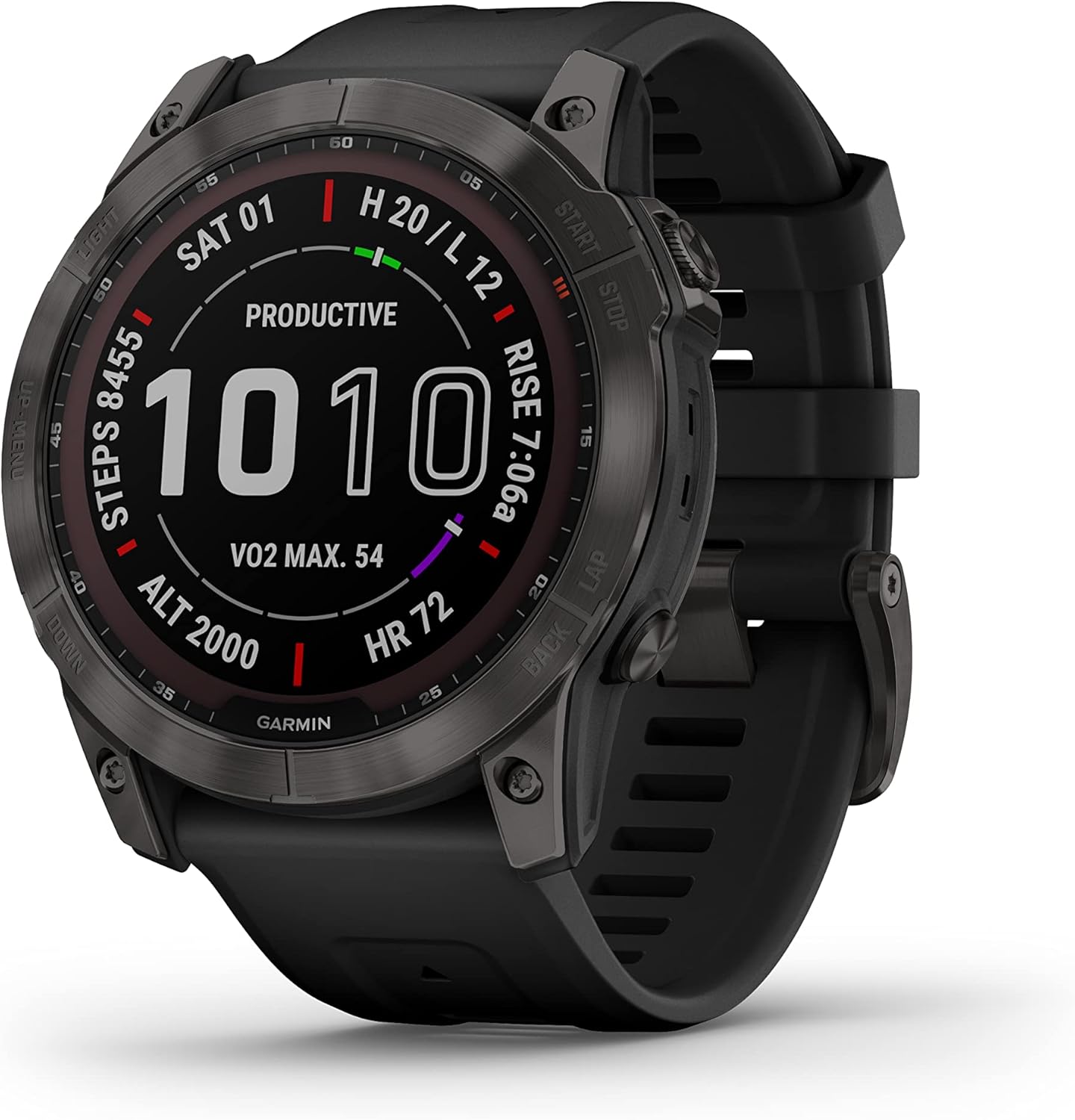
Design-wise, the Suunto 9 Baro Granite Blue Titanium looks like what it is: a proper sports watch. It’s round, fairly large, and clearly not trying to be a dress watch. The Granite Blue Titanium colour is actually pretty nice in real life. It’s a dark, slightly matte blue with a titanium bezel that looks tough without being flashy. Compared to something like a Garmin Fenix 5, it feels a bit cleaner and more minimal, more “Scandinavian” if you want to put a label on it.
On the wrist, it doesn’t feel as massive as the numbers suggest. The lugs curve down nicely, so it hugs the wrist instead of sitting like a plate. I wore it all day, including at work with a shirt, and while you can see it under the cuff, it didn’t look ridiculous. If you have very small wrists, it will still look big, but the weight is low enough that it doesn’t feel like a dive computer strapped to your arm.
The screen itself is simple: 240 x 201 resolution, not super sharp by smartphone standards, but readability is good, especially outdoors. In bright sunlight, the data fields are clear, and that’s what matters during a run or hike. Indoors it’s fine, not eye candy. The bezel is not crazy thick, but you do notice there’s some unused black area around the display. If you’re coming from an Apple Watch or a high-end AMOLED Garmin, this will look a bit old-school, but it does the job.
Button layout is straightforward: three buttons on the right side plus the touchscreen. I found myself using the buttons most of the time during workouts because they’re easier to hit with sweaty fingers or gloves. The overall design message is clear: this is built for function first. It’s not ugly, but it’s definitely more “gear” than “jewellery”. If you’re okay with that look, you’ll probably like it. If you want something sleek and discreet, this might feel a bit too sporty and chunky.
Battery: strong overall, but not everyone gets the same experience
Battery life is one of the main selling points of the Suunto 9 Baro, and overall it’s a strong point, with some caveats. Suunto talks about up to 170 hours in certain GPS battery modes, but that’s in very aggressive power-saving profiles that most people won’t use daily. In more normal conditions, with standard GPS and daily use, I was getting around 5–7 days per charge with 4–5 activities per week (30–60 minutes each) plus notifications, sleep tracking and general use.
During long runs and hikes, the battery drain felt reasonable. For example, on a 3-hour trail run with full GPS, backlight on auto and wrist HR, the watch lost roughly 10–15%. That lines up with the idea that you can do an ultra or a long day in the mountains without stressing about it. If you switch to one of the battery-optimised GPS modes, you can stretch that even more, but you lose some GPS precision. For walking or slow hiking, that trade-off is fine; for fast intervals or races, I’d stick to the standard mode.
Daily standby drain is modest. With notifications on and some wrist-raising to check the time, it drops maybe 10–15% per day if you don’t record any activities. That’s decent, not mind-blowing, but good enough that you don’t feel chained to the charger. Charging itself is straightforward: clip the cable on, and it fills up in a couple of hours from low battery.
Now the downside: I did see at least one Amazon review where the battery failed after 3 months, which is worrying. I haven’t had that issue personally, but it’s something to keep in mind. Also, some people complain about Suunto’s customer service being slow, which is not great if you end up being unlucky with a defective unit. In normal use, though, the battery is one of the stronger aspects of this watch and is one of the main reasons to pick it over more smartwatch-focused models.
Comfort: light for its size, strap is good but not perfect
In terms of comfort, I was pleasantly surprised. For a 50 mm sports watch with titanium and a barometer, the 67 g weight is pretty reasonable. On the wrist, it feels lighter than a lot of comparable Garmin models I’ve tried. I wore it basically 24/7 for several days in a row, including sleep, and it didn’t bother me enough to want to take it off at night, which is usually my limit with big watches.
The textile strap included is soft and flexible, not stiff like some silicone straps you get on cheaper watches. It breathes well, which is nice for long runs and hot days. I didn’t get any skin irritation or weird rubbing, even with sweat and dust on the strap after trail runs. The buckle system is standard and holds well; I never had it loosen during a workout. The fact you get two straps in the box is handy if one gets trashed or if you want to switch sizes.
Now, it’s not perfect. Because the watch is big, if you wear it too close to the wrist joint, it will bump a bit when you flex your hand, especially doing push-ups, cycling in the drops, or strength training. I had to slide it a bit higher on the arm for comfort and better heart rate readings. Also, the textile strap soaks up sweat more than silicone, so if you do very sweaty workouts, it can stay damp for a while afterwards. Not a huge issue, but worth knowing.
For sleep tracking, I noticed it more than a slim fitness band, obviously, but it wasn’t unbearable. If you hate sleeping with watches, this won’t change your mind. But if you’re used to sports watches, this one is on the comfortable side. Overall, comfort is pretty solid for the category: light for the size, strap feels good, but the sheer footprint of the watch means very small wrists might not love it.
Durability: feels tough, but support could be better
Durability is another big selling point here. The titanium case, 100 m water resistance and IPX8 rating give a good level of confidence. I’ve banged the watch against door frames, rocks on the trail and bike handlebars more than once, and so far there are no serious marks on the bezel or screen. Normal tiny hairline scratches happen, but nothing that affects readability. It feels like a watch you can take into the rain, mud and sea without worrying too much.
I used it in heavy rain and during sweaty summer runs, and there were no issues with fogging, buttons sticking or weird behavior. The buttons still click cleanly, and the touchscreen continues to respond as expected. The textile strap handled all of this decently too: it gets wet, but it dries out and hasn’t frayed yet. If you’re rough on gear, you might eventually want a spare strap, but that’s normal for sports watches.
Waterproofing to 100 metres is more than enough for swimming, showering and general water sports. I swam with it in a pool and in open water a few times, and had no problems. GPS and buttons worked fine afterwards, and there was no corrosion or anything suspicious. So for outdoor use, I’d say the watch holds up well physically.
The weak area is more on the brand support side. Some users mention poor response from Suunto when they needed help (for example, trouble resetting a password or dealing with battery issues). That’s not something you see on the watch itself, but it matters if something breaks. So, hardware durability seems solid in my experience, but if you draw the short straw and get a faulty unit, dealing with support might be a bit of a headache. If you’re okay with that risk and mainly care about tough hardware, this watch does feel built to handle serious outdoor abuse.
Performance: strong GPS and sport features, HR sensor is hit and miss
On the performance side, this is where the Suunto 9 Baro feels more at home. GPS tracking has been solid for me. On runs and hikes, the tracks stayed close to reality, even in wooded areas and around buildings. Distance and pace matched pretty well with my friends’ Garmin devices and with known route distances. The barometric altimeter is a big plus: elevation gain and loss looked more believable than GPS-only watches I’ve used, especially on steep trails where GPS tends to jump.
There are more than 80 sport modes, and in practice that means you’ll find something for pretty much anything: running, trail, cycling, hiking, swimming, triathlon, strength training, etc. The default data screens are well thought out. You can see pace, distance, HR, elevation, time and other key info without digging through menus. The interface during workouts is simple: swipe or use buttons to switch screens. I rarely felt lost, which is not always the case on more complex watches.
The weak point is the optical heart rate during intense exercise. At rest and during easy walks, it’s fine and lines up with a chest strap. But during intervals or hill sprints, it sometimes lagged or under-reported my heart rate by 10–20 bpm. That matches what some Amazon reviews say. When I paired it with an external chest strap, the data became much more reliable. So if you train based on HR zones and do serious intervals, I’d say just plan on using a chest strap with this watch.
The Suunto app is decent but not perfect. It shows your activities clearly and syncs well with Strava once it’s set up. Pairing the first time was a bit annoying; I had to retry a couple of times and make sure battery saving wasn’t messing with Bluetooth. Once paired, sync was mostly automatic and quick. The lack of advanced smartwatch features is noticeable: no contactless payments, no music storage, no big app ecosystem. But for pure sport tracking and analysis, the combo of watch + app is good enough for most people who want clear stats without getting lost in endless options.
What this watch actually offers on paper
On the spec sheet, the Suunto 9 Baro Granite Blue Titanium is a GPS multisport watch with more than 80 sport modes, barometric altimeter, wrist-based heart rate, and serious battery modes that can go up to 170 hours according to Suunto. It’s waterproof to 100 m, weighs about 67 g, and comes with textile straps that fit wrists from 130 to 220 mm. The screen is 50 mm with a 240 x 201 resolution, and it uses Suunto’s own operating system, not Wear OS or anything like that.
In the box, you get the watch, a USB charging cable and two textile wristbands. So you’re ready to go out of the box, no need to buy extra straps. It connects to your phone via Bluetooth and syncs through the Suunto app, which then can push data to Strava and other services. It also has basic music control (you control your phone’s music from the watch, there’s no storage for songs on the watch itself).
The big promise here is battery life and durability. Suunto really pushes the idea that this is for long races, ultras, multi-day hikes and rough use. The IPX8 rating and 100 m water resistance back that up on paper. The case is titanium, which should help with weight and toughness. There’s a barometer for better altitude data than GPS-only watches, which matters a lot for trail and mountain use. If you care about ascent, descent and storm warnings, baro is a big plus.
Where it’s clearly lighter is on smartwatch features. No app store, no fancy watch faces from third parties, and the OS is quite locked down compared to a Garmin Fenix or an Apple Watch. Notifications work, you can control music, you get basic daily tracking (steps, calories, sleep), but that’s about it. So if you want an outdoor tool that focuses on tracking your efforts and not being a mini-phone, the specs line up with that idea. If you want a wrist computer that does everything, this isn’t that.
Pros
- Strong battery life with useful battery modes for long runs and hikes
- Solid GPS and barometric altitude tracking for outdoor sports
- Light and comfortable for its size with a tough titanium build
Cons
- Optical heart rate is unreliable during intense exercise; chest strap recommended
- Limited smartwatch features and customisation compared to Garmin or Apple
- Customer service and app support can be slow or frustrating according to some users
Conclusion
Editor's rating
The Suunto 9 Baro Granite Blue Titanium is a serious sports watch aimed at people who care more about reliable tracking and long battery than apps and fancy smartwatch tricks. In real use, it delivers on the key points: good GPS, useful barometric altitude, strong multi-sport support and a battery that can comfortably handle long runs, hikes and even ultras if you use the smarter battery modes. The watch feels tough, looks decently clean for its size, and is comfortable enough to wear all day if you’re used to larger sports watches.
It’s not perfect. The optical heart rate sensor is fine for resting and easy activity, but not very trustworthy during intense intervals; pairing it with a chest strap is almost mandatory if you train by HR. The software and app are simpler and more limited than Garmin’s or Apple’s, and some people have had poor experiences with Suunto customer support, especially around account issues and hardware failures. Smartwatch features are basic: notifications and music control, and that’s about it.
So, who should get this? If you’re a runner, trail runner, hiker or multi-sport athlete who wants a tough, long-lasting training tool and doesn’t care too much about smartwatch extras, this watch makes sense. It’s also a good pick if you like straightforward menus and clear data screens over endless options. Who should skip it? Casual users who mainly want a lifestyle smartwatch, people obsessed with customisation and app ecosystems, and anyone who refuses to use a chest strap but still wants perfect HR data. For the right user, it’s a solid, no-nonsense training partner; for the wrong user, it’ll feel like an expensive, slightly outdated gadget.