Ultrahuman Ring Pro review: price, hardware and battery reality
The Ultrahuman Ring Pro review starts with price, because that is where this smart ring goes directly at Oura. Ultrahuman launched the new Ring Pro on Kickstarter with tiers from 299 to 479 dollars, undercutting an Oura Ring Gen 3 or a future Oura Ring 4 once you factor in the subscription over two years. For a health focused reader comparing smart rings, that total cost over many days matters more than any single launch discount or short term coupon.
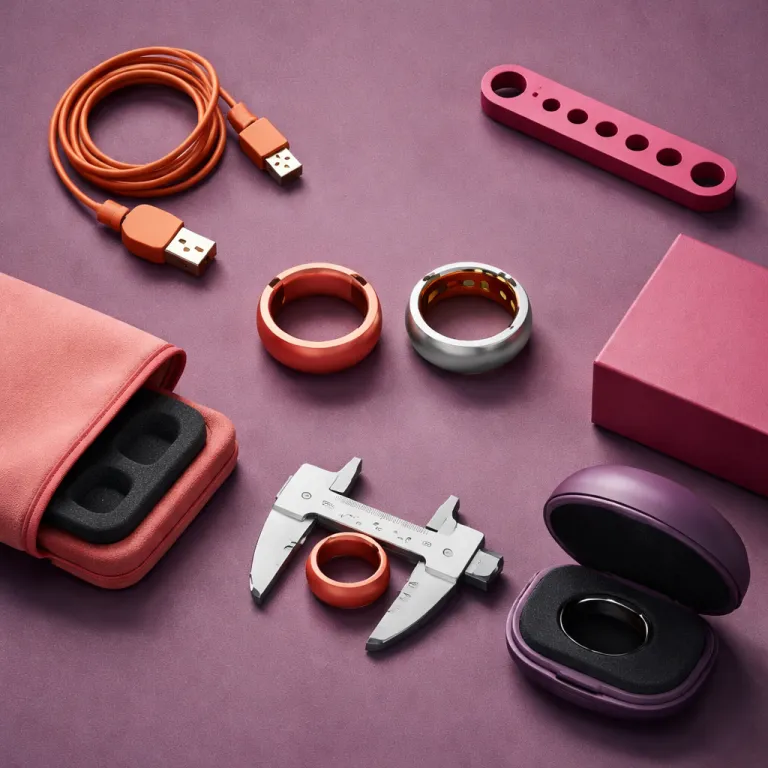
Backers at the top tier get the ring plus a charging case bundle, which includes a compact Pro charger that doubles as a power bank for the ring during travel. According to Ultrahuman’s Kickstarter campaign page, the charging case is aimed at people who want multi day battery performance without hunting for a wall charger on work trips, and it mirrors the approach of RingConn’s case rather than Oura’s simple USB cable. The Ultrahuman team also includes a free sizing kit with plastic trial rings, so you can test the fit at home before they ship the final raw titanium or coated model.
On the hardware side, the Ring Pro uses a titanium unibody shell with options like raw titanium, space silver and aster black finishes that feel closer to a Garmin Epix bezel than to a fashion accessory. In its official specifications, Ultrahuman lists the smart ring as water resistant to 100 metres, which is far beyond the 100 feet rating of many fitness trackers and should cover pool sessions, showers and cold open water days without drama if the claim holds up in independent testing. The inner surface carries the optical heart rate sensors and skin temperature sensors that feed the ring data into the Ultrahuman app for sleep, recovery and heart metrics.
Battery life is the headline claim in every Ultrahuman Ring Pro review, and on paper it is impressive. The company states up to 15 days battery in Chill Mode and around 12 days in Turbo Mode, which is the higher frequency tracking profile for more granular heart rate and movement data. That compares to roughly 5 to 8 days battery life on an Oura Ring in typical third party tests, and even in real world use a 10 or 11 day stretch between each charge would change how you think about charging time.
For context, many people using an Apple Watch Series 9 or a Fitbit Sense 2 have built a nightly or every second day charging ritual that often clashes with sleep tracking. A ring that can hold enough charge for nearly two weeks lets you wear it through every night, then drop it into the Pro charging cradle or the wireless charging case during a shower or while you make coffee. You stop planning your day around a charger, and that small shift often leads to more complete days of data for sleep, heart rate variability and resting heart rate trends.
Storage is another quiet but important specification in this smart ring. Ultrahuman claims in its product documentation that the ring can hold up to 250 days of data on the device without syncing to a phone, which is far more than the few days many wrist trackers keep before overwriting. That means if you travel without your phone or keep Bluetooth off for long stretches, the ring data should still backfill into the Ultrahuman app once you reconnect and charge, assuming the firmware behaves as described in the Kickstarter materials and press releases.
Design wise, the Ring Pro sits closer to the Oura Ring Heritage profile than to the chunkier RingConn or the lighter Ring Air style devices that focus on minimal weight. The inner edges are slightly beveled to reduce pressure on the finger during long keyboard sessions, and the raw titanium finish resists visible scratches better than polished steel bands from cheaper smart ring brands in most user reports. People with smaller hands may still prefer a slimmer Ring Air style design, but the sizing kit helps you judge whether the balance of thickness and comfort works for your day.
For readers who are still comparing rings with more traditional watches, it is worth looking at how a smart ring fits into a broader ecosystem. A dedicated smartwatch such as the 191 HD fitness watch with heart rate, SpO2 and sleep tracking can still be the best choice if you want on wrist notifications and sports modes. However, a ring that quietly tracks sleep and heart data for many days can complement a watch that you only wear during workouts or work hours, giving you continuous overnight trends without another screen.
| Specification | Ultrahuman claim |
|---|---|
| Battery (Chill Mode) | Up to 15 days (manufacturer claim) |
| Battery (Turbo Mode) | Around 12 days (manufacturer claim) |
| Water resistance | Rated to 100 m (manufacturer spec) |
| On device storage | Up to 250 days of data (manufacturer spec) |
| Kickstarter pricing | Approx. $299–$479 tiers |
Jade AI, health insights and what the Ultrahuman app really offers
Any serious Ultrahuman Ring Pro review has to dig into software, because hardware without strong insights is just jewellery with a battery. The Ultrahuman app is where your sleep, recovery and heart rate data turns into scores, trends and coaching style nudges that should help you change behaviour. Ultrahuman positions its Jade AI platform as the layer that interprets ring data rather than just plotting charts or raw timelines.
Jade AI currently has two modes, which matter differently depending on how deep you want to go into health tracking. The standard mode focuses on metric queries, so you can ask about your sleep quality, heart rate variability or resting heart rate over the last 30 days and get plain language explanations. The research mode is pitched at more advanced users and professionals, promising to integrate blood tests, glucose readings and environmental data such as air quality into a single timeline of your body’s responses.
For the health and sleep optimizer persona, that research mode sounds powerful but also raises questions about regulatory boundaries. After recent United States Food and Drug Administration guidance on wellness rings and health claims, companies like Oura, Whoop and Ultrahuman must be careful not to present risk scores as medical diagnoses. In practice, that means Jade AI can highlight patterns in your ring data and suggest that your recovery looks impaired after several days of poor sleep, but it cannot legally say you have a specific condition or prescribe treatment.
Ultrahuman bundles three so called PowerPlugs with the Ring Pro, and these are essentially specialised analytics modules. Respiratory Health looks at breathing rate and related metrics during sleep, Cycle and Ovulation Pro targets menstrual cycle predictions with a claimed 90 percent accuracy in Ultrahuman’s own materials, and Cardio Adaptability focuses on how your heart responds to training and daily stress. These tools sit on top of the same heart rate and temperature tracking that every smart ring collects, but they promise more tailored insights for people who want to optimise specific aspects of health.
Compared with an Oura Ring or a RingConn ring, the Ultrahuman ring leans harder into AI branding and less into simple readiness scores. Oura’s Daily Readiness and Sleep Scores are easy to understand but can feel opaque when you want to know which exact nights or workouts drove a change, even though Oura publishes several peer reviewed validation studies on sleep staging and heart rate accuracy. Jade AI, at least in the marketing material, aims to let you query your own days of data in more detail, asking for example how your heart rate responded to late evening meals over the last month.
For buyers who care about long term value, the absence of a subscription is as important as any AI feature. Oura currently charges a monthly fee for full access to historical data and advanced insights, which means that over two years the total cost of ownership can exceed the upfront price of an Ultrahuman Ring Pro even at the higher Kickstarter tiers. If Ultrahuman keeps the Ultrahuman app fully functional without a recurring fee, that will make this smart ring feel less like a service lock in and more like a one time purchase.
There is still a catch, and it sits in the gap between marketing promises and validated accuracy. Oura has nearly a decade of published validation studies and real world comparisons for sleep staging and heart rate tracking, while Ultrahuman is newer and currently has less peer reviewed data in the public domain to support its claims. For a reader who wants the best possible sleep tracking, that difference in validation may matter more than the extra days of battery or the presence of Chill Mode and Turbo Mode toggles in the app.
If you are curious about how other smart rings handle similar promises, it is worth reading a detailed test of an ultra thin AI smart ring with a sizing kit and 10 day battery life from independent reviewers. That kind of third party smart ring review shows how claims about heart rate, sleep and stress tracking often soften when exposed to daily life, and it provides a useful benchmark when you read any new Ultrahuman Ring Pro review. The same sceptical lens should be applied to Jade AI’s research mode until more independent data and validation studies appear, ideally using transparent test protocols that compare ring outputs with gold standard sleep lab or ECG measurements.
Kickstarter risk, delivery timelines and how it compares with Oura
The Ultrahuman Ring Pro review would be incomplete without addressing risk, because this launch is running through Kickstarter rather than a standard retail channel. Backers are being told to expect deliveries between June and July, which is ambitious given the recent legal dispute with Oura over smart ring patents that temporarily paused United States sales of the earlier Ultrahuman ring. While pre orders have reopened after that clearance, manufacturing and logistics still need to scale smoothly for thousands of new Ring Pro units.
Kickstarter is not a traditional store, and that matters for anyone treating this as a simple pre order. You are backing a project, not buying a finished product with guaranteed delivery times, and delays or specification changes are common even for experienced hardware teams. Ultrahuman has already shipped previous versions of its smart ring and a charging case, which reduces risk compared with a first time hardware creator, but it does not eliminate the uncertainty around exact shipping days or final firmware features.
For buyers comparing this directly with an Oura Ring, the trade off is clear. Oura sells a mature smart ring with known battery life, established heart rate and sleep tracking accuracy, and a polished app that has been refined over many product cycles and documented in academic papers. Ultrahuman offers more aggressive pricing over the long term, more days of battery on paper, and a more experimental AI layer, but it lacks the same decade long track record of sensor stability and app reliability.
There is also the question of how you plan to use the ring day to day. If you mainly want passive sleep tracking, resting heart rate trends and gentle nudges to wind down, then a stable device with predictable charging and a simple charger might be the best fit. If you are excited by the idea of querying your own ring data, experimenting with Chill Mode to extend battery life, and using a wireless charging case to keep the ring topped up during travel, then the Ultrahuman Ring Pro aligns more closely with that curiosity.
Some readers will already own a smartwatch and are wondering whether a smart ring adds anything meaningful. A detailed analysis of AI coaching on your wrist has shown that many watch based prompts feel like glorified notifications rather than deep insights, especially when the underlying data is noisy or incomplete. A ring that focuses on continuous, low friction tracking of sleep and heart rate can provide cleaner input data, which in turn can make any coaching, whether from Jade AI or another platform, more trustworthy.
Colour and finish options may sound cosmetic, but they influence whether you keep the ring on for all waking hours and sleep. The space silver and aster black versions are subdued enough for office wear, while the raw titanium model will appeal to people who like the industrial look of a Garmin Fenix or a high end mechanical watch. If you remove the ring often because it clashes with outfits or feels bulky, you lose the continuous days of data that makes any Ultrahuman Ring Pro review meaningful.
For people who want a single device to handle calls, notifications, workouts and health metrics, a smartwatch such as the waterproof step counter watch with Bluetooth calling and stress monitoring might still be the better all rounder. That kind of device offers on screen guidance and direct interaction, while a smart ring like the Ultrahuman Ring quietly logs heart rate and sleep in the background and leaves the screen work to your phone. In many cases, the best setup is a combination of a light watch during the day and a ring at night, sharing the tracking load.
Ultimately, this launch makes Oura look expensive not because the Oura Ring is suddenly worse, but because Ultrahuman has forced a clearer view of total cost and feature trade offs. If the promised battery life, Pro charging accessories and AI insights hold up in independent testing and future validation studies, the Ring Pro will give health focused buyers a credible alternative that does not lock them into a subscription. In the end, it is not the step count that matters, but what you do with the data you can trust.
Ultrahuman Ring Pro FAQ
Is the Ultrahuman Ring Pro waterproof? Ultrahuman rates the Ring Pro to 100 metres of water resistance in its official specifications, which should cover swimming and everyday exposure, though users should still follow the company’s care guidelines.
How long does the battery last in real life? The brand claims up to 15 days in Chill Mode and around 12 days in Turbo Mode, but actual battery life will depend on your tracking settings, temperature and how often you sync data, so real world tests may show shorter runtimes.
Do you need a subscription for Ultrahuman Ring Pro? At launch, Ultrahuman advertises full access to app insights without a recurring subscription, which contrasts with Oura’s membership model, though this policy could change over time and should be checked before purchase.