Summary
Editor's rating
Value for money: strong tool, high price, not for everyone
Big, rugged, and not trying to be a dress watch
Battery life: finally not charging every night
Comfort: fine for sports, a bit bulky for 24/7 wear
Titanium case, sapphire glass, and two very different straps
Durability: built to be knocked around
Training and GPS performance: where it actually shines
What this watch actually offers in real life
Pros
- Very accurate dual-frequency GPS and solid navigation with downloadable topo maps
- Strong training features with running power, vertical speed, and detailed analysis in Polar Flow
- Rugged build with titanium case and sapphire glass that resists scratches and knocks
- Battery easily lasts several days with regular GPS use, far better than most smartwatches
Cons
- High price, especially if you won’t fully use the advanced training and navigation features
- Smartwatch features are basic compared to Apple/Google (limited apps, simple interface)
- Large and quite thick on the wrist, not ideal for smaller wrists or wearing under tight sleeves
- Water rating on paper (1 m) looks modest for a watch marketed for serious outdoor use

Specifications
View full product page →| Brand | Polar |
A big, serious watch for people who actually train
I’ve been using the Polar Grit X2 Pro Titan for a few weeks now, mainly for running, hiking and a bit of cycling. Before this I was on a Garmin Forerunner and I’ve also tried a couple of Wear OS watches. So I’m not a pro athlete, but I’m the kind of person who trains 4–5 times a week and nerds out on stats. That’s the angle I’m coming from.
The short version: this thing feels like a proper training tool first, smartwatch second. If you’re expecting something like an Apple Watch with a rugged shell, that’s not what this is. It’s more like a Garmin Fenix vibe: big, tough, lots of numbers, less focus on fancy apps and phone tricks. Polar is clearly targeting people who care about performance, navigation and long battery life more than Spotify on their wrist.
In day-to-day use, the Grit X2 Pro Titan surprised me in a few ways. The screen is genuinely good, the GPS is very accurate, and the battery life is clearly better than any Wear OS watch I’ve used. At the same time, the “smart” side is basic: notifications, simple widgets, no real app store, and the interface sometimes feels a bit old-school compared to Google or Apple.
If you’re wondering whether to spend this kind of money, the key question is simple: do you want a training partner or a wrist phone? If it’s the first, the watch makes sense. If it’s the second, there are better options. I’ll break down what worked well for me, and what felt a bit meh for the price.
Value for money: strong tool, high price, not for everyone
Let’s talk about the uncomfortable part: the price. The Grit X2 Pro Titan sits in the “premium” segment, right up against high-end Garmin and fancy Apple Watch models. For that kind of money, you expect a lot. What Polar gives you is a serious training and navigation watch with very good hardware, but a fairly basic smartwatch experience. Whether that’s good value depends a lot on what you actually want from a watch.
If your main use is structured training, outdoor navigation, and long battery life, the value is decent. You’re paying for accurate GPS, robust build, and deep training metrics. In that sense, it competes more with Garmin Fenix / Epix than with generic smartwatches. The topo maps, dual-frequency GPS, and strong battery are genuinely useful on hikes and long runs. Polar Flow as an ecosystem is also mature enough that you’re not a beta tester; it’s stable and gives you plenty of data to work with.
On the downside, for this price, the smartwatch features are clearly behind what Apple, Samsung, or even some cheaper Wear OS watches offer. No big app store, no advanced smart features, and the interface, while functional, doesn’t feel particularly modern. If you mostly want to read and respond to messages, use third-party apps, or control a bunch of stuff from your wrist, the watch feels expensive for what it offers.
So in my view, the value is good if you are the target user: someone who trains seriously, goes outdoors a lot, and cares more about durability and metrics than about smart gimmicks. If you’re more casual, do a couple of runs a week, and just want something that looks nice and shows notifications, there are cheaper and more balanced options. It’s not a bad product at all, but it’s definitely not the most cost-effective if you won’t use the advanced training and navigation features.
Big, rugged, and not trying to be a dress watch
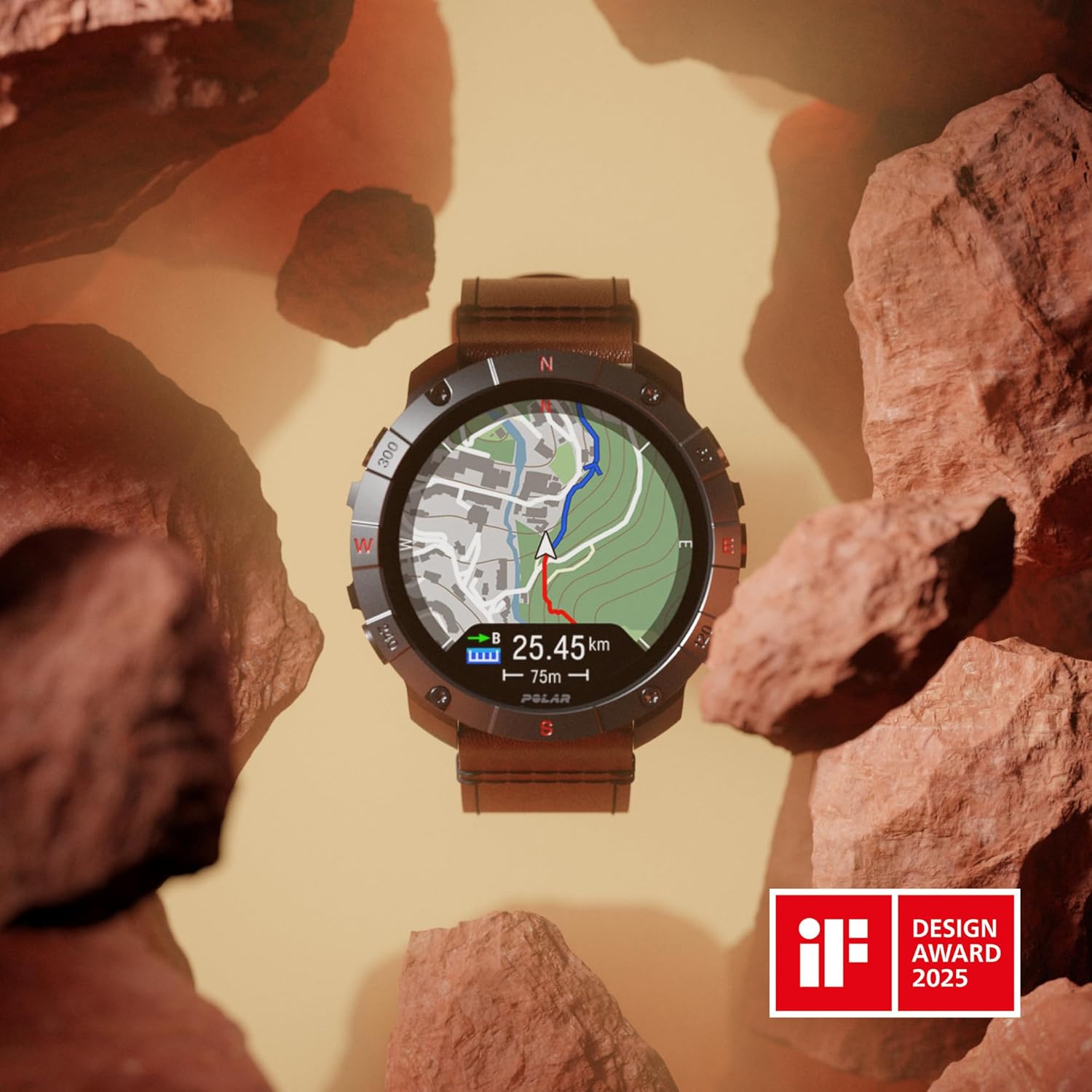
The first thing you notice when you strap on the Grit X2 Pro Titan is the size. It’s a big watch: around 49–51 mm case and 14 mm thick. On my medium wrist it definitely stands out. If you’re used to slim watches or smaller 40 mm smartwatches, this will feel chunky at first. For outdoor and sports use, though, the size actually helps: the screen is easier to read when you’re running or hiking and don’t want to stare too long at your wrist.
The design is clearly focused on being tough: titanium front case, sapphire crystal glass, and military-grade durability claims. I didn’t throw it off a cliff, but I did bump it into door frames, bike handlebars, and rocks on a scramble. No scratches so far, which is more than I can say for the stainless-steel Garmin I had before. The case shape is pretty standard round sports-watch style, nothing flashy, but it looks serious enough. If you like the rugged, “I go outdoors” look, you’ll probably like it. If you want something discreet under a shirt cuff, not ideal.
Controls are a mix of five physical buttons and a touchscreen. The buttons are a big plus during workouts: they’re easy to find by feel, even with gloves or sweaty hands. The touchscreen is fine for scrolling through menus and maps, but I mostly used the buttons when training. The only minor annoyance is that the interface can feel a bit menu-heavy; it took me a few days to remember where everything was.
Overall, the design feels honest: it’s built for people who actually go outside and don’t baby their watch. It’s not delicate, it’s not particularly pretty, but it looks and feels like something you can drag through a muddy trail run or a hike in the rain without worrying about it. If you’re into that style, it works. If you want something sleek and minimal, this will probably feel overkill on the wrist.
Battery life: finally not charging every night
Battery life is one of the main reasons to look at a watch like this instead of a Wear OS or Apple Watch. The Grit X2 Pro Titan doesn’t have a massive battery by raw spec (40 mAh listed, which is probably a typo in the data – in reality it behaves like a much bigger cell), but the power management is clearly tuned for endurance. In normal mixed use – a couple of GPS workouts per week, always-on screen off, notifications on – I was getting around 5–7 days per charge without babying it.
On heavy training days with long GPS sessions and maps, the battery obviously drops faster, but still not in a worrying way. I did a full day hike (~7 hours of GPS with maps on, brightness medium) and still had plenty left for the next day. In power-save modes, you can stretch it further, which is handy for multi-day trips. It’s not at the level of the most extreme Garmin models that last for weeks, but it’s clearly ahead of classic smartwatches that need a daily or every-2-days charge.
Charging itself is done via the Polar Charge 2.0 USB-C cable. The connector is proprietary but snaps on easily and stays in place. From low battery to full took roughly around an hour and a half in my case, which is acceptable. It’s not lightning fast, but since you’re not charging every day, it’s not a big deal. I usually just plugged it in while showering and making breakfast and topped it up enough for a couple more days.
If you’re coming from something like a Pixel or Apple Watch, the freedom of not thinking about the charger all the time is nice. If you’re coming from a basic GPS sports watch that already lasts a week or more, the difference is less impressive, but still decent given the bright AMOLED screen and all the sensors. Overall, the battery holds up well to real use, and I never had that “battery anxiety” feeling before long workouts.
Comfort: fine for sports, a bit bulky for 24/7 wear
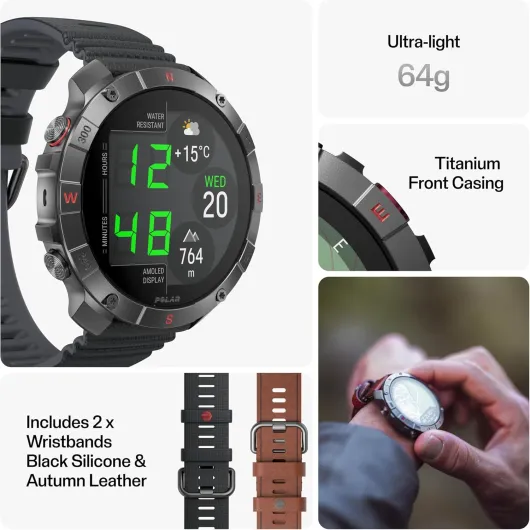
In terms of comfort, the Polar Grit X2 Pro Titan is a bit of a trade-off. On the one hand, it’s fairly light for its size at around 64 g and the included silicone strap is soft and easy to wear. On the other hand, the watch is big and thick, so you definitely feel it on your wrist, especially if you’re not used to large sports watches. For running and cycling, I got used to it after a few sessions. For sleeping with it on, it was more borderline for me.
With the silicone band, I had no real issues during workouts. The band doesn’t pinch, the buckle holds well, and there are enough holes to dial in a snug fit for heart rate readings without cutting off circulation. On a 2-hour trail run, I didn’t think about the watch much, which is a good sign. For all-day wear at the desk, it’s fine, but when typing with my laptop the case sometimes hits the edge if I’m not careful. That’s more a size issue than comfort, but it’s something to keep in mind if you have smaller wrists.
The leather strap feels nicer initially, especially if you’re wearing the watch with casual clothes, but it’s not what I’d call breathable. On a warm day, under a jacket or long sleeves, I noticed my skin getting a bit sweaty underneath. The cork lining is supposed to help, and it’s not terrible, but it’s still leather at the end of the day. For mixed office + light activity it’s ok, for proper training I’d stick to the silicone.
For sleep tracking, I tried a few nights. Personally, I found it a bit too bulky to forget it was there, especially if I rolled onto that side. If you’re used to wearing big watches at night, you might be fine. If you normally sleep with a smaller tracker or nothing at all, expect some adjustment. So comfort is decent overall, but this is clearly a sports/outdoor watch first, not a minimalist sleep band.
Titanium case, sapphire glass, and two very different straps
Material-wise, Polar didn’t cheap out here. The main points: titanium front casing, sapphire crystal glass, and two included bands – an autumn leather strap with a cork lining and a black silicone strap. The watch itself weighs around 64 g, which for a titanium outdoor watch is actually pretty light. Compared to a chunky stainless-steel Garmin I had before, this one feels less heavy on the wrist while still feeling solid.
The sapphire glass is the part I appreciated the most in daily life. I’m not careful with my watches and I’m always banging them on door handles, walls, and metal gym equipment. After a few weeks: no visible scratches at all. On my old glass watch, I had micro-scratches within days, so this is a real upgrade. The titanium case also holds up well: no dents or obvious marks yet. It doesn’t feel cheap or hollow; it has that “metal tool” vibe rather than “fashion accessory”.
The straps are a bit of a mixed bag. The leather strap with cork inner lining looks nice and feels decent for casual wear, but I didn’t love it for sports. After a sweaty run it felt slightly damp and took a bit to dry. For office or casual use it’s fine, but for workouts I quickly switched to the silicone strap. That one is more practical: light, easy to rinse, and doesn’t absorb sweat. The quick-release system makes swapping them easy, so at least you’re not stuck with one choice.
Overall, the materials match the price point better than some competitors that still ship with plastic or cheap-feeling bezels. You’re paying for durability and you actually get it. The only downside is that the fancy leather strap is more “nice extra” than really useful for sports. Most people who buy this watch will probably end up using the silicone strap 90% of the time and keeping the leather one for the odd non-sport day.
Durability: built to be knocked around
Durability is clearly one of the selling points of the Grit X2 Pro Titan, and in daily use it feels like it can take a beating. The sapphire glass is the star here: after weeks of fairly careless use – gym sessions, scraping against rocks while hiking, random knocks on door frames – I can’t see any scratches on the screen. With previous watches with regular glass, I usually had small marks by now. So if you’re clumsy or just active, that’s a real plus.
The titanium case also holds up nicely. It doesn’t show wear as quickly as softer metals and doesn’t feel like it’s going to dent easily. The watch is rated IPX8 and “water resistant” to 1 metre, which is a bit of a weird spec for something marketed as an outdoor watch. In practice, I used it in heavy rain, showers, and rinsed it under the tap without any issues. I didn’t do deep swimming with it, and if you’re a serious swimmer or diver, I’d double-check how far you really want to push that rating. For running, hiking, and general outdoor use in bad weather, it’s fine.
The straps are the weaker point in terms of long-term durability. The silicone one feels solid and should last, but like all rubber straps, it’ll probably age over a couple of years with sweat and sun. The leather strap already showed some slight creasing after a short time, which is normal for leather, but it’s not something I’d abuse in rain or mud. The good news is the 22 mm standard width, so you can easily replace them with third-party straps if needed.
Overall, as a piece of hardware, the watch feels like it will last years if you don’t do anything too crazy with it. It’s not a delicate gadget you’re scared to wear on a muddy trail. My only real concern is the modest-sounding water rating on paper, which doesn’t match the vibe of “take it anywhere”. For typical outdoor sports and everyday life, though, it handled everything I threw at it without drama.
Training and GPS performance: where it actually shines
This is where the Grit X2 Pro Titan starts to justify its price. In terms of GPS accuracy, it’s one of the better watches I’ve used. The dual-frequency GPS locked on within a few seconds in most cases, even in my street with tall buildings. On my usual 10 km route, the track is clean, corners are followed properly, and the total distance matched my previous best tracks from Garmin within a few meters. In forested sections and under tree cover, it still kept a smooth line instead of jumping around.
Heart rate performance from the wrist sensor is solid for steady efforts. On easy runs and hikes, it matched my chest strap within about 2–3 bpm most of the time. On interval sessions with sharp changes, it lags a bit like most wrist sensors, but that’s expected. The nice part is the extra metrics: running power, vertical speed, and training load. Running power in particular is handy on hilly routes where pace alone doesn’t tell the full story. It’s not perfect science, but it gives you a more stable effort target than just pace.
The training features in Polar Flow are pretty complete: weekly summaries, cardio load, suggested sessions, and recovery guidance. It’s more “performance coach” than “wellness app”. If you’re coming from Fitbit or a basic smartwatch, you’ll notice the difference in depth. It does take a bit of time to learn what all the metrics mean, but once you do, you can actually adjust your training instead of just looking at steps and calories.
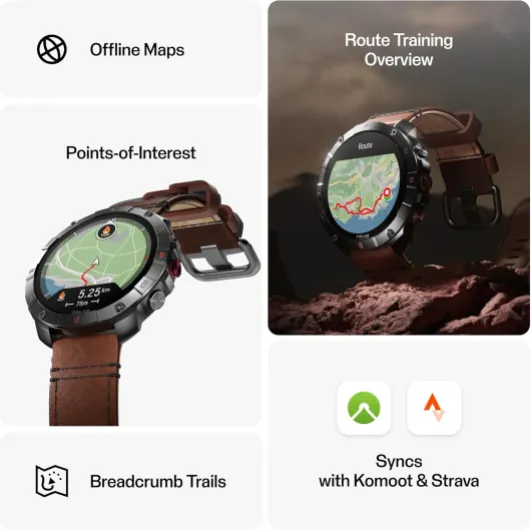
Navigation performance is also good. I loaded GPX routes for hikes and used the topo maps. The map rendering is basic but clear, and the watch gives you alerts if you go off route. I used it in areas where phone signal was weak and felt comfortable leaving the phone in my pack. It’s not as nice as a big phone screen, but for checking direction and general position, it’s enough. Overall, on the performance side – GPS, heart rate, training metrics, navigation – the watch feels like a serious tool rather than a toy.
What this watch actually offers in real life
On paper, the Polar Grit X2 Pro Titan ticks a lot of boxes: dual-frequency GPS, heart rate, SpO2, skin temperature, vertical speed, running power, topo maps, and a big AMOLED screen. In practice, the watch basically splits into three big areas: training metrics, navigation, and everyday smartwatch stuff. And the priority is very clearly in that order.
For training, you get a ton of profiles (running, trail, hiking, cycling, gym, etc.) and each one can be customised with different data screens. After a few sessions I had my usual setup: pace, heart rate, distance, running power and vertical speed on one screen, then lap data on another. The watch locks onto GPS quickly, and the heart rate readings were close to my chest strap most of the time. The Polar Flow app is where things really come alive: training load, cardio load, recovery suggestions, all that. If you like digging into graphs after your workout, it’s pretty solid.
Navigation-wise, the combo of dual-frequency GPS and downloadable topo maps is actually useful, not just a bullet point. I used it on a couple of long hikes with some forest sections where my phone usually struggles. The track stayed clean, no crazy zig-zags, and following a route on the map is straightforward once you get used to the interface. It’s not as slick as a phone app, but it does the job without you worrying about phone battery.
Where it’s weaker is the smartwatch side. You get notifications, basic calendar info, weather, timers, alarms, and that’s basically it. No big app ecosystem, no music streaming directly on the watch, and the interface is “functional” rather than pretty. If your main fun with a watch is replying to messages, controlling smart home stuff or paying with your wrist, this isn’t the best pick. If your fun is coming back from a long run and checking all your stats, then it starts to make more sense.
Pros
- Very accurate dual-frequency GPS and solid navigation with downloadable topo maps
- Strong training features with running power, vertical speed, and detailed analysis in Polar Flow
- Rugged build with titanium case and sapphire glass that resists scratches and knocks
- Battery easily lasts several days with regular GPS use, far better than most smartwatches
Cons
- High price, especially if you won’t fully use the advanced training and navigation features
- Smartwatch features are basic compared to Apple/Google (limited apps, simple interface)
- Large and quite thick on the wrist, not ideal for smaller wrists or wearing under tight sleeves
- Water rating on paper (1 m) looks modest for a watch marketed for serious outdoor use
Conclusion
Editor's rating
After a few weeks with the Polar Grit X2 Pro Titan, my conclusion is pretty clear: it’s a serious sports and outdoor watch that happens to do some smartwatch things, not the other way around. The strong points are the accurate dual-frequency GPS, reliable heart rate for steady efforts, long battery life, and tough build with titanium and sapphire. For running, hiking, trail, and general endurance training, it feels like a solid partner that actually helps you understand your sessions instead of just counting steps.
Where it falls short is in the pure smartwatch department and a bit on comfort for people with smaller wrists. Notifications and basic features are there, but no rich app ecosystem, no advanced phone integration, and the interface feels more utilitarian than modern. The price is also high, so if you’re not going to use the navigation, topo maps, and detailed training metrics, you’re basically paying for features you won’t touch.
I’d recommend this watch to people who train regularly, like to dig into their data, and spend a lot of time outdoors – especially runners, trail runners, hikers, and cyclists who want good GPS and long battery life. If you’re more into lifestyle tracking, casual workouts, or you care a lot about smart features and app variety, I’d look at an Apple Watch, a Pixel Watch, or a cheaper fitness watch instead. It’s a strong tool for the right user, but not a one-size-fits-all solution.