Summary
Editor's rating
Is it worth the money compared to Garmin and others?
Chunky, serious, and not exactly discreet
Battery life: the main reason to buy this thing
Comfort: wearable, but you always feel it’s there
Built to take hits and keep going
GPS, HR, and sports tracking: strong where it matters
What this watch actually offers on paper
Pros
- Battery life that easily handles multi-day adventures and heavy training weeks
- Very solid dual-frequency GPS performance in cities, mountains, and canyons
- Rugged build with sapphire glass and titanium bezel that resists real-world abuse
Cons
- Bulky and heavier than many competitors, not ideal for small wrists or office wear
- Software and app feel less polished and feature-rich compared to Garmin
- Screen is functional but not visually impressive compared to AMOLED rivals

Specifications
View full product page →| Brand | COROS |
A tank of a watch with a battery to match
I’ve been using the COROS VERTIX 2S Space Black as my main sports watch for a while now, mostly for long runs, gravel biking and a bit of hiking. Before this, I was on a Garmin Fenix 6, so I’m not coming to this cold. I wanted to see if the hype around COROS battery life and GPS accuracy was real, and if it was worth switching ecosystems. Short version: the battery is ridiculous (in a good way), the GPS is strong, but you do lose some polish and smart features compared to Garmin.
When you first take it out of the box, the watch immediately feels like a piece of gear, not a lifestyle gadget. It’s big, chunky, and clearly built for people who spend more time outside than in meeting rooms. If you’re used to slimmer watches or smaller wrists, the size will hit you right away. On my medium wrist it looks clearly like a sports tool, not something I’d wear with a dress shirt.
What pushed me to try the VERTIX 2S was the promise of 40 days of battery and very accurate dual-frequency GPS, especially for mountains and canyons. I’m tired of finishing a long weekend of training with 10% battery and hunting for a charger before the next session. With this one, I basically stopped thinking about the battery, which is honestly the main thing that made me keep using it.
It’s not perfect though. The watch is heavier than what I’d like for daily use, the software feels a bit more barebones than Garmin’s, and the app sometimes feels like a work in progress. If you’re expecting a super polished smartwatch with tons of smart features and third-party apps, you might be disappointed. But if you mainly care about tracking long efforts with reliable GPS and a battery that just keeps going, it’s pretty solid overall.
Is it worth the money compared to Garmin and others?
On value, the VERTIX 2S sits in the higher price range of sports watches, similar to high-end Garmins like the Fenix line. So you’re not buying a budget device here. For the money, what you really get is: huge battery life, tough build, and very solid GPS. If those are your priorities, the price makes sense. If you mostly care about smart features, pretty screen, and deep ecosystem, the equation is less convincing.
Compared to my old Garmin Fenix 6, the COROS gives me clearly better battery and, in some tricky GPS situations, slightly cleaner tracks. But Garmin still wins on app polish, training metrics depth, and smart features. One Amazon user even returned the COROS because it didn’t bring more functionality than their Fenix 6 and the app felt less detailed. I get that point: if you’re heavily invested in Garmin’s ecosystem and you like all the metrics and integrations, the switch can feel like a step sideways or even slightly backwards in terms of software.
Where COROS pulls ahead is for people who don’t want to charge often and who prioritize simple, reliable tracking over bells and whistles. The app is clean, the watch is straightforward, and for endurance athletes it covers the essentials well. The offline global maps and long GPS runtime are strong arguments if you do multi-day adventures without easy access to power. From that angle, the value is decent, especially if you actually use those features.
If you’re just doing casual 5K runs around the block and wearing the watch mostly as a daily smartwatch, I’d say there are cheaper, more comfortable options that make more sense. But if you’re regularly doing long rides, long runs, mountain trips, or races over several hours, the combination of durability and battery life justifies the price better. It’s not the best all-rounder for everyone, but for endurance-focused users, it’s a solid value despite the high initial cost.
Chunky, serious, and not exactly discreet
Design-wise, the VERTIX 2S is clearly made for outdoors people, not fashion. The case is big and thick, and on the wrist it looks like a proper tool. Compared to my old Garmin Fenix 6, the COROS feels even a bit bigger and heavier, which one Amazon reviewer also mentioned. If you have small wrists or you like slim watches, this will feel like a brick at first. On my wrist, it’s okay, but I definitely notice it more than a smaller running watch.
The Space Black color looks decent: it’s low-key, not flashy, and hides scratches pretty well. The titanium bezel with PVD coating helps with that. After wearing it during runs, rides, and some light climbing, I don’t see any major marks on the bezel or the sapphire glass, so on that front it holds up. It doesn’t feel fragile at all. If you tend to bump your watch into walls, rocks, or handlebars, this design is reassuring.
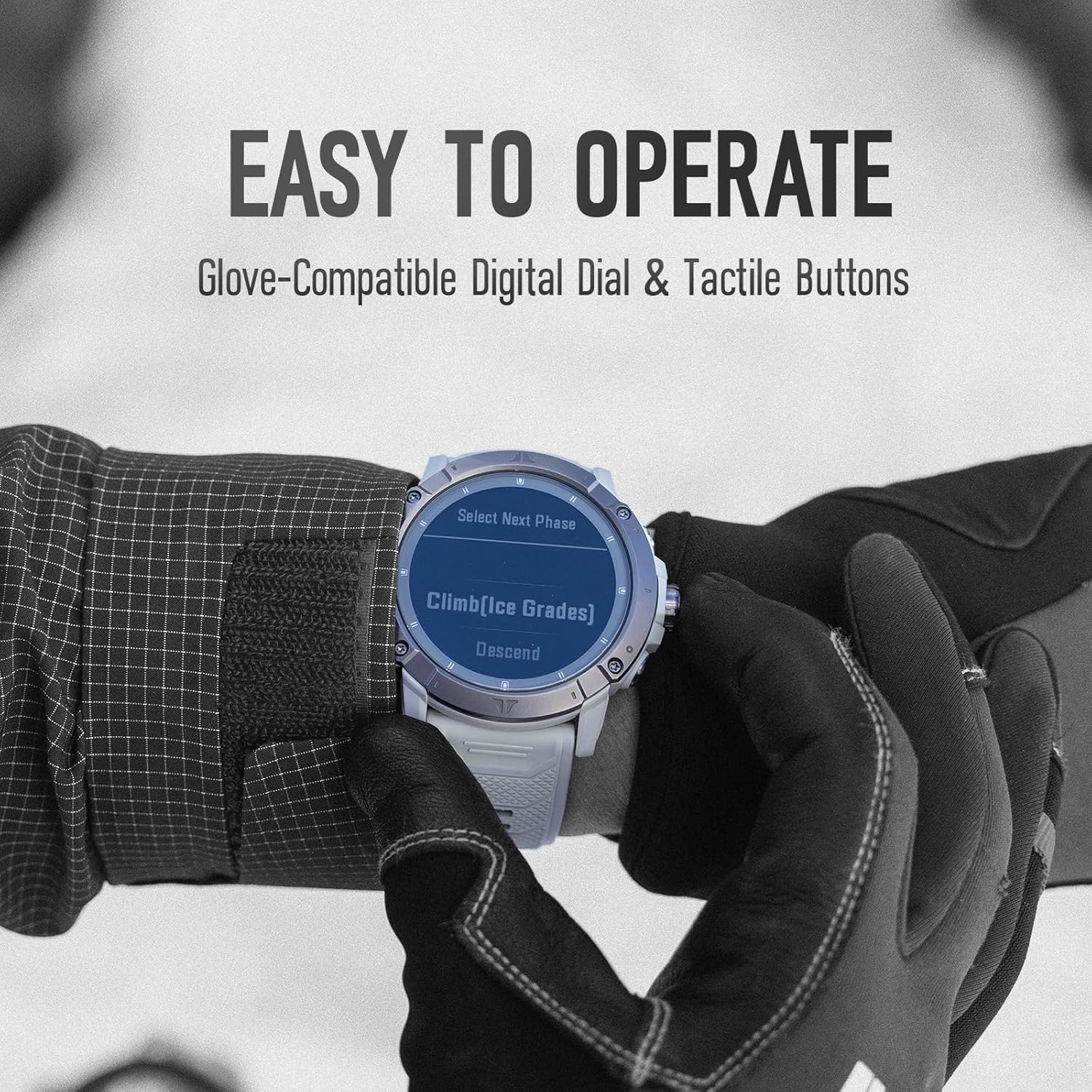
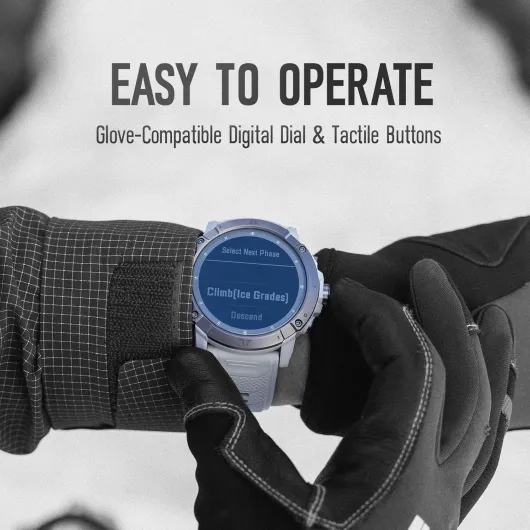
The main controls are a large digital dial plus a couple of buttons. The dial is actually pretty handy with gloves or sweaty fingers; you can scroll through menus without stabbing at a tiny button. It’s not super pretty, but it’s practical. The UI is simple: mostly black backgrounds, clear icons, and big fonts. It looks a bit dated compared to an Apple Watch, but in the middle of a trail run, I prefer “ugly but readable” over “beautiful but unreadable in sun”.
One thing to be aware of: it’s not a great watch for the office if you wear tight sleeves or shirts. It catches on cuffs and looks out of place with formal clothes. For casual wear, hoodies, or outdoor jackets, it’s fine. So from a design perspective, I’d say it’s clearly focused on function, not style. If you want a single watch that does sports and looks refined in a business setting, this one is a bit too rugged and bulky for that.
Battery life: the main reason to buy this thing
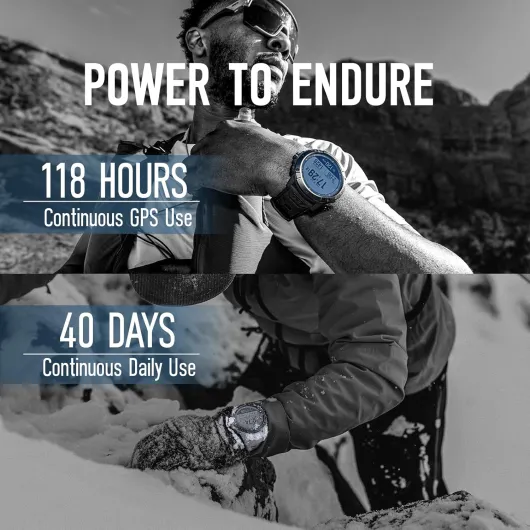
The battery is clearly the strongest point of the VERTIX 2S. COROS advertises up to 40 days of regular use and up to 118 hours of full GPS. In real life, with daily wear, notifications on, sleep tracking active, and 5–6 workouts per week (mix of 1–2 hour runs and rides), I was getting around 18–22 days per charge. That lines up pretty well with the one Amazon reviewer who mentioned around 19 days. It’s not the full 40 days, but that number is obviously for very light use.
For GPS-heavy stuff, it’s just comfortable. I did a long weekend of training with a 4-hour ride, 2.5-hour run, and a hike, and the battery barely moved compared to watches I’ve had before. You don’t have to think about turning GPS off, dimming screens, or disabling features. You just use the watch, and it keeps going. If you’re into ultra-distance races, multi-day hikes, or bikepacking, this is where the watch really earns its place.
Charging is straightforward and pretty quick. You don’t have to plug it in every few days, which honestly changes the relationship with the device. I stopped worrying about “do I have enough battery for today’s long run?” It’s just always ready. That removes a bit of mental load, especially if you’re training a lot or doing early morning sessions and don’t want to wake up to a dead watch.
On the flip side, the big battery is part of why the watch is so big and heavy. So you’re trading comfort and sleekness for autonomy. For me, that trade is worth it, but if you only do 3 short runs per week, this battery is almost overkill. Also, if COROS ever manages to drop the weight by 10 grams like one reviewer wished, without killing the battery, that would be ideal. But right now, if battery life is your top priority, this watch delivers.

Comfort: wearable, but you always feel it’s there
On the comfort side, the VERTIX 2S is a bit of a mixed bag. The strap is decent, soft enough and flexible, and I didn’t get any skin irritation from wearing it 24/7. The buckle holds well, and once it’s on, it doesn’t move much, even during long runs or cycling sessions. For sports, that’s exactly what you want: it stays in place, and the heart rate sensor keeps contact with the skin.
Where it’s less ideal is the overall weight and bulk. You can’t forget you’re wearing it. When I sleep with it to track sleep, I always feel it on my wrist, especially if I roll over and the case presses against my hand. It’s not painful, just noticeable. If you’ve only used light fitness bands before, this will feel like a big step up in size. Compared to my Fenix 6, it’s slightly more present on the wrist. Not a massive difference, but enough that someone sensitive to weight might care.
During long runs (2–3 hours), I didn’t have any real discomfort. The weight is fine once you’re moving, and the strap doesn’t chafe. On the bike, it’s a non-issue; you forget about it more, probably because there’s less wrist movement. With gloves, the big dial and buttons are actually easier to handle than some slimmer watches, so from that perspective, the bulky design pays off. I used it with winter gloves and had no trouble starting or stopping activities.
For all-day / office wear, comfort is okay but not perfect. It can get a bit sweaty under the strap in hot weather, and it definitely feels more like a piece of gear than a casual accessory. If you mainly want a watch to train with and don’t care much about sleeping with it or wearing it with tight clothes, it’s fine. If 24/7 comfort and discreet form factor matter a lot, this probably isn’t the best choice.
Built to take hits and keep going
Durability-wise, the VERTIX 2S feels like it’s built for abuse. The sapphire screen and PVD-coated titanium bezel are not just marketing lines; they actually matter when you’re scraping against rocks, walls, or random metal edges. After wearing it for outdoor runs, some climbing sessions, and daily life where I definitely knocked it into door frames and desks, I don’t see any serious scratches on the glass. The bezel has maybe a couple of micro marks, but nothing obvious unless you inspect it up close under good light.
The case and strap handle sweat, rain, and mud without any issue. I’ve rinsed it under the tap several times after dirty runs, and there’s no sign of water ingress or weird fogging. The buttons and dial still click and rotate like day one. The watch is clearly meant to live outdoors, not just pretend to. If you’re the type of person who is rough with gear, this is reassuring. It doesn’t feel like something you have to baby.
One small downside: because it’s big and heavy, when you do hit something, you feel it more, and it’s more likely to catch on stuff. A slimmer watch might just glance off; this one sometimes bangs into things. But at least it survives those hits. Compared to more fragile smartwatches with glass that scratches easily, this one is in another league for toughness.
Given the 2-year manufacturer warranty and the materials used, I’d expect this watch to last several years of regular outdoor use without major problems. Of course, software longevity is another topic, but in terms of physical durability, it’s one of the more robust options I’ve worn. If you care about a watch that you can keep on for climbing, skiing, and trail running without worrying every time you brush a rock, this one fits that role nicely.
GPS, HR, and sports tracking: strong where it matters
In terms of pure performance as a sports watch, the VERTIX 2S is pretty solid. The dual-frequency GPS is the main highlight. On my usual city routes with tall buildings and some tree cover, tracks are very clean, with far fewer weird zig-zags compared to older single-band watches I’ve used. In the mountains and in narrow valleys, it holds the line well. Distance totals at the end of runs and rides match what I’d expect from previous devices and known segments.
Heart rate accuracy from the optical sensor is decent. For steady runs, easy rides, and daily tracking, it’s fine. On intervals or very sudden sprints, like most wrist HR sensors, it can lag or spike a bit. If you care a lot about precise HR data for structured training, you’ll still want to pair a chest strap. For general training, the numbers are good enough to understand effort zones and trends. The app shows HR, HRV, resting HR and lets you look at data by week, month, or year, which is handy if you like to share that with a coach or doctor.
The sports modes cover the basics and more: running, trail running, cycling, indoor, swimming, skiing, rock climbing, etc. The rock climbing mode is a nice touch if you’re into that, though I’d say it’s more of a bonus than a reason to buy the watch. The navigation features are practical: you can load routes, follow them on the wrist, and there’s a “return to start” kind of logic. The maps are global and offline, so once they’re on the watch, you’re not relying on phone signal. Navigation mirroring from the phone is useful for more complex routes, but it’s still not as polished as some dedicated GPS devices.
On the downside, the software isn’t flawless. Some users mention bugs with the phone app, syncing issues, and VO2max not showing up even after months. I didn’t hit anything that bad, but I did notice that sometimes the sync took a couple of tries or a bit longer than I’d like. Also, compared to Garmin, you have fewer third-party integrations and less "ecosystem" depth. It does the core sports tracking very well, but if you like lots of smart features, widgets, and advanced training load metrics, this feels a bit more barebones.
What this watch actually offers on paper
The COROS VERTIX 2S is positioned as a full-on adventure and endurance watch. On paper, you’re getting: up to 40 days of regular use, up to 118 hours of full GPS, dual-frequency GPS, global offline maps, route planning, a next-gen optical heart rate sensor, sleep and recovery tracking, plus modes for running, cycling, rock climbing, skiing, and more. It also has 32 GB of storage, which you can use for maps and music.
In practice, the standout specs are really the battery and GPS. The rest is decent but not mind-blowing. The screen is 1.4 inches, LCD, 480 x 272 resolution. It’s readable, but if you’re used to Garmin AMOLED screens or Apple Watch, it will look more old-school. Personally, I prefer readability and battery over pretty colors, so I can live with it, but it’s clearly not a “wow” screen. It’s more functional than pretty.
The watch comes with a sapphire screen and a PVD-coated titanium bezel, which is the kind of stuff you usually see on higher-end outdoor watches. That, plus the 2-year warranty, gives the impression that it’s meant to survive real abuse: rock scrapes, cold, sweat, mud, etc. It’s also got Bluetooth for connecting to your phone and syncing with the COROS app, and it runs COROS’ own operating system (so forget third-party apps like Spotify or Connect IQ fields).
On the software side, COROS pushes the health and recovery side: HR, HRV, stress, sleep stages, wellness checks, etc. You can dig into these in the app, but compared to Garmin’s ecosystem, there’s a bit less depth and fewer small features. For someone coming from nothing, it’s more than enough. For someone used to a Fenix or Forerunner, you feel that the platform is simpler and sometimes a bit rough around the edges, especially with syncing and VO2max for some users.
Pros
- Battery life that easily handles multi-day adventures and heavy training weeks
- Very solid dual-frequency GPS performance in cities, mountains, and canyons
- Rugged build with sapphire glass and titanium bezel that resists real-world abuse
Cons
- Bulky and heavier than many competitors, not ideal for small wrists or office wear
- Software and app feel less polished and feature-rich compared to Garmin
- Screen is functional but not visually impressive compared to AMOLED rivals
Conclusion
Editor's rating
The COROS VERTIX 2S is basically a serious tool for people who actually spend time outdoors and do long sessions, not a lifestyle gadget. The big strengths are clear: the battery life is on another level, the dual-frequency GPS is reliable even in tricky areas, and the build is tough enough to handle rocks, falls, and bad weather. If you’re into ultra-distance running, long cycling weeks, mountaineering, or multi-day trips without easy charging, this watch fits that use case well.
On the other hand, it’s not a perfect all-round smartwatch. It’s big and heavy, the screen is functional but not pretty, and the software/app side is less polished than Garmin’s. Some users run into sync quirks or missing VO2max, and if you’re used to a very rich ecosystem with lots of smart features, you might find COROS a bit bare. It does the essentials of tracking, mapping, and navigation well, but it doesn’t try to be your everything-device like an Apple Watch.
So, who should buy it? People who want a rugged, reliable watch with battery life that lets them forget the charger, and who care more about performance tracking than smart features. Who should probably skip it? Those with small wrists, folks who mainly need a comfortable daily smartwatch with a nice screen, and heavy Garmin ecosystem users who love all the extra metrics and integrations. If you recognize yourself in the first group, the VERTIX 2S is a pretty solid choice. If you’re in the second, you’ll likely be happier with something slimmer and more polished on the software side.