Summary
Editor's rating
Value: strong offer if you hate subscriptions, with a few compromises
Design: low-key look, no screen, and fairly discreet on the hand
Battery life and charging: honestly the best part
Comfort: easy to forget you’re wearing it once you get the right size
Materials: titanium build that feels solid but not fancy
Performance and tracking: good for trends, not medical-grade
What you actually get in the box and how it works day to day
Pros
- Comfortable titanium ring with low-key design that’s easy to wear 24/7
- Strong battery life (about a week per charge) plus a charging case with plenty of backup power
- No subscription fees while still offering detailed sleep and health tracking in the app
Cons
- App is decent but not as polished or feature-rich as some premium competitors
- No GPS or workout-specific features, so limited appeal for serious sports tracking

Specifications
View full product page →| Brand | LEEP |
A smart ring without the monthly bill? I had to try it
I’ve been curious about smart rings for a while, mainly for sleep tracking, but I always bounced off the price + subscription combo. Paying a lot upfront and then a monthly fee just to see how badly I sleep didn’t really appeal. When I saw the LEEP Smart Ring with no subscription, decent reviews, and a charging case thrown in, I figured it was worth a proper test. I’ve been using it day and night for a bit over two weeks, on an Android phone, with Bluetooth on all the time.
My main goals were pretty simple: track sleep in more detail than my phone, get a feel for my heart rate and resting heart rate, and see if the thing is comfortable enough to wear 24/7 without driving me mad. I also wanted to see if the app was clear or one of those messy, half-translated dashboards that you give up on after three days. I used to wear a Garmin watch for tracking, but never at night because it’s bulky in bed.
In practice, I wore the ring on my right hand, middle finger most of the time, and compared the data against my Garmin when I went to the gym or out walking. I also did a couple of swims and some boring DIY around the house to see if it would scratch easily or lose connection. The ring basically stayed on my finger except for showers a few times and when I dropped it into the charger.
Overall, it’s not perfect, but it’s pretty solid for the price. The app is decent, the ring is comfortable, and the battery life is honestly the thing that impressed me most. There are some quirks with data accuracy and the app still feels like it’s evolving, but if you just want a simple, low-fuss health tracker without another subscription in your life, this one gets the job done.
Value: strong offer if you hate subscriptions, with a few compromises
In terms of value for money, the LEEP ring sits in a pretty good spot. You’re getting a titanium smart ring with a proper charging case, full-featured app, and no monthly subscription. Compared to bigger brands that charge you for both the ring and ongoing access to detailed stats, this is obviously more wallet-friendly in the long run. If you plan to use it for a year or more, skipping a subscription adds up quickly.
What you get for the price is: solid sleep tracking, good-enough heart rate and step tracking, stress and HRV insights, SpO2 and temperature trends, plus IP68 water resistance and a comfortable design you can wear day and night. There’s no screen, no GPS, and it doesn’t try to replace a serious sports watch. So if you’re a hardcore runner or cyclist who wants advanced workout metrics, you’ll still need another device. But if your main goal is to understand your sleep and general health a bit better without being glued to a wrist screen, this ring hits that use case well.
The app is decent but not perfect. You can feel that the ecosystem is still growing – new features pop up, and some screens could be a bit clearer or more polished. That said, everything essential works: syncing is reliable, metrics are readable, and you don’t get hammered with ads or upgrade pop-ups. For the price bracket it’s in, I think the trade-off is fair: slightly less polish than premium brands, but also no ongoing fees and still plenty of useful data.
So, is it the best device on the market? No, there are more advanced options if you’re ready to spend more and pay a subscription. But as a practical, one-off purchase that gives you solid tracking and a good overall experience, the value is strong. If you just want a straightforward way to keep an eye on your sleep and daily health without another monthly charge, it’s a good deal. If you’re chasing ultra-precise sports metrics and deep analytics, you might find it a bit basic.
Design: low-key look, no screen, and fairly discreet on the hand
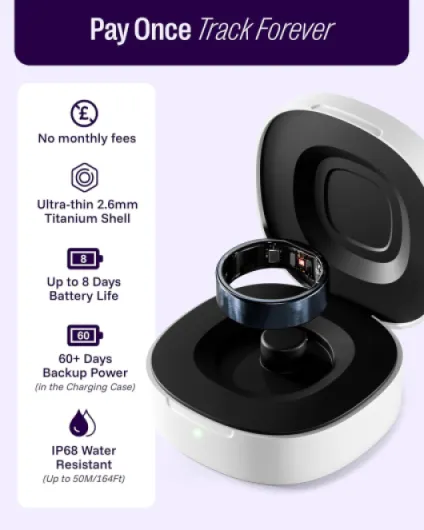
Design-wise, the LEEP ring is pretty low-key. It’s a simple band with a very slight curve and no screen or flashing lights when it’s on your finger. The Midnight Blue colour looks more like a dark navy/black in most lighting, which I actually prefer because it doesn’t scream “gadget.” From a distance, it just looks like a regular ring. Up close, you can see it’s a bit thicker than a simple wedding band, but not ridiculous.
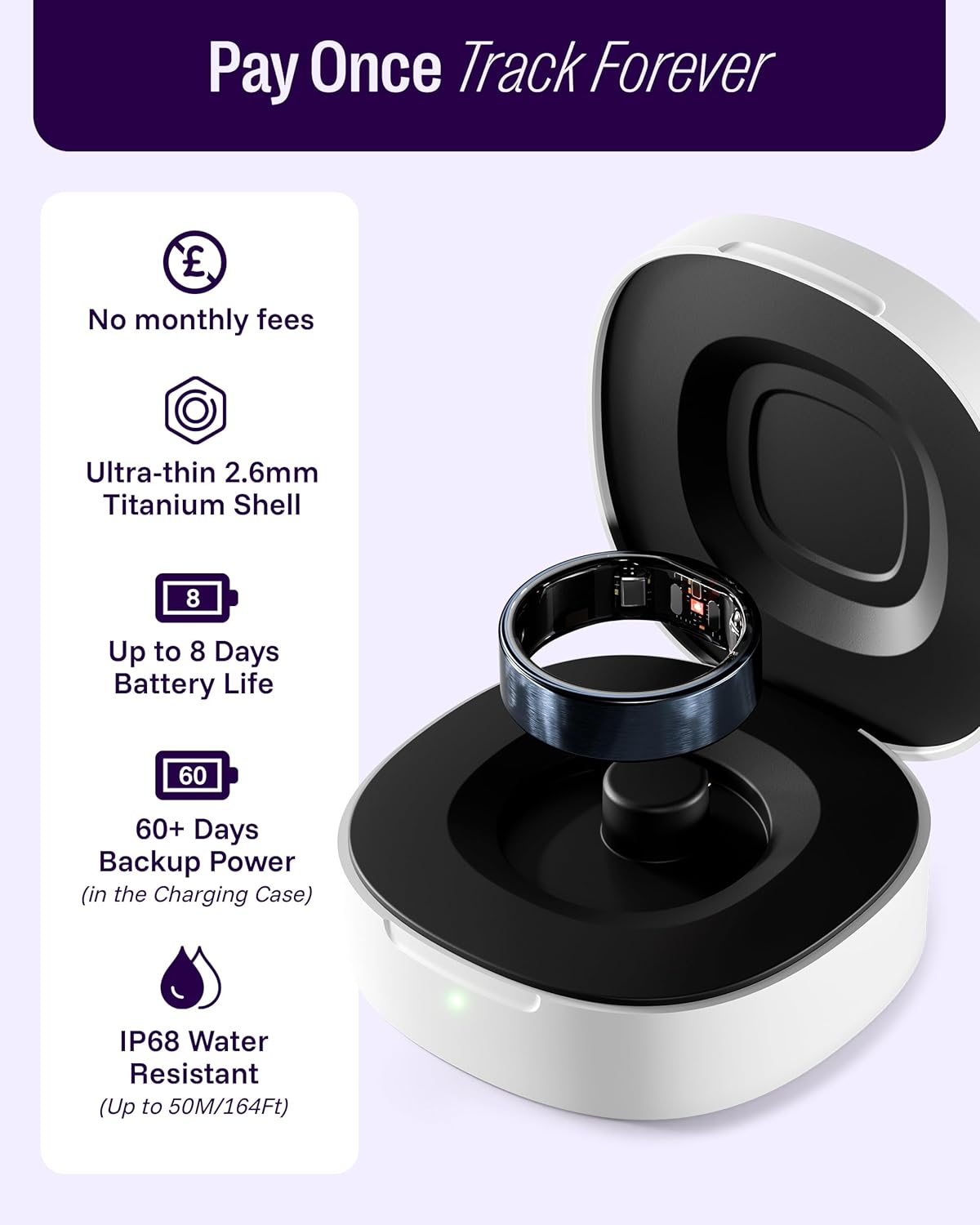
The ring is about 2.6 mm thick, according to the specs, and that feels about right. It’s not razor thin, but it’s slimmer than some older smart rings I’ve seen. On my hand it didn’t catch on pockets or gloves much, and I could type on a laptop all day without it feeling awkward. The inner side has the sensors and charging contacts, but you don’t really feel them once it’s on. There are no buttons at all, which keeps the look clean but also means everything is done through the app.
I like that there’s no always-on light or weird blinking when you move your hand. At night, the sensors will occasionally flash very faintly when doing readings, but you barely notice it unless you’re staring at your hand. For work, it passed fine in video calls and in the office – nobody asked what it was unless I mentioned it. Compared to a chunky smartwatch, it’s a lot more discreet, especially if you don’t like wearing something big on your wrist.
If I had to nitpick, the finish is slightly more glossy than I’d like. After a couple of weeks, it picked up some micro marks from knocking against metal door handles and tools while doing DIY. Nothing dramatic, but if you’re expecting it to stay pristine, that’s not realistic. Overall, though, the design is practical: simple, neutral, and easy to wear with anything. Not a fashion piece, but it blends in nicely, which is what I wanted.
Battery life and charging: honestly the best part
Battery life is where this ring really stands out. LEEP claims up to 8 days on a single charge, and that’s pretty much what I saw. I consistently got between 7 and 8 days with 24/7 wear, sleep tracking every night, and checking the app a couple of times per day. No need to baby it or turn features off. Compared to a smartwatch that needs charging every 1–3 days, it’s a nice change not having to think about it all the time.
The charging case is also genuinely useful, not just a gimmick. You drop the ring in, it snaps onto the contacts, and the case itself has a built-in battery that can recharge the ring multiple times. They claim up to 60 days backup with the case, which I obviously haven’t fully tested, but the battery indicator on the case barely moved after a couple of full ring charges. This means you can toss the case in your bag for a trip and not worry about finding an outlet every few days.
Charging speed is decent. From low battery (around 10–15%), the ring topped up to 100% in about an hour or so in the case. You can easily plug it in while you shower and get ready, or during a TV episode, and you won’t miss too much data. I usually charged it during the evening instead of overnight, because I mainly care about sleep stats. The USB‑C port on the case is standard, so no weird proprietary cable to lose, which is nice.
In practice, the battery life means you actually keep using the thing. With some wearables, the constant charging becomes annoying and you just stop wearing them. Here, one charge a week is very manageable. The only minor complaint is that there’s no percentage indicator on the ring itself (obviously, no screen), so you rely on the app and the case lights. Not a big deal, but worth knowing. Overall, though, the battery and charging setup are one of the strongest points of this product.
Comfort: easy to forget you’re wearing it once you get the right size
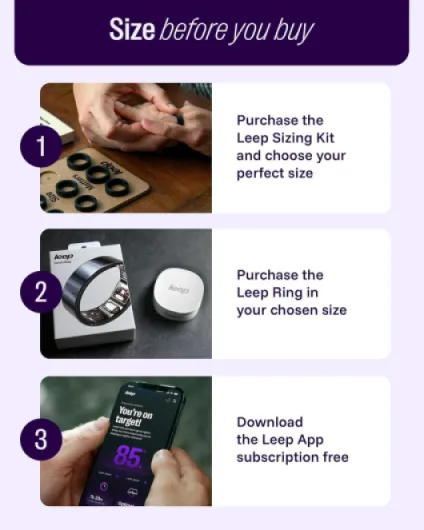
Comfort was one of my biggest questions, because if a ring annoys you in bed or while typing, you’ll just stop wearing it. I went with my usual ring size and it fit fairly well, but if you’re unsure, using their sizing kit first is probably smart. The fit is snug enough that it doesn’t spin wildly, but not so tight that it leaves deep marks. After the first two days, I honestly stopped noticing it most of the time.
During sleep, it was surprisingly unobtrusive. I’m a side sleeper, and with a watch I always feel it pressing into the pillow or my wrist. With this ring, there were a few moments the first night where I was aware of it when my hand was tucked under my head, but it wasn’t painful or anything. By night three or four, it just felt normal. I didn’t wake up because of the ring once during the whole test period, which is basically what I was hoping for.
Daytime use was also fine. Typing on a keyboard, using a mouse, carrying bags, all that was business as usual. The inner surface is smooth, so there are no sharp edges rubbing against your finger joints. I also didn’t get any noticeable sweating under the ring, even during a gym session and a short run. Obviously, you know it’s there if you think about it, but it never got to the point where I wanted to rip it off mid-day, which has happened to me with some chunkier smartwatches.
The only comfort downside is that if you choose the wrong size and it’s a bit loose, you might lose some accuracy and feel it twist around more, which can be annoying. Also, if you lift heavy weights or grip bars a lot, you might prefer to take it off for those sessions, because the pressure between the bar and the ring isn’t pleasant. But for normal office life, walking, sleeping and general use, I’d rate the comfort as genuinely good. It feels like a normal ring that just happens to be tracking your stats in the background.
Materials: titanium build that feels solid but not fancy
The ring is made from titanium, which is a good call for something you’re meant to wear 24/7. In the hand, it feels light but not cheap. There’s no flex, no creaking, and the inner surface is smooth with rounded edges. I’ve worn cheaper metal rings before that had rough edges or seams you could feel – this one doesn’t have that issue. You can tell they’ve at least paid attention to basic comfort and finishing.
The IP68 rating and 50 m water resistance are the other big material points. I wore it while washing dishes, in the rain, and for a couple of swims. No issues at all. The coating didn’t peel, and there was no fogging or weird behaviour afterwards. I didn’t do deep dives or anything extreme, but for normal daily life and pool swimming, it handled it fine. The fact that it ships with two silicone protectors is also a hint that they know people will bash it around – I ended up using one when doing a bit of DIY with tools, just for peace of mind.
Inside, the sensors sit flush enough that they don’t dig into the skin. After a few days, I pretty much forgot they were there. I did notice a light ring mark on my finger when I took it off after a full day, but no irritation or redness. That’s always my concern with cheaper wearables – bad coatings or materials that cause itching. Here, nothing like that so far. If you’re sensitive to some metals, titanium is usually a safer bet, and this seems in line with that.
Overall, I’d say the materials are solid and practical rather than fancy. It doesn’t feel like jewellery, but it also doesn’t feel like a toy. For the price point, titanium, proper water resistance and a decent finish are pretty good. Just don’t expect it to look brand new if you’re rough with it; it behaves like a normal ring made of metal, which means it will pick up the usual small marks over time.
Performance and tracking: good for trends, not medical-grade
On the tracking side, the ring covers quite a lot: sleep, heart rate, HRV, blood oxygen (SpO2), skin temperature trends, stress and activity (steps and general movement). I mainly focused on three things: sleep data, daily heart rate, and steps. For heart rate, I compared it to my Garmin watch on a few walks and light workouts. The readings were usually within a few beats per minute of the watch, which is good enough for everyday use. You’ll see occasional spikes or dips, but nothing extreme or obviously wrong.
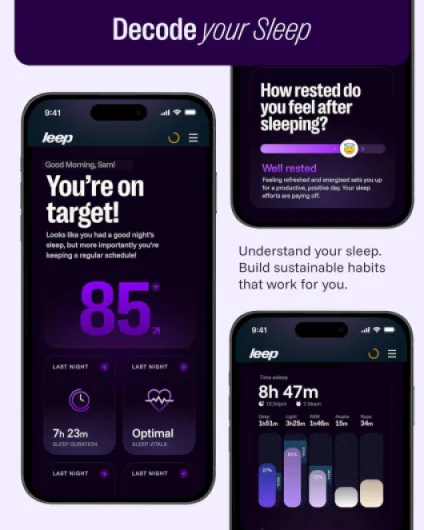
Sleep tracking is where this kind of device is meant to shine. It breaks your night into light, deep, and REM phases, plus shows how long it took you to fall asleep and how many times you woke up. The graphs in the app are clear enough, and the overall sleep score generally matched how I felt in the morning. On nights when I went to bed late and woke up a few times, the score dropped and the app nudged me about late meals or stress. It’s not magic, but it does a decent job of making you think about your habits.
Steps and activity are fine for a general idea, but don’t treat them like a calibrated sports watch. On days when I wore both the ring and my Garmin, the step counts were usually within a few hundred of each other over 10,000+ steps, which is good enough for me. The stress and HRV graphs are interesting if you like that kind of thing. They highlight periods of high stress or strain and can help you notice patterns, like feeling run down after a few short nights.
The honest take: it’s good for trends and habits, not for diagnosis. Don’t use this instead of a doctor if you have serious issues. But as a daily health tracker that pushes you to sleep a bit earlier, move more and notice when you’re run down, it works well. There are still the odd weird readings, especially if the ring shifts on your finger, but nothing that made me distrust it completely. For the price and form factor, the performance is pretty solid, as long as you keep your expectations realistic.
What you actually get in the box and how it works day to day
Out of the box, you get the ring, a charging case, a short USB‑C cable and two silicone protectors. That’s it. No fancy extras, but honestly you don’t need more. The ring I tried is the Midnight Blue version, size 7. There’s no screen on it, so all the info lives in the LEEP app. The ring connects via Bluetooth to your phone and syncs data like sleep, heart rate, HRV, blood oxygen, temperature and general activity. No GPS, so don’t expect running routes or pace charts here.
Setup was pretty straightforward. You download the app, create an account, pair the ring, and after a firmware update you’re good. The app walks you through what each metric is in plain terms, which I appreciated. After about three nights, it started giving me more useful sleep scores and trends instead of just raw numbers. It tracks things like sleep stages, time to fall asleep, wake-ups during the night, and gives you a kind of readiness or recovery style overview based on your last few days.
On a normal day, you don’t really interact with the ring itself. You just wear it and forget it. I checked the app a couple of times per day: once in the morning for sleep stats, and sometimes in the afternoon to look at heart rate and stress graphs. Sync is not instant like a watch with a constant screen, but when you open the app it pulls in data in 5–10 seconds, which is fine. Notifications and calls don’t show on the ring – it’s really just a health tracker, not a tiny smartwatch.
In terms of features for the price, it’s pretty good: no subscription, detailed sleep tracking, stress/HRV, SpO2, temperature trends, and activity tracking with steps and calories. It doesn’t try to do too much, which I actually liked. If you’re expecting phone controls, NFC payments, or full workout modes like a sports watch, this is not that. But as a quiet background health tracker, the overall package feels sensible and focused rather than gimmicky.
Pros
- Comfortable titanium ring with low-key design that’s easy to wear 24/7
- Strong battery life (about a week per charge) plus a charging case with plenty of backup power
- No subscription fees while still offering detailed sleep and health tracking in the app
Cons
- App is decent but not as polished or feature-rich as some premium competitors
- No GPS or workout-specific features, so limited appeal for serious sports tracking
Conclusion
Editor's rating
After a couple of weeks wearing the LEEP Smart Ring pretty much non-stop, my overall impression is positive. It’s comfortable, discreet, and does a solid job tracking sleep and everyday health stats without asking you for a subscription fee every month. The battery life and charging case are genuinely practical – charging once a week and having a backup battery in the case makes it very easy to live with. The app is clear enough, and the main metrics (sleep, heart rate, steps, stress) are consistent and useful for spotting patterns in your habits.
It’s not flawless. The app still feels like it’s evolving, and some people expecting super detailed training tools or medical-level accuracy will probably feel limited. There’s no GPS, no on-ring display, and it doesn’t replace a serious sports watch if you’re deep into running or cycling. But that’s kind of the point: this is a low-profile health tracker for people who want to understand their sleep and general wellbeing without another screen or another bill.
If you’re someone who wants a simple, comfortable ring to wear 24/7, cares mainly about sleep quality, resting heart rate, and general stress levels, and hates the idea of subscriptions, this is a good fit. If you want advanced workout tracking, smartwatch features, or the most polished app experience out there, you might be better off with a higher-end ecosystem and accepting the extra cost. For what it aims to do – quiet, ongoing health tracking at a one-time price – it gets the job done well.