Summary
Editor's rating
Is it good value or should you spend a bit more?
Slim, bracelet-style look that doesn’t scream “sports watch”
Battery life is actually one of the strong points
Comfortable for all-day wear, with a few small quirks
Activity tracking is fine, but heart rate and blood pressure are shaky
What this tracker actually offers on paper
How well it actually tracks health and sleep day to day
Pros
- Slim, lightweight design that’s comfortable for all-day and sleep wear
- Battery life of around 7–10 days with normal use
- Decent basic step and sleep tracking plus handy notifications for a low price
Cons
- Heart rate during intense exercise and blood pressure readings are often inaccurate
- App and instructions feel clunky and not very detailed
- No built-in GPS and limited sports features for serious training

Specifications
View full product page →| Brand | FITVII |
A slim budget tracker that tries to do it all
I used the FITVII Slim Fitness Tracker for a bit over two weeks as my daily watch: steps, sleep, heart rate, and basic notifications. I paired it with an Android phone, wore it day and night, in the shower, on walks, and during a few gym sessions with cardio. Before this, I’d mostly used cheap Xiaomi bands and an older Fitbit, so I wasn’t expecting miracles, just something that works reliably enough for the price.
My idea going in was simple: see if a low-cost band with blood pressure and blood oxygen on the spec sheet is actually useful, or just numbers on a tiny screen. I also wanted to see if the slim, bracelet-style design was more comfortable than the chunky square smartwatches that feel like bricks on smaller wrists. The Amazon rating is around 3.9/5 with a lot of reviews, so I expected a mixed bag: some good stuff, some annoying flaws.
In daily use, it did what I needed most of the time: count steps, buzz when a call or message came in, and give me a rough idea of how I slept. But a few things stood out quickly: the heart rate during intense exercise is not reliable, the blood pressure readings feel more like a toy than a tool, and the app is functional but a bit clunky. On the other hand, battery life and comfort are actually pretty solid for the price.
If you’re thinking about buying it, the key question is what you really care about. If you want a medical-grade heart rate monitor or super accurate training data, this is not it. If you just want a slim, cheap tracker that doesn’t look huge on your wrist and gives you general activity info, it’s decent. In the rest of the review I’ll break down design, comfort, performance, battery, sleep and health tracking, and whether it’s good value or if you’d be better off spending a bit more on a better-known brand.
Is it good value or should you spend a bit more?
Considering the price point of the FITVII Slim (usually in the lower budget range for fitness trackers), I’d say the value is decent but not mind-blowing. You get a slim, comfortable band, a week of battery life, basic activity and sleep tracking, notifications, and a few extra health metrics that are more for curiosity than anything else. For someone who just wants an entry-level tracker and doesn’t want to spend big-brand money, it’s a reasonable option.
Where the value becomes questionable is if you care a lot about accuracy during workouts or long-term reliability. Some Amazon reviews mention faults like step tracking stopping, and I had my own issues with inconsistent heart rate during intense exercise. The good news is that at least one reviewer reported fast replacement service, which is reassuring. Still, compared to something like a Xiaomi band or even an older Fitbit, the ecosystem and polish are clearly a step down.
If your priorities are: slim design, comfortable to wear, basic stats, and you’re okay with slightly clunky software, then you’re getting what you pay for. If you’re the type who will be constantly checking heart rate zones, comparing data with gym equipment, or relying on blood pressure readings, I’d honestly say this is not the best value for you. You’d be better off saving a bit more and going for a more established fitness brand that focuses on sensor quality.
Overall, I’d rate the value as good for casual users, average for fitness enthusiasts. It’s not a rip-off, but it’s also not some hidden gem that beats more expensive trackers across the board. It’s a budget band that behaves like a budget band: does the basics, cuts corners on accuracy and app quality, and relies on the low price and slim look to make sense. If that matches your expectations, you’ll probably be satisfied enough. If you expect more than that, you might end up feeling like that 1-star reviewer who called it useless for heart rate training.
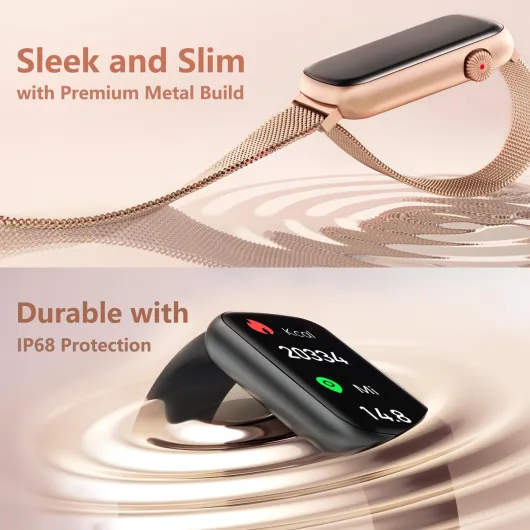
Slim, bracelet-style look that doesn’t scream “sports watch”
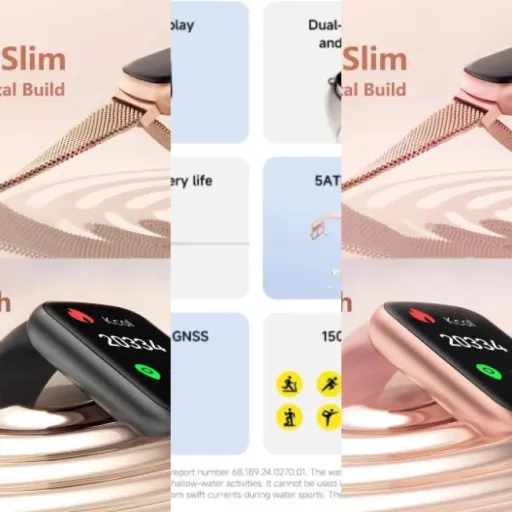
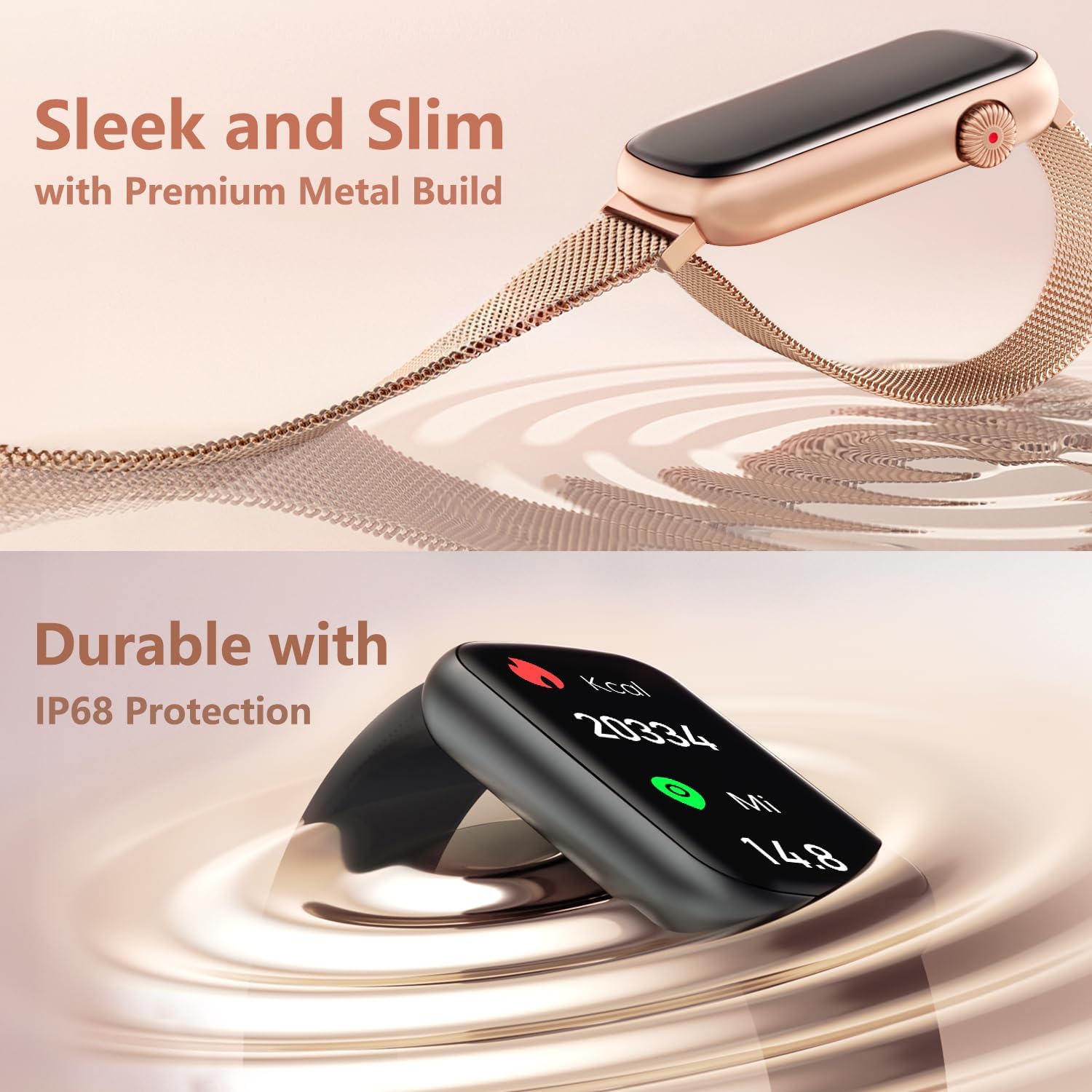
The main thing I noticed right away is the slim, narrow design. Compared to a typical square smartwatch or even some chunkier fitness bands, this one feels more like a bracelet. On my wrist it looked fairly discreet, not like I strapped a mini smartphone to my arm. If you hate big watch faces, you’ll probably like the shape and size here. The screen is 1.47 inches, tall and narrow, so it doesn’t extend too far across the wrist.
The bezels around the screen are there, so don’t expect an edge-to-edge look, but for this price level it’s fine. The display is LCD, not OLED, so blacks aren’t super deep and colors are decent but nothing more. Indoors it’s easy to read. Outdoors in bright sunlight, you need to tilt your wrist a bit or bump up brightness, and sometimes I had to shade it with my hand to read smaller text. It’s usable, but not great if you’re often outside in direct sun.
The design style is fairly neutral: black band, oval screen, and a simple buckle closure (the listing mentions magnetic straps as an option; mine came with a standard silicone strap, not a metal magnetic one). There’s one touch-sensitive area/button to wake it and navigate. The watch faces are basic but you can pick a few different layouts—digital, analog-style, bigger numbers, etc. Nothing fancy, but enough to make it feel a bit personal.
In day-to-day wear, it looks clean and not cheap from a distance. Up close, you can tell it’s a budget tracker: the casing is resin, and the screen doesn’t have that glossy premium glass feel. But for the price, I think the design is pretty solid. It’s not trying to be flashy, it just looks like a simple, modern band. If you want something low-profile that fits in at the office or on a casual night out, it does the job without drawing too much attention.
Battery life is actually one of the strong points
Battery life was better than I expected. The specs say 7–10 days, and I got pretty close to that. With 24/7 heart rate on, sleep tracking every night, notifications for calls and a few apps, and a couple of short workouts tracked, I got around 7–8 days on a full charge. If you turn off some features (like constant heart rate or frequent SpO2 checks), I can see it stretching closer to 9–10 days. So you’re not charging this every other day like some smartwatches.
Charging is done with a small magnetic cable that snaps to the back of the tracker. It’s not the strongest magnet I’ve seen, but it held well enough on a flat surface. From almost empty to full took about 1.5–2 hours for me, which matches the 2-hour claim. There’s no wireless charging or anything fancy, but that’s normal at this price. Just don’t lose the cable, because it’s proprietary.
One thing that’s a bit unclear is battery percentage visibility. The watch itself shows a battery icon, but it’s not super granular. In the app, you can see a clearer percentage. It’s not a huge problem, but the manual doesn’t really explain it well, and a couple of Amazon reviews mentioned confusion when charging for the first time. For me, I just plugged it in until the icon showed full and the app read 100%—after that, it lasted the week without issues.
In daily life, this means you can just pick a day of the week to charge it—say Sunday evening—and forget about it the rest of the time. That’s a big plus if you’re tired of babying your devices. Combined with the lightweight body, the good battery life makes it easy to actually use sleep tracking, because you’re not constantly taking it off to top up. Overall, in terms of battery, I’d say it’s pretty solid for the category, especially compared to more power-hungry smartwatches.
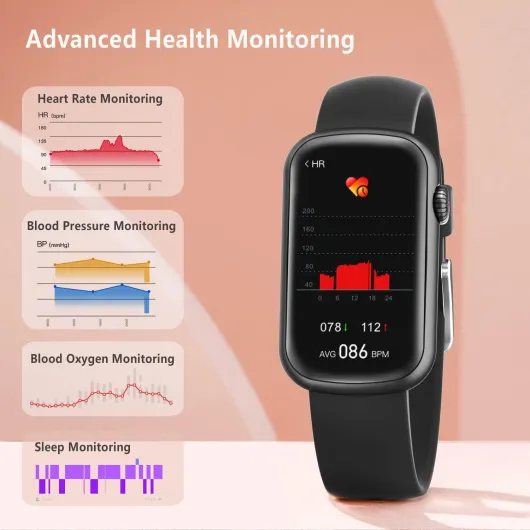
Comfortable for all-day wear, with a few small quirks
Comfort is actually where this tracker does fairly well. The slim body and light weight make it easy to forget you’re wearing it. I wore it basically 24/7: during work, workouts, sleep, and showers. No major irritation, no weird pressure points. The band material is that typical soft silicone you see on most fitness trackers—not luxurious, but flexible and skin-friendly enough. I have slightly sensitive skin and I didn’t get any rashes, as long as I took it off briefly to dry after showers.
The buckle closure is simple and secure. It doesn’t dig into the wrist, and I didn’t have any accidental openings. There are enough holes to fit both smaller and larger wrists. Once I dialed in the right tightness—snug but not strangling—the heart rate sensor stayed against the skin without leaving a mark. If you wear it too loose, you’ll see more heart rate dropouts, but that’s the same story with most trackers.
Sleeping with it was fine. The slim shape helps a lot here. With bigger smartwatches I often wake up because they press into the side of my wrist when I roll over. With this one, I barely noticed it. The only time it bugged me a bit was when I bent my wrist fully; the longer screen can press slightly into the top of the wrist, but it wasn’t painful, just something I noticed now and then.
One small downside: the underside with the sensors can collect a bit of sweat and grime if you work out hard, so you do need to rinse and wipe it occasionally. If you don’t, you might get some itchiness over time. Also, while there are mentions of a magnetic strap in reviews, my unit didn’t have that, and the included band is fairly basic. Overall though, in terms of comfort, I’d say it’s good for all-day and all-night wear, especially if you care more about not feeling the watch than about premium materials.
Activity tracking is fine, but heart rate and blood pressure are shaky
For the basic stuff—steps and general activity—the tracker is okay. Over several days, I compared it to my phone’s built-in pedometer and a Xiaomi band. The FITVII was usually within 5–10% of the others. On a 6,000-step day, it might show 5,700 or 6,300. That’s normal for cheap trackers. It’s good enough to see if you’ve been lazy or active, but not something I’d use for super precise step tracking. Distance and calories are estimates based on steps and your profile, nothing more.
Where things get more questionable is heart rate during exercise. At rest or walking around, the readings looked reasonable and close to my other devices. But during cardio (treadmill and bike), it often lagged or got stuck. For example, when the gym machine and my older Fitbit showed around 150–160 bpm, the FITVII sometimes sat at 90–110 bpm or even dropped to 80-something in the middle of a hard interval. That lines up with that 1-star review calling it dangerously inaccurate for workouts. It’s not always that bad, but it’s inconsistent enough that I wouldn’t trust it for serious training zones.
Blood pressure is basically a gimmick here. It gives you numbers, sure, but they stayed weirdly similar no matter what I was doing. I compared it with an actual cuff monitor a few times, and sometimes it was close, sometimes off by a lot. Same with blood oxygen (SpO2): at rest it showed normal values, but I wouldn’t rely on it for anything important. To be fair, the brand does say it’s not for medical use, and I totally agree. Treat these as rough info, nothing more.
The 7 sports modes are very basic: walking, running, cycling, etc. They mostly just change what’s shown on screen and how the data is grouped in the app. Without built-in GPS, runs and rides are less accurate unless you keep your phone with you and use connected GPS (if the app supports it properly). In practice, I’d say this tracker is fine for casual walks, light workouts, and daily movement tracking. If you want reliable heart-rate-based training, you should look at something else, even if it costs a bit more.
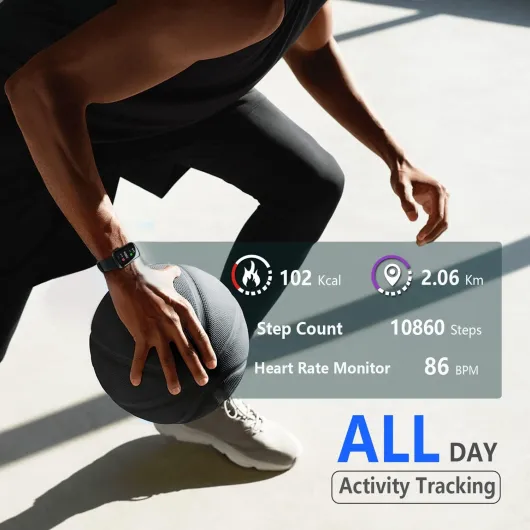
What this tracker actually offers on paper
On paper, the FITVII Slim tries to tick a lot of boxes. You get a 1.47-inch LCD color screen with a vertical layout, a slim band, and a claimed battery life of 7–10 days. It connects over Bluetooth to Android 7.0+ and iOS 13.0+ phones, but not to tablets or PCs. There’s no built-in GPS, so any distance tracking is based on steps and your stride length, or on your phone’s GPS if the app supports it during workouts. It’s IP68 waterproof, which means you can shower with it and it should handle splashes and maybe surface swimming, but it’s not a dedicated swim watch.
In terms of features, it offers 24/7 heart rate monitoring, blood pressure estimates, blood oxygen (SpO2), sleep tracking, step counting, calories, and 7 sports modes. Plus the usual smartband extras: call and message notifications, alarms, weather, music control, sedentary reminders, drink water reminders, and a female cycle reminder. You can also customize the watch face a bit with DIY options, though it’s limited compared to bigger ecosystems like Fitbit or Garmin.
The box is simple: the tracker itself, a silicone band, a magnetic charger, and a basic manual. No fancy extras, no spare band in the box. The band length goes up to about 8.6 inches, which fit my average wrist with room to spare. The memory is tiny (130 MB) but that’s normal for this type of product; you’re not storing music or anything, just logs that sync to the app. It supports all current smartphone models as long as they meet the OS and Bluetooth requirements, and pairing was straightforward for me.
Overall, on the spec sheet it looks pretty loaded for the price, especially with blood pressure and SpO2 sensors listed. In practice though, I’d say: treat those extra health metrics as rough indicators at best, not something you base serious decisions on. The core of the product is still step tracking, basic heart rate, and simple notifications. If you go in expecting a budget Fitbit-style band with some extra numbers to look at, that’s closer to reality than expecting a medical device on your wrist.
How well it actually tracks health and sleep day to day
Effectiveness really comes down to what you expect from a fitness tracker. As a daily reminder to move more and to glance at your sleep, it works. Steps are roughly right, and the idle/sedentary reminders are a nice nudge if you sit at a desk all day. The sleep tracking gives you total time, and splits it into light and deep sleep. Over two weeks, the total sleep time matched pretty closely with when I remembered going to bed and getting up. The breakdown into stages felt a bit random sometimes, but that’s pretty common with cheaper trackers.
Where it falls short is if you try to treat it like a serious health tool. The 24/7 heart rate trend is okay for seeing general patterns—like your resting heart rate dropping if you’re getting fitter or rising if you’re stressed or sick. But I wouldn’t trust the exact numbers during workouts. For sleep, it’s useful to see if you’re regularly sleeping too little, but it’s not analyzing sleep quality in a deep way like more advanced devices do.
Blood oxygen and blood pressure are more like “nice to look at once in a while” stats than something truly effective. I took multiple readings in different conditions. Sometimes they lined up with a proper device, sometimes they didn’t. The watch doesn’t really guide you on how to measure properly, and it’s easy to move your wrist or sit wrong and get a weird result. So in practice, I mostly ignored those after the first few days of curiosity.
The app itself is okay but not great. It syncs the data, shows graphs for steps, heart rate, sleep, and so on, and can connect to Apple Health according to user reviews. The layout is a bit clunky and the translations are sometimes off, but you can still find what you need. For someone who just wants to quickly check how much they walked and how they slept, it’s good enough. If you’re a data nerd who wants detailed training metrics and high accuracy, this tracker will feel limited and a bit frustrating.
Pros
- Slim, lightweight design that’s comfortable for all-day and sleep wear
- Battery life of around 7–10 days with normal use
- Decent basic step and sleep tracking plus handy notifications for a low price
Cons
- Heart rate during intense exercise and blood pressure readings are often inaccurate
- App and instructions feel clunky and not very detailed
- No built-in GPS and limited sports features for serious training
Conclusion
Editor's rating
After wearing the FITVII Slim Fitness Tracker day and night for a couple of weeks, my conclusion is pretty straightforward: it’s a simple, slim, budget tracker that handles the basics, but it has clear limits. As a daily step counter, sleep logger, and notification buzzer, it gets the job done. The design is discreet, the band is comfortable, and the battery life of about a week is genuinely handy. You can put it on, forget about it, and only charge it once every several days.
Where it falls short is in sensor accuracy for anything serious. Heart rate during intense exercise can be way off, blood pressure is more of a toy than a tool, and SpO2 is just a rough indicator. The app is functional but a bit rough around the edges. So if you’re buying this mainly to track hardcore workouts, dial in training zones, or monitor health conditions, I’d skip it and look at something more reliable, even if it costs more.
I’d recommend this tracker to people who: want a cheap, slim band for general activity, like the idea of seeing their sleep and steps in an app, and don’t obsess over perfect accuracy. It’s okay for teens, casual users, or as a first fitness band to see if you’ll actually use one. People who should skip it: anyone serious about fitness data, anyone who needs trustworthy heart rate or blood pressure readings, and those who want a polished app experience. Overall rating: 3.5 to 4 out of 5 for casual use, closer to 2.5 if you’re a data-focused athlete.