Summary
Editor's rating
Value for money: good on paper, depends how long it lasts
Design: slim and discreet, but with some compromises
Battery: the strongest point of this watch
Comfort: easy to wear, but the strap worries me
Durability & waterproofing: okay for water, question mark for the strap
Performance: fine for basics, don’t trust it like a medical device
What this HOUAN tracker actually offers
Pros
- Good battery life (around 4–6 days of real use) with fast charging
- Covers basic tracking (steps, heart rate, sleep) and notifications reasonably well
- IP68 rating makes it safe for showers, rain, and light swimming
Cons
- Strap/charging design is a weak point and can break after a few months
- App experience is mediocre and some users reported sketchy QR/app redirects
- No GPS and health metrics like blood pressure and temperature are not very trustworthy

Specifications
View full product page →| Brand | HOUAN |
A £30 fitness watch that looks tempting… but is it worth it?
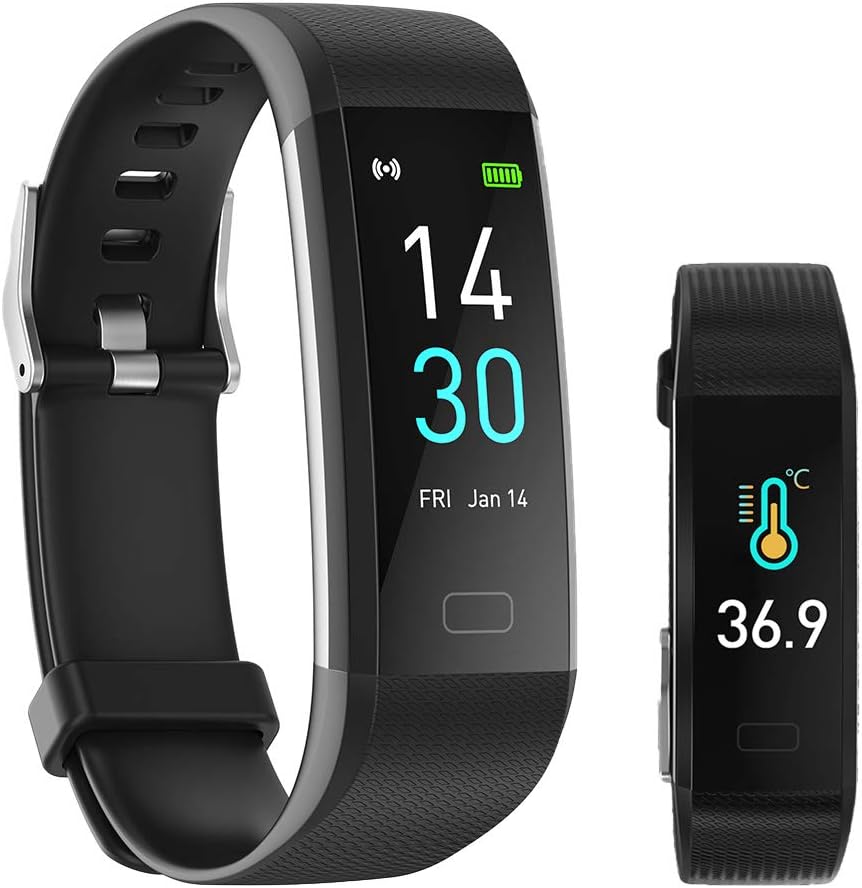
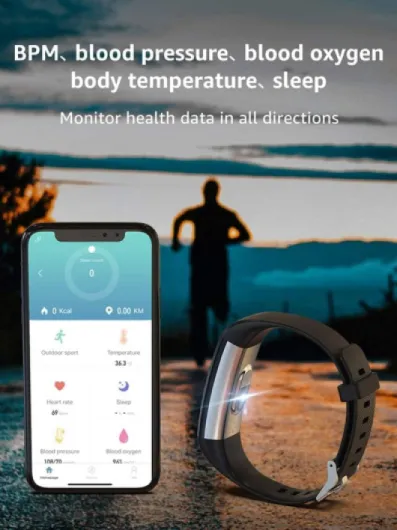
I’ve been wearing this HOUAN activity tracker on my wrist for a bit to see if a cheap band like this is actually usable day to day. On paper, it ticks a lot of boxes: heart rate, body temperature, step counter, sleep tracking, blood pressure, notifications, IP68 waterproof, the whole usual list. For around £30, it clearly targets people who want Fitbit-style features without paying Fitbit money.
In practice, it’s a mixed bag. Some things are genuinely pretty solid for the price, especially the battery life and basic step tracking. Other things feel a bit half-baked, like the app and the blood pressure feature. And then there are a few red flags from other buyers around the QR code / app setup and the strap durability that you really need to know about before you buy it.
I’m not a pro runner or anything, I use these bands for basic stuff: make sure I move during the day, track sleep roughly, get notifications when my phone is in my bag, and check my heart rate during walks or light workouts. So I judged this watch against that kind of everyday use, not hardcore triathlon training. For that, you’d want something much more serious (and much more expensive).
So here’s how it went: what actually works well, what’s just marketing on the box, and where this thing cuts corners. It’s not terrible, but it’s definitely not perfect, and depending on what you expect from a fitness tracker, it could either feel like good value or like a bit of a false economy.
Value for money: good on paper, depends how long it lasts
For roughly £30, you do get a lot of features on the spec sheet: heart rate, sleep tracking, body temperature, blood pressure, notifications, 16 sport modes, waterproofing, and a battery that can easily last nearly a week. Compared to big brands like Fitbit, Garmin, or Apple, it’s obviously way cheaper. If your expectations are modest and you mainly want steps, basic heart rate, and notifications, this looks like pretty good value at first glance.
However, you have to factor in the downsides. The app experience is not on the same level as the big brands. It works, but it’s a bit clunky. And more importantly, some people have run into sketchy-looking QR code / app redirects asking for card details, which is a big red flag. I didn’t hit that personally with the standard Runmefit app from the official store, but the fact that at least one verified buyer ended up cancelling their card over it doesn’t inspire confidence. If you’re not comfortable double-checking what you install, that’s a problem.
Then there’s the durability. If the strap breaks after two or three months and you can’t easily replace it, your £30 watch turns into e-waste very quickly. At that point, spending a bit more on a known brand or at least on a model with standard, replaceable straps might actually be cheaper in the long run. On the other hand, if you’re gentle with your stuff and just want a cheap tracker to test the concept, this can still be a decent deal.
So in terms of value, I’d say: it’s good if you’re on a tight budget, understand the limitations, and are okay with the risk that it might not last years. If you want something more reliable with better support and a cleaner app, it’s worth saving up a bit more. This is budget gear, and it behaves like budget gear: gets the job done, but with some compromises you can’t ignore.
Design: slim and discreet, but with some compromises
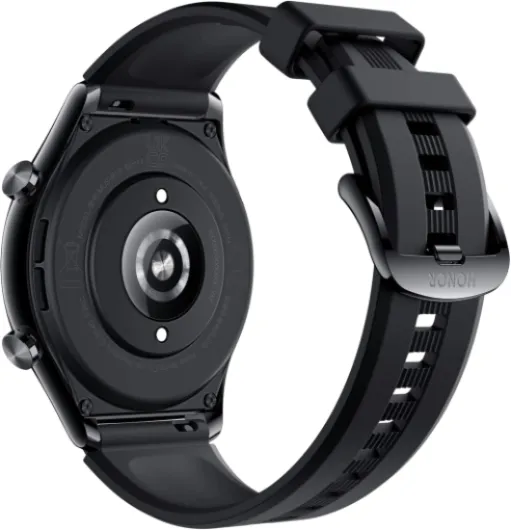
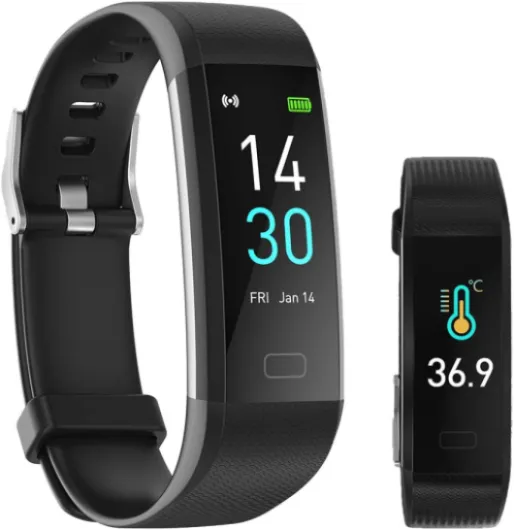
Design-wise, this HOUAN tracker is pretty low-key. It’s a slim, rectangular module with a black band and a simple buckle. On the wrist, it doesn’t shout for attention, which I actually like. It fits fine under a shirt cuff, and because it’s light (around 50 grams), you forget it’s there most of the time. Compared to chunkier smartwatches, this feels more like a classic fitness band than a mini phone on your wrist.
The screen is small at 0.96 inches, so don’t expect to read long messages comfortably. You can see who’s calling, read short notifications, and check your stats, but that’s about it. The resolution (240 x 240) is decent for the size, but the panel is LCD, not OLED, so blacks are more grey, and in bright sunlight you sometimes have to tilt your wrist to catch the right angle. It’s usable, just not pretty. The interface is simple: swipe through steps, heart rate, temperature, etc., and use the button to go back or wake the screen.
One thing to be aware of is the charging design. The USB connector is built into one end of the band, so you pull the strap off and plug the watch body directly into a USB port. It’s practical in theory (no need to carry a proprietary charger), but it creates a weak point at the band connection. One Amazon reviewer mentioned the strap breaking after a couple of months right at that joint, and honestly, I can see how that happens if you charge it often or pull it off roughly.
In short, the design is functional and discreet, which I liked, but it’s not premium. The small screen and integrated USB concept are fine for a cheap tracker, but just know you’re trading long-term robustness and readability for that slim, minimalist look.
Battery: the strongest point of this watch
The battery life is honestly one of the best parts of this tracker. The brand claims 7–15 days of standby and around 5 days of actual use, and in real life it lines up fairly well. With continuous heart rate on, notifications active, and checking the screen regularly, you can expect around 4–6 days before you really need to charge it. If you’re more conservative and don’t constantly wake the screen, you can stretch it a bit more.
Charging is fast too. One user mentioned going from empty to full in about 20 minutes; in my case it was closer to 30–45 minutes depending on how low it was, but still quick enough that you can just plug it in while you shower and get ready and be good for several days. You don’t get the stress of daily charging like with some smartwatches, which is a big plus if you hate constantly babysitting your gadgets.
The downside, as mentioned earlier, is the way you charge it. You have to pull off one side of the strap to reveal the USB connector and stick the whole watch into a USB port. Practically, it’s handy – no extra cable to lose – but every charge means flexing that strap joint. Over time, that’s probably what caused the strap breakage some people reported. So the strong battery life is great because it actually reduces how often you need to bend that joint. With 5-ish days per charge, you’re only stressing it maybe once a week.
If long battery life is one of your priorities and you’re okay with a slightly fiddly charging method, this watch does well. I’d say battery is where it feels like a clear win for the price, as long as you’re gentle with the band when you plug it in.
Comfort: easy to wear, but the strap worries me
In terms of comfort, it’s actually pretty good. The band is light, and once you adjust the buckle properly, it stays in place without squeezing your wrist. I wore it all day, including at the desk and on walks, and I didn’t feel the need to take it off because it was bothering me. Sleeping with it was also fine; the module is slim enough that it doesn’t dig into your wrist when you roll over, unlike some thicker smartwatches.
The material of the strap is flexible and feels similar to basic silicone or soft rubber. It doesn’t feel fancy, but it doesn’t irritate the skin either, at least for me. I didn’t get any redness or sweating issues under the band, even after a full day. The buckle system is basic but secure; it didn’t open accidentally during workouts or when I took off a jacket. So for everyday wear, it’s totally acceptable.
Where I’m less confident is long-term durability around comfort. Because the USB charger is part of the strap connection, you have to remove the band from the body regularly to charge it. That means you’re bending and pulling that same joint over and over. One user mentioned the strap breaking at that point after around two months, and that doesn’t surprise me. Once the strap goes, comfort obviously goes with it, and if you can’t easily find a replacement band that fits the charging design, the whole watch is basically done.
If you’re someone who is gentle with your stuff and doesn’t charge too often (the battery does help), you’ll probably be okay for a while. But if you’re rough with your gear or you’re buying this for a teenager who will yank the band off quickly, I’d be a bit cautious. Comfort day to day is good; longevity of that comfort is the question mark.
Durability & waterproofing: okay for water, question mark for the strap
The watch is rated IP68, which basically means it’s fine for everyday water exposure: hand washing, rain, shower, and shallow swimming. One reviewer mentioned showering with it without any issue, and I had the same experience: no fog under the screen, no weird behavior after getting it wet. I wouldn’t take it for deep diving or long sessions in a pool every day, but for normal life, the waterproofing seems to hold up.
The watch body itself feels reasonably solid for a cheap plastic device. It doesn’t creak or feel like it’s going to fall apart if you bump it on a door frame. I wouldn’t throw it around, but on the wrist, it feels fine. The screen will scratch if you’re careless, like most plastic or lower-end glass screens, so if you’re the type to hit your wrist on gym equipment a lot, expect a few marks over time.
The real durability issue is the strap, especially where it connects to the watch and doubles as the charging plug. Multiple charges mean repeated twisting and pulling of that same soft joint. One buyer said both units they bought ended up with broken straps around the two-month mark, right where the band joins the watch. That matches what I’d expect just from how the design works. Once that rubber weakens, it’s only a matter of time before it tears.
So overall: waterproofing and body durability are decent for the price, but the strap is the weak link. If you treat it carefully, avoid yanking it off, and don’t charge every day, you might be fine. But if you want something that will definitely last a couple of years with rough use, I’d be wary. That charging-strap combo is convenient at first, but long term it’s the part that could make the whole thing disposable.
Performance: fine for basics, don’t trust it like a medical device
For the core functions, the performance is decent but not flawless. Step tracking is roughly in the right ballpark. Compared to my phone and another mid-range tracker, it was usually within a few hundred steps per day, which is fine if you just want a general idea of how active you’ve been. Heart rate during steady walking or light exercise seemed plausible too; it reacted to changes and didn’t give totally random numbers.
Sleep tracking is okay for a rough overview. It spots when you fall asleep and wake up reasonably well, and splits the night into light and deep sleep. Like most budget trackers, it’s not super precise about wake-ups in the middle of the night, and sometimes it thinks you’re sleeping when you’re just lying still watching TV. For adjusting your general routine, it’s useful; for detailed sleep analysis, not so much.
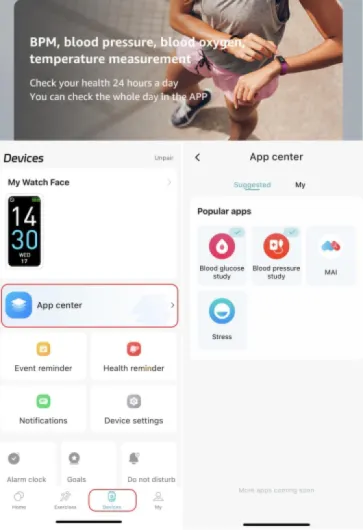
The more “fancy” features are where I’d be more skeptical. Body temperature and especially blood pressure should not be treated as accurate medical readings. The watch does give you numbers, but they’re more like a rough indicator than something you should use to adjust medication or make health decisions. The blood pressure feature also needs to be set up through the app (Runmefit, in the App Center, blood pressure study), which is a bit clunky. I’d treat these as curiosities, nothing more.
Notifications and sport modes do what they’re supposed to for the most part. You get vibrations for calls and messages, and you can start basic sport tracking sessions. Just remember: no built-in GPS, so outdoor runs and walks are only really accurate if you bring your phone and let the app use GPS. Overall, the performance is fine for casual users who want motivation and rough stats, but it’s not something I’d rely on for high-precision tracking or health monitoring.
What this HOUAN tracker actually offers
On paper, this tracker tries to do a bit of everything. You get a small rectangular LCD screen (0.96 inches, 240 x 240 resolution), a silicone-style band with a buckle, and one main button on the side. It connects to your phone via Bluetooth and uses the Runmefit app to sync data. It’s advertised as IP68 waterproof, so okay for showers and shallow swimming. No built-in GPS, so all distance tracking is based on steps and your phone’s GPS if you use it together.
Feature-wise, the list is long: steps, distance, calories, heart rate, body temperature, blood pressure (via the app setting), sleep monitoring, sedentary reminders, and a bunch of sport modes (16 in total: walking, running, spinning, cycling, yoga, etc.). You also get smartphone notifications (calls, texts, WhatsApp, Facebook, etc.), alarms, and some basic watch faces you can customize, including using your own photo as a background. It’s compatible with Android and iOS as long as you’re not on some ancient version.
In day-to-day use, the core of the product is still the basics: step counting, heart rate, sleep tracking, and notifications. The extra stuff like blood pressure and body temperature feels more like bonus features rather than something I’d rely on for health decisions. The app lets you pick which sport modes show up on the watch (up to four at a time), and you can toggle things like drink-water reminders and alarms. The sync is automatic when the watch and phone are close, which is convenient when it actually works smoothly.
Overall, the presentation is clear: it’s a low-cost all-round fitness band. Just be aware that while the specs sheet looks pretty loaded, not every feature is as polished as you might hope. If you go in expecting a budget Fitbit clone with a few rough edges, the positioning makes sense. If you expect medical-grade accuracy or a smartwatch experience like Apple or Garmin, this is not that.
Pros
- Good battery life (around 4–6 days of real use) with fast charging
- Covers basic tracking (steps, heart rate, sleep) and notifications reasonably well
- IP68 rating makes it safe for showers, rain, and light swimming
Cons
- Strap/charging design is a weak point and can break after a few months
- App experience is mediocre and some users reported sketchy QR/app redirects
- No GPS and health metrics like blood pressure and temperature are not very trustworthy
Conclusion
Editor's rating
Overall, the HOUAN activity tracker is a cheap fitness band that does the basics pretty well but comes with some strings attached. Step counting, simple heart rate tracking, basic sleep stats, and notifications all work well enough for everyday use. The battery life is a strong point – going several days between charges with a quick top-up – and the IP68 rating means you don’t have to baby it around water in normal situations. For someone who just wants a simple band to nudge them to move more and show who’s calling, it gets the job done.
On the downside, this is not a polished ecosystem. The app is okay but not great, and the whole QR code / external site situation some users hit is a real concern, especially if you’re not very tech-savvy. The strap/charger design is clever but fragile, and based on buyer feedback, it’s probably the first thing that will fail. Add to that the fact that blood pressure and temperature readings are more of a gimmick than something you should rely on, and you need to go in with realistic expectations.
If you’re on a tight budget, want basic tracking, and are comfortable installing the official app carefully and handling the strap gently, this tracker can be decent value. If you want reliability, cleaner software, and better long-term durability, I’d skip this and look at a slightly more expensive model from a better-known brand or at least one with standard replaceable bands. It’s a functional budget option, not a long-term investment piece.