Summary
Editor's rating
Value for money: worth it if you want simple and offline
Design: simple, light, and a bit generic
Battery life: one of the real strengths
Comfort: you almost forget it's there
Durability & waterproofing: decent for everyday use
Performance & accuracy: good enough, but not always spot-on
What this watch actually does (and what it doesn't)
Pros
- No Bluetooth or app required – fully standalone and simple to set up
- Lightweight and comfortable with around 5–7 days of battery life
- IP68 water resistance and basic features (steps, distance, sleep, reminders) that cover everyday needs
Cons
- Step counting can be inaccurate depending on walking style and movements
- No heart rate, no GPS, and no detailed health metrics
- Screen resolution and watch faces are basic, with only a couple of truly readable options

Specifications
View full product page →| Brand | HUAKUA |
A fitness tracker for people who hate apps and Bluetooth
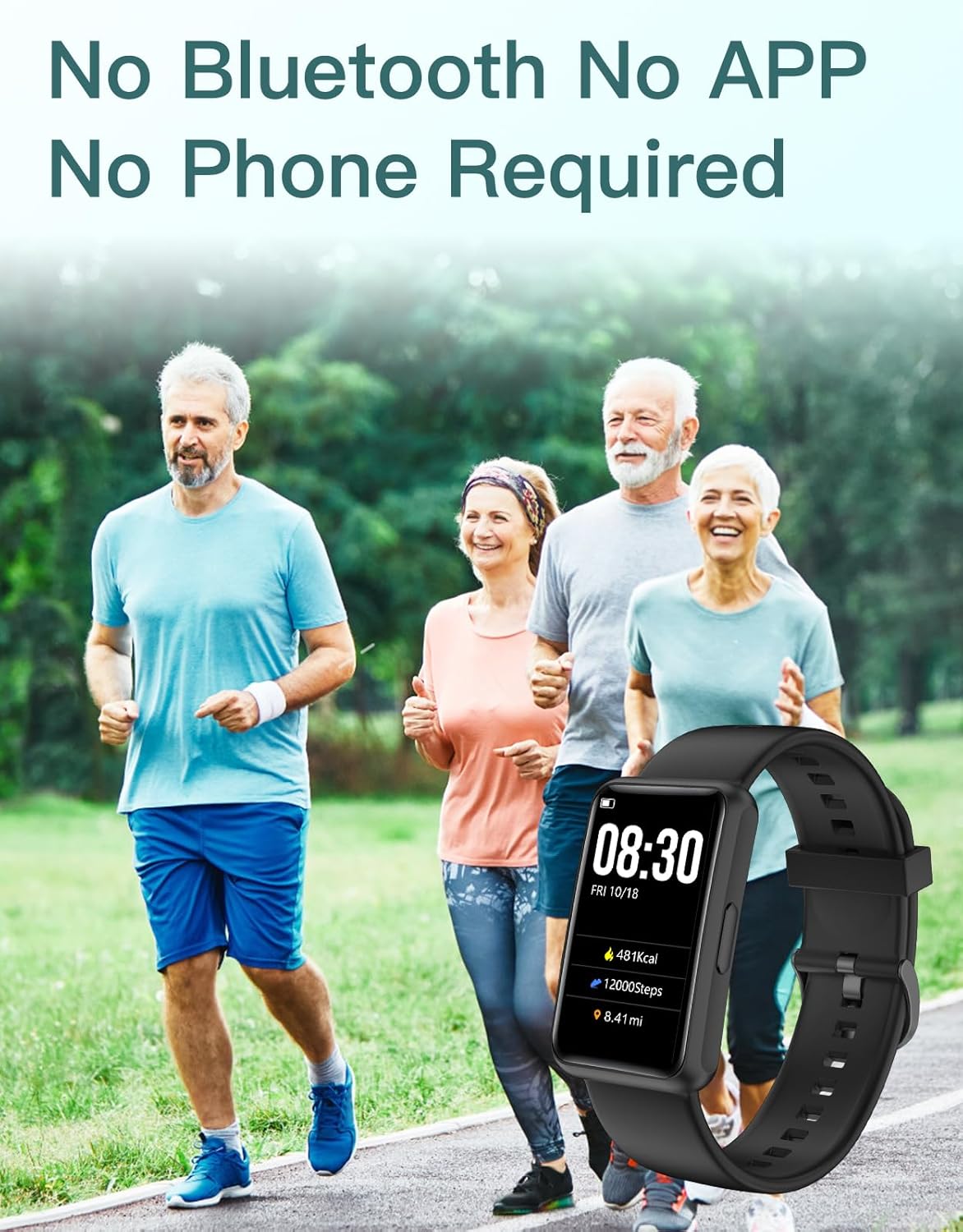
I picked up the HUAKUA S2 because I was fed up with trackers that need an app, an account, permissions, and ten notifications before you can even count a step. This one is the opposite: no Bluetooth, no app, no syncing. You set it up on the watch itself and that’s it. That was the main reason I bought it and, on that point, it delivers exactly what it says.
I’ve worn it pretty much every day for a bit over two weeks, mainly for step counting and to check roughly how active I am during workdays. I also tried the sleep tracking, timers, reminders, and the different sport modes (walking and running in my case). I didn’t baby it: office days, some walks in the rain, a couple of sweaty runs, quick showers with it still on my wrist by mistake.
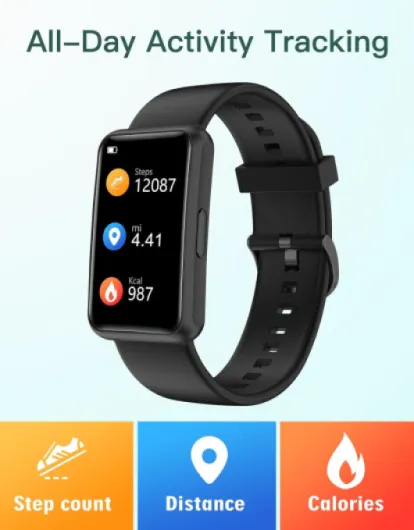
Overall, it feels like a basic but practical tool rather than a cool gadget. No fancy animations, no notifications, no GPS. You get steps, distance, calories, simple sleep data, alarms, and some health reminders. That’s about it. If you’re expecting smartwatch features, you’ll be disappointed. If you just want a digital pedometer on your wrist, it starts to make sense.
It’s not perfect though. The step counter can be a bit weird depending on how you walk, the screen isn’t razor sharp, and some things feel a bit cheap. But for the price, and especially for someone who wants to avoid apps and pairing, it’s pretty solid. I’ll break down what worked for me and what annoyed me so you can see if it fits your use case.
Value for money: worth it if you want simple and offline
Price-wise, this sits in the budget fitness tracker category. For what you pay, you get: step counting, distance and calories, a few sport modes, basic sleep tracking, alarms, timers, drink/sit reminders, IP68 water resistance, and a battery that lasts about a week. The big selling point is really the no Bluetooth, no app approach. If that’s important to you, then this watch suddenly makes a lot more sense than some similarly priced competitors.
Compared to cheap trackers that require an app, you obviously lose app features: no graphs, no long-term data backup, no firmware updates, no phone notifications. But you also avoid data sharing, constant pairing issues, and random app bugs. For some people (especially seniors, kids, or anyone tired of being connected all the time), that’s actually a big plus. You’re paying for simplicity, not for an ecosystem.
On the downside, the accuracy is not perfect and there’s no heart rate sensor or GPS. If you want serious fitness tracking, there are better options slightly higher in price that give you more precise metrics and a better screen. Also, the design and interface are clearly from the budget world. It does the job, but it doesn’t feel premium in any way.
For me, the value is good but not mind-blowing. If you specifically want a standalone pedometer watch with no smartphone required, then it’s one of the few decent choices and the price is fair. If you don’t care about the no-Bluetooth aspect, you might find better-featured trackers in the same price range that just need an app. So it really depends on your priorities.
Design: simple, light, and a bit generic
Design-wise, the HUAKUA S2 is very basic. Rectangular plastic case, black silicone strap, and a small color screen. If you’ve seen cheap fitness bands on Amazon, you already know the vibe. It doesn’t scream “premium watch”, but it also doesn’t look childish or ridiculous. I wore it at work and nobody really noticed it, which is fine by me. It just blends in as a generic fitness band.
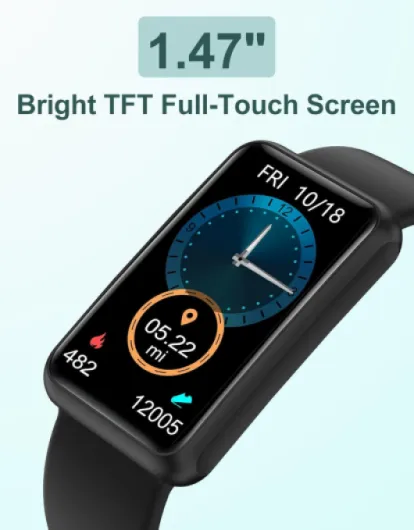
The screen is 1.47 inches with a low resolution, so don’t expect crisp graphics or sharp fonts. You can clearly read the time and steps, which is what matters, but small icons and some watch faces look a bit blocky. Brightness is decent though. I could read it in daylight on walks, and indoors I actually turned the brightness down one notch because it was a bit too strong in darker rooms.
The interface is mostly swipe-based with one physical button. The button is small but clicky enough. After a couple of days, muscle memory kicks in and you stop hunting through menus. Still, some layouts could be cleaner. For example, a couple of the analog-style watch faces look nice at first glance, but the time is harder to read than necessary, which is annoying if you just want to quickly check the exact minute.
In short, the design is functional but nothing special. If you want something that looks like a high-end smartwatch, this is not it. If you want a discreet, light band that does its job without attracting attention, it works. I would have liked slightly better fonts and watch faces, but it’s acceptable for this price range.
Battery life: one of the real strengths
On battery, the HUAKUA S2 is pretty solid. The brand says 5–7 days, and that lines up with what I saw. With screen brightness at a medium level, step tracking all day, a couple of alarms, and occasional timers, I was consistently getting around 6 days before needing to recharge. If you hammer the screen constantly or leave brightness at max, you’ll be closer to 4–5, but still decent.
Charging is done with a small proprietary cable that snaps onto the back of the watch. It’s not USB-C, which is a bit annoying, but that’s the norm for most cheap trackers. From almost empty to full, it took me roughly 1.5 hours, which is in line with the specs. I usually just plug it in while I’m at my desk or during dinner and it’s ready to go for almost a week again.
The nice thing is you don’t have to baby the battery or think about it every night like with some smartwatches. No Bluetooth, no GPS, no constant notifications – all that helps. For a senior or a kid, that’s important: fewer chances to end up with a dead watch because they forgot to charge it the night before.
If I really nitpick, I’d say I would like a clearer battery percentage indicator. It has an icon, but it’s not super precise. Still, in daily use, I just got used to charging it once a week and never really worried about it. For this type of product, I’d rate battery life as one of the main advantages.
Comfort: you almost forget it's there
The good news: this thing is light. Around 29 grams, silicone strap, slim profile. I have fairly average wrists and it sits flat without a big bump. I wore it all day at the office, on walks, and even to bed for sleep tracking, and it never really bothered me. Compared to chunkier smartwatches I’ve used, this one is much less noticeable, especially when typing on a laptop or resting your wrist on a desk.
The strap itself is soft enough, not the stiff kind you sometimes get on cheap watches. The buckle is a classic tang buckle, nothing fancy, but it holds well. I didn’t get any skin irritation, even when sweating during runs. Obviously everyone’s skin is different, but I’d say it’s comfortable enough for long wear. I only took it off for charging and sometimes for showers when I remembered (even though it’s IP68 rated).
For seniors or kids, the low weight is a real plus. I let an older relative try it for a day. She usually hates watches because they feel heavy and annoying, but she kept this one on all day and said it was “fine” – which from her is basically a compliment. The text size on the main screens is also readable enough, as long as you stick to the clearer watch faces.
Minor downside: the strap holes spacing is pretty standard, but on very small wrists you might end up between two holes and have it either slightly too tight or a bit loose. Also, there’s no quick-release mechanism for the strap, so if you want to swap it for another one, it’s a bit more fiddly. Overall though, in terms of comfort, I’d say it’s one of the stronger points of this watch.
Durability & waterproofing: decent for everyday use
In terms of build, this is plastic and silicone, so don’t expect a tank. But for a lightweight fitness tracker, that’s normal. After a bit more than two weeks of use, including some accidental knocks on door frames and desks, I don’t see any major scratches on the screen or cracks on the body. The case feels reasonably solid for the price. It doesn’t flex or creak when you press on it.
The waterproof rating is IP68, which on paper means it can handle dust and being submerged up to a certain depth (they mention 1.5 meters). I haven’t gone swimming with it, but I did shower with it a couple of times and washed my hands a lot without removing it. No fog under the screen, no weird behavior, no condensation. So for everyday water exposure (rain, sweat, sink, shower), it seems fine.
The strap holes and buckle haven’t stretched or loosened yet. That said, with this kind of silicone strap, I wouldn’t be surprised if after a year or more of daily use it starts to show wear. The good point is that the watch is light, so there’s less stress on the pins. It also comes with a 3-year warranty, which is reassuring on paper, though as always with these brands, how smooth the warranty process is in practice can vary. At least one Amazon review mentioned good customer support and a replacement, which is a positive sign.
I wouldn’t use this as a hardcore sports watch for mountain biking crashes or heavy construction work, but for normal office life, walks, gym sessions, and a bit of rain, it holds up. In short, durability feels good enough for everyday users, as long as you remember it’s a budget plastic tracker, not a rugged outdoor watch.
Performance & accuracy: good enough, but not always spot-on
This is where things get a bit mixed. The step counting is generally in the right ballpark, but it really depends on how you move. On normal walks outdoors, arm swinging naturally, it was fairly close to the step count from my phone and another tracker I have – usually within 5–10% difference, which is okay for casual use. For example, on a 5,000-step walk according to my phone, the HUAKUA showed around 5,200–5,400 most of the time.
However, if you walk with your hands in your pockets, push a stroller, or move in a very stiff way, the watch can miss steps or undercount, which matches what one of the negative Amazon reviews said. I tried walking deliberately with minimal arm movement, and the count clearly lagged behind. On the other hand, during a day when I was at home doing chores, I noticed it added some steps from random arm movements, so it can also overcount a bit in certain situations. It’s not a precision instrument, it’s more a rough activity gauge.
The sport modes (walking, running, training) don’t change a lot in terms of data. You mostly get time, steps, distance, and calories. There’s no heart rate, no pace, no GPS. I tested the running mode on a known 3 km route: distance was close enough but not perfect, which makes sense because it’s based on step length, not actual GPS distance. If you’re okay with “about 3 km” instead of “3.02 km”, it’s fine. If you’re training for a race, this is too basic.
Sleep tracking is very simple. It only logs duration, and you have to activate it manually, which I personally find a bit annoying because I sometimes forget to start it. When I did remember, the total sleep time was roughly right, but don’t expect details about deep vs light sleep. Overall, performance is acceptable for casual tracking, but if accuracy is your top priority, you’ll probably want something more advanced.
What this watch actually does (and what it doesn't)
On paper, the HUAKUA S2 is a simple fitness tracker with a 1.47" color screen, step counter, calories, distance, a few sport modes, basic sleep tracking, alarms, timers, and some health reminders (drink water, get up, breathing). The big selling point is clear: no Bluetooth and no app. You don’t need a smartphone at all. You enter your age, height, weight, and step length directly on the watch using the touch screen and one button, and it starts counting.
In daily use, the core screens I used were: time and steps, daily summary (steps, distance, calories), and the sport modes. There are also multiple watch faces, but honestly only one or two are really readable if you care about seeing the exact time quickly. The menu is straightforward once you’ve spent 10–15 minutes pressing everything to see what it does. It’s not the most intuitive thing ever, but it’s not complicated either.
Important to note: there is no GPS, no heart rate sensor, and no fancy health metrics. So if you’re used to Garmin, Fitbit, or Apple Watch data, you’ll feel like you went back 10 years. It’s basically a digital pedometer with a few extras. It stores about a week of data internally, so you can see your previous days, but there’s no way to export anything. If you like graphs and long-term history, this is not the product for you.
Personally, I used it as a rough activity indicator: “Did I move enough today or did I just sit in front of a screen?” For that, it gets the job done. For serious training or precise calorie tracking, I wouldn’t trust it 100%. It’s more for people who want a low-tech nudge to walk a bit more, not a full health dashboard.
Pros
- No Bluetooth or app required – fully standalone and simple to set up
- Lightweight and comfortable with around 5–7 days of battery life
- IP68 water resistance and basic features (steps, distance, sleep, reminders) that cover everyday needs
Cons
- Step counting can be inaccurate depending on walking style and movements
- No heart rate, no GPS, and no detailed health metrics
- Screen resolution and watch faces are basic, with only a couple of truly readable options
Conclusion
Editor's rating
After using the HUAKUA S2 for a couple of weeks, my opinion is pretty clear: it’s a simple, offline fitness tracker that does the basics reasonably well and doesn’t try to be anything more. Steps, distance, calories, basic sleep tracking, reminders, and a decent battery – that’s what you’re getting. No Bluetooth, no app, no GPS, no heart rate. If you go in with that mindset, you probably won’t be disappointed.
The strong points for me are the ease of use once you’ve done the initial setup, the lightweight and comfortable design, and the battery life that easily gets you through almost a week. It’s especially suitable for seniors, kids, or anyone who doesn’t want to mess around with apps and pairing. On the flip side, step accuracy is not perfect in all situations, the screen and interface are clearly budget-level, and you don’t get advanced metrics. It’s more of a daily activity reminder than a training tool.
Who is it for? People who want a straightforward pedometer watch, parents buying a first tracker for a child, or older users who just want to count steps and see the time without dealing with smartphones. Who should skip it? Runners who care about pace and distance, data nerds who love graphs, and anyone wanting notifications and smart features. For its niche – simple, offline tracking – it’s good value for money, as long as you accept its limitations.