Summary
Editor's rating
Value for money: cheap entry into smart rings, with clear trade-offs
Design: looks like jewelry, not like a gadget
Battery life: anywhere from 2 to 6 days, depending how you use it
Comfort and sizing: nice to wear, but sizing is tricky
Daily performance and app experience
What this Findtime smart ring actually does (and doesn’t)
Tracking effectiveness: okay for casual use, not for data nerds
Pros
- Nice ring-style design that looks like regular jewelry and is lightweight
- Decent step and basic heart rate tracking for casual daily use
- Fast charging (around 20–30 minutes) and simple app with clear charts
Cons
- Not water resistant, so you have to remove it for showers and dishes
- Sleep tracking is often inaccurate and not reliable for serious use
- No GPS and limited sports features compared to fitness watches or bands

Specifications
View full product page →| Brand | findtime |
A budget Oura-style ring I actually wore every day
I’ve been curious about smart rings for a while but didn’t feel like dropping serious money on an Oura or Ultrahuman. So I grabbed this Findtime Smart Ring in silver (size 7) to see if a budget ring from a random brand could actually replace a basic fitness band. I wore it pretty much 24/7 for a bit over two weeks, only taking it off to charge and wash dishes because it’s not water resistant, which already tells you something.
Right away, I went in with low expectations: unknown brand, basic app (LuckRing), and the product page reads like generic Amazon stuff. Still, I wanted to see if it could at least handle the basics: steps, heart rate, and sleep tracking without driving me nuts. I paired it with an Android phone and, for a few days, cross-checked it against my Garmin watch to see how far off it was.
Over these two weeks, I focused on real-life use: walking to work, a couple of runs, desk job during the day, Netflix at night, and my usual terrible sleep schedule. I wasn’t trying to baby it or test it in a lab, just wear it like a normal person. If something was annoying, I noticed fast. If I forgot I had it on, that was a good sign.
Overall, it’s a decent budget tracker with clear limits. It looks nicer than most cheap fitness bands and the basic tracking works, but there are a few annoying flaws, especially the sleep tracking and the lack of water resistance. If you expect high-end accuracy or tons of features, you’ll probably be disappointed. If you just want a cheap ring that counts steps and looks like jewelry, it’s not bad at all.
Value for money: cheap entry into smart rings, with clear trade-offs
Price-wise, this Findtime ring sits in the budget zone, way below Oura and other big-name smart rings. For that lower price, you’re getting: step tracking, basic heart rate, HRV, rough sleep data, skin temperature, and a half-decent app, all in a ring that looks nicer than most cheap fitness bands. On paper, that’s pretty solid value if you’re just curious about smart rings and don’t want to overspend.
Where the value drops a bit is in the compromises: no water resistance, no GPS, and sleep tracking that’s hit-or-miss. If those things matter to you, you might be better off with a simple fitness band from a known brand at a similar price. You’d lose the ring style, but you’d probably gain better accuracy and durability. So it really comes down to how much you care about the ring form factor and jewelry look.
For someone who wants a “good enough” tracker that blends in as jewelry, I think the price is fair. You’re paying mostly for the form factor and the look, not for cutting-edge sensors. Compared to premium rings that cost several times more, this obviously lacks polish and accuracy, but it still gives you enough data to nudge you to walk more or notice if you’re constantly sleeping too little.
Personally, I’d say it’s good value if you’re realistic about what you’re buying. Don’t expect premium-level health tracking or rugged build quality. Expect a decent-looking ring that tracks the basics, needs charging every few days, and sometimes gets sleep wrong. If that’s enough for you, the price makes sense. If you’re picky or data-obsessed, you’ll probably feel you should have saved up for something higher-end.
Design: looks like jewelry, not like a gadget
Visually, this is where the ring does pretty well. The silver version with the fake diamonds actually looks like regular jewelry at a glance. Most people I met didn’t realize it was a tracker until I told them. If you hate the look of plastic wristbands, this feels like a decent alternative. It’s ultra-thin and not bulky, so it doesn’t scream “tech toy” on your hand.
The outer finish is shiny, so it looks nice out of the box, but it also means fingerprints and smudges show up easily. After a few days of wearing it while typing and carrying stuff, I noticed tiny hairline marks on the surface. Nothing dramatic, but I wouldn’t call it scratch-proof. If you’re rough with your hands or regularly carry bags, keys, etc., it’ll probably show wear over time.
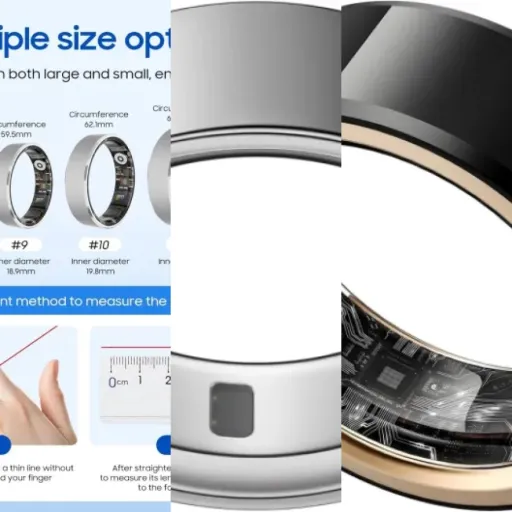
The inner side of the ring has the sensors and charging contacts. They’re slightly recessed, so you don’t feel hard edges digging into your skin, which is good. The shape is a simple round band, no weird curves, so it fits in with regular rings if you stack them. The only catch is you’ll want it on a finger where it stays snug for tracking but not so tight that it leaves marks, because this thing doesn’t flex at all.
Overall, I’d put the design in the “looks good for the price but feels like cheap jewelry up close” category. From a distance, it passes as a normal ring. Up close, you can tell it’s not premium. If looks matter more than ultra-precise tracking, this design is probably one of the main reasons to choose it over a basic fitness band.
Battery life: anywhere from 2 to 6 days, depending how you use it
Battery life seems to be all over the place in the reviews, and I get why. On my side, with 24/7 wear, heart rate on, sleep tracking, and a couple of short workouts per week, I was getting around 3–4 days per charge. That’s somewhere between the user who got 2 days and the one claiming 6 days. I’d say if you’re using all features, expect 2–4 days, not a full week.
The good news is that it charges fast. From almost empty to full took me roughly 20–30 minutes. That matches what another review said. So it’s easy to top up while you’re getting ready in the morning or sitting at your desk. There’s no display to suck power, so it’s really just the sensors and Bluetooth draining the small battery.
The downside is the hassle factor. A ring is something you want to forget about, but having to charge every 2–4 days means you will forget it on the charger at some point. And because it’s not water resistant, you’re already taking it off for showers, dishes, etc., so that’s more opportunities to misplace it or skip putting it back on after charging.
Compared to something like an Oura (which can go longer), this is clearly behind, but for the price range I’d call the battery life acceptable but not spectacular. If you’re okay with plugging in your phone daily, charging this every few days isn’t a big deal. If you want a true “wear it and forget it for a week or more” device, this ring won’t give you that.
Comfort and sizing: nice to wear, but sizing is tricky
In terms of comfort, I was actually surprised. The ring is lightweight and low profile, so after an hour or two I mostly forgot it was on my finger. It doesn’t catch on clothes or pockets much, and I could type on a keyboard all day without it feeling annoying. Compared to a thick metal ring, this feels lighter and less intrusive.
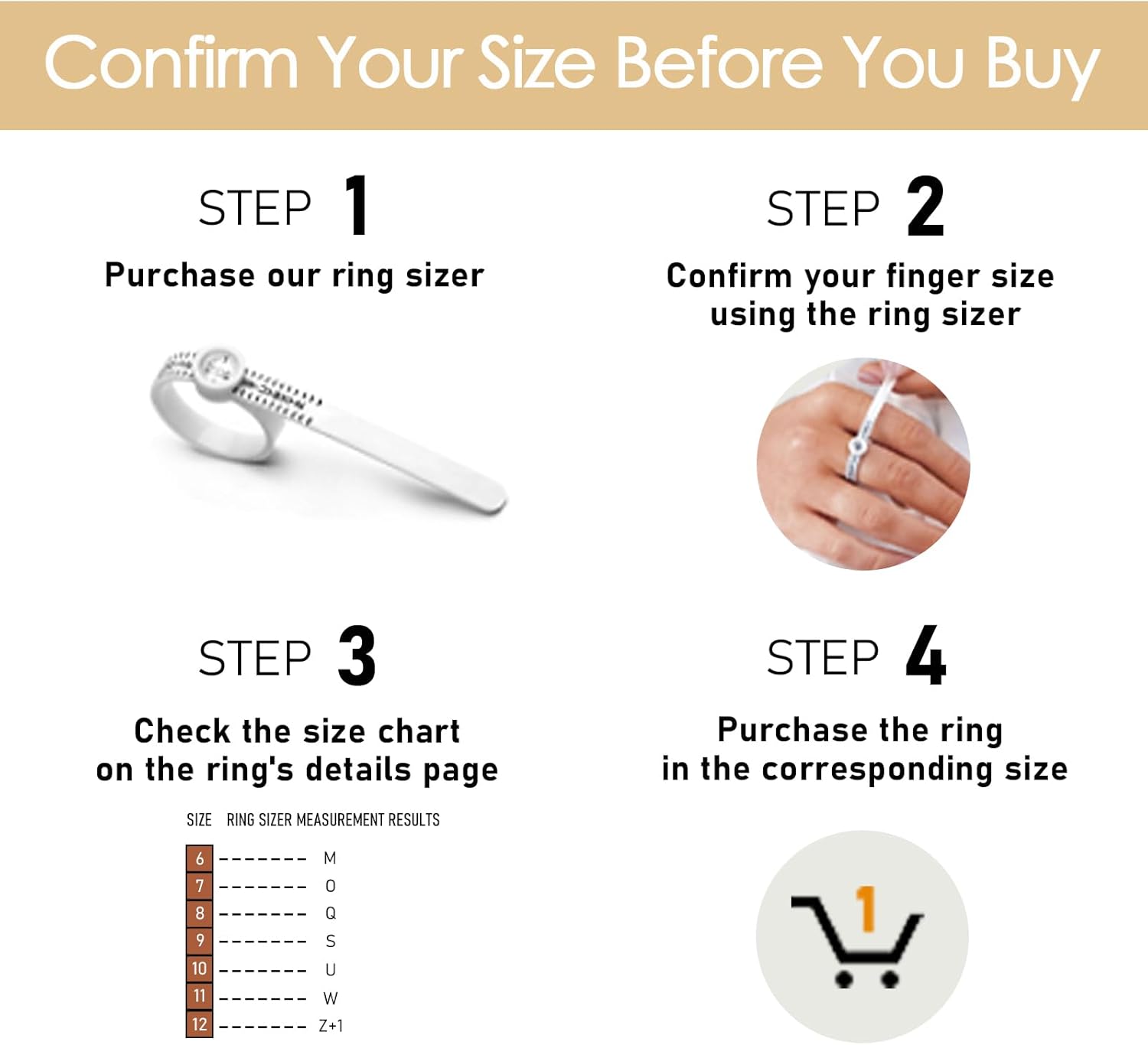
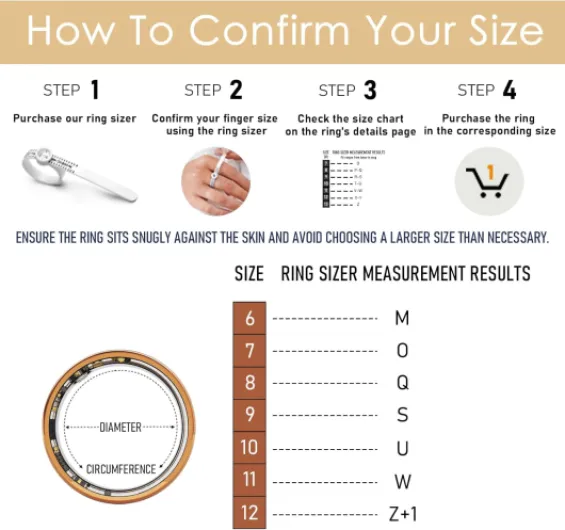
The big headache is sizing. The listing and some reviews say to go up one size, and I agree. I initially followed a ring sizer and ended up with something a bit too snug, especially when my fingers swelled slightly in the evening. With a size up, it was way more comfortable. You want it snug enough that the sensors stay in contact, but not so tight that you get a ring mark or feel pressure. If you’re between two sizes, I’d go for the larger one.
Sleeping with it was fine for me. I wore it on my ring finger and didn’t wake up because of it. It’s not bulky like some smartwatches that press into your wrist at night. The inside is smooth, so no sharp edges. The only thing I noticed is that if your hands get sweaty, the inside can feel a bit sticky, but that’s pretty normal with metal rings.
The downside is that since it’s not water resistant, you end up taking it off for showers, washing dishes, swimming, etc. That breaks the “always on” feeling and increases the risk of losing it. Comfort-wise, I liked wearing it. Practicality-wise, the constant on/off for water is annoying, and the sizing guesswork can be a pain if you don’t already know your ring size well.
Daily performance and app experience
Day-to-day, the ring behaves like a simple background tracker. Once it’s paired, you don’t really interact with the ring itself, you just open the LuckRing app occasionally to sync and check your stats. Syncing was mostly smooth for me on Android; it took maybe 5–10 seconds to pull in the latest data. I had one or two moments where it didn’t sync right away and I had to toggle Bluetooth, but nothing dramatic.
The app is basic but does the job. You get daily, weekly, and monthly views for steps, sleep, heart rate, and temperature. The graphs aren’t super polished, but you can clearly see trends. There aren’t many advanced options: no deep coaching, no clever insights, just raw numbers and a few generic tips. If you’re used to the polished apps from big brands, this will feel bare-bones. If you just want to see if you hit your step goal, it’s fine.
The sports modes are kind of meh. You can start an activity in the app, choose the sport type, and it will log time, estimated calories, and heart rate. But with no GPS and no waterproofing, it’s not very useful beyond just timing your sessions. For running especially, not having distance or pace from GPS is a big limitation. For indoor workouts or walks where you don’t care about routes, it’s tolerable.
One small extra is the camera remote control. It works: you can use the ring to trigger your phone camera via the app. It’s a fun bonus but not something I used more than once. Overall performance is stable enough for a cheap gadget: it doesn’t crash constantly, it records most of your day, and the app is usable. Just don’t expect the polish or depth of an Apple, Garmin, or Fitbit ecosystem.
What this Findtime smart ring actually does (and doesn’t)
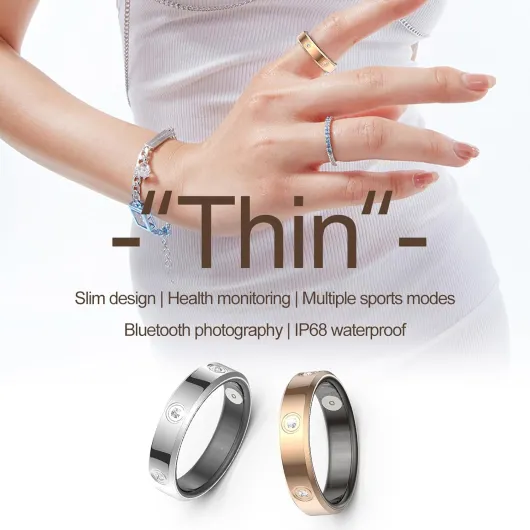
On paper, this ring promises a lot for the price: heart rate, HRV, sleep tracking, steps, calories, distance, multiple sport modes, and even camera remote control. It connects over Bluetooth 5.4 and uses the LuckRing app on Android or iOS. No screen on the ring itself, so everything is done in the app. The ring just has its sensors and a tiny internal battery.
In practice, the main things you’ll use are: step counter, heart rate monitor, sleep tracking, and maybe skin temperature if you care about that. The sports modes are basically presets inside the app that slightly change how it logs activity, but you’re not getting GPS or any advanced stats. Think of it as a simple activity tracker hidden in a ring, not a full-blown sports watch.
Setup was straightforward: install LuckRing, create an account, pair the ring via Bluetooth, and that’s it. Syncing usually takes a few seconds when you open the app. The app gives you basic charts: steps per day, heart rate over time, sleep stages (light/deep), and temperature. It’s not pretty, but it’s usable. You can clearly see days where you moved more or slept like trash, which is enough for a casual user.
Where it falls short is on the “serious health” side. There is no GPS, no waterproofing, and the sleep data is not super accurate. It’s fine if you just want a rough idea of how active you are, but if you’re used to Garmin, Fitbit, or Oura-level detail, this feels basic. For the price, I’d say the feature list is solid, but you have to accept that half of it is more “nice to have” than actually reliable.
Tracking effectiveness: okay for casual use, not for data nerds
Let’s talk about what most people actually care about: does it track properly? For steps, it’s decent. On days where I also wore my Garmin watch, the step count was usually within 5–10% of what the watch reported. For a cheap ring, that’s fine. You’re not getting lab-grade precision, but it gives you a realistic idea of whether you walked 3k steps or 10k.
Heart rate is more mixed. At rest, it was close to my watch, usually within a few beats per minute. During normal walking, still fine. But during runs or anything where my hand moved a lot, the readings jumped around more. Sometimes it lagged or showed weird spikes that clearly didn’t match how I felt. So it’s usable for a general daily average and resting heart rate, but I wouldn’t trust it for serious training zones.
The weak point is sleep tracking. Like one of the Amazon reviews said, it’s not very accurate. A couple of nights it said I was asleep while I was just lying in bed scrolling on my phone. On another night, it missed a wake-up in the middle of the night completely. It gives you a rough idea of total time in bed and some basic light/deep breakdown, but if you really want reliable sleep data, this isn’t it. It’s more of a vague indicator than something you’d use to change your habits.
There’s also skin temperature and HRV data, but those are very high level. You can see if your temperature is a bit higher than usual, which might be useful around illness or cycle tracking, but you don’t get much explanation or insights. Overall, I’d say the ring is effective enough for basic activity awareness, but not good enough if you’re picky about data or want to track workouts and sleep seriously.
Pros
- Nice ring-style design that looks like regular jewelry and is lightweight
- Decent step and basic heart rate tracking for casual daily use
- Fast charging (around 20–30 minutes) and simple app with clear charts
Cons
- Not water resistant, so you have to remove it for showers and dishes
- Sleep tracking is often inaccurate and not reliable for serious use
- No GPS and limited sports features compared to fitness watches or bands
Conclusion
Editor's rating
After wearing the Findtime Smart Ring for a couple of weeks, my take is pretty simple: it’s a budget-friendly way to test the smart ring concept, but it’s not a serious health tool. It looks decent, feels light on the finger, and handles basic stuff like steps and all-day heart rate reasonably well. The app is basic but usable, and the fast charging makes the 2–4 day battery life less annoying than it could be.
On the downside, the lack of water resistance is a big drawback for something meant to be worn all day and night. The sleep tracking is clearly not very accurate, and sports tracking is limited by the absence of GPS and deeper metrics. If you’re coming from a Garmin, Fitbit, or Apple Watch, this will feel like a downgrade in terms of data quality, even if the ring form factor is nicer to look at.
I’d recommend this ring to someone who wants a cheap, jewelry-style tracker mainly for steps, rough heart rate, and a general sense of activity, and who doesn’t want to wear a wristband. If you’re just curious and don’t want to spend big, it’s a reasonable experiment. But if you care about precise sleep analysis, advanced training features, or durability, you’re better off saving up for a more reputable brand or sticking with a good fitness watch or band.