Summary
Editor's rating
Value for money: decent feature list, tough competition at this price
Design: more low‑key tracker than flashy smartwatch
Battery life: nowhere near 15 days if you actually use it
Comfort: easy to forget you’re wearing it (in a good way)
Build & durability: tougher than it looks, but some long‑term doubts
Health tracking & SOS: solid basics, but some trust issues
What this tracker actually does (beyond counting steps)
Pros
- Comfortable, lightweight metal design with IP68 rating and two included straps
- Good range of wellness features (ECG, HR, SpO2, temperature, stress) with a clear companion app
- SOS, fall detection and family sharing add a useful extra layer of safety for some users
Cons
- Real‑world battery life far from the claimed 15 days, with reports of quick degradation
- Fall detection and sleep tracking are inconsistent, so you can’t fully rely on them
- Price is close to better‑known brands that offer more refined tracking and support

Specifications
View full product page →| Brand | Penerl |
A fitness band that’s really about safety first
I’ve been wearing this Penerl VITRO tracker on my wrist for a couple of weeks, swapping it in for my usual Fitbit/cheap Huawei combo. I picked it up mainly because of the SOS and fall detection stuff, not just the step counting. I’ve got older relatives and I liked the idea of testing something that mixes fitness tracking with a bit of peace of mind.
On paper, it looks stacked: 24/7 heart rate, ECG on the wrist, sleep tracking, stress, temperature, SpO2, 188 sport modes, 15‑day battery, metal body, family sharing, the whole lot. The Amazon page makes it sound like a mini health station, just without the medical approval. The catch is that the brand is basically unknown and the user reviews are split, especially around battery and the fall detection feature.
In day‑to‑day use, it feels more like a safety‑leaning wellness band than a hardcore sports watch. It tries to do a bit of everything, and sometimes it pulls it off, sometimes you feel the rough edges. I’ve had some good surprises (build quality, comfort, app clarity), and some real annoyances (battery claims, fall detection reliability, price versus big brands).
If you’re thinking about buying it, don’t just look at the spec sheet. In practice, it’s a decent all‑rounder with some smart ideas, but it’s not magic and it’s definitely not perfect. I’ll break down where it shines, where it’s just okay, and where you might be better off going with a more established brand.
Value for money: decent feature list, tough competition at this price
Let’s talk money. This Penerl VITRO sits in a price range where it’s up against entry‑level and mid‑range models from big names like Xiaomi, Huawei, Fitbit, and sometimes even discounted Garmin or Samsung devices. For an unknown brand, it actually brings a lot of features: ECG, 24/7 tracking, SOS, fall detection, family sharing, metal body, and a spare strap. On paper, that looks good for the price.
In practice, the value question comes down to this: how much do you trust an unknown brand for safety features like fall detection and SOS? And how much do you care about brand support and updates? If you just look at the hardware and basic tracking, it’s fairly priced. But when you consider the mixed battery life reports, the hit‑and‑miss fall detection, and the fact that some mainstream brands offer similar or better tracking for a similar price, it’s not an obvious bargain.
Compared to, say, a Xiaomi Band or a basic Huawei Band, this Penerl gives you a nicer metal body and the extra safety functions. But those big brands usually have more polished apps, more stable firmware, and better long‑term support. One Amazon reviewer even said straight out that it’s good but overpriced, and I tend to agree: you’re paying a bit of a premium for features that are still rough around the edges.
If you specifically want the combination of wellness tracking plus SOS/family sharing in a discreet band, and you’re okay accepting the flaws, then the value is acceptable. If you mainly care about accurate fitness tracking, strong battery life, and reliability, you’ll probably get better value from a more established brand at the same or even lower price. So I’d rate the value as “decent but nothing more” rather than a clear win.
Design: more low‑key tracker than flashy smartwatch
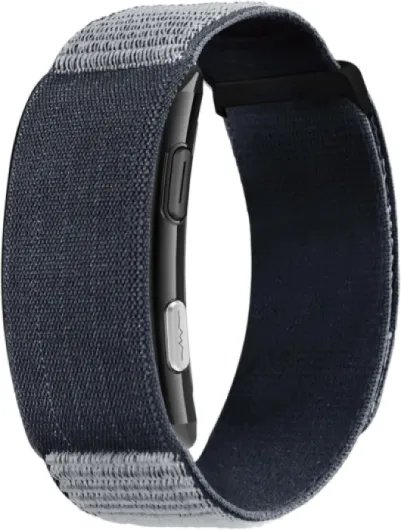
Design‑wise, this thing surprised me in a good way. It’s not a big chunky smartwatch; it’s more like a slightly upgraded Mi Band or Fitbit Inspire, but in metal. The aerospace aluminium casing sounds like marketing, but in hand it does feel more solid than the usual cheap plastic bands. It’s light (about 50 grams) and fairly slim, so it doesn’t catch on sleeves or feel like a brick when you sleep with it on.
The version I had is the Metallic Black one with a metal strap and a spare nylon strap in the box. The metal strap uses a small magnetic clasp, which I actually liked. It’s easy to adjust without tools and you can tweak the tightness in seconds. That said, if you’re doing something where the band might get snagged, a magnetic clasp can pop open more easily than a classic buckle, so just be aware of that. For day‑to‑day office and casual wear, it’s fine.
There’s no big colour screen trying to be a mini smartphone. That’s a plus and minus. On the plus side, it stays discreet and doesn’t scream “fitness tracker” from a distance. It also means less distraction and probably helps with battery. On the downside, if you’re used to reading messages or detailed stats directly on your wrist, this feels more basic. Most of the detailed info lives in the app, not on the band.
In terms of looks, it’s pretty neutral. Black metal, simple shape, nothing flashy. It works with gym clothes, jeans, office stuff, whatever. If you want something that looks like jewellery or a fashion watch, this won’t scratch that itch. But if you just want something that looks clean and doesn’t feel cheap, it gets the job done. Compared to similarly priced watches from big brands, it looks a bit more plain, but the metal body helps it feel more premium than the usual plastic trackers.
Battery life: nowhere near 15 days if you actually use it
The product page proudly claims up to 15 days of battery life. In the real world, with all the health stuff running, that number is pretty optimistic. In my use, with 24/7 heart rate on, sleep tracking, a couple of workouts per week, notifications on for calls and messages, and a few ECG checks, I was seeing around 4–6 days per charge. That’s not terrible, but it’s nowhere near the promised 15 days.
This lines up with the mixed reviews. Some people say they get close to the advertised figure, others say it dropped to 2 days or less after a couple of months. One review even says it degraded so badly that it barely lasts 24 hours now. That’s a red flag. It suggests the battery quality or power management isn’t very consistent from unit to unit. Maybe if you turn off most of the tracking and notifications, you might stretch it, but then you’re basically not using half the features you paid for.
Charging itself is fine. You get a small magnetic charger in the box; it clips on easily and a full charge doesn’t take too long (around 1–1.5 hours in my case). Because it’s not a daily charge device like some smartwatches, it’s not a huge hassle, but it’s still annoying that the real‑world figures don’t match the advertised ones. It’s the classic “up to” claim that only works in ideal lab conditions.
If you’re coming from an Apple Watch that you plug in every night, you’ll see this as an upgrade. If you’re used to simpler bands that genuinely last 10+ days, you might feel a bit short‑changed. Overall, I’d call the battery life acceptable but not impressive, and the reports of quick degradation mean I’d keep an eye on it in the first months in case you need to return it.
Comfort: easy to forget you’re wearing it (in a good way)
Comfort is one of the areas where this band does well. It’s light, slim, and doesn’t bounce around on the wrist. I wore it all day and all night for several days straight, including at the gym, in the shower, and while sleeping. Once you’ve got the strap adjusted properly, you mostly forget it’s there, which is important for something that’s meant to track you 24/7.
The metal strap feels decent on the skin, no sharp edges or weird rubbing spots for me. The magnetic clasp lets you get a snug but not suffocating fit, which is important for heart rate accuracy. For workouts where I got really sweaty, I actually preferred the nylon strap from the box. It breathes better and doesn’t get as sticky as metal when you’re dripping. Swapping straps is straightforward, nothing fancy, but it works.
Sleeping with it was fine. Because the body is fairly small and slim, it doesn’t dig into your wrist when you roll over or rest your head on your arm. I’ve had chunkier smartwatches leave marks or feel annoying under the pillow; this one didn’t. The only time I noticed it at night was when the vibration for an alert kicked in, but even that is more of a nudge than a shock.
If you’ve got very small wrists, it might look a bit long, but the weight is low enough that it shouldn’t be a problem. If you hate wearing anything on your wrist at all, no tracker will fix that, but compared to most budget fitness bands and cheaper smartwatches, I’d say comfort here is pretty solid. No skin irritation for me, even with constant wear, and the IP68 rating means you don’t have to baby it around water, which also helps with just leaving it on and forgetting about it.
Build & durability: tougher than it looks, but some long‑term doubts
In terms of pure build, the band feels sturdier than the average budget tracker. The aluminium casing gives it a bit of protection against bumps and scrapes. One Amazon reviewer even mentioned skidding on wet concrete and the band taking the hit without visible damage, which matches my impression that it’s not fragile. During my time with it, it survived gym machines, door frames, and a couple of accidental knocks on tables without any obvious marks.
The IP68 water resistance is handy. I wore it in the shower and during sweaty workouts without any issues. I didn’t take it swimming, but on paper it should handle pool sessions. Just don’t expect it to be a dive watch or survive saunas and hot baths, as the manual warns against high‑temperature and high‑pressure environments. That’s pretty standard for this type of device.
The straps feel fine out of the box. The metal one didn’t lose its colour or finish in my short test window, and the nylon strap is basic but comfortable. The magnetic clasp hasn’t randomly popped open on me, but I can see it being more vulnerable than a classic buckle in some situations. If you’re doing contact sports or stuff where it might catch, I’d probably switch to the nylon strap or another more secure band.
Where I have doubts is internal durability, especially around the battery and sensors. With several reviews mentioning fast battery degradation and some weird behaviour around fall detection and alerts, I’m not fully convinced this thing will age as well as trackers from bigger brands. The hardware shell is good, but the long‑term electronics reliability is a bit of a question mark. If you’re gentle with your gadgets, it’s probably fine. If you’re rough and expect a solid 3–4 years, I’d be cautious.
Health tracking & SOS: solid basics, but some trust issues
On the health side, the tracker does continuous heart rate, basic SpO2, sleep stages, and even ECG when you trigger it. For daily stuff like resting heart rate and general heart rate trends, it lined up reasonably well with my usual watch. It’s not pixel‑perfect, but for casual tracking it’s fine. The ECG takes about 30 seconds of staying still, and you get a simple trace and a generic interpretation. Nothing medical, but enough to notice if something looks very off.
Sleep tracking is a bit hit and miss. It does pick up roughly when you fell asleep and woke up, but the breakdown between light/deep/REM feels a bit optimistic sometimes. On one night where I woke up 3–4 times, the band only showed one wake period. This matches some of the Amazon reviews saying sleep tracking is “rubbish”. I wouldn’t plan my life around those graphs. Use it more as a rough guide than a precise log.
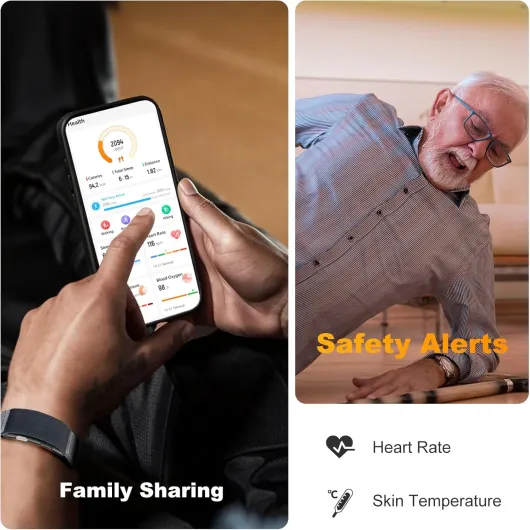
The big talking point is SOS and fall detection. Manual SOS is straightforward: you trigger it, and it pings your preset contacts through the app. As long as your phone is nearby and connected, that part works. Fall detection is more complicated. It uses motion to guess that you’ve fallen, then sends alerts. In my tests with staged “falls” (dropping onto a sofa, quick sit‑downs, etc.), it triggered sometimes and missed other times. Some Amazon users say it failed during real falls and then fired randomly later, which is worrying.
So here’s my honest take: as a backup safety tool, it’s fine. As your only safety net for a frail person, I wouldn’t rely only on this. It’s better than nothing, but the inconsistency means you can’t fully trust it. For pure fitness tracking and wellness trends, it’s decent but not special. For serious health monitoring or fall alerts, you’re still better off with medical‑grade systems or at least a more established ecosystem.
What this tracker actually does (beyond counting steps)
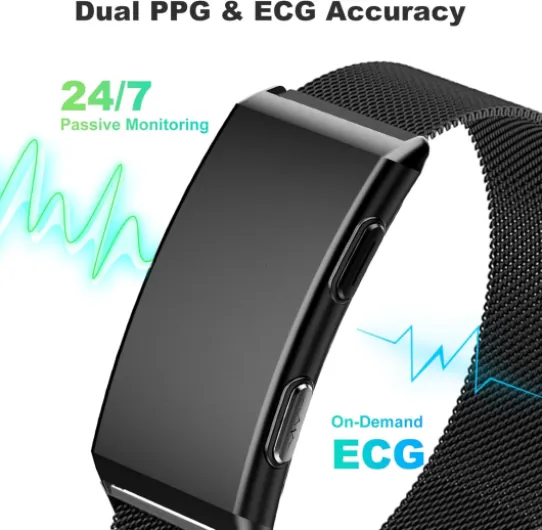
Let’s start with what this thing is supposed to be. The Penerl VITRO is a slim fitness band with a metal shell and no big flashy screen like a smartwatch. It pairs with the G BAND app on your phone (Android or iOS) and basically turns into a sensor hub on your wrist. It records heart rate 24/7, SpO2, skin temperature, HRV, stress, sleep, menstrual cycle, and supports ECG on demand. That’s a lot for something this small, especially from a no‑name brand.
Then there’s the whole safety angle: manual SOS, fall detection, and family sharing so someone else can keep an eye on your basic stats. If you’ve got parents living alone or a partner who works alone a lot, that’s the kind of feature that makes you pay attention. It’s not advertised as medical, and it clearly says it’s for wellness only, so don’t expect it to replace a doctor or a proper medical alert system.
On the fitness side, the spec sheet shouts about 188 sport modes. In practice, that just means there’s a preset for pretty much anything: running, cycling, walking, gym, yoga, swimming, and then a ton of niche stuff you’ll probably never touch. The basics are there: steps, distance, estimated calories, workout duration, heart rate during exercise, and some basic summaries in the app afterwards.
The promise is basically: one band that tracks your daily health, your sports, your sleep, and doubles as a simple safety device for you and your family. In reality, it does most of that, but some parts feel more polished than others. If you’re expecting Garmin‑level sports analysis or Apple Watch‑level smart features, this isn’t it. If you just want numbers to look at and a basic safety net, it’s closer to the mark.
Pros
- Comfortable, lightweight metal design with IP68 rating and two included straps
- Good range of wellness features (ECG, HR, SpO2, temperature, stress) with a clear companion app
- SOS, fall detection and family sharing add a useful extra layer of safety for some users
Cons
- Real‑world battery life far from the claimed 15 days, with reports of quick degradation
- Fall detection and sleep tracking are inconsistent, so you can’t fully rely on them
- Price is close to better‑known brands that offer more refined tracking and support
Conclusion
Editor's rating
Overall, the Penerl VITRO fitness tracker is a solid metal wellness band with some smart ideas, but it’s held back by a few important issues. I liked the discreet design, the comfortable fit, and the fact it packs ECG, 24/7 heart rate, and a pile of wellness metrics into a small form factor. The app is clear enough, and for basic trends – resting heart rate, rough sleep patterns, stress levels – it does the job. The safety angle with SOS, fall detection, and family sharing is a nice touch that you don’t see on every band at this size.
On the downside, the battery life doesn’t live up to the 15‑day claim for most realistic use, and reports of fast degradation are worrying. Sleep tracking is average, and fall detection is not something I’d fully trust for a vulnerable person. At its current price, it’s bumping into territory where big brands offer more polished products. So, who is it for? Someone who wants a low‑key, comfortable band with extra safety features and is okay with some quirks. Who should skip it? Anyone who needs rock‑solid fall alerts, very accurate sleep tracking, or long‑term reliability on par with the big names. It’s not terrible, but it’s not a clear winner either.