Summary
Editor's rating
Value for money: worth it if you care about trends, not raw numbers
Design & usability: looks decent, a bit bulky but practical
Battery life & everyday hassle factor
Build quality & durability: solid enough, not premium
Performance & app: quick sync, good app, a few quirks
What the Dial H30 actually does (beyond just weight)
Effectiveness: solid for trends, imperfect for exact body fat
Pros
- Consistent readings and good for tracking trends over time
- Solid app with clear graphs and Apple Health integration
- Handle with electrodes and auto user recognition work well for multi-user households
Cons
- Body fat percentage can be noticeably off for some body types
- Bulky design with handle and cable, runs on AA batteries instead of being rechargeable

Specifications
View full product page →| Brand | InBody |
A home body-comp scale that tries to play in the pro league
I’ve been using the InBody Dial H30 at home for a few weeks, mainly to track fat loss and muscle while cutting. I already knew InBody from the big professional machines you stand on at gyms and clinics, so my expectations were a bit high. I wanted something more serious than the usual cheap Bluetooth bathroom scale, but I also knew I wasn’t getting a full medical device for this price. So I went in with a mix of curiosity and skepticism.
In practice, this feels like a halfway point between a basic smart scale and the big InBody machines you see in clinics. You get the handle with electrodes, the app with a bunch of metrics, and auto user recognition, which is handy if you live with other people. But it’s still a home device that runs on AA batteries and sits on your bathroom floor, so you can’t expect perfect lab-level accuracy. If you’re chasing exact body fat percentage to the decimal, you’ll be annoyed. If you just want trends, it’s more interesting.
What pushed me to test it was the combo of: handle with electrodes (more contact points than normal scales), an app that syncs with Apple Health, and the InBody name. I’ve had cheap smart scales before that gave completely random body fat readings, so I wanted to see if this did any better. I also liked the idea of not having to open the app every time and just stepping on it in the morning to log everything.
After a few weeks, my take is pretty clear: it’s not perfect, but it’s usable and consistent
Value for money: worth it if you care about trends, not raw numbers
Price-wise, the InBody Dial H30 sits clearly above the cheap smart scales you can grab for not much money, but below the high-end Tanita models or regular full-sized professional InBody machines. So the real question is: do you get enough extra value compared to a basic smart scale to justify the price difference? My take: yes, if you’re serious about tracking trends and share it with others at home; no, if you just want a rough idea of your body fat and mostly care about weight.
What you pay for here is mainly:
- The InBody brand and experience from their pro machines
- The handle with extra electrodes, which should help with better estimates than foot-only models
- A more polished app with clear graphs and Apple Health integration
- Auto user recognition that actually works for multiple people
If those points matter to you, the price starts to make sense. For me, the fact that the body fat number is not perfect isn’t a deal-breaker because I use it to watch how it moves, not to get a medical diagnosis. As one Amazon reviewer said, being off by about 2% compared to a professional InBody is acceptable for home tracking. Another user had a bigger gap, so there is some risk that on your specific body type it might under- or overestimate more. That’s the gamble with all BIA scales.
If you compare it to something like a Tanita RD-545, which one reviewer switched to and preferred, those devices can be more precise but also more expensive and bulkier. So it really depends on your budget and how fussy you are about precision. For most people who just want to follow their weight, fat, and muscle trends without going full lab mode, the H30 offers decent value for money, as long as you go in knowing its limits and don’t treat the numbers like absolute truth.
Design & usability: looks decent, a bit bulky but practical
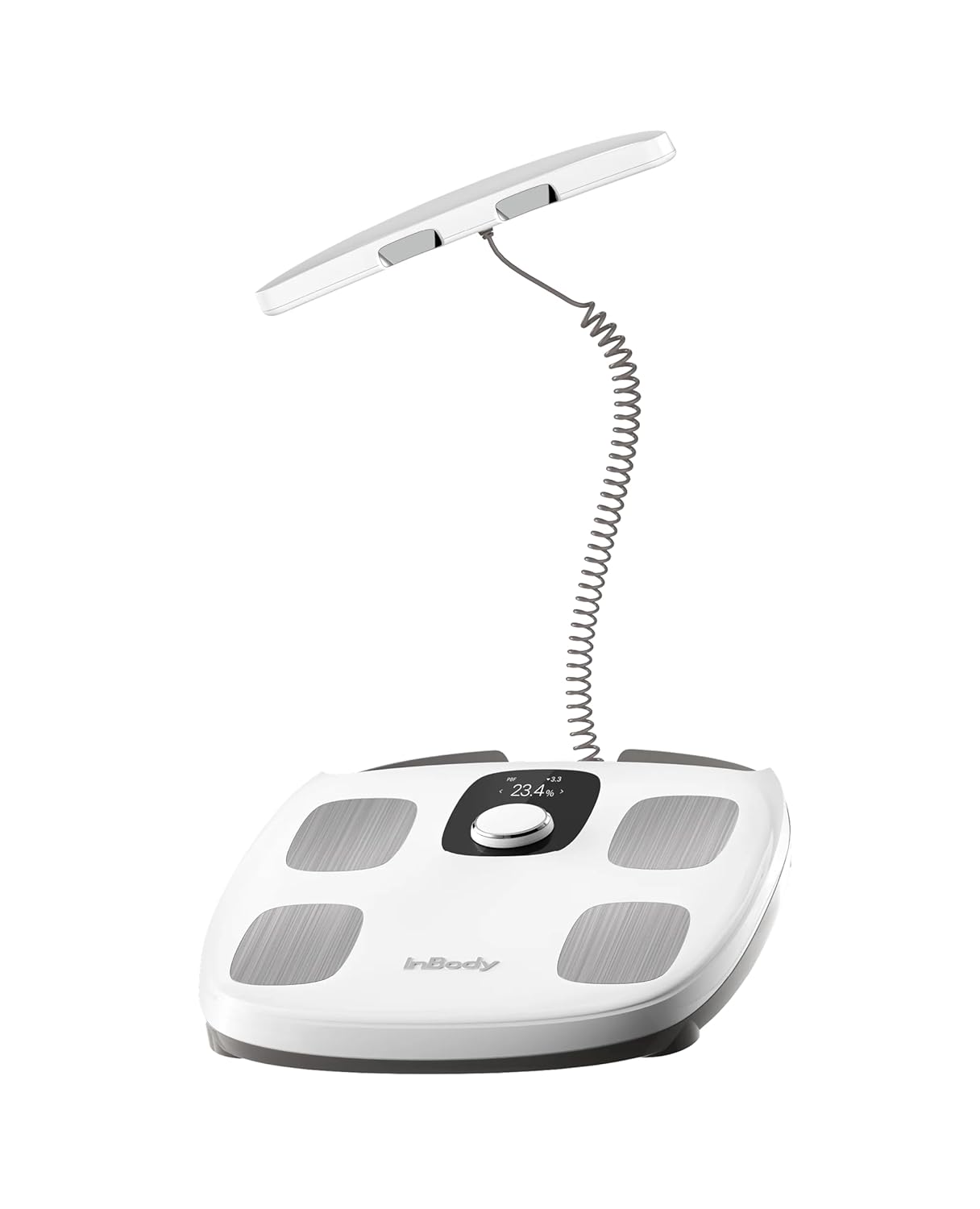
Design-wise, the Dial H30 is closer to a small piece of gym equipment than a minimal bathroom accessory. The platform is white, fairly wide, and the handle sits in a cradle on top. It’s not ultra-thin or fancy; it’s more "functional box" than decoration. The backlit LCD screen is easy to read, even early in the morning with half-open eyes. The splash-proof design is nice if you keep it near the shower or in a humid bathroom, though I wouldn’t go around spilling water on it for fun.
The handle is the main visual and functional element. You grab it with both hands, thumbs on the small electrodes. At first it feels a bit awkward compared to just standing on a normal scale, but you get used to it quickly. The cable length is fine for my height (around 5’10”); I don’t have to hunch over. If you’re very tall, you might feel a bit more tension on the cable. The whole thing feels like it was designed more for accuracy than style, which personally I prefer.
In terms of day-to-day use, it’s pretty straightforward: step on it barefoot, grab the handle, stand still. The only thing is you quickly learn you need to be consistent: same time of day, similar hydration level, and ideally not moving or breathing too heavily. One Amazon reviewer mentioned holding their breath during body comp measurement to stabilize the values, and weirdly, that does help reduce fluctuations between back-to-back readings. It’s not in the official manual, but in practice, it works.
The downside of the design is the overall bulk. With the handle and cradle, it takes more space than a flat scale you can slide under a cabinet. You need a place where it can stay out because taking it in and out of a closet every day would get annoying. Also, while it looks decent, it’s not really a design object you’ll brag about. It’s fine, it’s readable, it’s practical. That’s about it.
Battery life & everyday hassle factor
The Dial H30 runs on 4 AA batteries, which are included in the box. Personally, I prefer rechargeable built-in batteries with USB-C, but at least AA batteries are easy to find. During my few weeks of use with daily weigh-ins, the battery indicator barely moved, so I’d expect it to last several months under normal use. The scale has an auto shut-off feature, so it doesn’t stay on or drain power unnecessarily after you step off.
From a daily use perspective, the fact that it wakes up quickly and doesn’t require you to tap it first is nice. You just step on, it turns on, detects you, and starts doing its thing. As long as the batteries are not dying, there’s no lag or weird behavior. With some older digital scales I had, low batteries caused random readings and resets; I didn’t see that here during the test period.
The only small annoyance is knowing that at some point you’ll have to flip it over and unscrew or unclip the battery compartment to replace four batteries. If you use it a lot and don’t like wasting batteries, it might be worth putting rechargeables in there from the start. For a device in this price range released in 2024, I would have liked a rechargeable option, but it’s not a deal-breaker. It’s just slightly old-school.
Overall, on the battery side, it’s pretty simple: it works, it lasts, and you don’t have to think about it much. Just be aware it’s not USB-rechargeable, so if you hate dealing with AA batteries, that might annoy you long-term. For most people, it’s fine and low-maintenance once you’ve set it up.
Build quality & durability: solid enough, not premium
The scale itself feels reasonably solid. It’s not super heavy, but it doesn’t feel like a flimsy plastic toy either. The platform is wide and stable, and I never felt like it was going to tip or flex under normal use. The surface handles splashes and humidity in the bathroom without any issue so far. The backlit display hasn’t shown any fading or weird pixels. For a home device, it gives a decent impression of sturdiness.
The part I was more cautious about is the handle and cable. You’re pulling the handle up and down every time you use it, so that’s the main potential weak point in the long term. The cable feels okay, not super thick but not ultra thin either. You just have to avoid yanking it like a maniac or letting kids treat it like a toy. If you use it normally and place the handle back in its cradle gently, I don’t see it breaking right away, but it’s clearly the part I’d baby the most.
The underside has the usual plastic feet and doesn’t scratch tiles or bathroom floors. It’s not waterproof, just splash-proof, so obviously don’t wash it under the tap or leave it in a puddle. Cleaning is easy with a damp cloth. After a few weeks, I don’t see any marks or yellowing, but that’s too short to judge long-term discoloration. Given the build, I’d expect it to hold up fine with normal use, but it’s not built like a tank either.
In short, durability feels good enough for regular home use, as long as you’re not rough with the handle and cable. If you want something that you’ll toss around or move constantly between rooms, this isn’t ideal because of the extra parts. But if it stays in one spot and you treat it decently, I don’t see a big red flag on build quality.
Performance & app: quick sync, good app, a few quirks
On the performance side, the H30 is pretty quick. From stepping on the scale to getting full body comp data, it usually takes under 30 seconds. Weight shows up almost instantly, then the body composition analysis runs once you’re holding the handle properly. The auto user recognition works surprisingly well: in my house with two users, it almost never got confused. The data syncs to the InBody app via Bluetooth within a few seconds, even if the app isn’t open when you step on the scale, which is convenient.
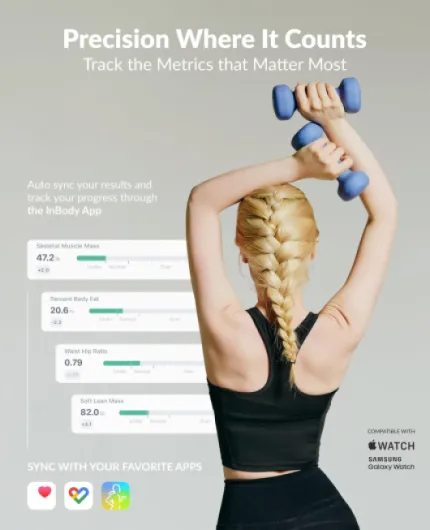
The InBody app is actually one of the strong points. It’s not cluttered, and it gives you graphs over days, weeks, and months. You can easily see curves for weight, body fat, and muscle mass. It also syncs with Apple Health, so if you’re already tracking workouts and calories there, it plugs in nicely. Compared to some cheap-brand apps that feel half-translated and buggy, this one feels more finished and stable. I didn’t have crashes or lost data during my test period.
That said, there are a few quirks. First, if your phone’s Bluetooth is off or the app has been fully killed, sometimes the sync is delayed and the data only shows up later. It still ends up in the history, but not instantly. Second, if you’re the kind of person who likes to weigh in multiple times a day, the app’s charts can get a bit noisy. This scale really makes more sense for a single weigh-in per day, or even per week, rather than obsessively jumping on it every few hours.
Overall, in terms of performance, I’d say: fast enough, stable enough, and the app is genuinely useful. It’s not perfect, but it’s way better than the cheap smart scales that lose connection all the time or mis-assign users. If you want multi-user support, auto sync, and decent graphs, it does the job without driving you crazy.
What the Dial H30 actually does (beyond just weight)
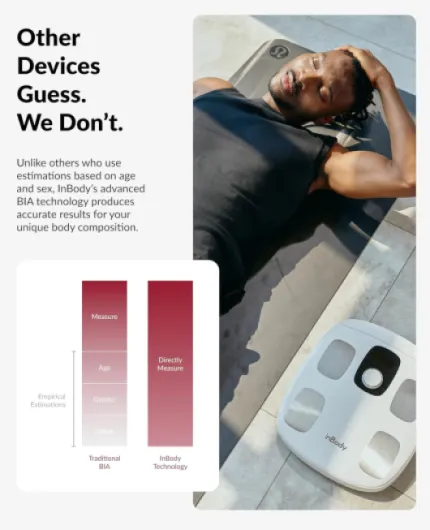
On paper, the Dial H30 is a smart scale that goes beyond weight and BMI. It measures weight, body fat, muscle mass, and a few other metrics using bioelectrical impedance (BIA). The big difference from basic scales is the handle with electrodes, including little thumb electrodes. You pull the handle up, stand still a few seconds, and it sends a weak current through your body to estimate fat and muscle. It’s not painful, you don’t feel anything.
The scale connects via Bluetooth to the InBody app. The app is honestly one of the stronger points: clean layout, data history, graphs, and it syncs with Apple Health. You can track weight, body fat percentage, skeletal muscle mass, and other stuff like visceral fat level. It’s not just a pretty number on the screen; you get trends and ranges (normal, high, low) which help put the data in context. For a household, the auto user recognition works pretty well: you just step on and it figures out who you are based on previous data, then syncs automatically.
In real life, I mostly used three metrics: weight, body fat %, and muscle mass. The rest is nice to have but I didn’t obsess over it. The weight is spot-on compared to another digital scale I have. Body fat is where things get more nuanced: it’s consistent day to day if you measure the same way each time, but it can be off compared to a professional InBody or a DEXA scan. For me, it reads a bit lower than I know I actually am, similar to what one Amazon reviewer reported. For my partner, it seemed closer to reality. So it clearly reacts differently depending on body type.
From a "what does it really bring" point of view, you’re paying for: the InBody brand, the hand-held electrodes, and the app ecosystem. If you just want your weight and a vague idea of body fat, a cheaper smart scale can do that. If you care about tracking changes month to month with a bit more structure and a more serious app, then the H30 starts to make sense, even if the raw numbers aren’t perfect.
Effectiveness: solid for trends, imperfect for exact body fat
Let’s be blunt: if you expect this scale to give you your exact body fat percentage like a DEXA scan, you’ll be disappointed. That’s not how home BIA works, no matter the brand. Where the Dial H30 is actually decent is in tracking trends over time. If you always measure in the same conditions (morning, after bathroom, before eating, barefoot, no heavy training right before), the numbers move in a way that makes sense: when I cut calories and keep protein high, body fat slowly goes down, muscle mass more or less holds; when I relax on diet, body fat creeps up. So as a direction indicator, it works.
On absolute accuracy, my experience matches some of the Amazon reviews. Compared to a professional InBody at a clinic, the H30 showed my body fat about 1–3% lower, depending on the day. That’s not catastrophic, but it’s not perfect either. For my partner, the difference was smaller and sometimes spot-on. So clearly the algorithm and the way it handles different body types (more muscular vs more average) can shift results. One reviewer said they knew they were around 17% and the scale kept showing 11–12%, which is a bigger gap than what I saw, but it shows the limits.
Where it does better than cheap smart scales I’ve tried is consistency. With low-end models, I could step on three times in a row and swing 4–5% body fat for no reason. With the H30, if I use the same stance, hold the handle correctly, and don’t move or talk, I usually get very similar results. If I move, talk, or breathe deeply, the numbers jump more. That’s where the "hold your breath during measurement" trick actually helps stabilize things. It’s a bit ridiculous, but it works.
So in practice, I use it as follows: I ignore the "exact" body fat number and focus on relative change. If it says I’m 18% but I know I’m closer to 20%, I don’t care as long as it goes from 18 to 17 to 16 over weeks as I diet. Same for muscle mass: I look at whether it’s stable or dropping fast. For that use, the H30 is effective enough. If your goal is to prove to the world you’re exactly X% body fat, you’re using the wrong tool.
Pros
- Consistent readings and good for tracking trends over time
- Solid app with clear graphs and Apple Health integration
- Handle with electrodes and auto user recognition work well for multi-user households
Cons
- Body fat percentage can be noticeably off for some body types
- Bulky design with handle and cable, runs on AA batteries instead of being rechargeable
Conclusion
Editor's rating
Overall, the InBody Dial H30 is a pretty solid home body composition scale if your goal is to track trends and keep yourself accountable, not to get a medically perfect body fat percentage. The weight readings are accurate, the body comp numbers are consistent if you measure under the same conditions, and the app is one of the better ones I’ve used for this type of product. The handle with electrodes and auto user recognition make it more practical for a household than the usual flat smart scales.
On the downside, it’s not a magic device. The body fat percentage can be off by a couple of points, and for some people it may underestimate more, like one Amazon reviewer who saw a big gap with their known body fat. The design is a bit bulky, the cable and handle are parts you need to treat with some care, and it runs on AA batteries instead of being rechargeable. Also, if you only care about your weight, this is clearly overkill and you’re better off with a cheaper digital scale.
I’d recommend the Dial H30 to people who: train regularly, want to follow fat loss or muscle gain over months, like looking at graphs, and are okay with using the numbers as a guide rather than absolute truth. It’s also good if several people in the house want to track their stats without fighting over profiles. If you’re super picky about exact body fat accuracy, or you just want a simple bathroom scale, you should probably skip this and either go cheaper or jump straight to a higher-end body comp device or occasional pro measurements.