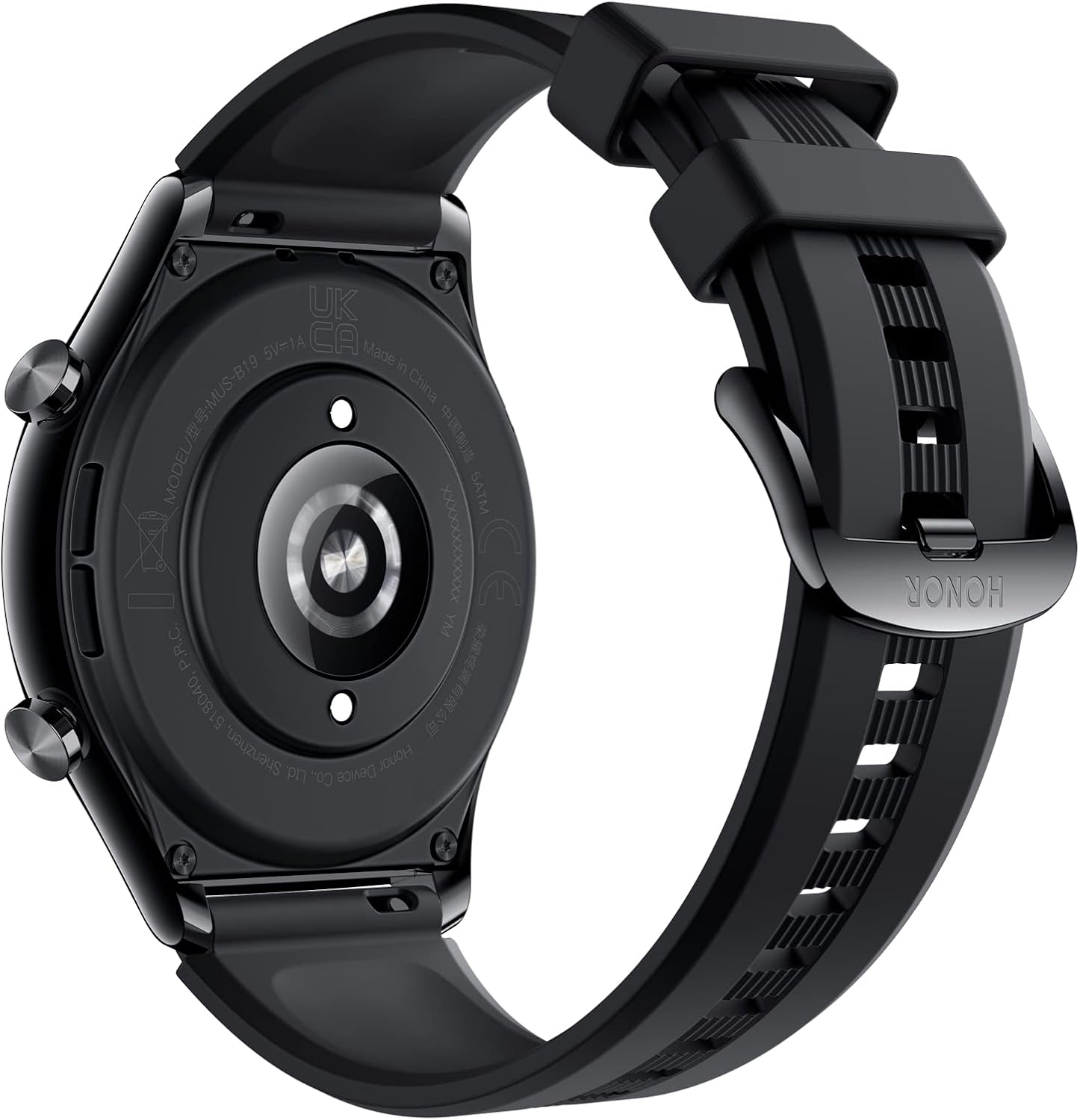
Summary
Editor's rating
Is it worth the money compared to other watches?
Looks like a normal watch, not a toy on your wrist
Battery life: finally something that doesn’t need charging every night
Comfort: light enough to forget you’re wearing it (most of the time)
Health tracking and GPS: solid, with a few software quirks
What this watch actually does (and doesn’t do)
Pros
- Very good battery life: around 5–7 days in real use with full health tracking
- Comfortable and light for a 46 mm watch, easy to wear 24/7 including sleep
- Solid health tracking (heart rate, SpO2, sleep) and reliable built-in GPS for workouts
Cons
- Closed ecosystem: no iOS support and no clean sync to Google Fit or Strava
- No NFC payments and no third-party app store, limited smart features compared to Wear OS
- Auto-brightness can be too dim indoors, and the stock strap feels a bit basic

Specifications
View full product page →| Brand | HONOR |
A smartwatch that actually lasts more than 2 days
I’ve been using the HONOR Watch GS 3 as my daily watch for a few weeks, mainly paired with an Android phone. I came from older Huawei/Honor watches and a couple of Wear OS models, so I had a pretty good idea of what I wanted: decent health tracking, proper battery life, and notifications that actually arrive when they should. I’m not into fancy animations or app stores on the watch, I just want something that works and doesn’t die every night.
First impression out of the box: it feels lighter and thinner than most 46 mm watches I’ve tried. I honestly expected it to feel bulky, but on the wrist it’s closer to a normal watch than a chunky sports tracker. Setup with the HONOR Health app from the Play Store was straightforward. No weird APK sideloading like on some Huawei devices, which is already a relief if you don’t want to mess around with unofficial app stores.
From day one, what stood out most was the battery and the screen. The AMOLED display is sharp, bright enough outdoors, and the watch still manages to last several days with heart rate, SpO2, sleep, and notifications on. It’s not a tiny fitness band, it’s a full-size smartwatch, so getting nearly a week out of it in real use is pretty solid. Not the marketing “14 days” they promise, but it’s still much better than Wear OS or Apple Watch style devices.
It’s not perfect though. The main downsides I noticed: no iOS support, no NFC payments, and the auto-brightness can be a bit too dim indoors if you leave it on automatic. The strap out of the box is okay but not great, and the software is a closed ecosystem: no third-party apps, no syncing to Google Fit or Strava directly. If you want a smartwatch that behaves more like a mini phone on your wrist, this isn’t it. If you want a health-focused watch with long battery and a classic look, then it starts to make sense.
Is it worth the money compared to other watches?
In terms of value for money, the HONOR Watch GS 3 sits in an interesting spot. It’s usually priced below the big names like Samsung Galaxy Watch series, Garmin mid-range models, or top Fitbit models, especially when it’s on discount. For that price, you get a bright AMOLED screen, good battery life, solid health tracking, built-in GPS, and a design that doesn’t scream cheap plastic. If your main priorities are battery, comfort, and basic health metrics, it feels like you’re getting a fair deal.
Where the value drops a bit is on the software and ecosystem side. You’re locked into the HONOR Health app, with no official sync to Google Fit, Strava, or Apple Health (and iOS isn’t even supported). If you’ve already invested in another ecosystem or you really care about exporting your data easily, this can be frustrating. Also, there’s no NFC, so no contactless payments, and no app store, so you’re stuck with the built-in functions. For some people that’s enough, for others it will feel limited compared to a Wear OS or Apple Watch.
Compared to cheaper fitness bands, the GS 3 gives you a better screen, more comfortable size, more reliable GPS, and a more “real watch” look. Compared to more expensive smartwatches, it wins on battery and often on price, but loses on smart features and integration. So it’s kind of a middle ground: more serious than a band, simpler than a full smartwatch. If you find it around the £100–£150 range (or equivalent), I’d say it’s good value if you know what you’re getting. At much higher prices, it starts to compete with watches that do more on the smart side.
Bottom line: if you’re an Android user who mainly wants health tracking + long battery + decent design and you don’t care about paying in shops with your wrist or installing third-party apps, this watch is a sensible buy. If you want heavy integration with apps, replies to messages, and an open ecosystem, you’re better off saving more and going for a Wear OS device or a higher-end model from another brand.
Looks like a normal watch, not a toy on your wrist
Design-wise, the HONOR Watch GS 3 leans more towards a classic round watch than a rugged sports brick. The case is 46 mm wide and about 10 mm thick, so on paper it sounds big, but because it’s only around 44 g without the strap, it doesn’t feel heavy at all. On my medium wrist it covers a good chunk, but it doesn’t look ridiculous or like a diving computer. If you have very small wrists, you might find it a bit large, but that’s true for most 46 mm watches.
The 1.43" AMOLED display with 400 x 400 resolution is crisp. Text is sharp, watch faces look clean, and the 1000 nits brightness rating is enough to read it outdoors in sunlight. Indoors, auto-brightness tends to drop too low sometimes, especially in dim rooms when you’re watching TV or working at a desk. I ended up fixing the brightness manually at level 2, which solved the issue and was still bright enough outdoors. So it’s not a deal-breaker, just something you’ll likely tweak after a couple of days.
The case itself has a slightly curved glass and a slim profile that gives it a more “normal watch” vibe. It doesn’t scream sports watch like some Garmin or rugged G-Shock style devices. There are two side buttons: the top one is the main menu/return button, and the bottom one opens workouts by default (you can remap it). The buttons click firmly and don’t feel cheap. The bezel is minimal, so you mostly see screen when you look at it, which makes it feel a bit more modern.
One thing I liked is the 22 mm standard strap size. That means you can easily swap the band for leather, metal, or velcro without hunting for some proprietary connector. The included strap on the Midnight Black version is functional but basic. I swapped it out after a few days for a third-party band, and that instantly made the watch look more premium. Overall, the design is clean, fairly discreet, and fits both casual and slightly more formal outfits without looking out of place.
Battery life: finally something that doesn’t need charging every night
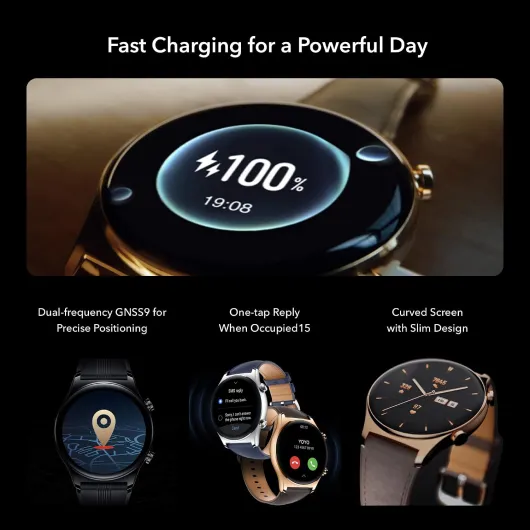
Battery life is honestly the main reason I’d pick this watch over a Wear OS or Samsung watch. HONOR claims 14 days of typical use, but that’s with fairly light settings. In my real use, with 24/7 heart rate, all-day SpO2, sleep tracking, notifications on, brightness fixed at level 2, and a few GPS workouts per week, I consistently got around 5–7 days on a charge. That’s already much better than the 1–2 days I was getting on other smartwatches.
When I turned off continuous SpO2 and reduced some of the constant monitoring, I got closer to 8–9 days. I never reached the full 14 days, but I also didn’t baby it. For me, not having to think about charging it every night is a big quality-of-life win. I just plug it in once a week, usually when I’m sitting at my desk. The charger is a small magnetic cradle, and the connection is fairly stable. It’s not the most secure magnet in the world, but it’s fine if you place it flat on a table.
The fast charging claim of “5 minutes for a day of use” is roughly accurate. From low battery, a quick 5–10 minute top-up gave me around 15–25% battery, which easily covers a day if you’re not doing long GPS sessions. From near empty to full takes under an hour, which is decent. I never had a situation where the watch died in the middle of the day because I forgot to charge it. Worst case, I’d see it at 10–15% in the morning, drop it on the charger while showering and having breakfast, and it was good to go.
Compared to my older Huawei Watch 2 and a Wear OS watch I used before, the difference is noticeable. With those, battery anxiety was constant: always thinking “can I track this workout and still have enough for the evening?”. With the GS 3, that basically disappears. It’s not magic, it’s just a less power-hungry system with fewer heavy apps. If you can live without full-blown smartwatch features, the trade-off is worth it. In short, battery life is one of the strong selling points, and for an Android user who values health tracking, it’s hard to complain here.
Comfort: light enough to forget you’re wearing it (most of the time)
Comfort was one of the big positives for me with the HONOR Watch GS 3. Despite the 46 mm diameter, the 44 g weight keeps it from feeling like a brick on the wrist. I wore it pretty much 24/7 for sleep tracking, workouts, and normal day-to-day use. After the first day, I mostly stopped noticing it, which is exactly what I want from a watch I’m supposed to wear all day and night. The curved back and smooth edges help a lot here.
The default fluoroelastomer strap is okay but nothing special. It’s soft enough and doesn’t irritate the skin, even with some sweat during workouts. The buckle is a standard tang buckle, so it stays secure. The main gripe is that it feels a bit cheap compared to the watch body, and it doesn’t breathe that well in hot weather. After a long workout or a hot day, you do feel that sticky band feeling. Swapping to a fabric or perforated strap made a noticeable difference for me in terms of comfort and breathability.
For sleep tracking, I was expecting the watch to be annoying because of the size, but it was actually fine. The low weight helps a lot during the night. I had more trouble with some older watches that were thicker and heavier. The sensors on the back don’t dig into the wrist; they sit flush and only leave a faint mark if you wear the band too tight. For accurate readings, you do need to keep it reasonably snug, especially for heart rate and SpO2, but not to the point where it cuts circulation.
During workouts, the watch stays in place well enough to keep the sensor stable, as long as you adjust the strap properly. I used it for brisk walks, cycling, basic gym work, and some rowing machine sessions. No sliding around, no chafing. If you’re used to a tiny fitness band, you’ll notice the larger case at first, but after a few sessions it becomes normal. In short, comfort is a strong point, and if you invest in a better strap that suits your skin and climate, it’s very easy to wear this watch all day and night.
Health tracking and GPS: solid, with a few software quirks
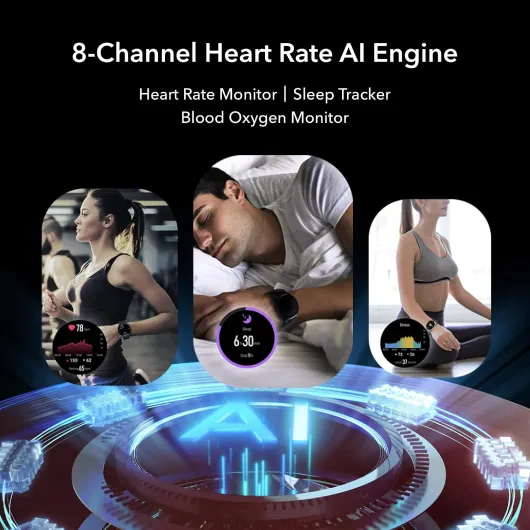
On the health tracking side, the HONOR Watch GS 3 does a pretty solid job. The 8-channel PPG heart rate sensor seems reliable for day-to-day tracking. Resting heart rate numbers were in line with what I get from a Polar chest strap and another brand’s watch. During steady workouts (walking, easy cycling), the readings were close enough, with only a few second delays on sudden changes. During more intense intervals, like short sprints or rapid changes in pace, it sometimes lags or smooths out spikes, which is normal for wrist-based sensors in this price range.
The all-day SpO2 monitoring is handy if you care about oxygen levels, especially at night. I don’t have medical-grade equipment to fully verify it, but the readings were consistent and stayed within expected ranges, and I never got weird 80% style random values like I’ve seen on some cheap trackers. The vibration alert for low SpO2 is there, but unless you have known breathing issues or sleep problems, you probably won’t trigger it often. It’s more of a peace-of-mind feature than something I used actively.
Sleep tracking is one of the areas where the watch tries to be very detailed. It breaks sleep into deep, light, REM, and awake periods, and gives you a score plus tips. In practice, it detected my sleep and wake times quite accurately. Short wake-ups in the night were sometimes missed or marked as light sleep, but the overall duration matched what I remembered. The app also lists “sleep problems” and throws suggestions at you (go to bed earlier, avoid screens, etc.). It’s nice at the beginning, but after a while it feels repetitive. Good if you’re trying to fix your schedule, easy to ignore if you already know your habits are bad.
For GPS, I tested it against my phone’s GPS and a dedicated running watch. Lock time is reasonably fast, usually under 20–30 seconds outdoors. Once locked, tracks were accurate enough on city runs and bike rides, with only minor wobbles near tall buildings. Distance and pace were in line with my other devices, so no big complaints there. Battery usage with continuous GPS is roughly in the ballpark of what HONOR claims: you can do long runs or rides without worrying it will suddenly die. The main annoyance is still the ecosystem: workouts stay in HONOR Health, and there’s no native export to major platforms like Strava without workarounds. So performance is good, but the data is somewhat locked in.
What this watch actually does (and doesn’t do)
The HONOR Watch GS 3 is basically a fitness-focused smartwatch with a few smart features on top, not the other way around. So you get 24/7 heart rate tracking, all-day SpO2 monitoring, sleep tracking, stress tracking, GPS for outdoor workouts, and more than 100 sport modes. On the smartwatch side, you get notifications, call handling via Bluetooth, music control and storage, alarms, timers, and a few utility apps like weather and stopwatch. That’s about it. No app store, no WhatsApp replies from the wrist, no Google Maps on the screen.
Pairing is done via the HONOR Health app from the Play Store. The app is pretty similar to Huawei Health if you’ve used that before: daily dashboard, graphs for heart rate, steps, sleep, SpO2, and workout history. You can tweak notification settings, watch faces, health reminders, and update firmware from there. A bit annoying: you can’t sync your data to Google Fit or Strava directly. So if you already have years of data sitting in another ecosystem, this watch lives in its own bubble. For some people that’s fine, for others that’s a deal-breaker.
Function-wise, the watch covers the basics of a health tracker very well. It tracks steps, calories, distance, and heart rate consistently through the day. The sleep tracking is quite detailed, with breakdowns of deep, light, REM sleep and suggestions for improvement. The SpO2 monitoring can run automatically and warn you with a vibration if it drops too low. For workouts, you have the usual running, walking, cycling, plus niche modes like rowing, swimming with stroke detection, and a bunch of gym activities. GPS is built in and doesn’t rely on the phone.
What it doesn’t do: no contactless payments (no NFC), no LTE, no eSIM usage in practice despite what some specs might suggest, and no official support for iPhones. So if you’re on iOS, you can basically forget this watch. It’s clearly built for Android users who care more about battery and health tracking than having a wrist extension of their phone. Once you accept that, the feature set is pretty straightforward and consistent with that goal.
Pros
- Very good battery life: around 5–7 days in real use with full health tracking
- Comfortable and light for a 46 mm watch, easy to wear 24/7 including sleep
- Solid health tracking (heart rate, SpO2, sleep) and reliable built-in GPS for workouts
Cons
- Closed ecosystem: no iOS support and no clean sync to Google Fit or Strava
- No NFC payments and no third-party app store, limited smart features compared to Wear OS
- Auto-brightness can be too dim indoors, and the stock strap feels a bit basic
Conclusion
Editor's rating
The HONOR Watch GS 3 is a practical choice if you’re an Android user who cares more about health tracking and battery life than fancy smartwatch tricks. It looks like a normal watch, is light enough for 24/7 wear, and handles the basics well: heart rate, SpO2, sleep, steps, and GPS workouts. In daily use, the 5–7 days of real battery life with everything turned on is the main selling point. You charge it once a week instead of every night, and that alone makes it much easier to live with than many Wear OS or Samsung models.
On the downside, the software ecosystem is closed and a bit isolated. No iOS support, no NFC payments, no app store, and no clean sync to Google Fit or Strava. If you want a watch that acts like a mini phone on your wrist, this isn’t it. It’s more of a polished fitness tracker in a watch body. For the price it often sells at, I think it’s good value for people who just want reliable health tracking, notifications, and a decent-looking watch that doesn’t die in a day. If you’re deep into Google’s ecosystem or need advanced smart features, you should probably look elsewhere.