Summary
Editor's rating
Value: good hardware, dated software, watch the map costs
Design: small, tough, and a bit stuck in 2012
Battery: the main reason to buy it (if you like AA’s)
Durability: feels like it can take a beating
Performance: solid GPS tracking, clunky software
What the eTrex 22x actually offers (once you strip the marketing away)
Pros
- Rugged, IPX7-rated body that handles rain and drops well
- Runs on 2 AA batteries with around 25 hours of use and easy battery swaps
- Reliable GPS/GLONASS tracking and preloaded TopoActive Europe maps for basic outdoor use
Cons
- Small non-touch screen and dated button-based interface
- Outdated Garmin BaseCamp software, especially problematic for Mac users
- Extra detailed maps are expensive and UK address search is limited with the included maps

Specifications
View full product page →| Brand | Garmin |
A small GPS brick for people who don’t trust their phone battery
I took the Garmin eTrex 22x on a few hikes and bike rides because I was fed up with my phone dying halfway through a long day out. I wanted something simple: show me where I am on a map, record the track, and run on AA batteries so I can just swap them out. On paper, this thing does exactly that. In practice, it’s a bit old-school, and you need to accept that from the start.
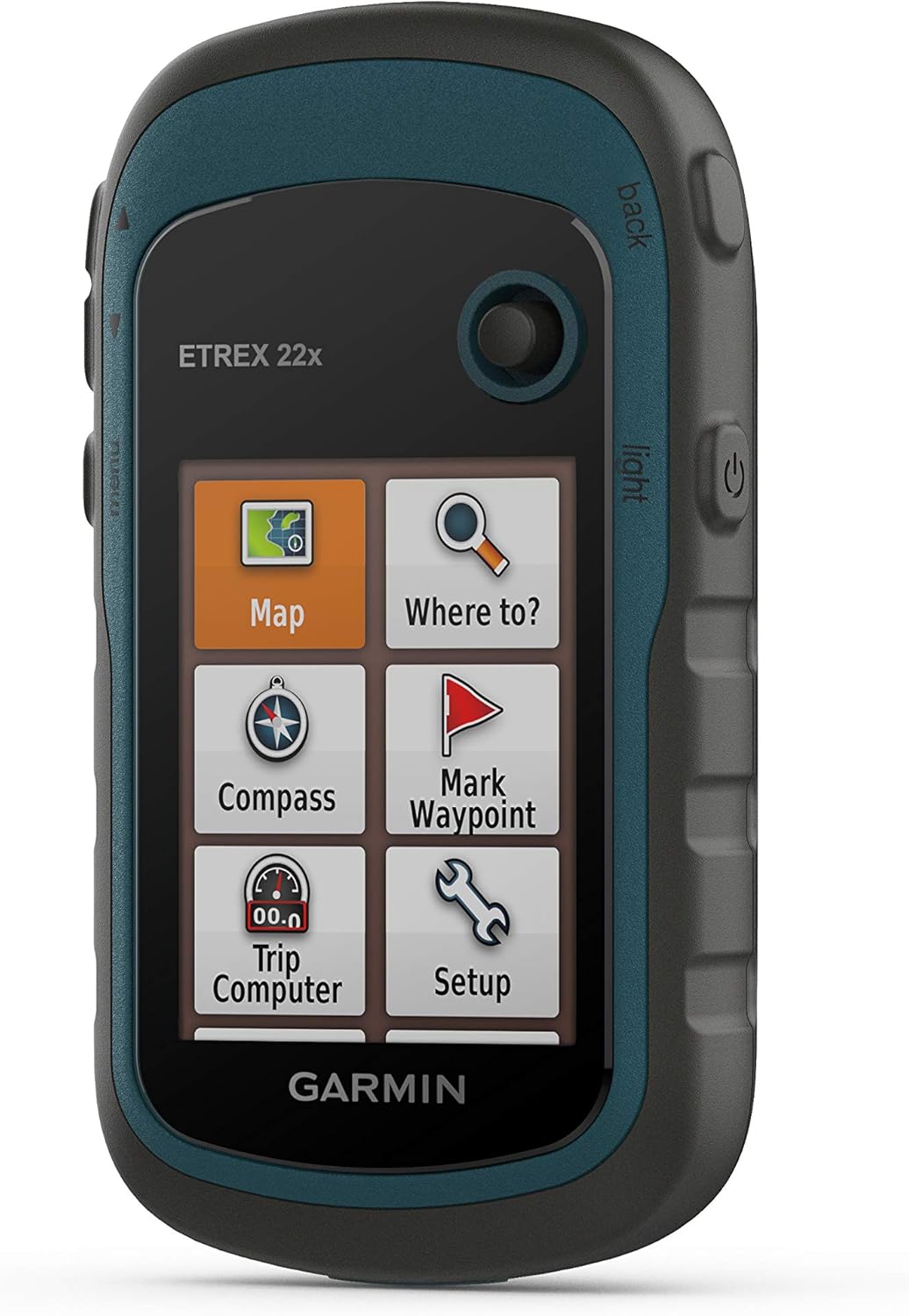
The first impression is pretty clear: this is a no-nonsense, button-only GPS. No touch screen, no fancy smartwatch vibe, just a chunky little device that feels like it could survive being dropped in mud. If you’re used to modern phone apps like Komoot or AllTrails, the interface will feel dated. But if you’ve used older Garmins before, you’ll feel right at home.
What pushed me to try it was the combination of AA batteries, 25-hour battery life, and preloaded TopoActive maps of Europe. I wanted something I could throw in my pack for multi-day trips without worrying about power banks or sockets. And on that point, it does the job pretty well. It turns on fast, locks onto satellites quickly, and doesn’t complain in the rain.
However, it’s not perfect. The screen is small, the software ecosystem feels stuck in the past, and if you’re on Mac especially, the whole BaseCamp situation is annoying. So this review is basically: it works, it’s tough, but it’s not exactly friendly or modern. If you’re okay with that trade-off, it can still be a solid tool.
Value: good hardware, dated software, watch the map costs
On value, the eTrex 22x is a bit mixed. The hardware itself is solid for the price: rugged body, good battery life, decent GPS performance, and preloaded TopoActive Europe maps. For someone who wants a dedicated outdoor GPS instead of relying on a phone, it gives you the basics you need without going into the higher price bracket of more advanced Garmin units with touchscreens and extra sensors.
Where the value drops is around maps and software. The included TopoActive maps are okay for general outdoor use, but if you want more detailed or specialized mapping (like full UK address coverage or premium topo data), Garmin’s extra maps are expensive. One Amazon reviewer points this out clearly: paying a high price for the device and then another big chunk for better maps feels hard to justify, especially when phone apps offer good maps for less or even free.
Then there’s the BaseCamp situation. The fact that Garmin has basically stopped supporting the software, especially on newer Macs, hurts the overall package. If you only occasionally load GPX files via USB and don’t care about fancy map management, you’ll be fine. But if you expect a clean, modern experience with simple syncing and route planning, this feels outdated for the money. That’s where the 3.8/5 average rating makes sense to me: good hardware, but let down by the ecosystem.
So in terms of value, I’d say it’s decent but nothing more. If you specifically want a rugged, AA-powered GPS and you’re okay with old-school software, then the price is acceptable. If you’re on the fence and comfortable using your smartphone with a power bank and good apps, you might find this overpriced for what it does in 2024.
Design: small, tough, and a bit stuck in 2012
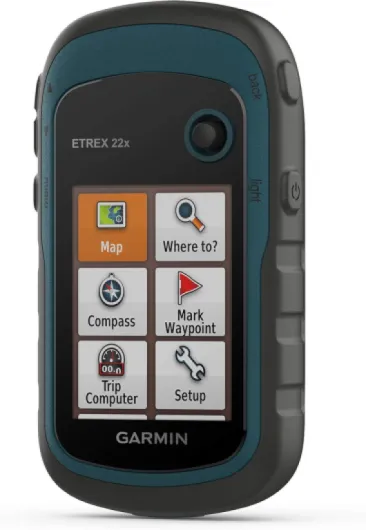
Design-wise, the eTrex 22x is basically a small plastic brick with a colour screen. It’s not pretty, but it feels practical. The blue and black casing looks like typical outdoor gear: you won’t frame it for its looks, but you also won’t cry if it gets scratched. It fits easily in one hand and slips into a jacket pocket without dragging your clothes down. At 5.4 x 10.3 x 3.3 cm, it’s compact enough to mount on a bike or hang from a strap without being annoying.
The controls are all physical. You’ve got buttons on the sides and a little joystick-style control on the front. At first, it feels clunky compared to a touch screen, especially if you’re used to pinching and swiping on a phone. But after a couple of outings, I got used to it. In cold weather with gloves on, the buttons are actually a plus. No mis-taps, no struggling with a wet touch screen; you just click your way through the menus. It’s not fast, but it’s reliable.
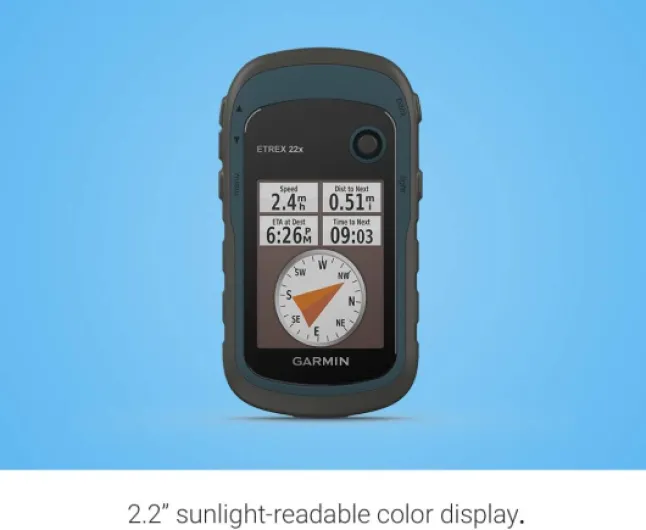
One downside is the 2.2-inch screen. It’s sunlight-readable and the 240 x 320 resolution is okay, but the size makes map reading a bit cramped. You end up zooming in and out more than you’d like. If you’re doing fine navigation or cycling at speed and trying to glance at the route, it can feel small. Several reviewers mention the same thing, and I agree: it’s usable, but not generous.
In terms of practicality, the back battery door feels solid, and the overall build suggests it can take drops and rain without drama. It’s not a sleek gadget, more like a tool you don’t have to baby. If you want something that looks modern and slick on your handlebars, this isn’t it. If you just want a rugged little device that can be thrown in a bag and forgotten until you need it, the design makes sense.
Battery: the main reason to buy it (if you like AA’s)
Battery life is honestly the main reason I’d pick the eTrex 22x over using a phone. Garmin claims around 25 hours in GPS mode with 2 AA batteries. In my use, with standard alkaline batteries, screen on regularly, and track recording active, I got roughly a full long weekend of hikes (two long days and one shorter day) before needing to swap batteries. That’s not far off the spec, and if you use good NiMH rechargeables, you can push it quite nicely.
The big advantage is the replaceable AA batteries. On multi-day trips, you don’t need power banks or sockets. You just carry a few spare AAs and you’re covered. If it dies in the middle of nowhere, you pop in new ones and you’re back up in seconds. Compared to a smartphone that needs careful power management and external batteries, this is very practical. One reviewer even mentions this as a key plus, and I agree completely.
The downside is that you have to manage physical batteries: recharge NiMH cells at home, or buy alkalines regularly. If you’re used to just charging your devices overnight via USB, this feels a bit old-school. Also, there’s no built-in rechargeable battery option, so you can’t just plug the GPS itself into a power bank to fully solve everything. You can power it via USB, but that’s not the same as having an internal pack.
In short, if your priority is reliable, long battery life far from electricity, the eTrex 22x is pretty strong. If you live in a world of daily USB charging and hate dealing with loose batteries, this system will annoy you. For me, for proper outdoor trips, the AA approach still makes sense, and here it’s executed well.
Durability: feels like it can take a beating
From a durability point of view, the eTrex 22x feels built to be abused. The casing is thick plastic, the screen is recessed slightly, and the whole thing is rated IPX7, which means it can handle being splashed or briefly submerged. I used it in light rain and damp conditions without any issue. It doesn’t feel fragile like some glossy gadgets; more like a tool you can toss into a backpack with other gear.
I dropped it once from about chest height onto packed dirt, and it came out with just a tiny scuff on the plastic, nothing on the screen. That matches what I’ve seen with previous eTrex models: they’re not pretty, but they’re tough. The buttons also feel firm and not wobbly. They give a clear click, and I didn’t notice any sponginess, even after repeated use. For something you’re going to use with cold or wet fingers, that’s reassuring.
Because it uses AA batteries, you don’t have to worry about the internal battery degrading after a few years. Worst case, the device itself ages, but you’re not stuck with a dead internal battery that’s hard to replace. For long-term use, that’s a real advantage. An older eTrex I’ve used in the past is still alive years later for exactly that reason.
Of course, the screen is not indestructible. There’s no fancy Gorilla Glass here, so if you throw it against rocks or let it rub against metal in your bag, you’ll probably get scratches. A cheap screen protector wouldn’t hurt. But overall, for hiking, biking, and camping use, it feels reliable and tough enough. If your priority is something that survives bad weather, mud, dust, and the occasional drop, this unit is pretty solid in that department.
Performance: solid GPS tracking, clunky software
In the field, the eTrex 22x does the core GPS job well. It locks onto satellites quickly, even under trees, and the track recording is reliable. On my hikes, the recorded paths matched what I expected when I later checked them against online maps. No weird zig-zags or random jumps. The support for both GPS and GLONASS clearly helps in more challenging environments. For people who mostly care about “where am I” and “how do I get back,” it delivers.
Route following also works fine once you have the GPX file on the device. The map redraw speed is not blazing fast, but it’s acceptable for hiking and moderate cycling. It’s not like a modern phone, but it doesn’t lag to the point of being useless. Zooming and panning the map with the joystick is slower than with touch, but you get used to it after a couple of outings. The device feels stable: no crashes or random reboots during my use.
Where things get annoying is the software side on the computer. Garmin BaseCamp, the program used to manage routes and maps, is basically abandoned. On Windows it still works, but it feels old and clumsy. On Mac, some users report crashes and connection issues, and I’ve seen the same kind of instability. If you’re not comfortable messing around with outdated software, drivers, and manual file transfers, the experience can be frustrating. One Amazon review even mentions having to return the device because of this.
So, performance in the narrow sense (GPS accuracy, tracking, recording) is pretty solid. Performance as a complete ecosystem (device + software + map management) is clearly behind the times. If you’re happy to load a few GPX files, follow them, and not fiddle too much, it’s fine. If you want smooth integration with modern apps and easy syncing, this is not the right product.
What the eTrex 22x actually offers (once you strip the marketing away)
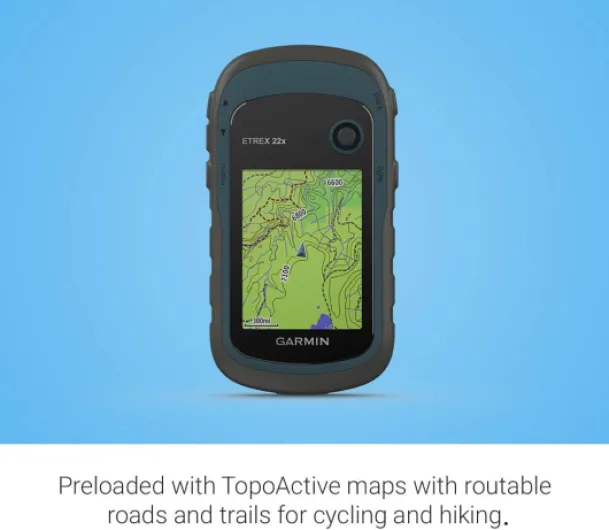
On paper, the Garmin eTrex 22x is a compact handheld GPS with a 2.2-inch colour screen, 8 GB internal memory, microSD slot, and preloaded TopoActive Europe maps. It weighs about 142 grams and runs on 2 AA batteries, which Garmin claims give around 25 hours in GPS mode. It supports GPS and GLONASS, so satellite lock stays decent even in forests or valleys. There’s no touch screen: everything is handled with side buttons and a small joystick-style control.
In real use, the device is clearly aimed at people who hike, bike, or fish and want a separate GPS that doesn’t rely on a phone. It can show topographical maps, record tracks, save waypoints, follow GPX routes, and handle paperless geocaching. It’s rated IPX7, so rain and puddles are not a problem. The screen is sunlight readable but small. If you like big maps and zooming around like on a smartphone, you’ll find it cramped.
One important detail: it comes with TopoActive Europe maps, which are decent for trails and cycling, but not perfect for address searching, especially in the UK. If you expect full turn-by-turn car-style navigation with complete address search everywhere, you’ll be disappointed. For trails, forest paths, and general orientation, it’s okay. For precise address lookup without paying for extra maps, it’s limited.
Overall, the feature set is solid but basic. No Wi-Fi, no touchscreen, and the Bluetooth is pretty limited. It’s more of a dedicated tool than a smart gadget. If you’re fine with a device that mostly just does maps, waypoints, and tracks, it fits the brief. If you want modern syncing, apps, and cloud magic, this will feel dated from day one.
Pros
- Rugged, IPX7-rated body that handles rain and drops well
- Runs on 2 AA batteries with around 25 hours of use and easy battery swaps
- Reliable GPS/GLONASS tracking and preloaded TopoActive Europe maps for basic outdoor use
Cons
- Small non-touch screen and dated button-based interface
- Outdated Garmin BaseCamp software, especially problematic for Mac users
- Extra detailed maps are expensive and UK address search is limited with the included maps
Conclusion
Editor's rating
The Garmin eTrex 22x is a practical, old-school GPS that focuses on doing a few things reliably: showing your position on a topo map, recording tracks, following GPX routes, and running for a long time on AA batteries. The hardware is tough, the GPS reception is dependable, and the battery system makes sense for multi-day trips away from power. If what you want is a separate outdoor GPS you can trust in bad weather and remote areas, it gets the job done.
On the flip side, the device feels clearly dated compared to modern alternatives. The small non-touch screen, clunky button navigation, and above all the outdated BaseCamp software make the whole experience less friendly than it should be, especially if you’re on Mac. The included maps are okay but not great for things like full address search in the UK, and buying extra maps from Garmin gets expensive fast. That’s why I see it as a niche tool rather than a general navigation solution.
Who is it for? Hikers, bikepackers, and campers who value ruggedness and AA-powered reliability over modern interfaces and smart features. Who should skip it? Anyone who mostly does day hikes, is happy using a smartphone with offline maps, or expects smooth software and seamless syncing. In short: solid little workhorse, but you need to be okay living with its quirks and its old-school ecosystem.