Summary
Editor's rating
Value: good, but only if you’re already in the Apple world
Design: familiar Apple look, bigger screen, nothing revolutionary
Battery: finally usable for a full day (and night), with some limits
Comfort: light on the wrist, fine for sleep, but 46mm isn’t for everyone
Durability & water resistance: feels tough enough for normal abuse
Performance & everyday use: smooth, fast, and very integrated with iPhone
What you actually get with the Series 11 GPS 46mm
Health & fitness effectiveness: solid tracking and useful alerts
Pros
- Very smooth performance and tight integration with iPhone (calls, messages, apps, Apple services)
- Noticeably improved battery life versus older Apple Watches, with fast charging that’s actually useful
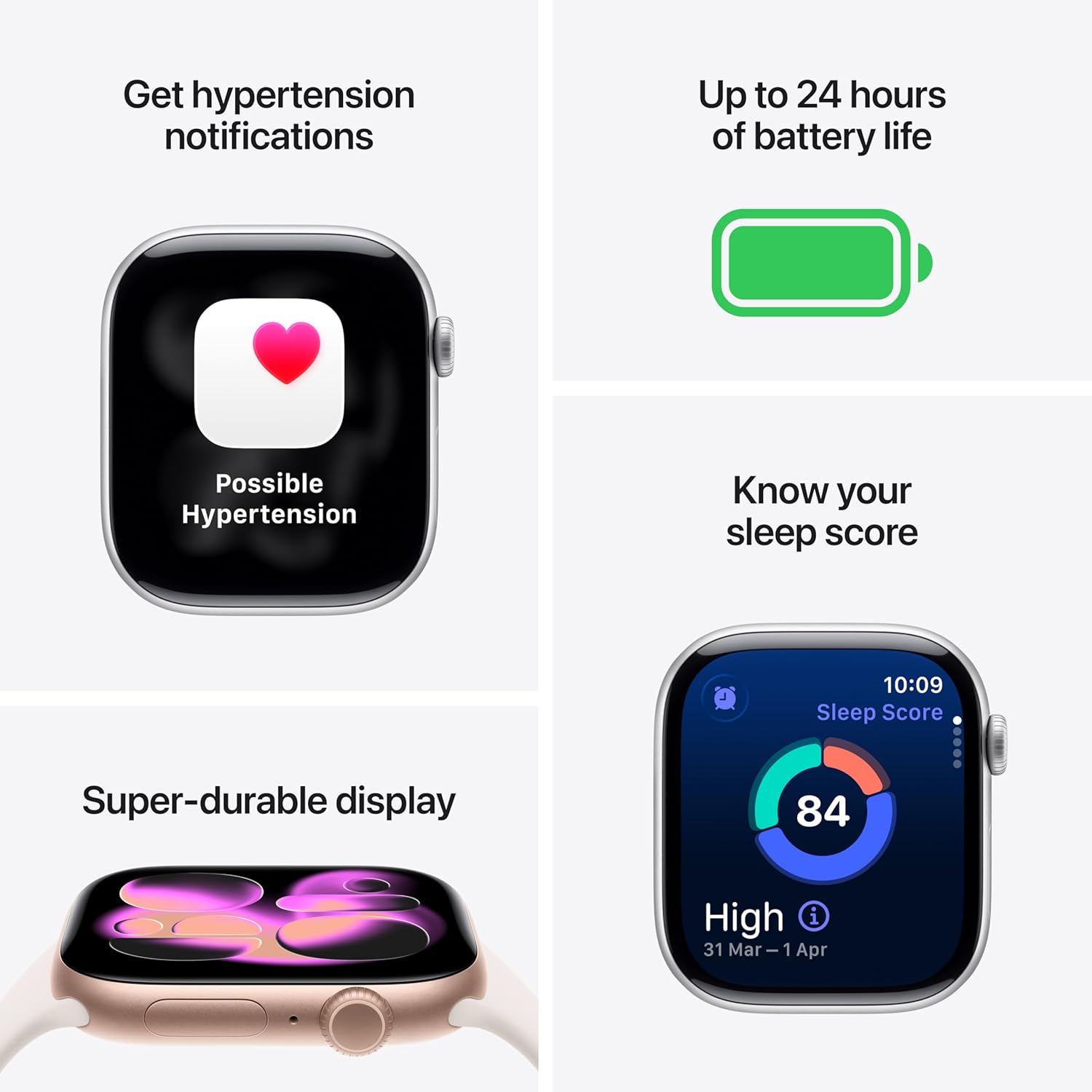
- Strong health and fitness package: sleep score, ECG, blood oxygen, hypertension notifications, fall and crash detection
Cons
- Still basically a one-day battery watch, not suitable if you hate daily charging
- Design feels very similar to previous generations, not much visual novelty
- Price is high, especially if you won’t fully use the advanced health features

Specifications
View full product page →| Brand | Apple |
Apple Watch Series 11: worth upgrading or just Series 10 with better PR?
I’ve been using the Apple Watch Series 11 GPS 46mm (Space Grey with the black sport band) as my daily watch for a bit now. Before this, I had an Apple Watch SE and I’ve also spent some time with a Samsung Galaxy Watch. So I’m not coming at this as a hardcore Apple fan, more as someone who just wants a watch that tracks health, doesn’t die halfway through the day, and doesn’t feel like a brick on the wrist.
The first thing that hit me is how familiar it feels. If you’ve seen a Series 10 or even a recent Apple Watch, this doesn’t look like a big change. Same general shape, same vibe. Where it really shifts is in the battery life, the new health bits like hypertension notifications and sleep score, and the way it ties into the iPhone. It’s very much an Apple product: smooth setup, lots of polish, and a price that makes you think twice.
In daily life, I used it for the usual stuff: messages, calls, quick replies, music control, timers while cooking, and a couple of workouts per day (one walk or run, plus some strength training). I also wore it overnight to test the sleep tracking and sleep score. I didn’t baby it: showers, washing dishes, walking in the rain, bumping it against door frames like an idiot – normal human use.
Overall, it’s pretty solid, but not magic. Some things are genuinely useful (battery, sleep score, fitness tracking), others feel a bit overhyped. If you already have a fairly recent Apple Watch, it’s not a night-and-day upgrade. If you’re coming from an SE, an older model, or from Android watches, it feels like a clear step up, mainly for health features and polish. Let’s break it down properly.
Value: good, but only if you’re already in the Apple world
Let’s talk money. The Apple Watch Series 11 is not cheap, even in the GPS version. You are paying a premium for the brand, the ecosystem, and the polish. Is it worth it? It depends where you’re coming from and what you expect. If you already have an iPhone and you actually plan to use the health, sleep, and fitness features, then yes, it feels like good value for money, especially if you catch it on a discount like some Amazon buyers did.
Compared to the Apple Watch SE, I’d say the Series 11 is genuinely better: better screen, more health features (like ECG, blood oxygen, hypertension notifications, better durability), and better battery life. If health tracking is important to you, I’d skip the SE and go for this or a similar higher-end model. The comment saying “don’t get the SE” isn’t completely wrong if you care about those extras. If you just want basic notifications and simple fitness, the SE might still be enough and cheaper.
Against Android watches or brands like Samsung and Withings, the value is more about integration. One user mentioned switching from Samsung to this and clearly preferred the Apple Watch for build and setup. I’d agree: the experience with an iPhone is smoother here than mixing brands. On the other hand, if you don’t care about deep integration and mostly want long battery life and basic tracking, some cheaper alternatives might do the job for less money.
So, is it overpriced? A bit, yes, like most Apple stuff. But it’s also one of those products where you actually get consistent performance, good support, and regular updates. If you’re already in the Apple ecosystem and you’ll use at least half of what it offers, the price is easier to swallow. If not, it’s probably overkill and you’re paying for features you won’t really touch.
Design: familiar Apple look, bigger screen, nothing revolutionary
Design-wise, this is classic Apple Watch with a slightly larger footprint. The 46 mm case with the Space Grey aluminium looks clean and simple. If you’ve seen a Series 10, you’ll honestly struggle to tell them apart at a glance. For people who like the Apple Watch look, that’s fine. If you were hoping for a radical redesign, this isn’t it. It’s still a square watch with rounded corners and a digital crown on the side.
The screen itself is bright and sharp, and the always‑on display is genuinely useful. I could see the time and complications at a glance without having to flick my wrist dramatically. Outdoors in sunlight, the screen stayed readable. Indoors, I actually had to turn the brightness down a bit because it felt too strong in darker rooms. The bezels are thin enough that you don’t really notice them much in everyday use.
What I liked is that the watch looks fine in both casual and slightly more formal situations. With the basic black sport band, it’s clearly a smartwatch, not a traditional watch, but it doesn’t scream for attention. If you want something that looks more like jewelry, you’ll probably want a different band or a different brand altogether. For me, it’s functional and discreet enough.
My only real gripe is that the design is starting to feel a bit “samey” if you’ve been around Apple Watches for years. It’s not ugly at all, but it’s also not exciting. It’s more like: it gets the job done, looks tidy, and you move on. If design is your top priority, this is good but nothing new. The value here is more in the screen quality and comfort than in any fresh visual concept.
Battery: finally usable for a full day (and night), with some limits
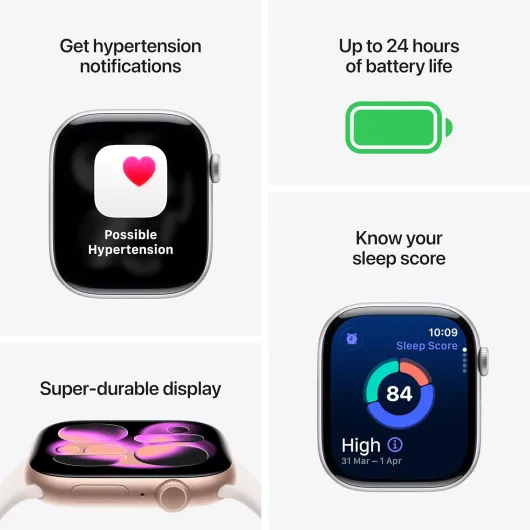
The battery life is one of the key selling points of this Series 11, and yes, it is noticeably better than my old SE and even better than what I’ve seen on older mainline Apple Watches. Apple claims up to 24 hours of normal use, and in real life, with always‑on display enabled, notifications, a couple of workouts, and sleep tracking, I was typically ending the day with around 30–35% battery left. That’s actually decent for an Apple Watch.
On lighter days (fewer workouts, less screen-on time), I could push it into the second day, but then I had to be careful and usually ended up charging it in the late afternoon. For people who were dreaming of true multi-day battery, this still isn’t it. It’s more like “solid one-day watch with some buffer” than a two- or three-day device. Compared to most Android smartwatches I’ve used, it’s competitive; compared to Garmin or other low-power watches, it’s still behind.
The fast charging is genuinely practical. From around 10–15% to something like 70–80% took roughly 30 minutes for me, which matches the claim of about 8 hours of use from a 15-minute top up. In real life, that means you can charge it while you shower and get ready and you’re good for the rest of the day. If you want to track sleep, the routine that worked for me was: charge in the evening while watching TV or after dinner, then put it back on before bed.
Bottom line: battery life is finally at a point where you don’t have to babysit it all day, but it’s not a multi-day beast. If you’re fine with charging once a day and doing a quick top-up here and there, you’ll be happy. If you hate the idea of daily charging, this type of watch probably isn’t for you anyway, no matter the brand.
Comfort: light on the wrist, fine for sleep, but 46mm isn’t for everyone
On the comfort side, the 46 mm aluminium case is surprisingly light. Compared to my old stainless-steel watch, this feels almost toy-like at first, in a good way. After a couple of hours, I basically forgot I was wearing it, which is what you want for a daily watch. The rounded back sits flat on the wrist, and the sensors didn’t leave any marks or irritation, even when I wore it 24/7 for a few days.
The sport band in S/M is standard Apple stuff: soft, a bit rubbery, and easy to adjust. The pin-and-tuck closure holds well. I wore it during workouts, in the shower, and while sleeping, and it never popped open or moved around too much. I did have to adjust it a bit tighter for workouts and a bit looser for normal use, but that’s normal. If you’re really sweaty, it can get a bit sticky under the band, but a quick rinse fixes that.
For sleep, I was expecting the 46 mm size to feel bulky, but it was actually okay. You do notice it if you sleep with your wrist under your head or pressed against the pillow, but it wasn’t painful or anything, just mildly annoying at times. After the first couple of nights, I got used to it. If you’ve never slept with a watch, there will be a short adjustment period, but the weight itself isn’t the problem, it’s just the presence of something on your wrist.
One thing to keep in mind: if you have very small wrists, 46 mm may look and feel a bit big. The watch is thin and light, but the footprint is still large. On my medium wrist, it was fine and I liked the larger screen for readability. Overall, comfort is a strong point here: light case, soft band, and no weird pressure points, as long as you pick the right size and tighten it properly for workouts.
Durability & water resistance: feels tough enough for normal abuse
Apple says the Series 11 has a display that’s 2x more scratch resistant than Series 10 and is rated for 50 m water resistance plus IP6X dust resistance. I obviously didn’t throw it off a building or drag it on concrete, but I did wear it as I normally would: in the shower, washing dishes, in the rain, during workouts, and doing basic house chores where you bang your wrist on door frames and tables without thinking about it.
After this period, the screen still looked clean, with no visible scratches. That said, glass is glass – if you slam it against something sharp, it will mark. I wouldn’t rely purely on the marketing claim and go scraping it on walls for fun. But for regular life, it feels pretty solid. The aluminium case will mark more easily than stainless steel if you really hit it, but it also keeps the weight down, which is a fair trade-off in my opinion.
For water resistance, I had zero issues: showers, heavy hand washing, and short exposure to rain were all fine. I didn’t do deep swimming sessions, but 50 m water resistance on an Apple Watch has been around for a while and is usually enough for pool swims and casual water exposure. If you’re a serious diver, you’ll want a different type of watch anyway.
The band held up fine too. No peeling, no weird stretching, and the pin-and-tuck closure stayed secure. Dust and dirt wiped off easily. Overall, I’d say durability is good for everyday use. It feels like a watch you can wear all day without babying it, but if you’re very clumsy or do manual work, you might want a case or a screen protector just for peace of mind.
Performance & everyday use: smooth, fast, and very integrated with iPhone
In terms of performance, the watch is fast and responsive. Swiping between watch faces, opening apps, checking notifications, or starting workouts all felt smooth. I didn’t run into any noticeable lag, even with several complications and apps installed. Compared to my old Apple Watch SE, everything just feels snappier and more fluid. It’s not night and day, but you notice it when you go back.
Notifications are where this watch really earns its keep. Messages, calls, calendar alerts, reminders, and app pings all come through quickly. I could answer calls on the watch when my phone was in another room, and the speaker and mic were good enough for short conversations. Don’t expect home-theater sound, but for a quick “yeah, I’m on my way,” it’s perfectly usable. Haptics are strong enough that I never missed notifications, even while walking outside.
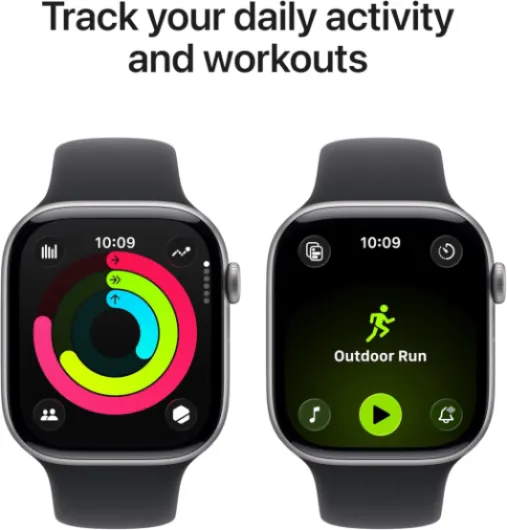
For fitness and health, the watch tracks heart rate, workouts, and daily activity rings reliably. GPS for walks and runs locked on quickly and stayed accurate in my area. Heart rate readings matched pretty closely with a chest strap I used for comparison during one workout – not 100% identical, but close enough for normal use. Features like heart rate zones, training load, and the new Workout Buddy (linked to Apple Intelligence on the iPhone) are good for people who want a bit more structure in their training without going full sports-nerd.
Apps run well, and the integration with iPhone is where this thing really shines. Controlling music, checking weather, using timers, Find My, and even some niche apps (like glucose monitor integration mentioned by another user) all worked smoothly. There’s nothing mind-blowing here, but it’s very practical. My main criticism is that some of the new smart features still feel a bit tied to having the latest iPhone and staying in Apple’s world. If you’re okay with that, it’s great; if you like mixing ecosystems, it’s more limiting.
What you actually get with the Series 11 GPS 46mm
On paper, this Apple Watch Series 11 GPS 46mm is packed: sleep score, ECG, blood oxygen, hypertension notifications, crash and fall detection, fitness tracking, always-on display, 50m water resistance, IP6X dust resistance, and 64 GB of storage. It’s the GPS version, not the full cellular one, but it still uses Wi‑Fi and your iPhone to keep you connected for calls, texts, and notifications. For most people who carry their phone anyway, this is enough.
The 46 mm screen size is on the larger side, which I liked because it makes text and complications easier to read without squinting. If you’ve got a smaller wrist, it may look a bit big, but on my medium wrist it looked fine, not cartoonish. The sport band in S/M size is supposed to fit 140–190 mm wrists. On me, I still had a few holes left, so the range feels accurate. The band is the usual Apple fluoroelastomer type – smooth, slightly rubbery, and easy to rinse.
Setup was classic Apple: open the box, bring it near the iPhone, scan the pattern, wait a bit, done. I had it paired and configured in under 10–15 minutes, including picking watch faces and enabling health tracking. Compared to my older Samsung watch, the pairing process is less fiddly and you don’t feel like you’re wrestling with multiple apps and permissions for half an hour.
In daily use, the watch is clearly aimed at people who want a general-purpose gadget on their wrist: a bit of fitness, a bit of health monitoring, plus notifications and quick actions. It is not a hardcore sports watch like a Garmin Fenix, and it’s not pretending to be. If you want deep battery for multi-day hikes, look elsewhere. If you want something that just fits into the Apple ecosystem and keeps an eye on your health, this is more in that lane.
Health & fitness effectiveness: solid tracking and useful alerts
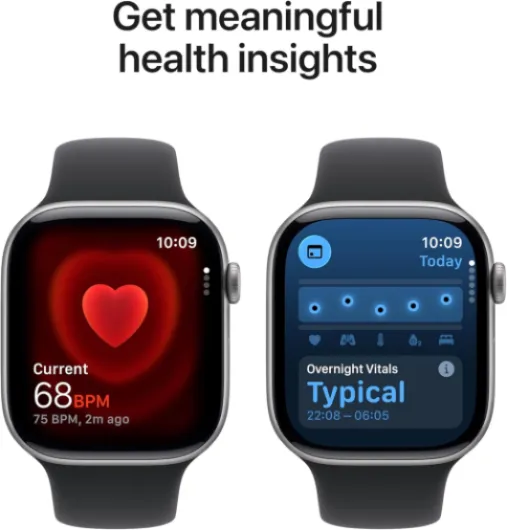
This is where the Series 11 earns its keep: health and fitness tracking. You get heart rate tracking, ECG, blood oxygen readings, sleep score, possible sleep apnea alerts, high/low heart rate notifications, irregular rhythm alerts, and now hypertension notifications. Obviously, this is not a medical device, but as a general monitor, it’s quite useful. I used ECG a few times just to test it; it’s quick and easy, and the results sync to the Health app, where you can share them with a doctor if needed.
The sleep score feature is actually more helpful than I expected. It doesn’t just tell you how long you slept, but also gives you a score that takes into account things like consistency and interruptions. After a few nights, patterns start to show. For example, I noticed my score dipped clearly on nights where I ate late or used my phone in bed for too long. It’s not perfect science, but it’s a good nudge to adjust habits. Sleep stages (REM, deep, core) lined up fairly well with how I felt in the morning.
On the fitness side, the watch tracked walks, runs, and strength sessions reliably. Heart rate zones are helpful if you’re trying to train in a certain intensity range. GPS tracks looked accurate on the map, and distance estimates were close to what I got on my phone and another sports watch. Training load and the extra metrics are nice if you’re trying to follow a plan, but you can also ignore them and just use it for basic calorie and time tracking.
The safety features – fall detection, crash detection, and Check In – are things you hope you never need, but it’s reassuring to have them. I didn’t trigger them in real life (thankfully), but I’ve seen enough reports and tests to trust that they at least work reasonably well. Overall, in terms of effectiveness as a health and fitness companion, the Series 11 is strong. Not perfect, but more than enough for most people who aren’t elite athletes or medical professionals.
Pros
- Very smooth performance and tight integration with iPhone (calls, messages, apps, Apple services)
- Noticeably improved battery life versus older Apple Watches, with fast charging that’s actually useful
- Strong health and fitness package: sleep score, ECG, blood oxygen, hypertension notifications, fall and crash detection
Cons
- Still basically a one-day battery watch, not suitable if you hate daily charging
- Design feels very similar to previous generations, not much visual novelty
- Price is high, especially if you won’t fully use the advanced health features
Conclusion
Editor's rating
Overall, the Apple Watch Series 11 GPS 46mm is a solid everyday smartwatch that does most things very well without trying to be something it’s not. You get smooth performance, a bright always-on display, good health and fitness tracking, better battery life than older Apple Watches, and a comfortable, lightweight design. It’s basically the “default” choice if you have an iPhone and want a watch that just integrates nicely into your daily life.
It’s not perfect. The design is a bit repetitive if you’ve owned previous models, battery is good but still basically a one-day affair, and the price is clearly on the high side. But in practice, it gets the job done: it tracks your sleep, nudges you to move, handles notifications, and adds some peace of mind with features like fall and crash detection and hypertension alerts. For many people, that’s exactly what they want from a smartwatch.
Who is it for? iPhone users who care about health, sleep, and convenience, and who don’t mind charging daily. It’s especially interesting if you’re upgrading from an SE or an older Series watch. Who should skip it? People who want multi-day battery, those who hate daily charging, or anyone not really interested in the extra health features. In that case, a cheaper SE or even a simple fitness band might make more sense. For everyone else, this is a strong, reliable choice, just not a miracle gadget.