Summary
Editor's rating
Value for money: pricey for what you actually get
Design: looks nice, but sizing is a headache
Battery: okay life, but reliability question marks
Comfort: light and discreet, unless you mess up the size
Materials & build: tough titanium, but I’m not fully relaxed about the battery
Performance: decent health tracking, not a full watch replacement
What the Galaxy Ring actually does (beyond the marketing buzzwords)
Pros
- Comfortable and discreet when correctly sized, easier to sleep with than a watch
- Solid integration with Samsung Health, no subscription fees
- Good basic heart rate and sleep tracking, can be worn on different fingers
Cons
- Sizing kit vs real ring mismatch can make the ring uncomfortably tight
- Price is high for what is basically a background health tracker
- Battery life is only okay and reports of swelling raise reliability concerns

Specifications
View full product page →| Brand | Samsung |
A smart ring that feels cool, but rough around the edges
I’ve been playing with the Samsung Galaxy Ring (Titanium Silver, size 7, UK version) for a little while now, alongside my usual Galaxy Watch. I went in quite hyped because the idea is simple: same kind of health tracking, but in a tiny ring you forget you’re wearing, and without any subscription nonsense. On paper, it ticks a lot of boxes: sleep tracking, heart rate, stress, cycle tracking, all fed into Samsung Health with some AI-driven “Energy Score” on top.
In reality, it feels like a first-generation product that Samsung pushed out a bit early. It’s not terrible, but it’s also not the slam dunk I expected for the price. The Amazon rating around 2.9/5 doesn’t surprise me after using it. Some things work well enough, but there are a couple of issues that would make me think twice before recommending it blindly, especially the sizing and some worrying feedback about the battery on other units.
I used it mostly on my index and middle finger during the day and ring finger at night, swapping around to see if readings changed. I already live inside the Samsung ecosystem (Galaxy phone + Galaxy Watch), so setup and app side weren’t a problem for me. If you’re on Android but not on Samsung, or you expect it to replace a full smartwatch, that’s where expectations can get out of sync with what it actually does.
So this review is basically: how it feels day to day, what actually works, what’s annoying, and whether it’s worth dropping decent money on a small titanium ring when there are cheaper or more mature options out there. Short version: it’s a cool idea, but you really need to know what you’re getting into.
Value for money: pricey for what you actually get
Let’s be blunt: the Galaxy Ring is not cheap. For the kind of money Samsung is asking, you’re in the same price range as a decent smartwatch or a more mature smart ring from brands that have been doing this longer. On the plus side, there’s no subscription fee, which is a big deal compared to some competitors that lock features behind monthly payments. Once you’ve paid, you get the full feature set through Samsung Health, which I appreciate. Ongoing costs are basically zero unless something breaks.
But when you look at what it actually does – basic health tracking, sleep tracking, Energy Score, some AI summaries – it doesn’t feel massively ahead of a good fitness band or an older Galaxy Watch. If you already own a Galaxy Watch, like one of the reviewers, the extra value is pretty limited. You mainly gain more comfortable sleep tracking and a backup tracker for when the watch is off your wrist. For some people, that’s worth it; for many, it’s just duplication.
Where it makes more sense is for people who hate wearing watches or can’t wear them because of tattoos or work rules. In that case, paying for a discreet ring instead of a watch can be justified, especially if you’re deep into the Samsung ecosystem. The integration with Samsung phones is smooth, and everything lives in one app. If you’re on another Android brand or you don’t care about Samsung Health, the value drops a bit, because you’re not using its biggest advantage.
Considering the Amazon score sitting under 3/5, the sizing complaints, and at least one serious battery issue, I’d say the value is “okay but not great”. You’re paying a premium for a form factor and brand name more than for mind-blowing features. If you find it at a discount and you know exactly why you want a ring instead of a watch, it can be a reasonable buy. At full price, I think there are better ways to spend your money on health tracking unless the ring format is a must for you.
Design: looks nice, but sizing is a headache
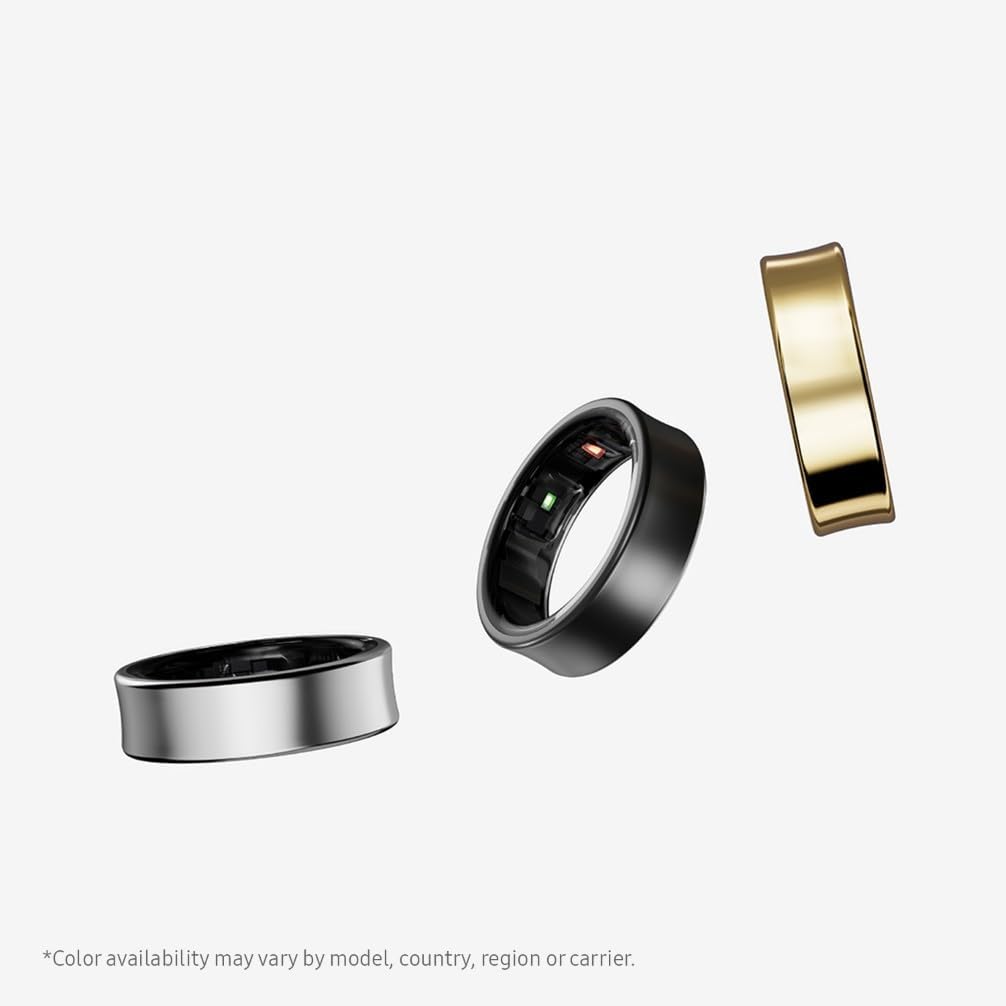
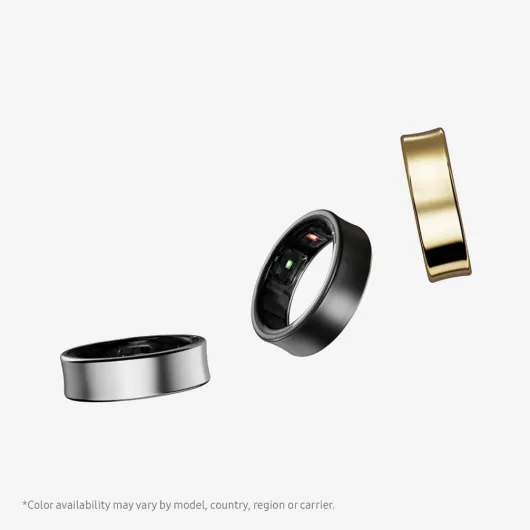
Visually, the Galaxy Ring looks pretty clean. The Titanium Silver version has a simple, concave outer shape that doesn’t scream “tech gadget”. On the hand, it just looks like a modern metal ring. No flashy lights, no weird bumps on the outside. If you work in an office or wear it with normal clothes, it blends in fine. That part, I liked. It’s also fairly light for a metal ring, so it doesn’t feel like a heavy chunk dragging your finger down.
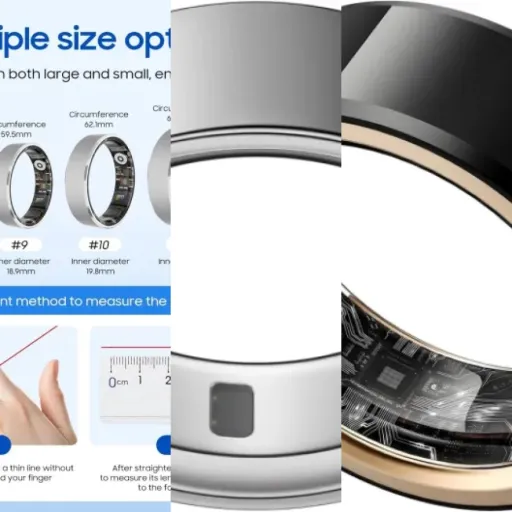
The problem is less about how it looks and more about how Samsung handled sizing. A lot of people, including one of the Amazon reviewers, got caught by the difference between the plastic sizing kit and the actual ring. The real ring is tighter, probably because of the inner sensors and the rigid metal build. I noticed the same sort of thing: the size that felt perfect with a plastic tester suddenly felt snug with the real ring, especially when my fingers swelled a bit in the evening or after a hot shower.
In daily life, that means you really need to be careful about your size. If you go too tight, you end up in that scary situation where you’re twisting and soaping your finger trying to get it off, and that’s not fun with a £££ electronic ring. If you go too loose, it can spin around and mess with sensor contact or even slip off during sports. Personally, I’d lean half a size up from the tightest comfortable size in the kit, just to avoid hospital-level panic trying to remove it.
One thing I did like is that, unlike some other rings, Samsung doesn’t lock you to one finger for readings. You can wear it on whatever finger fits best and still get data. That’s handy if your ring finger is already taken or if one finger swells more than others. Overall, design-wise it’s pretty solid, but the sizing experience is honestly a weak point and something you need to think through before buying.
Battery: okay life, but reliability question marks
With a 17 mAh battery, you shouldn’t expect miracles. In normal use – 24/7 wear, sleep tracking on, heart rate tracking, Bluetooth connected – you’re looking at a few days on a charge, not weeks. In my case, it was around 3–4 days before I felt I needed to top it up. That’s fine, but not exceptional compared to some other smart rings that can push closer to a week. If you’re used to charging a watch every day, this will feel like an improvement. If you were hoping to forget the charger for ages, not so much.
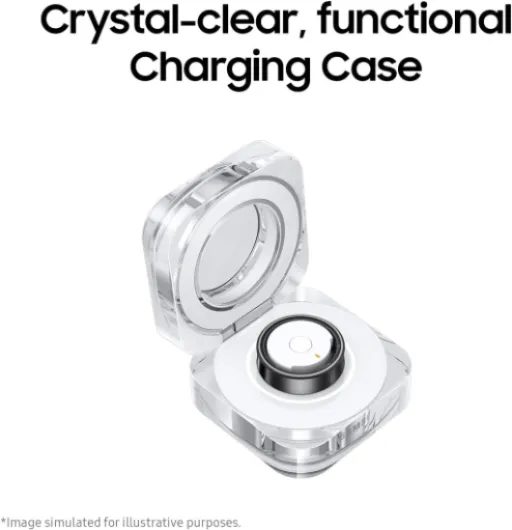
Charging itself is straightforward: pop it in the charger, wait a bit, done. It doesn’t take that long to go from low to full, which is nice if you just want to top it up while you shower or sit at your desk. I didn’t have any connection issues while the battery was low; it just behaves like a normal wearable and eventually reminds you it’s time to charge. Nothing special here, it’s fine.
The bigger issue is what one of the Amazon reviewers reported: battery swelling after less than three weeks. That’s not a small thing on a ring. I didn’t see anything like that on mine, but knowing it happened to someone else is enough to put a question mark on long-term reliability. At this price, you want to trust that the thing on your finger isn’t going to deform and squeeze you. Even if it’s a rare fault, it’s hard to ignore.
Overall, battery life is acceptable for what it does, but not a strong selling point. You still need to think about charging it regularly, and the potential for battery issues makes me less relaxed about wearing it 24/7 than I would be with a simple metal ring or even most watches. If Samsung tightens up quality control, I’d be more comfortable recommending it. Right now, I’d say the battery is “fine on paper, slightly worrying in the real world”.
Comfort: light and discreet, unless you mess up the size
When the size is right, the Galaxy Ring is very comfortable. It’s light, smooth on the inside, and doesn’t dig into the skin. Compared to a watch, it’s obviously less noticeable. I could sleep with it on without thinking about it much, which is the whole point for sleep tracking. During the day, typing on a keyboard or using a mouse was fine; it didn’t catch on anything or feel clunky like some chunky fashion rings do.
Where comfort goes out the window is if you pick a size that’s even slightly too small. Fingers change size during the day – heat, salt, exercise, all that. With the plastic sizer, you might think “snug but fine”, and then with the metal ring, after a run or a hot shower, it becomes “why is my finger turning red?”. That’s basically what one of the Amazon reviewers described, and I get it. With electronics in there, the inner diameter feels less forgiving than a simple metal band.
Swapping fingers helped me a bit. On hotter days, I moved it to a finger that tends to stay slimmer. The sensors still worked reasonably, so that flexibility is a plus. But if you’re the kind of person whose fingers swell a lot, you might end up taking it off quite often, which partly defeats the point of continuous tracking. I also noticed that if it’s too loose, it can rotate, and then the sensor alignment feels a bit random, which made me wonder about data accuracy.
Overall, when everything lines up – right size, normal temperature, no swelling – it’s very easy to live with and way less intrusive than a watch. But the margin for error is smaller than I’d like. If you’re buying, take the sizing process seriously, maybe wear the test ring for a few days in different conditions before choosing, and consider going a touch looser rather than tighter. Comfort is good, but only if you nail that part.
Materials & build: tough titanium, but I’m not fully relaxed about the battery
The ring is made from titanium, which is a nice choice for something you’re wearing 24/7. It’s strong, light, and doesn’t scratch as easily as softer metals. In normal use (typing, carrying bags, light workouts), it held up fine. I didn’t baby it and didn’t notice any major marks. The concave design also helps a bit, because the raised edges tend to take hits before the middle part. It feels like something you can keep on most of the day without worrying too much.
Inside, you’ve got the usual health sensors and a small lithium-ion battery (17 mAh). That’s where things get a bit concerning. I personally didn’t have a battery swelling issue, but seeing a verified review saying the battery swelled in under three weeks is not the kind of thing you ignore on a device that tight around your finger. A swollen watch battery is annoying; a swollen ring battery can be a real problem if it tightens on your finger. For a premium-priced gadget, that kind of failure is pretty bad, even if it’s just a few units.
From a build point of view, the ring feels solid and the finish is what you’d expect from Samsung: clean, no sharp edges, no rough seams inside. The inner surface is smooth enough that it doesn’t irritate the skin, even after wearing it overnight. It’s also light enough that you don’t constantly feel it banging on things. I washed my hands, did dishes, and showered with it a few times, and nothing unusual happened, so water resistance seems fine in normal use.
Still, between the tight fit and the potential battery issues, I’m not 100% relaxed wearing it all the time. If you have any history of swelling fingers or circulation problems, I’d be cautious. The materials themselves are good, but a ring is less forgiving than a watch when something goes wrong inside it. For this price range, I expected a bit more confidence on the reliability front.
Performance: decent health tracking, not a full watch replacement
Let’s talk about what it actually tracks and how well it does it. In my use, heart rate readings were in the same ballpark as my Galaxy Watch and a chest strap for steady activities like walking, sitting, or working. One of the Amazon reviewers with tattooed arms said they got accurate readings compared to their watch, and I’d agree that for basic heart rate and resting heart rate, it’s pretty solid. For intense workouts with lots of movement, it’s not as reliable as a good sports watch, but that’s not really its main job.
Sleep tracking is where the ring makes more sense. Having something small on your finger instead of a watch on your wrist is just nicer at night. It picked up bedtimes and wake times reasonably well, and the sleep stages looked similar to what my watch usually gives me. The added “Sleep Coaching” inside Samsung Health is basically tips and trends over time. It’s useful if you actually look at it and try to change habits; otherwise it just becomes more graphs you ignore after a week.
The Energy Score is a simple summary that mixes your sleep, activity and heart data into one number. It’s handy as a quick glance, but I wouldn’t base life decisions on it. Some days it said I was low on energy when I felt fine, and other days it gave me a decent score after a short but deep sleep. It’s okay as a rough guide but not magic. Same for the AI stuff: it’s more like a slightly smarter summary than some genius insight nobody else has.
As a companion to a Galaxy Watch, it works best. One user mentioned using it while the watch charges and to pick up extra steps when they forget their phone on the couch. That’s exactly the kind of scenario where it shines: filling the gaps rather than being the main device. If you expect it to fully replace a watch for tracking runs, handling notifications, and doing everything from your wrist, you’re going to be disappointed. As a quiet background health tracker, it gets the job done, just not much more.
What the Galaxy Ring actually does (beyond the marketing buzzwords)
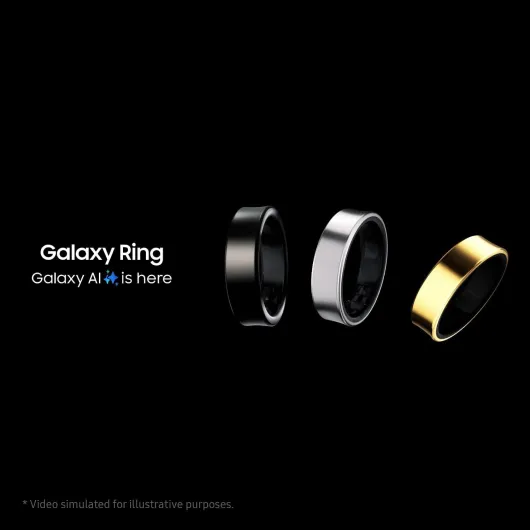
On the spec sheet, the Galaxy Ring is a small health tracker with no screen, no GPS, and a tiny 17 mAh battery. It connects over Bluetooth to your phone and pushes all its data into Samsung Health. The big selling points are: AI-powered health insights, Energy Score, sleep tracking with coaching, heart rate and stress tracking, and cycle tracking with skin temperature. So it’s more like an Oura-style ring than a mini smartwatch.
Day to day, what this means is: you wear it, forget about it most of the time, then open Samsung Health to see your stats. You don’t get notifications on the ring, no screen to glance at, and no GPS tracking for runs. It does count steps, tracks heart rate, gives you sleep stages, and feeds all that into a combined score (Energy Score) that tells you roughly how ready you are for the day. If you already use a Galaxy Watch, a lot of this will feel very familiar, just moved from your wrist to your finger.
The product page and box push the “AI” angle pretty hard, but in practice it’s basically slightly smarter summaries of your sleep/activity/heart rate. It’s not some magic doctor in a ring; it’s more like, “You slept X hours, your heart rate did Y, so you might feel a bit tired, maybe take it easy.” Useful, but not mind-blowing. If you’re expecting something far ahead of standard trackers, you’ll probably think it’s just decent, not more.
Where it fits best is as a low-profile tracker if you don’t like watches or can’t wear them (tattoos, work rules, or just hate the feeling). It also works as a backup to a Galaxy Watch, for example tracking sleep while the watch charges. If you’re hoping to ditch your watch entirely and still get advanced sports metrics and GPS, this is not that product.
Pros
- Comfortable and discreet when correctly sized, easier to sleep with than a watch
- Solid integration with Samsung Health, no subscription fees
- Good basic heart rate and sleep tracking, can be worn on different fingers
Cons
- Sizing kit vs real ring mismatch can make the ring uncomfortably tight
- Price is high for what is basically a background health tracker
- Battery life is only okay and reports of swelling raise reliability concerns
Conclusion
Editor's rating
The Samsung Galaxy Ring is a cool idea that only half-delivers in real life. As a low-profile health tracker, it works: it tracks sleep, heart rate, stress, and activity reasonably well, and the data in Samsung Health is clear enough. The Energy Score and AI bits are fine as quick summaries, but they’re not revolutionary. Comfort and design are good if you get the sizing right, and the titanium build feels solid on the hand.
On the downside, the sizing process is touchy, and the real ring runs smaller than the plastic kit for some people, which can turn into a nasty experience if it gets stuck. The reported case of battery swelling after a few weeks is also hard to ignore on a tight metal ring. Add a high price and the fact that it doesn’t really replace a full smartwatch, and you end up with a niche product. It makes the most sense for Samsung users who can’t or don’t want to wear a watch, or as a backup for sleep tracking while the watch charges.
If you’re already happy with a Galaxy Watch or another solid wearable, I’d skip this at full price. If you really want a ring tracker, are okay with some early-product quirks, and are careful with sizing, it can get the job done – just don’t expect miracles. There’s potential here, but it feels more like version 1.0 than a fully polished solution.