Summary
Editor's rating
Value: pays off mainly if you’re deep in the Samsung ecosystem
Design: discreet, solid, but not for every lifestyle
Battery life: close to the promise, but not 7 days for everyone
Comfort: great for sleep, but sizing is tricky
Materials and build: titanium is nice, but not indestructible
Durability: okay for normal life, questionable for tougher use
Tracking performance: decent accuracy, AI is more of a coach than a miracle
What the Galaxy Ring actually does (and doesn’t do)
Pros
- Very comfortable to wear, especially for sleep compared to a smartwatch
- Good integration with Samsung Health and clear AI-based summaries/coaching
- Solid battery life (around 4–6 days in real use) with a handy wireless charging case
Cons
- No GPS, no screen and no notifications – limited features for the price
- Potential durability concerns if the ring shell separates and lets in moisture
- Not suitable for iPhone users and less appealing outside the Samsung ecosystem

Specifications
View full product page →| Brand | Samsung |
A smart ring instead of a watch: does it really make sense?
I’ve been using smartwatches for years, but mainly for steps and notifications. For sleep, I always ended up taking them off because the wristband bothered me and the screen lighting up at night was annoying for my partner. That’s why the Samsung Galaxy Ring caught my eye: same health data (more or less), but in ring form, lighter and supposedly easier to forget you’re wearing it. I picked up the Titanium Black in size 10 and used it daily for a bit.
Right away, you should know this thing is really focused on health and sleep, not on being a mini-smartphone like a watch. No GPS, no screen, no notifications on the ring itself. It’s basically a sensor brick around your finger that feeds Samsung Health with data and then Galaxy AI spits out summaries and tips. If you’re expecting a tiny Galaxy Watch on your hand, you’ll be disappointed. If you just want tracking without a screen, you’re closer to the target.
In practice, I mostly used it for three things: sleep tracking, heart rate monitoring and general activity/energy score during the day. I kept my phone nearby and sometimes my watch, and compared numbers. Overall, the Galaxy Ring stayed in the same ballpark as my Galaxy Watch in terms of heart rate and sleep duration. Some details differ, but not in a shocking way. The big difference is comfort and the fact you forget it’s there, which is the whole point.
It’s not perfect though. For the price, you feel a bit limited: no GPS, tiny internal memory, and you’re locked to Android 11+ and ideally a Samsung phone if you want the full experience. Plus I’ve seen a few reports (and one review in the data) of build issues with the ring separating and letting moisture in, which is not reassuring given the price. So, it’s a cool idea that mostly works, but there are trade-offs you need to accept before buying.
Value: pays off mainly if you’re deep in the Samsung ecosystem
In terms of value, the Galaxy Ring sits in a weird spot. It’s not cheap, and yet on paper it offers less than many fitness watches: no GPS, no screen, very little storage, no direct notifications. What you’re really paying for is the form factor (ring instead of watch) and the tight link with Samsung Health and Galaxy AI. If you already use a Galaxy phone and maybe a Galaxy Watch, the ring becomes a kind of comfort upgrade for sleep and 24/7 tracking. In that case, it has some sense, especially if you hate sleeping with a watch.
Compared to other trackers, you can easily find cheaper wristbands that do steps, heart rate and sleep tracking pretty well. They’re not as discreet and not as comfortable at night, but they cost much less. On the flip side, there are also other smart rings on the market. Some are priced similarly or higher, and Samsung is clearly aiming at that niche. If you’re comparing smart rings only, the Galaxy Ring is competitive, especially if you value the Samsung Health integration. But if you’re open to watches or bands, it’s harder to justify the price strictly on features.
The other point is longevity. When I see user reports of rings failing after a couple of months due to shell separation and being called non-repairable, I immediately question long-term value. A ring at this price should last several years of normal use. If it dies after a year or two and can’t be repaired, the cost per year becomes pretty high. Also, software update support is listed as “unknown”, which doesn’t help in terms of future-proofing, even if the core functions don’t really need constant new features.
So, in my opinion, the value is decent but not outstanding and very dependent on your situation. If you’re on Android (ideally Samsung), care a lot about comfortable 24/7 tracking, and you’re okay paying more for the ring form factor, you’ll probably be satisfied. If you just want good health tracking at a fair price and don’t mind a wristband, there are cheaper and more versatile options. For me, it’s a nice gadget that I like, but I wouldn’t say it’s the best bang for the buck in the fitness tracker world.
Design: discreet, solid, but not for every lifestyle
Design-wise, the Galaxy Ring looks like a fairly thick, slightly chunky ring with a clean, modern look. The Titanium Black version I tried is quite neutral: matte to semi-gloss finish, no shiny bling. On a hand, it doesn’t scream "gadget" like some older smart rings. From a distance, it just looks like a simple black ring. Up close, you can see the sensors on the inside and the slight bulge where the electronics sit, but it’s not ugly. It’s more “techy minimal” than jewelry.
The ring has a rounded outer shape and a slightly curved inner surface to sit better on the finger. It’s not razor-thin though. If you’re used to very slim rings, you’ll feel this one is thicker and a bit higher. For office work, driving, daily life, it’s fine. Where it becomes less ideal is for people who work a lot with their hands. One of the Amazon reviews says the same: it’s comfortable, but not really recommended for manual labor like construction. I agree. The thickness means it can catch on tools, edges, or get scratched easily if you’re constantly handling rough surfaces.
On the style side, I’d say it’s discreet but clearly not a fashion piece. It’s more functional than pretty. If you usually wear several rings, you’ll have to think about where to put this one because it takes more space than a normal band. For me, wearing it on the index or middle finger worked best; on the ring finger it felt a bit too bulky next to my regular ring. Also worth noting: there’s no visible logo on the outside, which I like. It just blends in.
One concern is build integrity. There’s a user review mentioning the ring shell splitting after about 10 weeks, letting moisture in and making it basically impossible to repair. I personally didn’t have that issue in my test window, but you feel that if that outer shell opens even a little, it’s game over for water resistance. So while the design looks solid and the titanium gives a sturdy impression, there’s clearly a potential weak point at the seam between the two halves. For a device you’re supposed to wear 24/7, that’s something to keep in mind, especially if you’re rough with your hands.
Battery life: close to the promise, but not 7 days for everyone
Samsung advertises up to 7 days of battery life on the Galaxy Ring, and that’s roughly in the right zone, but with conditions. With continuous heart rate on, sleep tracking every night, and regular syncing to the phone, I was more in the 4–6 day range depending on how often I checked the data and how active I was. On a lighter use week, with fewer syncs and no constant fiddling in the app, I got closer to 6 days. Hitting a full 7 days would probably require very light usage and some settings dialed back.
The charging case is actually pretty handy. You drop the ring in, it latches magnetically, and the little LED shows you the status. The case itself can be charged wirelessly, which is nice if you already have a pad for your phone or earbuds. It feels very similar to using wireless earbud cases: you just top it up when you remember and don’t worry too much. Charging the ring from low to full is quick enough that you can throw it in the case while showering or during a short break and get a good chunk of battery back.
One thing to keep in mind: because there’s no screen and no heavy features like GPS, the battery feels quite stable day to day. You don’t get those massive drops like on a watch after using GPS or bright screen time. It just slowly ticks down. I checked the percentage every evening and it was fairly predictable. That’s nice because you can plan around your sleep: you don’t suddenly find yourself with 5% left at bedtime.
Overall, I’d say the battery life is good enough to not be a daily concern, but the “7 days” is more of a best-case scenario than a guarantee. Realistically, plan on charging it every 4–5 days if you use all tracking features. For a small ring with constant sensors, I’m okay with that. It’s still way better than having to charge a watch every night. Just don’t buy it expecting a full week every time, unless you’re very conservative with settings.
Comfort: great for sleep, but sizing is tricky
Comfort is where the Galaxy Ring actually makes sense compared to a watch. On the finger, it’s much less intrusive than a smartwatch on the wrist, especially at night. I slept with it every night and, after the first two nights, I barely noticed it. It doesn’t light up like a screen, it doesn’t vibrate, and it doesn’t pinch your skin like some wristbands can. For sleep tracking, it’s honestly one of the most comfortable options I’ve tried. There’s even an Amazon review in Portuguese saying it’s perfect for sleep and doesn’t bother the partner, which matches my experience: no more big watch between you and the pillow.
During the day, it’s also fine most of the time. Typing on a keyboard, using a mouse, driving, carrying bags – no big issue. Where I did feel it more was during push-ups, weightlifting with certain grips, or when putting my hand in tight pockets. It’s thicker than a normal ring, so you feel that extra bulk. It didn’t hurt, but it reminded me it was there. Also, if you’re not used to wearing rings at all, there is a short adaptation period. One Amazon user even said they’re not used to rings but still found it comfortable, which I can see, but you do need a few days to get used to the feeling.
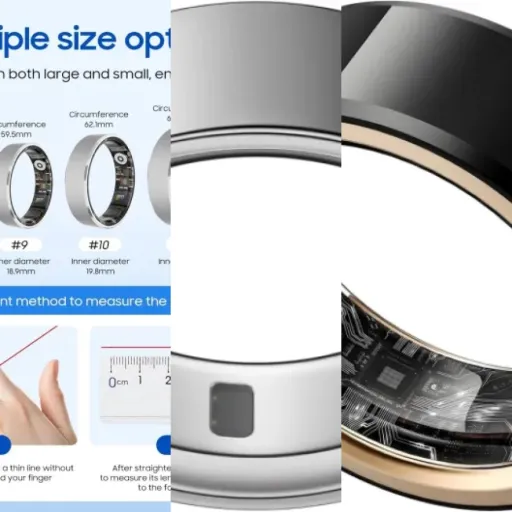
The biggest comfort factor is actually sizing. Samsung themselves say Galaxy Ring sizes don’t match regular ring sizes, and they push you to order a size kit first. Honestly, do it. I went with my usual ring size at first and it was slightly off: either too tight when my fingers swelled a bit, or too loose when my hands were cold. With a tracker, that’s annoying because it can affect sensor accuracy and comfort. The size kit helps you find the sweet spot where the ring is snug but not choking your finger.
One more detail: heat and swelling. On hot days or during workouts, fingers swell a bit. With the Galaxy Ring, I sometimes felt it getting tighter but not painfully so. If you’re someone whose fingers swell a lot, consider going half a size up (with the kit) or be ready to switch fingers depending on the time of day. Overall, I’d rate comfort as one of the strong points, especially for sleep. Just don’t skip the sizing step and don’t expect to forget it’s there 100% of the time if you’re very sensitive to rings.
Materials and build: titanium is nice, but not indestructible
The ring is made from titanium, which is a good choice for something that lives on your hand all day. It’s light, doesn’t rust, and usually handles sweat and daily bumps pretty well. In the hand, the Galaxy Ring feels light for its size; you don’t get that heavy steel feeling, which is important for sleep. After a few hours, I mostly forgot I had it on. The inside is smooth, and I didn’t feel any rough edges or hot spots, even during workouts when my hands were a bit sweaty.
That said, titanium doesn’t mean invincible. It still scratches. If you rub it against metal surfaces, gym equipment or tools, you’ll get marks sooner or later. With normal daily use (typing, cooking, driving), I only got a couple of tiny hairline marks, nothing major. But if you’re the type to bang your hands against stuff all day, it’ll show. One Amazon reviewer also mentioned they wouldn’t recommend it for people in construction or heavy manual work. I agree: it’s tough enough for office and casual sports, but I wouldn’t count on it surviving years of abuse without looking very used.
Inside the ring, you have the sensors and electronics. This is where the water resistance up to 10 ATM comes into play. On paper, that’s more than enough for swimming, showering, and sweating. In practice, you’ve got that complaint from a user where the two halves of the ring separated and let moisture in, and Samsung called it non-repairable damage. That’s a bit worrying for something that’s sold as water protected. It suggests the weak point isn’t the material itself, but the way the shell is assembled.
Overall, I’d say the materials are pretty solid for everyday use, but I wouldn’t treat the ring like a cheap metal band you don’t care about. If you’re careful, it should hold up fine. If you treat it like a beater ring and slam it into everything, don’t be surprised if it gets scratched or worse. For the price, I would have liked a bit more confidence in long-term durability, especially given the reports of separation. So good materials on paper, but the assembly quality is what will make or break it over time.
Durability: okay for normal life, questionable for tougher use
Durability is where I’m a bit more cautious with the Galaxy Ring. On paper, it looks reassuring: titanium body, water resistance up to 10 ATM, designed to be worn 24/7. During my own use, I didn’t have any big issues. Some very light scratches appeared after a few knocks, but nothing extreme and nothing that affected function. I wore it in the shower, during workouts, and while washing dishes, and it kept working fine. So for regular office + gym + home life, it seems okay.
The problem is that not everyone treats their hands gently. There’s a verified review mentioning that after about 10 weeks, the connection between the two shell halves opened up, moisture got inside, and Samsung support called it a non-repairable damage. That’s not great for a device that’s supposed to handle water and daily knocks. It suggests that the weak spot isn’t the titanium itself, but the assembly line where the ring is sealed. If that seal fails, the sensors are unprotected, and you’re basically done.
I wouldn’t say the ring is fragile, but I also wouldn’t call it tough enough for heavy manual work. If you’re in construction, mechanics, or anything where your hands constantly hit hard surfaces, I’d be careful. Either take it off for work (which defeats part of the 24/7 idea) or accept that it might get beaten up quickly. Even one of the positive Amazon reviews says it’s not really recommended for people who usually work with their hands, despite being stable and good quality otherwise. That matches my feeling.
So, in practice: for everyday urban use, workouts, and sleep, durability is acceptable but not bombproof. It’s more like a nice smartwatch in ring form than a rugged tool. If you’re gentle with your tech, you’ll probably be fine. If you tend to destroy watches, rings and phones, I’d think twice, especially considering the price and the fact that a shell failure is basically fatal for the device.
Tracking performance: decent accuracy, AI is more of a coach than a miracle
On the performance side, the Galaxy Ring does what it promises: it tracks sleep, heart rate and overall activity fairly consistently. I compared it with a Galaxy Watch and a basic fitness band I already had. For heart rate, the numbers were usually within a few beats per minute of my watch, both at rest and during light workouts. It’s not a medical device, but for everyday monitoring and spotting obvious issues (like very high or low heart rate), it’s good enough.
For sleep tracking, it logs sleep and wake times pretty accurately. It caught most of my night awakenings, and the total sleep duration was close to what I’d estimate myself. The breakdown into light, deep and REM sleep is always a bit of a guess on these consumer devices, but the patterns were consistent from night to night. The added layer here is “sleep coaching”: after a few nights, you start getting tips and a “sleep score” based on duration, regularity, interruptions, etc. The AI angle is mostly in how it summarizes and suggests small changes like adjusting bedtime or cutting late caffeine. It’s helpful, but don’t expect some magic revelation – it’s more like a slightly smarter sleep report.
In terms of activity tracking, it counts steps and general movement, but it’s not as complete as a watch. No GPS means no precise tracking of runs or bike rides without your phone. You can still get a decent idea of daily movement and calories, but if you’re into detailed sports tracking, this is too basic. The “energy score” that combines sleep, heart rate and activity into a single number is actually pretty handy. On days after a short night and a lot of stress, the score was lower and the app suggested taking it easy. It’s not perfect, but it does make you stop and think about how you feel.
Overall, performance is solid but not mind-blowing. It’s about on par with a good fitness band, just in a different form factor. The Galaxy AI branding is mostly about nicer summaries and coaching, not some revolutionary new measurement. If you like data and small nudges to improve habits, you’ll appreciate it. If you already find health apps a bit naggy, this won’t change your mind. For the price, I would have liked a bit more in terms of sports features, but as a daily health monitor, it does the job.
What the Galaxy Ring actually does (and doesn’t do)
The Galaxy Ring is basically a compact health tracker in ring form. No screen, no GPS, no music, nothing fancy. It connects to your phone via Bluetooth and works with the Samsung Health app. The key functions are: sleep tracking with AI-based coaching, continuous heart rate monitoring, activity tracking (steps, movement, etc.), and an "energy" score that mixes sleep, activity and heart rate to tell you how ready you are for the day. Galaxy AI then wraps this up into daily summaries and suggestions like “go to bed earlier” or “you were less active today.”
You get up to 7 days of battery life according to Samsung. In real life, it depends how often you sync and how many measurements you enable (continuous heart rate, skin temp, etc.). There’s no GPS and almost no local storage (8 MB), so it’s clearly not made to track runs on its own. The ring is water resistant up to 10 ATM, so showers, sweat and swimming are supposed to be fine. The charging case can be wirelessly charged and has a light indicator to show charging status, which is handy when you just drop it on a charging pad and forget it.
What I noticed: this is not a replacement for a smartwatch. It’s more like a health extension that stays on you 24/7. If you already own a Galaxy Watch, the ring mostly adds comfort for sleep and maybe a slightly different perspective on recovery. But it doesn’t add new smart features. If you don’t use a watch, the ring becomes your main tracker, but only if you’re okay with everything being viewed through the phone app. No quick glances at the wrist, no vibrations for messages, nothing like that.
On compatibility, it’s Android only (Android 11+), and realistically it’s meant for the Samsung ecosystem. It technically works with other Android phones, but you lose some integration, and you still need to be okay with Samsung Health as your main health app. No iPhone support at all, so if you’re on iOS, this is a straight “no”. Overall, what you pay for here is the form factor (ring instead of watch) and the integration with Samsung Health + Galaxy AI. If that combo doesn’t interest you, the feature list alone is pretty basic for the price.
Pros
- Very comfortable to wear, especially for sleep compared to a smartwatch
- Good integration with Samsung Health and clear AI-based summaries/coaching
- Solid battery life (around 4–6 days in real use) with a handy wireless charging case
Cons
- No GPS, no screen and no notifications – limited features for the price
- Potential durability concerns if the ring shell separates and lets in moisture
- Not suitable for iPhone users and less appealing outside the Samsung ecosystem
Conclusion
Editor's rating
Overall, the Samsung Galaxy Ring is a solid health tracker in a very comfortable form factor, especially for sleep. If you hate wearing a watch at night or all day, this ring makes sense: it’s light, fairly discreet, and does a good job with sleep and heart rate tracking. The integration with Samsung Health and the Galaxy AI summaries is handy, giving you clear overviews and simple tips without having to dig through tons of graphs. Battery life is good enough that you don’t have to think about it every day, and the charging case is convenient.
On the flip side, you have to accept its limits. No GPS, no screen, and no notifications on the ring mean it’s not a smartwatch replacement. It’s more of a sensor companion for your phone (and maybe your watch) than a standalone device. Durability is acceptable for everyday life, but if you’re rough on your hands or do heavy manual work, I’d be cautious – user reports of the shell opening and letting in moisture are not reassuring at this price. And if you’re not already using a Samsung phone and Samsung Health, a good part of the appeal drops off.
So, who is it for? People on Android, ideally with a Samsung phone, who care a lot about comfortable 24/7 health and sleep tracking and don’t need watch-like features on their finger. Who should skip it? iPhone users, anyone wanting detailed sports tracking with GPS, and those who mainly care about the best feature-per-euro ratio. It’s a nice product that gets the job done and feels good to wear, but it’s not the best deal for everyone.