Summary
Editor's rating
Value: pricey, but makes sense if you actually use the extra features
Design: small, discreet, but not exactly premium-feeling
Battery: finally no coin cells, but we’ll see how it ages
Comfort: fine once adjusted, but not completely forgettable
Durability: feels solid, but the strap could be better for the price
Performance: much better than wrist HR, with plenty of nerdy extras
What the HRM-600 actually does (beyond just heart rate)
Pros
- Very accurate and responsive heart rate compared to wrist sensors, especially for intervals
- Rechargeable battery with up to ~2 months life, no more coin cell swaps
- Extra data (HRV, running dynamics, treadmill pace/distance) and standalone recording for no-watch workouts
Cons
- Strap feels a bit average for the price and doesn’t keep its shape that well
- Many advanced metrics and features are overkill if you’re a casual user
- Distance/speed in standalone mode are estimates only, no built-in GPS

Specifications
View full product page →| Brand | Garmin |
A chest strap for data nerds who are tired of dodgy wrist HR
I’ve been using the Garmin HRM-600 for a few weeks now, mostly for interval runs, some indoor rowing, and a couple of football sessions where I didn’t want a watch on my wrist. I bought it because I was getting tired of my watch optical sensor lagging during intervals and completely messing up hard efforts. Also, I’m done with coin cell batteries that die randomly in the middle of a workout. The promise here is simple: rechargeable battery, better data, and the option to train without a watch.
In practice, the HRM-600 feels like a mix between a classic chest strap and a small activity tracker that just happens to sit on your chest. It syncs to the watch like any other ANT+/Bluetooth strap, but it also records workouts on its own and pushes everything to Garmin Connect later. That’s the theory at least. I wanted to see if it actually works in everyday use or if it’s just another feature you never touch after week one.
So far, I’ve used it paired to a Garmin watch, to a Concept2 PM5, and once completely standalone with just my phone in the bag. I’ve washed the strap twice in the machine, charged it once, and worn it in sweaty summer conditions. I’m not gentle with this stuff, so if something is going to feel cheap or annoying, it usually shows up fast. With this strap, a few things stood out: comfort is decent, data is solid, but some details are a bit annoying for the price.
If you’re wondering whether it’s worth paying more than the basic Garmin HRM or cheaper brands, I’ll walk through what actually changes day to day: comfort, data quality, battery, and how handy the no-watch recording really is. It’s not perfect, and there’s definitely cheaper gear that gets the job done, but it does bring some useful extras if you care about metrics and hate changing tiny batteries.
Value: pricey, but makes sense if you actually use the extra features
In terms of value, the HRM-600 sits on the expensive side of heart rate straps. You can easily find cheaper chest straps that give you solid heart rate data and basic connectivity for a lot less. So the question is: are you really going to use what you’re paying extra for here—rechargeable battery, standalone recording, HRV, running dynamics, treadmill pace/distance, etc.?
If you’re already deep in the Garmin ecosystem, train regularly, and care about accurate intervals and form metrics, the price starts to make more sense. One Amazon reviewer mentioned they already had a Pro Plus and still felt this one was worth it for better connectivity and extra data. I get that. If you look at your Garmin Connect stats after every run and tweak your training based on them, this strap fits that mindset nicely.
On the other hand, if you just want a chest strap because your watch HR is a bit off, and you don’t care about stride length or ground contact time, you can save money with a simpler Garmin strap or even a decent third-party one. You’ll get 90% of the benefit—better HR accuracy—without paying for all the side features. Also, the slightly underwhelming strap material makes the premium price feel a bit less justified.
So for value, I’d call it good but not mind-blowing. It’s not a rip-off, because it genuinely brings extra functionality and convenience, especially with the rechargeable battery and standalone recording. But it’s also not the smartest buy if you’re a casual runner or just starting out. This is more for people who train several times a week, like data, and actually open Garmin Connect regularly. If that’s you, the money isn’t wasted. If not, you can easily go cheaper and still be happy.
Design: small, discreet, but not exactly premium-feeling
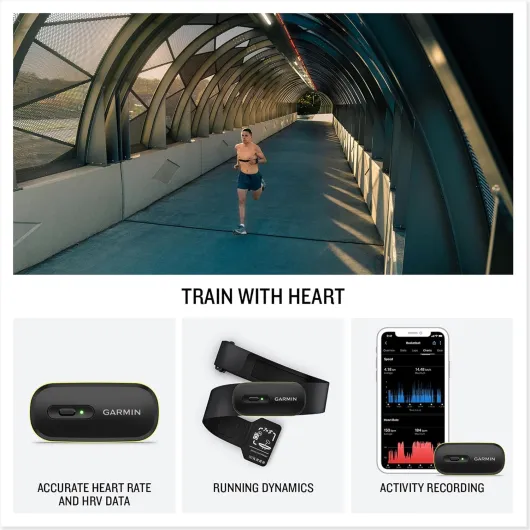
Design-wise, the HRM-600 is pretty straightforward. You get a small black sensor module clipped into a soft nylon strap. Nothing flashy, no weird colors, just a low-key black band that disappears under a shirt. The sensor itself is compact and doesn’t stick out much, so under a tight running top it doesn’t create a weird bump. Compared to older Garmin HRM straps I’ve used, it’s roughly the same size, maybe a bit sleeker.
The strap is available in two sizes: XS-S (60–85 cm chest) and M-XL (80–119 cm chest). I’m in the lower end of M-XL and had enough room to adjust it. The adjustment slider is basic but works. One thing I noticed, and that lines up with one of the Amazon reviews: the strap doesn’t really keep its shape once you stretch and wear it a few times. It’s not falling apart or anything, but it doesn’t have that firm, structured feel some other premium straps have (like Myzone). It feels a bit more floppy when you pick it up.
The sensor charges with a standard Garmin charging cable (same as many of their watches), which is good if you’re already in the Garmin ecosystem. No silly proprietary clip that’s different from everything else you own. The charging port is exposed but recessed enough that sweat and water haven’t caused issues so far. I’ve rinsed it and machine washed the strap (sensor removed) with no problem.
In terms of looks, it’s honestly just boring but functional, which I like. You’re not buying this to show off. My only minor complaint is the strap feeling a bit cheap for the price. At this price point, I’d expect something that feels a bit more structured and premium in the hand. On the body, though, it does the job and doesn’t stand out, which is ultimately what matters.
Battery: finally no coin cells, but we’ll see how it ages
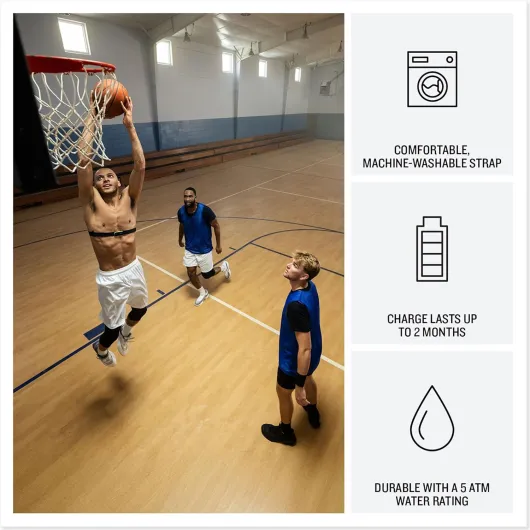
The big change with the HRM-600 compared to older straps is the rechargeable battery. No more CR2032 coin cells, no more tiny screws and rubber gaskets that eventually leak. Garmin claims up to 2 months of battery life on a full charge, depending on usage. In my case, after a few weeks of 4–5 workouts per week (mostly 45–60 minutes each), I’ve only had to charge it once, and it still wasn’t completely empty. So the 2-month claim doesn’t feel crazy.
Charging is simple: same Garmin USB cable as many of their watches. I just plug it in next to where I charge my watch. It goes from almost empty to full in about an hour or so. For me, this is way less annoying than realizing your coin cell is dead right before a workout and having no spare. One Amazon review mentioned their old Polar dying after one session because of battery issues—this solves that annoyance pretty well.
Of course, the long-term question is battery degradation. After a year or two, will that 2-month life drop to 2 weeks? Hard to say yet. But for now, it’s nice to just treat it like any other rechargeable device. If you already own a Garmin watch, the shared cable is a small but practical detail. No extra cord to keep track of.
Overall, I’d say the battery situation is one of the real advantages of this strap. You charge it rarely, you don’t think about it much, and you avoid the whole coin-cell drama. If you’re the type who forgets to charge anything, this is still easier than swapping batteries. Just accept that someday the internal battery might wear out, and then the strap is basically done. For the time being, though, it’s a clear quality-of-life upgrade over the old style.
Comfort: fine once adjusted, but not completely forgettable
Comfort is always the make-or-break part with chest straps. If it digs in or slips, you just stop using it. With the HRM-600, comfort is good but not perfect. The nylon strap is soft enough, and once it’s in the right spot (just under the chest muscles), I mostly forget it’s there. On easy runs and daily wear tests around the house, no real issues: no rubbing, no red marks after an hour.
Where it gets more noticeable is during high-intensity stuff or sports with a lot of upper-body movement. On a hard interval session, I felt the strap shift slightly at the back once when I was really drenched in sweat. It didn’t slide down dramatically, but I had to readjust it after the workout. During an indoor rowing session, it stayed in place but I was aware of it more than with some older, slightly wider straps. The sensor module itself doesn’t pinch, but like one Amazon review mentioned, if you tighten it too much it can feel like it’s digging in a bit. Loosen it half a notch and it’s fine, but then you risk a tiny bit more movement.
The XS-S size is a good idea for smaller chests; a lot of brands ignore that. For me on the M-XL, the adjustment range is generous, but the strap material doesn’t feel as grippy as it could. It relies more on tension than on any anti-slip texture. For boxing or team sports with lots of twisting, I’d say it’s okay, but not the most locked-in strap I’ve tried.
In day-to-day comfort terms: it’s perfectly usable for long runs and gym sessions, and I haven’t had any chafing even during sweaty summer runs. Just don’t expect it to completely disappear like some of the softer, slightly more padded straps out there. It’s more in the “you feel it but it’s not annoying enough to take off” category. For me, that’s acceptable, but for very sensitive skin or people who absolutely hate chest pressure, it might still be a bit much.
Durability: feels solid, but the strap could be better for the price
Durability is always a bit of a gamble with heart rate straps. Sweat, washing, and constant stretching usually kill them faster than the electronics. Based on a few weeks of use and what other users report, the sensor module itself feels sturdy. The plastic casing is tight, no creaks, and the charging port area still looks clean after sweat, rinsing, and handling. It definitely feels better built than some budget straps I’ve tried that start to look rough after a month.
The strap is where I’m a bit less impressed. Functionally it works, but like one Amazon review said, it doesn’t really keep its shape. After some use and a couple of machine washes (sensor removed), it looks slightly stretched and more floppy. It still holds on the body, and the elastic is fine, but if you compare it to some more structured straps like Myzone’s, it feels a bit less premium than the price suggests. I’d call it “good enough” but not tough-feeling.
Machine washability is a plus though. I tossed the strap into a laundry bag on a gentle cycle and let it air dry. No visible damage, stitching is intact, and the electrode areas still pick up signal quickly when slightly dampened before a workout. That’s more convenient than hand-washing every time, and it encourages you to actually clean it, which should help it last longer.
Given Garmin’s track record, I expect the electronics to hold up for a while, but like the 5-star reviewer said, these kinds of straps often struggle to survive more than a year of hard, sweaty use. If you train daily and really soak it, don’t be shocked if the strap needs replacing at some point, even if the sensor is still fine. So durability rating from me: sensor feels robust, strap is okay but not impressive for the price. It’s not fragile, but it doesn’t scream long-term tank either.
Performance: much better than wrist HR, with plenty of nerdy extras
On performance, this is where the HRM-600 actually earns its keep. Compared to my watch’s optical sensor, the heart rate response is clearly faster and more stable, especially during intervals. When I do 30/30s or hill sprints, the chest strap follows the spikes and drops almost in real time, while my wrist HR usually lags by 10–20 seconds and sometimes overshoots. For structured training and zones, this alone makes a big difference.
HRV data and running dynamics are more niche, but they work as advertised. With a compatible Garmin watch, you get stride length, vertical oscillation, ground contact time balance, and step speed loss. I don’t stare at these during the run, but in Garmin Connect after the session you can see clearly where your form breaks down late in a long run or during hard efforts. If you don’t care about this level of detail, it’s just extra graphs. If you like tweaking your technique or working with a coach, it’s actually pretty useful.
For indoor and non-watch activities, performance is decent too. On the treadmill, pace and distance from the HRM-600 were closer to the machine’s numbers than my watch’s built-in estimation. On a Concept2 rower with PM5, it paired easily and tracked HR without dropouts for a full 40-minute session. That’s consistent with what one of the Amazon reviews said: connectivity is strong, and it doesn’t randomly disconnect like some cheaper straps.
Where it’s not perfect is the standalone workout mode. It does record HR, calories, speed, distance, and steps, but don’t expect GPS-level accuracy on distance or speed since there’s no GPS. It’s more like a decent estimate based on movement. For team sports or gym circuits, that’s fine—you mainly care about heart rate and overall effort anyway. So, performance-wise: very solid HR accuracy, good connectivity, and extra metrics that are genuinely useful if you’re into data. If you just want basic heart rate, this might be overkill, but it definitely does its job well.
What the HRM-600 actually does (beyond just heart rate)
On paper, the HRM-600 is more than a simple heart rate strap. It tracks heart rate, HRV, running dynamics, steps, calories, speed, distance, and can store workouts by itself without a watch. Then it syncs everything later to Garmin Connect through your compatible watch or smartphone. That’s the sales pitch. In reality, you’ll probably use 2–3 of those things regularly and forget about the rest unless you’re really into data analysis.
Connected to a Garmin watch, it behaves like any standard Garmin chest strap: heart rate shows up instantly, zones are more responsive than wrist-based HR, and you get extra running metrics like stride length, vertical oscillation, and ground contact time balance if your watch supports them. During indoor track and treadmill runs, it can send pace and distance directly, which is handy if your watch’s indoor GPS estimation is trash. I tested it on the treadmill: distance and pace were much closer to what the treadmill console showed compared to my watch alone.
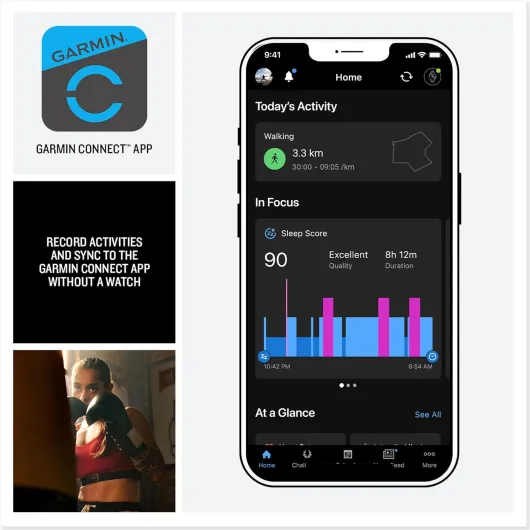
The interesting part is when you don’t wear a watch. For sports like football, boxing, or team training, you can just wear the strap, start an activity from your phone (or rely on it auto-detecting depending on setup), do your session, and sync later. In my test football session, it recorded heart rate, duration, calories, and distance. Distance is clearly based on movement estimation, not GPS, so don’t expect perfect maps, but for effort tracking it’s good enough.
Overall, function-wise, it’s a heart rate strap plus activity tracker hybrid. If you only want heart rate for steady runs, cheaper straps will do the same. If you like digging into HRV, running dynamics and training load, or you often train without a watch, then these extras start to make more sense. Just be honest with yourself: are you really going to look at ground contact time balance every week, or is it just something that sounds cool on the product page?
Pros
- Very accurate and responsive heart rate compared to wrist sensors, especially for intervals
- Rechargeable battery with up to ~2 months life, no more coin cell swaps
- Extra data (HRV, running dynamics, treadmill pace/distance) and standalone recording for no-watch workouts
Cons
- Strap feels a bit average for the price and doesn’t keep its shape that well
- Many advanced metrics and features are overkill if you’re a casual user
- Distance/speed in standalone mode are estimates only, no built-in GPS
Conclusion
Editor's rating
The Garmin HRM-600 is a solid chest strap for people who train seriously and care about their data. Heart rate accuracy is clearly better than wrist-based sensors, especially for intervals and high-intensity work. Add in the running dynamics, HRV, treadmill pace/distance, and the ability to record sessions without a watch, and you end up with a strap that does more than just feed numbers to your watch. The rechargeable battery is a real quality-of-life perk—no more coin cells dying right before a workout.
It’s not perfect though. The strap itself feels a bit average for the price and doesn’t keep its shape as nicely as some competitors. Comfort is good but not totally forgettable, and standalone distance/speed is more of an estimate than something you’d trust like GPS. Also, if you’re not going to use the extra metrics or standalone mode, you’re basically paying extra for features that will sit unused in the background.
In short: if you’re already in the Garmin ecosystem, train several times a week, and like digging into Garmin Connect, the HRM-600 is a pretty solid upgrade that gets the job done and makes training more precise. If you’re a casual runner who just wants better HR than your watch gives, a cheaper strap will be enough and probably feel like better value. It’s a good product, just aimed more at data-hungry users than at beginners.