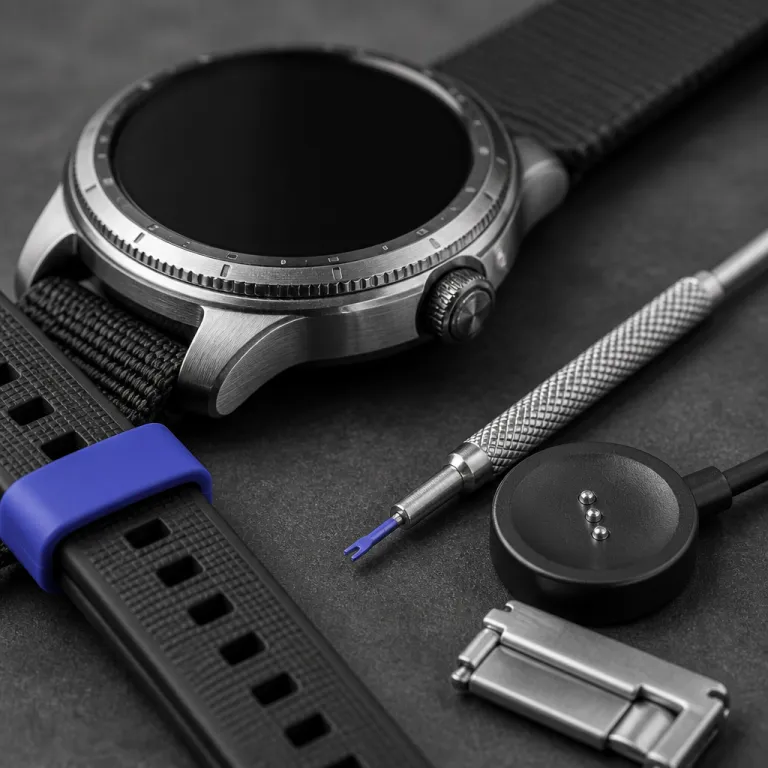
Bigger battery and tougher hardware for real multi day wear
The Samsung Galaxy Watch Ultra 2 arrives at Samsung Unpacked in London with a clear message for any Android user who trains hard. This new Galaxy Watch pushes directly into Apple Watch Ultra territory by pairing a larger 784 mAh battery with a rugged titanium shell that targets runners, hikers and everyday athletes who hated charging every night. According to Samsung’s published specifications and the FCC filing for model SM‑L715, that capacity is a substantial jump over the first Galaxy Watch Ultra, and if you already own the original model, the hardware changes are big enough that you should at least pause before you auto-renew your usual upgrade cycle.
On paper, the roughly 33 percent larger battery promises several extra days of battery life, but real-world use will depend heavily on how much dual-frequency GPS tracking, always-on display and 5G or LTE data you actually use. Samsung’s own estimates suggest one and a half to two days with everything lit up, and closer to three days if you rein in continuous heart-rate tracking, limit blood-pressure checks and keep the screen below its 5,000 nits peak brightness. Multi-day runners and backpackers who currently carry a charger for their Samsung Galaxy Watch or older Galaxy phone on every overnight trip may finally get a watch that survives a long weekend without a wall socket, though independent endurance testing with repeatable battery benchmarks will be needed to confirm those claims.
The case moves fully to titanium, with both Titanium Blue and Titanium Silver finishes aimed at buyers who want a premium watch that still looks acceptable in a meeting. Titanium makes the Galaxy Watch Ultra 2 feel lighter on the wrist than a chunky Garmin Fenix 7 while still meeting a claimed MIL‑STD durability rating for shock and temperature swings based on Samsung’s lab testing. The brighter display is rated at up to 5,000 nits and is designed to stay visible in harsh sunlight, which matters when you are checking heart rate or route guidance mid-run and do not want to squint at a dim app screen.
Samsung is also leaning on safety and health features to justify a higher purchase price that is expected to land between $649 and $699 in the United States, based on early retailer listings and Samsung guidance. The Watch Ultra 2 keeps fall detection, emergency calling and a full suite of health-tracking tools, including continuous heart-rate monitoring, blood-oxygen estimates and on-wrist blood-pressure readings where regulators allow them. For people managing disease conditions such as hypertension or sleep apnea, the combination of blood-pressure snapshots, sleep tracking and heart-rate trends inside the Samsung Health app can provide useful context to share with a clinician, even if the watch is not a medical device and has not yet been validated by large independent clinical trials.
Not every feature is included in the box, and some options are sold separately, which matters if you are budgeting carefully for a new Samsung Galaxy wearable. Cellular models will come in both LTE and full 5G versions depending on your region, and you will need a separate carrier plan if you want to leave your Galaxy phone at home while streaming music or taking calls. Bands, chargers and some accessories will also be sold separately, so factor those into your total purchase cost if you are moving from a lighter fitness tracker such as a Garmin Lily 2 Active, which we covered in detail in our review of a smaller GPS smartwatch with long battery life.
Key Galaxy Watch Ultra 2 specs at a glance
- Battery: 784 mAh, rated for roughly 1.5–3 days depending on settings
- Case: Titanium (Titanium Blue or Titanium Silver), MIL‑STD‑rated durability
- Display: 1.5‑inch Super AMOLED, up to 5,000 nits peak brightness
- Processor: Snapdragon Wear Elite on a 3 nm process
- Connectivity: Bluetooth, Wi‑Fi, LTE or 5G (region dependent), satellite messaging
- Health sensors: heart rate, SpO2, blood pressure (where approved), sleep tracking
3nm chip, 5G on the wrist and how it compares
Under the titanium shell, the Samsung Galaxy Watch Ultra 2 runs a Snapdragon Wear Elite processor built on a 3 nanometre process, which is a major shift from the older chip in the first Watch Ultra and is documented in Qualcomm’s and Samsung’s spec sheets. That smaller process should mean lower power draw for the same work, so the bigger battery and more efficient silicon together are what really unlock longer battery life rather than capacity alone. Samsung is also pitching on-device artificial intelligence for things like smarter energy-score estimates, more accurate sleep-stage breakdowns and better heart-rate tracking during interval workouts.
In practice, on-device AI only matters if it makes your health data more trustworthy and more visible in daily decisions, not just prettier in a Samsung marketing screenshot. If the new processor can keep heart-rate and pace tracking stable at high cadence, where many Galaxy Watch models and even the Apple Watch Series 9 tend to drift according to user reports and early reviewer testing, then runners and cyclists will feel the upgrade immediately. The same goes for sleep-tracking and energy-score metrics, which need to line up with how rested you actually feel, not just what the health app says after a night of tossing and turning.
Connectivity is where the Samsung Galaxy Watch Ultra 2 takes a risk by adding 5G support in the United States and South Korea, while Europe sticks with LTE and Bluetooth-only models. A 5G watch sounds futuristic, but you will pay for a separate line, and constant cellular use will eat into those promised extra days of battery life unless Samsung has tuned the radios very aggressively. For many people, LTE or even Bluetooth-only models that stay tethered to a Galaxy phone will be the smarter purchase, especially if you mostly train near home or work where your phone is already in your pocket.
Satellite messaging support is also on the spec sheet, which pushes the Galaxy Watch Ultra 2 closer to adventure watches from Garmin and Apple that target backcountry users. This kind of feature is reassuring if you trail run or hike in areas with patchy coverage, but again, satellite services are usually sold separately through subscription plans that add to the long-term cost of ownership. If you rarely leave urban coverage, you may be better served by a simpler watch with strong GPS and dual-frequency positioning, such as a dedicated running watch or even a smart ring like the Galaxy Ring, which we examined in our in-depth review of Samsung's titanium silver smart ring.
Against the expected Apple Watch Ultra 3, Samsung is clearly betting that a brighter 1.5‑inch Super AMOLED display at 5,000 nits, a tougher MIL‑STD‑rated titanium case and a bigger battery will be enough to tempt Android users who have been eyeing Apple from afar. Apple still has an edge in third-party app support and seamless integration with the iPhone, but Samsung is closing the gap for Galaxy phone owners who want a premium watch that feels purpose-built for endurance sports. For current Galaxy Watch Ultra owners, the decision to upgrade will likely hinge on how much you value 5G, the new processor and any real-world gains in GPS accuracy and health-tracking stability rather than cosmetic changes like a new Titanium Blue finish.
Buy, wait or skip? If you are moving up from an older fitness tracker or a first-generation smartwatch, the Galaxy Watch Ultra 2 looks like a strong buy on specs alone. Existing Galaxy Watch Ultra owners should wait for independent battery and GPS tests that directly compare the 3 nm chip and larger battery against the first model before committing. If you never use LTE, do not care about satellite messaging and mainly want basic step counting, you can safely skip this Ultra tier and choose a lighter, cheaper wearable instead.
Health tracking, ecosystem lock in and whether to preorder
Health tracking remains the core pitch for the Samsung Galaxy Watch Ultra 2, and this is where everyday buyers should focus before they rush to preorder. The watch continues to track heart rate, blood oxygen, blood pressure where supported and sleep stages, feeding all of that into Samsung Health to generate trends, alerts and an overall energy score that tries to summarise how ready you are to train. For people juggling work, family and fitness, that energy score can be a useful nudge, but it only earns trust if the underlying heart-rate tracking and sleep tracking are consistent over many days and weeks rather than just a single impressive night.
Samsung ties most of these features to a Samsung account and the Samsung Health app, which means you are effectively buying into an ecosystem in the same way Apple Watch buyers commit to iOS. The Galaxy Watch Ultra 2 will be most compatible with a Galaxy phone, where features like fall-detection alerts, emergency contacts and app notifications work with minimal friction. Android users on other brands can still pair the watch, but some advanced health-app integrations and phone-call features may be limited, so check the compatibility list carefully before you make a purchase decision.
From a safety perspective, fall detection, emergency SOS and continuous heart-rate alerts can be particularly valuable for older users or anyone with known disease conditions that affect blood pressure or cardiac rhythm. The watch can flag unusually high or low heart-rate readings, prompt you to take a manual blood-pressure measurement with a paired cuff and log symptoms in the health app for later review. None of this replaces medical care, but for many families it adds a layer of reassurance that a simple step counter or basic fitness band cannot match, especially when combined with location sharing and emergency contact notifications.
Preorders for the Samsung Galaxy Watch Ultra 2 are scheduled to open on the same day as the London Unpacked event, with general sales expected to start in early August according to regulatory filings such as the FCC record for model SM‑L715 and regional certification databases. Those documents confirm details like wireless bands and battery capacity, but they do not speak to real-world comfort or accuracy. If you are a current Galaxy Watch Ultra owner, the safest move is to wait for independent testing that compares GPS accuracy, battery life under mixed LTE and GPS use, and the reliability of new features like dual-frequency positioning and updated sleep algorithms.
Upgraders coming from older trackers such as a Fitbit Charge 4, Garmin Vivosmart 4 or first-generation Apple Watch SE will feel a much bigger jump in display quality, app performance and health-tracking depth, so a day-one preorder is easier to justify if the price lands within your budget. For anyone still on the fence, it is worth revisiting how you actually use your current watch over a typical week rather than how you imagine you will use a new one. If you rarely leave Bluetooth range of your phone, 5G and LTE may be wasted, and you might get more value from a lighter device or from learning how to use advanced features in the Samsung Watch app, which we covered in our guide on enhancing your fitness journey with Samsung's wearable software. In the end, the Samsung Galaxy Watch Ultra 2 is less about chasing every spec and more about whether its mix of titanium hardware, extended battery life and deeper health tracking actually helps you train smarter over many days, not just log a higher step count.