Summary
Editor's rating
Value: cheaper than Oura, but not flawless either
Design: discreet and light, but sizing can be tricky
Battery life: okay, but not the multi‑week dream
Comfort: you almost forget it… if the size is right
Durability: feels solid, but long‑term reliability is a question mark
Performance: good for sleep and HR, weaker for steps and workouts
What the Helio Ring actually offers in real life
Pros
- Very light and comfortable for sleep compared to a watch or fitness band
- No subscription: full health and sleep analytics in the Zepp app included
- Sleep tracking and general health metrics (HR, stress, SpO2) are fairly solid
Cons
- Inaccurate or inconsistent step and activity tracking compared to watches
- Battery life only around 3–4 days despite no display
- Some reports of units stopping working or charging issues, plus tricky sizing

Specifications
View full product page →| Brand | Amazfit |
A smart ring that tries to replace your fitness band
I’ve been curious about smart rings for a while, mainly because I’m tired of wearing a watch to bed just to track sleep. I tried the Amazfit Helio Ring for a couple of weeks, size 10, paired with an Android phone and later an iPhone to see how it behaved. I already knew the Zepp app from Amazfit watches, so I had a rough idea of what to expect in terms of data and interface.
The pitch is pretty simple: a light titanium ring that tracks heart rate, SpO2, stress and sleep, charges wirelessly in about an hour and doesn’t lock key features behind a subscription. On paper, that’s exactly what a lot of people want as an Oura alternative: one payment, no monthly fee, and you keep your wrist free. That’s what pushed me to test it instead of going straight for Oura.
In daily use though, things are a bit more mixed. Some stuff is genuinely well done: the ring is very light, you forget it quickly, and the Zepp app is still one of the clearer ones I’ve used. But you can also feel that this is a first‑gen ring from Amazfit. There are small annoyances with sizing, step counting and reliability that you don’t see as often on their watches. Reading through other user reviews, I’m clearly not the only one who hit some of these issues.
If you’re expecting a perfect, polished experience, you might be a little disappointed. If you’re okay with something that’s pretty solid for sleep and general health trends, but not flawless for activity tracking, then it starts to make sense. I’ll walk through how it did for me on design, comfort, performance, battery and whether it’s worth the price compared to just buying another fitness watch.
Value: cheaper than Oura, but not flawless either
The main selling point of the Helio Ring, beyond the form factor, is clearly the no‑subscription model. With Oura, you pay for the ring and then a monthly fee just to unlock the full app features. One of the Amazon reviewers even complains about having to pay £5.99 a month for Oura, and that’s exactly the kind of person Amazfit is targeting here. With the Helio Ring, you pay once and get the advanced sleep, stress and fitness analytics in the Zepp app without extra charges.
In terms of price, depending on where you buy it and promos, it usually sits below Oura while offering most of the same core functions: sleep tracking, HR, SpO2, stress, readiness‑type insights. On top of that, the Zepp app is already mature thanks to years of Amazfit watches, and it integrates with Apple Health, which is handy if you’re already invested in that ecosystem. So on paper, the value looks pretty good: cheaper hardware, no monthly fee, decent app.
The problem is the 3.5/5 average rating on Amazon and the recurring complaints: inaccurate steps, charging issues, units that stop working, sizing headaches. If you get a good unit and the size is right, you probably feel like you got a good deal, like the people leaving 4 and 5 star reviews. If you fall on a bad unit or wrong size, the value drops quickly and it becomes a frustrating purchase.
So I’d say the value is good but with risks. It’s clearly more affordable over time than Oura, and better than wearing a big watch to bed if you only care about sleep and health trends. But if you want rock‑solid reliability and perfect tracking for sports and steps, there are better options among Amazfit’s own watches or from Garmin/Apple, even if they’re not rings. You just need to be honest with yourself: if what you really want is a polished, zero‑worry experience, this might feel a bit “beta” for the money.
Design: discreet and light, but sizing can be tricky
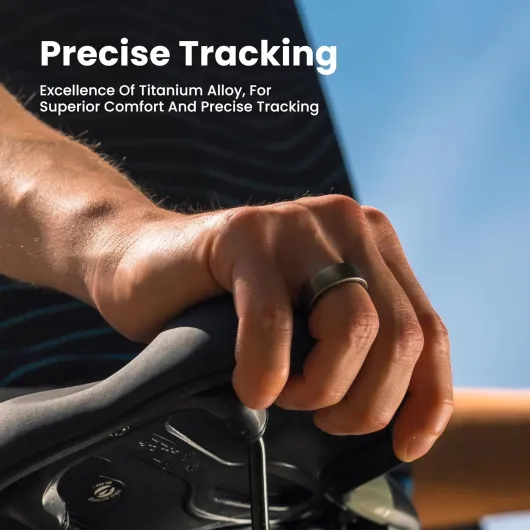
Visually, the Helio Ring is pretty low‑key. The black finish and round profile make it look like a simple band, not like some sci‑fi gadget. On my hand, it didn’t scream “tech toy”, which I liked. The inner part has the optical sensors and contact points, but once it’s on, you barely see them. For work or going out, it just passes as a normal ring, not a fitness device, which is a big plus compared to chunky watches or bright screens.
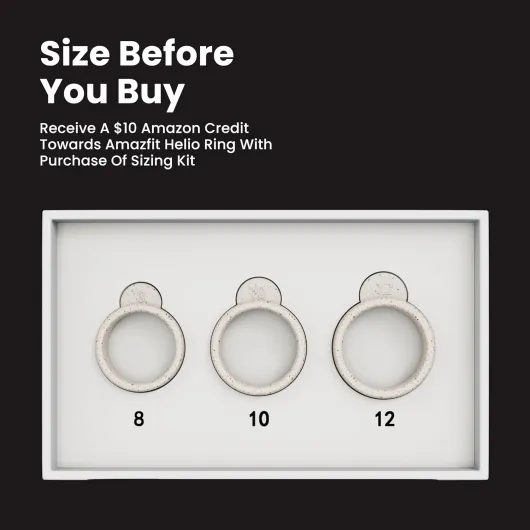
The big issue for me was sizing. Size 10 is fairly large, and the ring is quite wide and thick for people with smaller hands. One Amazon review mentioned the size being huge, and I get it: if you mess up the size, you end up with something that rotates too much on the finger, which messes up both comfort and tracking accuracy. There’s no built‑in adjustability of course, so you really need to be sure about your ring size before ordering. In my case, I had to move it between fingers to find the least annoying position.
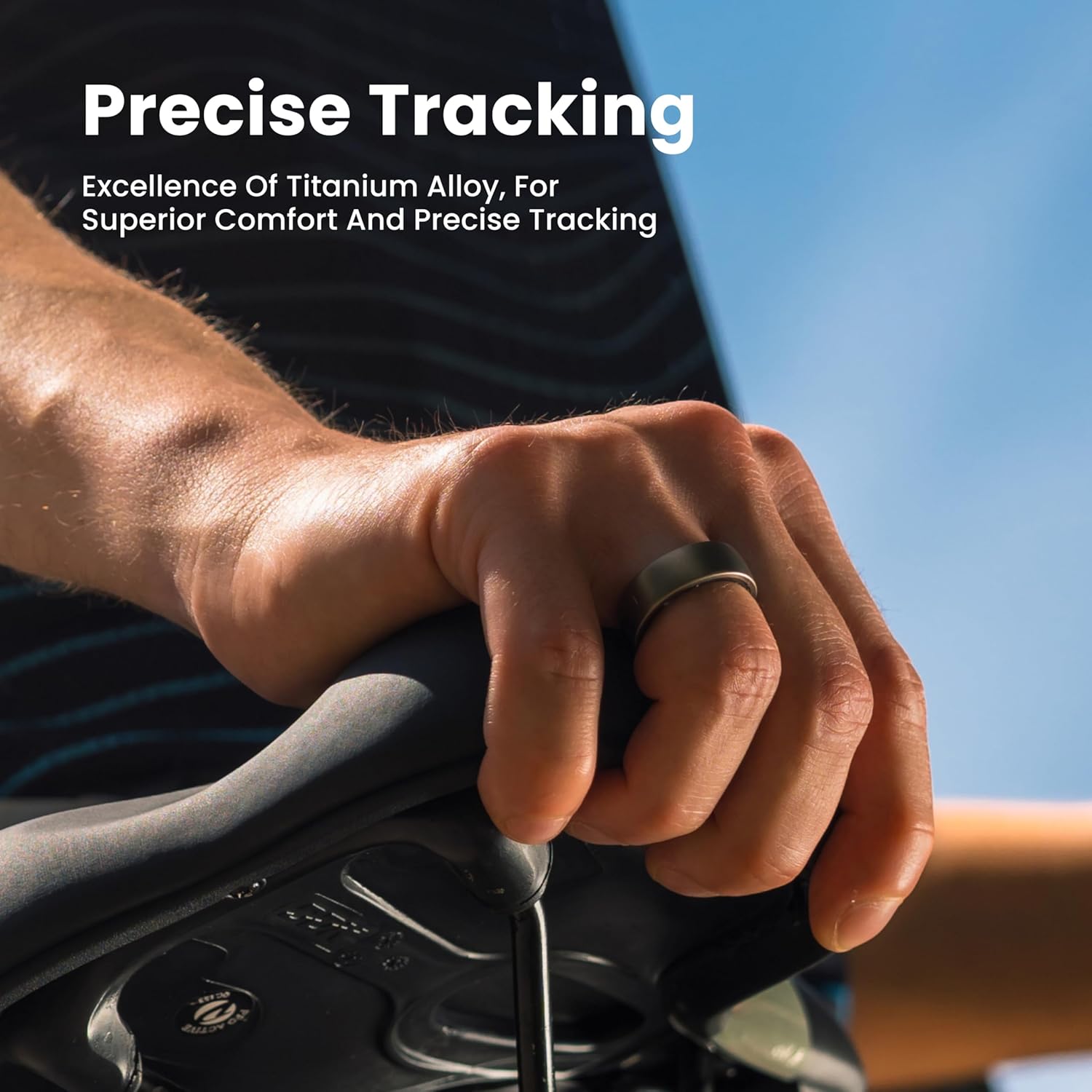
In terms of build, it feels solid for such a light piece. The titanium alloy doesn’t flex, and I didn’t see any immediate scratches after a couple of weeks of normal use (typing, cooking, showers, a few gym sessions). It’s rated as waterproof (up to 100 m according to the specs), so technically it can handle swimming and showers. I wore it under running water and during hand washing without issue. Still, because it’s a ring, it will bang into doorframes, weights and so on, so you’ll want to be a bit careful if you’re clumsy.
Overall, I’d say the design is clean and practical, but not tiny. If you’re used to a slim wedding band, this will feel bulkier at first. For people who already wear slightly wide rings, it will feel more natural. Just don’t rush the purchase without checking your size properly, or you’ll end up like some of the negative reviews complaining it’s way too big and unstable on the finger.
Battery life: okay, but not the multi‑week dream
Battery life is one of those areas where marketing and reality don’t always match perfectly. The Helio Ring has a small 18.5 mAh battery and claims fast wireless charging in about 1.4 hours. That part is roughly accurate: from low battery to full, I was around an hour and a bit on average, which is fine. You drop it on the charger while showering and having breakfast and you’re good for a few days.
In terms of autonomy, with 24/7 wear, continuous heart rate, SpO2 at night and full sleep tracking, I was seeing around 3 to 4 days max. One of the positive reviews confirms roughly the same: battery lasts at most 4 days. So if you’re coming from a basic fitness band that lasts a week or more, this will feel a bit short. If you’re used to a smartwatch that you charge every day, then 3–4 days will feel fine.
I didn’t notice any weird battery drain or random drops during my test period, but some reviews mention their unit simply stopped working at some point. That could be a defective batch or a quality control issue. I can’t say mine had that problem, but it’s something to keep in mind if you plan to rely on this ring long‑term without a backup device.
Overall, I’d say the battery is acceptable but not impressive. It’s enough that you don’t have to think about it every night, but you still need to remember the charger on trips longer than a long weekend. For a device without a screen, I was hoping for closer to a week, but given the constant sensors and tiny battery, 3–4 days seems to be the realistic norm here.
Comfort: you almost forget it… if the size is right
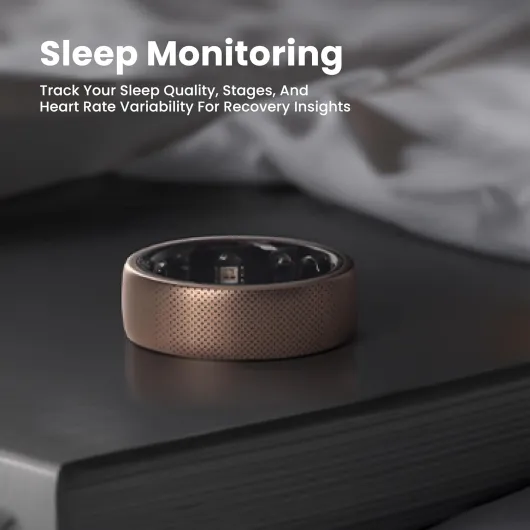
The thing I liked most about the Helio Ring is the weight: 4 grams is basically nothing. After an hour or so, I stopped feeling it most of the time, especially during the day. Compared to sleeping with a watch or a chunky fitness band, this is clearly more comfortable. No strap marks on the wrist, no screen digging into the skin when you roll onto your side. For sleep tracking, wearing a ring instead of a watch is just more natural for me.
That said, comfort really depends on how well it fits your finger. When the ring is slightly too big, it spins around and the sensor window ends up on the side or on top of the finger. That’s annoying at night when you feel it twist, and it’s also bad for heart rate tracking. I had to adjust it a few times before falling asleep, especially when my hands were cold and my fingers thinned a bit. During workouts with a lot of grip (pull‑ups, weights), you also feel the ring pressing between the bar and your finger, which is not ideal.
During normal daily activities like typing, cooking or driving, I mostly forgot about it. It didn’t catch on clothes or pockets, and I didn’t feel any weird edges or sharp parts. The inner surface is smooth enough. Showering with it was fine, but I still prefer to dry under the ring after, because water can sometimes stay trapped there and make the skin a bit wrinkly if you keep it on 24/7.
In short, comfort is decent to good as long as you nail the size and accept that it’s not meant for heavy grip sports. For sleep and desk work, it’s clearly better than a watch. For strength training or manual labor, I would probably take it off to avoid both discomfort and accidental knocks that could shorten its life.
Durability: feels solid, but long‑term reliability is a question mark
In the short term, the build quality feels pretty solid. The titanium alloy case didn’t show any cracks or major scratches after a couple of weeks of fairly normal use. I knocked it a few times on door frames and gym equipment and it came out without visible damage. The inner sensors stayed clean and didn’t peel or loosen. So on the physical side, it doesn’t feel fragile or cheap.
The ring is advertised as waterproof and with a 100 m water resistance depth, plus an IP rating listed in the specs. I wore it in the shower and for washing hands without any issue. I didn’t go swimming with it, but given the rating, it should handle pools and the sea on paper. Just remember that impacts and chemicals (chlorine, soap, etc.) can still shorten the life of the seals over time, like with any wearable.
The bigger concern for durability is electronics and firmware reliability. One of the Amazon reviews bluntly says their ring “stopped working” after a while. Another complains about charging problems. I didn’t hit that problem personally, but I’ve seen enough similar comments on various wearables to know it’s not rare with first‑gen products. If the charging coil or battery goes bad, there isn’t much you can do at home, and it becomes an expensive dead ring.
So if we separate things: physical robustness seems good for a ring you wear every day, but long‑term electronic reliability is harder to judge. I’d be comfortable using it daily, but I’d keep the warranty info handy and I wouldn’t throw away my old tracker immediately, just in case. For now, I’d rate durability as promising but not fully proven, especially given some of the negative reviews mentioning early failures.
Performance: good for sleep and HR, weaker for steps and workouts
On the performance side, I’ll split it by use case, because it’s not equally good at everything. For sleep tracking, I was pleasantly surprised. The sleep stages, total sleep time and wake‑ups matched pretty well with how I felt in the morning. When I had a short night or woke up several times, the app reflected that. The recovery and readiness‑style insights in Zepp were clear enough, and several users online also point out that sleep tracking seems to be the strong point, even the one who said their ring later stopped working.
For heart rate at rest and during the day, it was also fairly consistent. Compared to a wrist watch I wore at the same time, average heart rate over the day was in the same ballpark. There were some small differences during quick spikes (climbing stairs, sudden effort), which is normal for optical sensors on different body parts. For steady activities like walking around or sitting, the curves looked reasonable. SpO2 readings were also in the normal range for me and didn’t show anything weird.
Where it gets weaker is steps and activity tracking. One of the Spanish reviews complains that it doesn’t count steps well, and I saw the same thing. On some days, it was clearly undercounting compared to my phone and my watch, especially when I had a lot of short indoor walks. Finger movement is not the same as wrist movement, and the algorithms don’t always interpret it correctly. For serious sports tracking, this is not the device I’d rely on as my only source of truth.
In practice, I ended up using the Helio Ring mainly as a background health monitor: sleep, resting HR, stress trends. For that, it does the job. For precise daily step goals or workout metrics, I still trust a watch or a dedicated sports tracker more. So performance is solid but limited: good for trends and recovery, not great as your one and only fitness device.
What the Helio Ring actually offers in real life
On paper, the Amazfit Helio Ring is a compact health tracker dressed up as a simple ring. No display, no fancy lights, just a black band made of titanium alloy with sensors on the inside. It talks to your phone through Bluetooth and pushes all the data into the Zepp app. So if you’re expecting to read your stats directly on the ring, forget it: this thing is basically a silent sensor you wear 24/7.
The main metrics it tracks are: heart rate, SpO2 (blood oxygen), stress (via EDA sensor and heart rate variability), sleep stages, and general fitness estimates like VO₂ Max. It doesn’t have GPS, so for running and walking it leans heavily on your phone or on another Amazfit device if you sync them together. The brand highlights that there’s no subscription: you buy the ring, you get the full health reports and sleep analytics in the app, which is a clear jab at Oura and its monthly fee.
In the box, it’s pretty bare‑bones: the ring and some documentation, and that’s about it. No huge charger dock or complicated setup. The wireless charging is fast on paper (around 1.4 hours), and the ring’s battery is tiny (18.5 mAh), which explains the low weight. During my tests, I mostly used it as a dedicated sleep tracker and day‑to‑day stress/HR monitor, while keeping my normal watch for workouts, because step counting and sports tracking on rings are usually a bit hit or miss.
Overall, the concept is clear: it’s for people who want health and sleep info without wearing a watch all the time. It’s not a mini‑smartwatch on your finger. If you go in with that mindset, it’s easier to accept the limits. The problem is that some people expect it to replace both a watch and a fitness band, and for that use, it still feels a bit short, especially for precise step tracking and more serious workouts.
Pros
- Very light and comfortable for sleep compared to a watch or fitness band
- No subscription: full health and sleep analytics in the Zepp app included
- Sleep tracking and general health metrics (HR, stress, SpO2) are fairly solid
Cons
- Inaccurate or inconsistent step and activity tracking compared to watches
- Battery life only around 3–4 days despite no display
- Some reports of units stopping working or charging issues, plus tricky sizing
Conclusion
Editor's rating
After using the Amazfit Helio Ring for a while, my feeling is pretty clear: it’s a solid sleep and health companion, but not the perfect all‑round fitness device some people expect. The ring is light, discreet and way more comfortable to sleep with than a watch. Sleep tracking and general health metrics (resting HR, SpO2, stress trends) are handled well enough, and the Zepp app presents the data in a way that’s easy to understand. The fact that everything is available without a monthly subscription is a real advantage compared to Oura.
On the other hand, you have to accept its limits. Step counting and activity tracking are not very reliable, and if you’re serious about sports stats, you’ll probably keep a watch anyway. Battery life is okay at 3–4 days, but nothing impressive for a screenless device. Add in some reports of units that stop working or charge poorly, plus the sizing issues, and you end up with a product that’s good when everything lines up, but a bit hit or miss overall.
I’d recommend the Helio Ring mainly to people who prioritize sleep and all‑day health tracking, hate sleeping with a watch, and don’t want to pay a monthly fee. If you’re more into precise workouts, step goals and long‑term robustness, I’d look at a watch or a more mature ring ecosystem. For me, it’s a decent first attempt from Amazfit, useful but not flawless, and worth it only if you’re clear about what it does well and where it falls short.