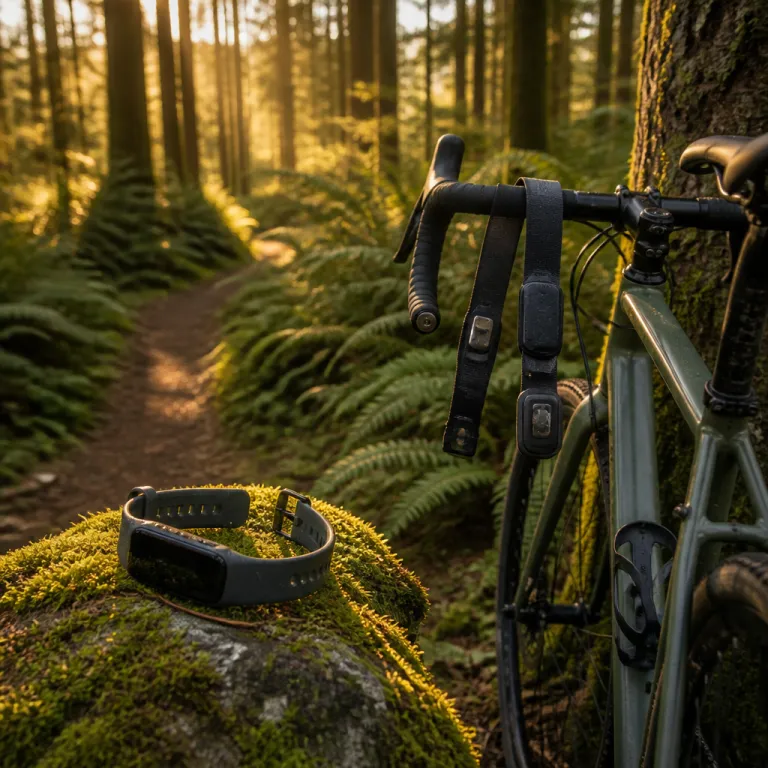
Why fitness tracker cycling heart rate accuracy collapses on the bike
TL;DR: Wrist-based heart rate during cycling is fine for easy rides but often fails at high intensity. Road vibration, wrist angle, and grip pressure disrupt optical sensors, so serious training still calls for a chest strap or upper-arm monitor.
On paper, a modern fitness tracker promises precise heart rate during cycling. In practice, once you push above zone 3, wrist-based cycling heart rate accuracy often unravels and the rate data on your wrist starts to drift. That gap between the clean metrics on the watch and what your heart actually does can quietly derail months of structured activity and training.
The physics are stacked against wrist-based heart rate monitors when you ride. A cycling position bends the wrist, your grip compresses blood vessels, and road vibration shakes the device so the optical sensor struggles to measure heart signals cleanly. PPG sensors in every sport watch and most fitness trackers rely on light bouncing off blood volume changes, and that fragile light path is exactly what handlebar buzz and wrist flexion disrupt.
During steady indoor running, optical heart rate monitors can stay within about 5 beats per minute of a chest strap. On the road bike, especially during hard efforts, multiple peer-reviewed studies show average wrist errors of 8 to 15 beats per minute, with spikes of 20 to 30 beats during sprints or climbs. For example, Wang et al. reported mean absolute errors of 8–13 bpm for Apple Watch and Garmin devices during cycling compared with ECG (JMIR Mhealth Uhealth, 2017, 10.2196/mhealth.7854), while Boudreaux et al. found similar discrepancies in controlled lab tests (Int J Exerc Sci, 2018, 10.3390/s18030839). When your training zones are only 8 to 10 beats wide, that level of error turns a carefully planned threshold interval into either a junk zone 2 spin or an overcooked VO2max effort.
Think about what happens when you hit rough tarmac at 35 km/h while gripping the drops. The device lifts microscopically off the skin, the strap shifts, and the watch face twists as you absorb shock through your arms. Every tiny gap between sensor and skin corrupts the optical signal, so the tracker firmware guesses based on previous rate data and cadence, which is why your heart rate sometimes plateaus implausibly while your legs are screaming.
Even the best multi-sport devices like a Garmin Forerunner or an Apple Watch Ultra can only do so much against physics. A Garmin Venu or a mid-range sport watch with an older sensor will usually fare worse, especially if the strap is loose or the watch is worn over a jersey cuff. That is why cyclists who care about accurate tracking for training load, VO2max estimates, and recovery metrics still rely on a chest strap or upper-arm heart rate monitor as their primary device for serious rides.
When wrist based tracking is good enough for cycling
Not every ride demands lab-grade cycling heart rate precision. If you are cruising to work, spinning with friends, or logging an easy recovery activity, a wrist fitness tracker can be perfectly adequate. In those scenarios, you mainly want broad trends in heart rate and overall tracking of calories, distance, and GPS-based route.
On flat bike paths at 20 to 25 km/h with relaxed grip, optical heart rate monitors usually behave. The device sits more still, the strap does not dig into the wrist, and the watch face maintains a consistent seal against the skin so the sensor can measure heart signals with fewer motion artifacts. For these low-intensity rides, the difference between a Garmin Forerunner, a Garmin Venu, an Apple Watch, or other fitness trackers is smaller than the difference between a calm road and a cobbled climb.
Zone 2 endurance work is where wrist-based devices can still support structured training. If your goal is to keep your heart rate roughly between 120 and 140 beats per minute, a 5 to 8 beat error will not ruin the session. You will still get useful heart rate data for long-term data analysis, especially when you combine it with sleep tracking, daily activity metrics, and GPS tracking from the same fitness tracker.
Problems start when you rely on that same device for precise threshold or VO2max intervals. Above zone 3, the combination of higher cadence, stronger grip, and more upper body tension makes the optical sensor far less reliable, and the heart rate monitor can lag by 20 seconds or more. That lag means you overshoot the target, then back off too late, which is exactly how you end up with messy intervals that feel hard but do not match the intended training stimulus.
If you mainly ride indoors on a smooth trainer, wrist-based fitness trackers behave better because vibration is lower and your hands move less. Even then, a chest strap or upper-arm heart rate monitor will still give cleaner data, which matters when you are comparing efforts week to week or following medical advice about safe heart rate limits as explained in this guide on what to do when your watch and your doctor disagree. For casual cyclists who care more about battery life, notifications, and comfortable wear than perfect heart rate data, a good sport watch remains a sensible compromise.
When you need a chest strap or arm band instead of the wrist
If you care about structured training, there is a clear line where wrist-based fitness tracker cycling heart rate accuracy stops being acceptable. Any time you run FTP tests, race, or perform short intervals above threshold, you should pair your watch with a chest strap or optical arm band. Those external heart rate monitors move the sensor away from the vibrating wrist and closer to the torso or upper arm, where blood flow is more stable.
Chest straps like the Garmin HRM Pro Plus or Polar H10 use electrical signals rather than light to measure heart activity. That electrocardiogram-style approach is far less sensitive to motion, so the heart rate data stays accurate even when you sprint out of the saddle or hammer over broken tarmac. For cyclists who live by power zones and heart rate zones, this level of precision is non-negotiable because it underpins every training metric, from Training Load to recovery time.
Optical arm bands such as the Polar Verity Sense or Wahoo Tickr Fit sit on the upper arm, where muscle and soft tissue dampen vibration. They still use PPG light sensors, but the placement and tighter strap make the device more stable than a wrist watch during cycling. Many riders find these arm-based heart rate monitors a more comfortable wear than a chest strap, especially on long rides or in hot weather when a tight chest band can chafe.
Pairing a chest strap with a Garmin Forerunner, a Garmin Venu, or an Apple Watch turns the watch into a smart head unit. The sport watch handles GPS tracking, battery management, and on-wrist metrics, while the external strap feeds accurate heart rate into the system for clean data analysis later. This combination is particularly useful if you also run or swim, because the same multi-sport devices can track all three disciplines with one ecosystem.
If you are testing new shoes or pushing for a personal best on a familiar climb, you want every variable except your effort to stay constant. That is why serious cyclists often use a chest strap during key workouts, even if they rely on the watch alone for easy spins or commutes, and why they care about how the strap, the device, and the watch face feel over several hours. For runners cross training on the bike, pairing a strap with a high cushioned shoe test such as the one described in this detailed review of the Fresh Foam X 1080 can reveal how heart rate responds to different surfaces and cadences.
Why some watches fail less than others above zone 3
Not all fitness trackers are equal when it comes to cycling heart rate accuracy. Newer devices like the latest Garmin Forerunner models or the Apple Watch Ultra use larger sensor arrays and smarter algorithms to clean up noisy heart rate data. That does not break physics, but it does mean fewer wild spikes and slightly tighter tracking when the road gets rough.
Garmin’s Elevate sensors, now in their fifth generation on high-end Forerunner and best Garmin multi-sport models, use multiple wavelengths of light and more photodiodes. This wider optical footprint helps the device maintain contact with the skin even when the watch face shifts slightly, which improves the ability to measure heart signals during moderate cycling. Apple takes a similar approach in the Apple Watch and Apple Watch Ultra, combining dense sensor arrays with aggressive software filtering that cross-checks heart rate data against accelerometer and gyroscope inputs.
Still, even the best cycling-focused sport watch cannot fully overcome tight aero positions and constant vibration. When you ride on the drops or aero bars, the wrist angle opens a gap between the strap and the skin, and the watch may slide toward the hand where blood flow is more affected by grip pressure. That is why both Garmin and Apple advise a snug strap and positioning the device above the wrist bone for any high-intensity activity in their product support material.
Battery life also shapes how aggressively a device can process data in real time. A compact fitness tracker with a tiny battery must balance GPS tracking, always-on display, and continuous heart rate monitoring, which can force compromises in sampling frequency or algorithm complexity. Larger sport watches with bigger batteries, like some best Garmin models, can afford more frequent sampling and heavier data analysis without killing battery life on a long weekend of riding.
If you want a refined sport watch for serious training, it is worth reading long-term tests that go beyond spec sheets. Extended reviews such as this guide to refined fitness watches for men who take training seriously often highlight real-world failure points like flaking straps, laggy heart rate monitors, or optimistic sleep tracking. Those details matter more than one extra metric on the watch face, because they determine whether the device still feels like a comfortable wear after ten weeks of daily activity and cycling.
How to wear your watch for better cycling heart rate data
Even without buying new devices, you can improve fitness tracker cycling heart rate accuracy by changing how you wear the watch. The first rule is simple but often ignored: the strap must be snug enough that the device does not slide when you flex your wrist. A loose band lets light leak around the sensor, which forces the heart rate monitor to guess and smooth, especially when vibration from the road kicks in.
Position the watch two finger widths above the wrist bone for any serious cycling session. That slightly higher placement sits on a fleshier part of the forearm with more stable blood flow, which helps the sensor measure heart signals more consistently during both low and high intensity efforts. If your sport watch allows it, switch to a softer, more elastic strap that can maintain even pressure without cutting into the skin during long rides.
Skin contact matters as much as strap tension. Sweat, sunscreen, and dust can all interfere with the optical path, so wiping the back of the device and your skin before a hard workout can reduce artifacts. Darker tattoos directly under the sensor can also degrade heart rate data, which is one reason some athletes prefer a chest strap or upper arm band even for moderate activity.
Watch placement interacts with handlebar choice and riding style. On flat bars with a relaxed grip, most fitness trackers behave better because the wrist angle is mild and the watch face stays flat against the skin, while on aggressive drop bars the angle and pressure change constantly. If you spend long periods in the drops or on aero extensions, consider moving the device slightly higher on the arm or relying on an external heart rate monitor for the most important sessions.
Finally, pay attention to how the device feels over time, not just during a quick test in the shop. A strap that seems fine for ten minutes can become a distraction after two hours of continuous tracking, especially if the battery adds weight or the watch face digs into the wrist. The right balance between secure fit, comfortable wear, and clean heart rate data is personal, and it is worth experimenting across several rides to find your own best setup.
Making sense of your cycling heart rate metrics and data analysis
Getting better fitness tracker cycling heart rate accuracy is only half the story; the real value comes from how you use the data. Modern fitness trackers and sport watches turn raw heart rate into metrics like Training Load, VO2max estimates, recovery time, and sleep scores. Those numbers can guide smarter decisions about when to push, when to rest, and how to balance cycling with the rest of your life.
For that guidance to be trustworthy, the underlying heart rate data must be clean during the efforts that matter most. If your device routinely underestimates heart rate during hard intervals, it will think you are fitter than you are, which leads to overly aggressive training plans and misleading multi-sport readiness scores. Over time, that mismatch between what the watch reports and what your body feels can erode confidence in both the device and your own perception.
Combining a chest strap for hard rides with wrist-based tracking for daily activity and sleep gives you the best of both worlds. The strap feeds accurate heart rate into the watch during key sessions, while the watch handles GPS tracking, step counts, and overnight monitoring without extra gear. When you later review your rides, you can trust that spikes and plateaus in the graphs reflect real physiology rather than strap slip or handlebar buzz.
Pay attention to patterns rather than single rides. If your heart rate for a given climb suddenly jumps 10 beats higher at the same power and perceived effort, that is a meaningful signal that you might be tired, stressed, or getting sick, while one odd reading on a day with heavy wind and traffic is less important. The goal is not to chase perfect numbers, but to use consistent tracking and thoughtful data analysis to support better decisions about training, recovery, and health.
In the end, the best cycling setup is the one that fits your body, your budget, and your goals. A reliable sport watch with solid battery life, a comfortable strap, and the option to pair external heart rate monitors will serve most riders better than a flashy device with dozens of rarely used watch face widgets. What matters is not the step count or the prettiest GPS map, but what you do with the information your tracker quietly collects every time you roll out.
Key statistics on cycling heart rate accuracy and wearables
| Sensor type | Typical error vs ECG / chest strap | Best use cases | Main limitations for cycling |
|---|---|---|---|
| Wrist optical (sport watch / fitness band) | ~5–8 bpm at low intensity; 8–15 bpm on average at higher intensity; peaks of 20–30 bpm during sprints | Commuting, easy endurance rides, general fitness tracking | Motion artifacts from vibration and grip, lag during rapid heart rate changes, poor reliability for intervals |
| Upper-arm optical band | Typically within ~3–7 bpm of ECG during most efforts | Everyday training, long rides, riders who dislike chest straps | Still optical, so some error during maximal efforts; requires separate strap and charging |
| Chest strap (electrical) | Usually within 1–3 bpm of ECG across intensities | Structured intervals, FTP tests, racing, medical or rehab guidance | Less comfortable for some riders, can chafe, needs good skin contact |
- Independent lab tests on wrist-based fitness trackers during high-intensity cycling have reported average heart rate errors of 8 to 15 beats per minute compared with chest straps, which is large enough to push riders into the wrong training zone for structured intervals (for example, Wang et al., JMIR Mhealth Uhealth, 2017, 10.2196/mhealth.7854; Boudreaux et al., Int J Exerc Sci, 2018, 10.3390/s18030839).
- During short sprints and steep climbs, optical heart rate monitors on the wrist have shown peak errors of 20 to 30 beats per minute, mainly due to handlebar vibration and grip-related blood flow changes, making them unreliable for precise efforts like FTP tests or race pacing (controlled indoor trainer research with simulated road vibration and standardized sprint protocols, e.g., Stahl et al., Cardiovasc Diagn Ther, 2019, 10.21037/cdt.2019.01.03).
- Chest strap heart rate monitors typically stay within 1 to 3 beats per minute of electrocardiogram reference measurements during both steady-state and high-intensity cycling, which is why they remain the gold standard for athletes who rely on heart rate zones for training prescription (comparative validation research on consumer wearables and medical-grade systems, such as Gillinov et al., Ann Noninvasive Electrocardiol, 2017, 10.1111/anec.12447).
- Surveys of recreational endurance athletes have found that more than 60 percent of regular cyclists who own a GPS-enabled sport watch also own at least one external heart rate strap or arm band, reflecting widespread recognition that wrist-based sensors alone are not sufficient for all training scenarios (market research on wearable adoption among cyclists and triathletes, typically with samples in the hundreds to low thousands).
- Battery life trade-offs are significant, because enabling continuous GPS tracking and high-frequency heart rate sampling on a compact fitness tracker can reduce runtime by 30 to 50 percent compared with basic daily activity and sleep tracking modes, which influences how aggressively manufacturers can filter and process heart rate data in real time (technical documentation and independent endurance tests of popular devices).
FAQ about cycling with wrist based heart rate trackers
How inaccurate is a wrist fitness tracker for cycling heart rate ?
During easy cycling, many wrist fitness trackers stay within about 5 to 8 beats per minute of a chest strap, which is usually acceptable for casual training. At higher intensities above zone 3, especially on rough roads or in aggressive positions, errors can jump to 15 or even 30 beats per minute. That level of inaccuracy makes wrist-based readings unreliable for precise interval work, FTP tests, or race pacing.
Can I make my wrist watch more accurate for cycling without a chest strap ?
You can improve accuracy by wearing the watch two finger widths above the wrist bone and tightening the strap so the device does not slide during hard efforts. Cleaning sweat and sunscreen from the sensor, avoiding tattoos under the watch face, and riding with a slightly lighter grip on the bars also help. These steps will not match a chest strap, but they can reduce the worst spikes and dropouts in your heart rate data.
Do I really need both a sport watch and a chest strap for cycling ?
If you only ride casually and care mainly about distance, speed, and general fitness, a single sport watch or fitness tracker is usually enough. If you follow structured training plans, race regularly, or work with power and heart rate zones, pairing your watch with a chest strap or arm band is strongly recommended. The watch handles GPS tracking and metrics, while the strap supplies accurate heart rate for serious sessions.
Is an arm band heart rate monitor better than a chest strap for cycling ?
Upper-arm optical bands are often more comfortable than chest straps and usually more accurate than wrist-based sensors, especially on rough roads. However, electrical chest straps still tend to be slightly more precise during very high-intensity efforts and rapid changes in heart rate. Many cyclists choose arm bands for everyday rides and chest straps for key workouts or races where every beat counts.
Which watches are best for cycling heart rate accuracy ?
High-end multi-sport devices like recent Garmin Forerunner models, the Garmin Venu series, and the Apple Watch Ultra line generally perform better than basic fitness trackers because they use larger sensor arrays and more advanced algorithms. Even these watches still struggle in aggressive cycling positions or on very rough surfaces, so pairing them with a chest strap remains the most reliable option. When choosing a device, prioritize secure strap design, battery life with GPS tracking enabled, and support for external heart rate sensors over cosmetic features on the watch face.