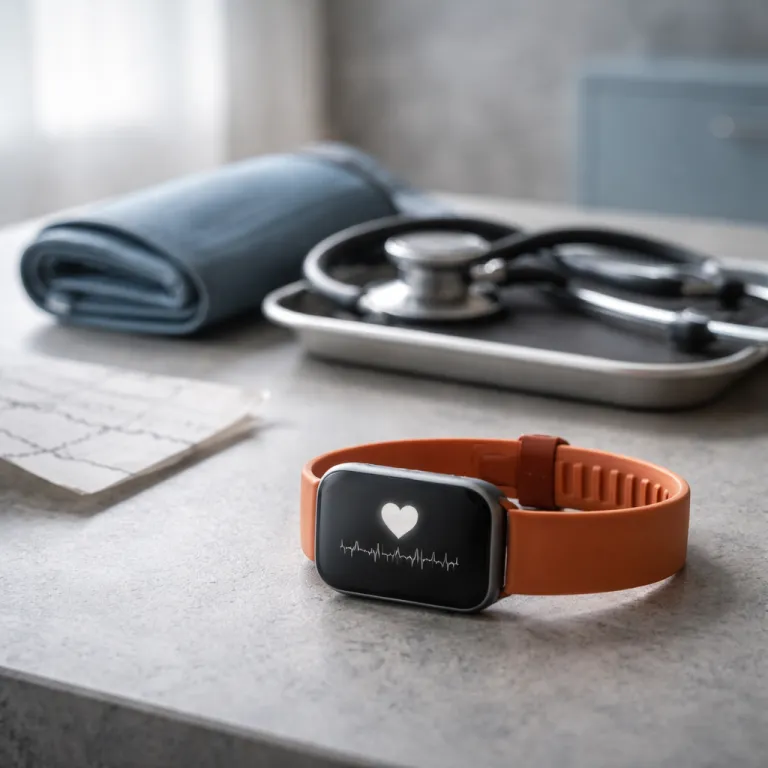
What “wearable health data accuracy” really means in a doctor’s office
Wearable health data accuracy for your doctor starts with one hard truth. These devices are built as consumer electronics first and only sometimes as medical tools, so the gap between wellness promises and clinical reality keeps widening. If you want your watch and other wearable devices to help rather than confuse your physicians, you need to understand where the numbers come from and how fragile that accuracy can be.
Most wearables use optical sensors on the wrist to estimate heart rate and heart rate variability (HRV), then layer algorithms on top to infer sleep, stress, energy expenditure and even atrial fibrillation detection. That stack of assumptions turns raw light signals into polished health data, but every layer introduces potential error that your doctor must mentally discount. When you bring a consumer wearable or several activity trackers to a medical appointment, the physician is really reviewing a story told by software rather than a direct measurement like an electrocardiogram or a blood pressure cuff.
Some metrics are closer to medical grade than others, and that hierarchy matters when you rely on wearable health insights for real health care decisions. Apple Watch ECG and some atrial fibrillation notifications are U.S. Food and Drug Administration (FDA) cleared features, while most sleep staging, stress scores and oxygen saturation estimates on other devices remain wellness only. When a doctor evaluates wearable data from a watch, ring or band, they usually trust heart rate trends and gross physical activity levels but treat detailed sleep phases, calorie burn and heart rate variability as moderate quality guidance at best.
Regulation is quietly shifting under your wrist, and it affects how much faith you should place in any single device. The United States Food and Drug Administration has expanded its general wellness category for wearable technology, which lets manufacturers ship more medical sounding features without full clinical validation. That means you may see blood pressure, glucose trends or advanced heart rate variability graphs on consumer wearables, yet those readings can still be low quality from a physician’s perspective.
For a person seeking information, the key is not to reject wearables but to recalibrate expectations about accuracy. Think of wearable activity and sleep tracking as continuous, noisy surveillance that is excellent for spotting patterns but unreliable for single data points. Your doctor will usually care more about multi week trends in health data than about whether last Tuesday’s oxygen saturation reading was off by two percentage points.
How doctors actually use wearable data in real consultations
When patients bring printouts or app screenshots, physicians see both opportunity and risk. The opportunity is richer context around symptoms, because continuous heart rate and physical activity logs can reveal patterns that a ten minute visit never could. The risk is that low quality or misinterpreted wearable data can send both doctor and patient chasing ghosts instead of real medical problems.
In cardiology clinics, doctors often ask about specific devices such as Apple Watch, Garmin Forerunner, Fitbit Charge or Oura Ring, because they have read the same medical studies and independent validation reviews you have. They know that an Apple Watch with FDA cleared ECG can help confirm atrial fibrillation episodes, while a budget watch with vague arrhythmia detection claims may only generate anxiety. When a physician sees a spike in resting heart rate or a sustained drop in energy expenditure on your wearable health dashboard, they may use it as a prompt to order proper tests rather than as a diagnosis in itself.
Sleep specialists increasingly see consumer wearables in their practice, yet they treat sleep stage graphs with caution. Most devices infer sleep from motion and heart rate, which works reasonably for total sleep time but poorly for precise REM or deep sleep detection, especially in people with insomnia or sleep apnea. If you want to go deeper on how different watches, rings and bands handle sleep, a detailed sleep tracking face off can help you understand what each device gets right and wrong before you walk into the clinic.
For general practitioners, the most actionable wearable data usually comes from simple metrics tracked over months. Average daily steps, minutes of moderate physical activity, resting heart rate and broad sleep duration trends give a quick snapshot of lifestyle that no waiting room questionnaire can match. When those trends shift abruptly on a wearable device without an obvious life event, a careful physician may see an early warning sign worth exploring.
Doctors also worry about the psychological load of continuous monitoring, especially for anxious patients. A consumer wearable that pings you about every minor heart rate blip or slight drop in oxygen saturation can turn normal physiology into a constant alarm bell. Many physicians now spend part of the visit teaching patients when to ignore their watch and when to treat wearable devices as a genuine early warning system.
Why your tracker’s numbers drift, and when that drift matters
Not all accuracy problems are dramatic, and that subtle drift is what often misleads health conscious users. Optical heart rate sensors on the wrist struggle during high intensity intervals, cold weather runs and strength training, so even premium wearable devices like Apple Watch Series 9 or Garmin Fenix 7 can under report peaks and over smooth spikes. When those heart rate errors feed into calorie estimates, VO2max scores and training readiness, the entire stack of wearable data becomes only moderate quality for serious decision making.
Independent studies have repeatedly shown that VO2max estimates from consumer wearables tend to be optimistic by roughly ten to fifteen percent compared with lab tests.[1] That gap is large enough to flatter your ego yet small enough to look believable, which is why so many people overestimate their fitness level based on a single watch review or marketing article. If you want a deeper dive into why VO2max on your wrist is systematically inflated and what that number is actually worth, a focused explainer on wrist based VO2max accuracy is worth reading before you chase a specific score.
Heart rate variability is another metric where wearable health promises outpace validation. HRV reflects tiny changes in the time between heart beats, and it can correlate with stress, recovery and autonomic nervous system balance, but wrist based heart rate variability estimates are highly sensitive to motion, skin tone, temperature and even strap tightness. When a consumer wearable turns that shaky HRV signal into a single daily readiness score, your doctor will usually treat it as a rough wellness indicator rather than a medical decision tool.
Sleep tracking has its own accuracy traps that matter for people obsessed with recovery. Many activity trackers and watches label light sleep, deep sleep and REM with confident looking graphs, yet polysomnography studies in sleep labs show wide error bars for stage detection, especially in people with fragmented sleep.[2] If your wearable health app tells you that you had only ten minutes of deep sleep, a physician will often look first at total sleep time and consistency before worrying about the exact breakdown.
Energy expenditure estimates are perhaps the least reliable metric in mainstream wearables, even though they drive many people’s food and exercise decisions. Calorie burn algorithms mix heart rate, motion and demographic data, but they rarely account for individual differences in metabolism, medications or medical conditions, so two people with identical watch readings can have very different true expenditure.[3] For weight management and long term health, most physicians recommend treating wearable calorie numbers as directional feedback rather than as precise targets.
How to bring wearable health data to your doctor without wasting time
Turning a pile of wearable data into a useful medical conversation requires some preparation. Doctors are under time pressure, so handing over ten different app screens from multiple wearables and asking for a full review is a recipe for frustration. A better approach is to summarise your health data into a one page snapshot that highlights trends in heart rate, sleep and physical activity over several weeks.
Start by choosing one primary device, whether that is an Apple Watch, a Garmin Venu, a Fitbit Sense or an Oura Ring, and stick with it long enough to build a baseline. Switching between consumer wearables every few days makes it impossible for physicians to separate real physiological changes from differences between devices, especially when some are FDA cleared for specific features and others are not. Export your wearable activity, resting heart rate, sleep duration and, if available, oxygen saturation trends into a simple chart that you can share during the visit.
Next, annotate your wearable data with real life context that your doctor cares about. Mark periods of illness, travel, new medications, major stressors or changes in physical activity, because those events often explain shifts in heart rate, sleep or heart rate variability better than any algorithm. When physicians see that your resting heart rate climbed and your sleep dropped right after a job change or a new beta blocker, they can separate lifestyle effects from potential medical problems.
Be explicit about what you want from the conversation, because that shapes how deeply your doctor will engage with the numbers. If you say that you are worried about atrial fibrillation because your watch flagged irregular rhythm, the physician will focus on ECG strips, pulse checks and possibly Holter monitoring rather than on generic wellness scores. If your concern is chronic fatigue, they may look at long term sleep duration, energy expenditure patterns and comorbid conditions instead of obsessing over nightly sleep stage detection.
Finally, set boundaries with both your wearable and yourself to avoid data driven anxiety. Turn off non essential alerts that ping you for every minor heart rate fluctuation, and agree with your doctor on which thresholds or patterns should trigger a call or visit. The goal is to make wearable health data accuracy serve your life and your medical care, not to let a watch or other devices dictate your mood hour by hour.
Key figures on wearable health accuracy and medical use
- In peer reviewed validation studies, wrist based heart rate during steady state walking often shows errors under 5 %, while high intensity intervals can see errors exceeding 10 to 15 % compared with chest strap electrocardiogram readings.[1]
- Research comparing consumer wearable VO2max estimates with laboratory cardiopulmonary exercise testing typically finds overestimation in the range of 10 to 15 %, which is enough to shift a person one full fitness category on many scales.[1]
- Large scale analyses of atrial fibrillation detection by Apple Watch and similar devices report sensitivities around 84 to 98 % and specificities around 90 to 99 % for irregular rhythm notifications, but performance drops in asymptomatic, low risk populations.[2]
- Studies evaluating sleep tracking against gold standard polysomnography show that many wearables achieve roughly 80 to 90 % accuracy for total sleep time, yet accuracy for individual sleep stages such as REM or deep sleep can fall below 60 % in people with insomnia or sleep apnea.[2]
- Systematic reviews of energy expenditure estimation in consumer wearables indicate average errors of 20 to 30 % for daily calorie burn, with some devices underestimating and others overestimating depending on activity type and intensity.[3]
- Surveys of physicians in primary care and cardiology suggest that a growing minority, often around one third, now routinely discuss wearable health data with patients, yet many report concerns about data overload and the clinical quality of consumer devices.[3]
References[1–3]: American Heart Association; Journal of Medical Internet Research; Annals of Internal Medicine.