What is zone 2 running in practical, data driven terms
Zone 2 running means staying in a low to moderate training zone where your heart works steadily but comfortably. In this zone your aerobic system supplies most of the energy, so the effort feels easy enough to maintain for a long time. When people ask what is zone 2 running, they usually want to know how this gentle effort can still improve endurance and long distance performance.
Sports scientists often describe this training as running at a heart rate of roughly 60 to 70 percent of your maximum, but your exact rate zones depend on age, fitness, and genetics. At this intensity your body clears lactate from the blood as quickly as it is produced, which keeps you just below your personal lactate threshold and delays fatigue. Fitness trackers estimate this threshold and show which running zone you are in, so you can see in real time what zone your current pace belongs to and whether you are truly staying in an easy aerobic range.
For most runners this type of zone training feels like a pace where you can speak in full sentences without gasping, which is why coaches use the talk test as a simple guide. If you are wondering what zone you are in during daily runs, that talk test combined with heart rate data from a tracker gives a reliable picture without needing lab equipment. Over time these easy runs in zone 2 build aerobic endurance quietly in the background, even though they never feel like high intensity efforts or all out workouts.
How fitness trackers define heart rate zones and zone 2
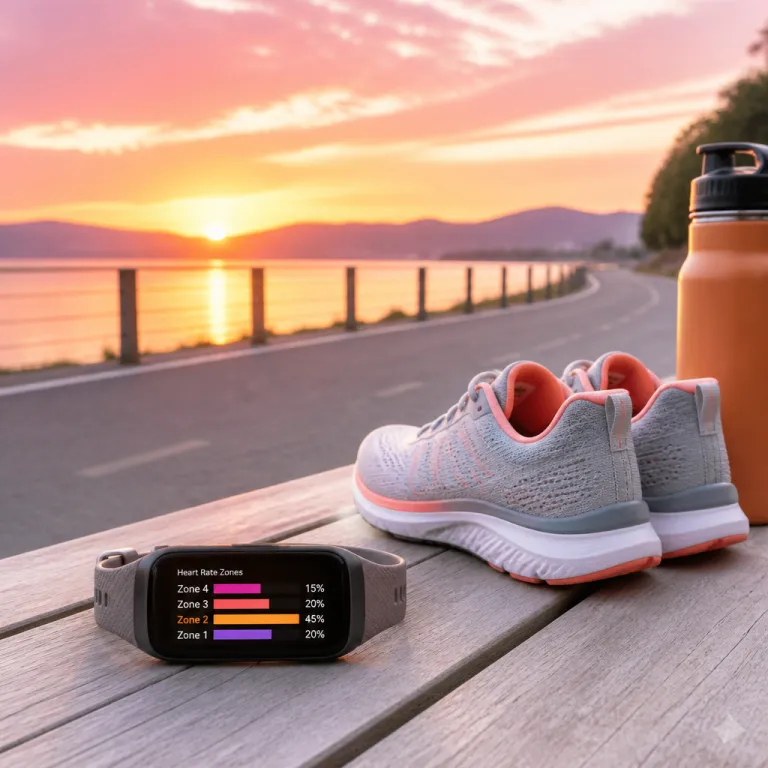
Modern fitness trackers calculate heart rate zones by combining your age, resting heart rate, and sometimes a short test zone protocol such as a brisk run or walk. The device then divides your possible heart rate range into three to five rate zones, each linked to a different training goal from basic aerobic work to high intensity intervals. When you ask what is zone 2 running, your tracker answers by showing a colored bar or percentage for the specific training zone where your current heart rate sits.
Optical sensors on the wrist read blood volume changes to estimate each heart beat, and the software smooths the signal over time to reduce noise from arm movement. Accuracy is usually within about 3 to 5 beats per minute of a chest strap during steady state running, though darker skin tones, tattoos, heavy sweat, and rapid arm swing can widen that error range. This is why a snug strap and stable watch position matter for accurate heart rate and pace data, especially during long runs where sweat and impact can shift the device.
Once your zones are set, the tracker logs how many minutes you spend in each running zone during the week, highlighting whether your plan includes enough easy runs in zone 2. Runners can then compare sessions and see whether they drifted too fast, turning intended aerobic endurance work into accidental high intensity training. Over several weeks this objective record of time in each zone heart range becomes more reliable than memory and helps you answer not only what zone 2 running is, but also how consistently you are actually doing it.
Why zone 2 running is the foundation of aerobic endurance
Zone 2 running targets the aerobic base, which is your body’s capacity to use oxygen efficiently at a sustainable pace. In this training zone your slow twitch muscle fibers handle most of the work, and they adapt by building more mitochondria and capillaries that deliver oxygen rich blood. When you understand what is zone 2 running from this physiological angle, it becomes clear why endurance athletes treat it as non negotiable work rather than optional easy runs.
Staying below your lactate threshold allows your body to burn a higher proportion of fat for fuel, which preserves limited glycogen stores for later in long runs or races. Over time this kind of zone running teaches your heart to pump more blood per beat, so your heart rate drops at the same pace and you can run faster while still remaining in the same rate zones. This is the quiet magic of aerobic endurance training, where small improvements accumulate week after week without the stress of constant high intensity efforts.
Research on endurance adaptations supports this emphasis on low to moderate intensity work. For example, classic laboratory studies report increases in mitochondrial content of roughly 20 to 40 percent in trained muscle after several months of regular aerobic training, though exact values vary with protocol, genetics, and starting fitness. These cellular changes, combined with stronger cardiac output, explain why consistent zone 2 running gradually makes everyday paces feel easier and more sustainable.
Using the talk test, pace, and test zones to find your level
Many people first approach the question of what is zone 2 running through the simple talk test rather than laboratory data. If you can talk in full sentences but would struggle to sing, you are likely in the right training zone for aerobic work. When your breathing becomes choppy and you can only speak three or four words at a time, you are probably drifting above your ideal zone heart range.
Fitness trackers refine this subjective feeling by pairing pace and heart rate, then suggesting a personal test zone workout to sharpen your rate zones. A common method is a progressive run where you start with easy running, then increase speed every few minutes until breathing becomes clearly strained and your heart rate climbs rapidly. The point just before this sharp rise often corresponds to your lactate threshold, and the device uses it to adjust the boundaries of your running zone levels, including zone 2.
Over several weeks you can repeat a similar test at the same route and time of day to see whether your easy runs are getting faster at the same heart rate. When that happens, it means your aerobic endurance is improving and your training plan is working, even if the effort still feels comfortably easy. This mix of talk test feedback, pace tracking, and structured test zones gives runners a practical answer to what zone 2 running is for their own body rather than relying on generic charts.
Building a weekly training plan around zone 2
A practical way to apply what is zone 2 running is to anchor your week around it, then add other sessions sparingly. Many endurance athletes follow a simple structure where roughly three quarters of their training time stays in easy runs at zone 2, with the remaining time reserved for tempo work or high intensity intervals. This approach protects the aerobic base while still nudging your threshold and speed upward.
For a recreational runner training three to four times per week, that might mean two short easy runs in zone 2, one longer run at the same training zone, and one optional faster session. As a concrete example, you could aim for about 120 total weekly minutes, with roughly 90 minutes in zone 2 and 30 minutes at moderate to hard intensity. The faster workout could be a tempo run just below lactate threshold or short intervals in a higher running zone, but the total time at high intensity should remain modest.
Small details such as comfortable footwear and secure straps also matter when you spend many hours in zone work across the month. If your watch moves on the wrist, heart rate readings can jump and misclassify an easy training run as a harder effort, so it is worth choosing a stable band such as the options described in this guide to rubber watch straps for active tracker users. With reliable data and a clear weekly structure, you can answer not only what zone 2 running is but also how it fits into a sustainable life friendly training plan.
Interpreting your fitness tracker data for smarter zone training
Once you understand what is zone 2 running conceptually, the next step is learning to read your fitness tracker data with a critical eye. Start by checking whether your easy runs actually sit in the intended rate zones, rather than creeping into moderate or high intensity because of excitement or group pressure. If your heart rate is consistently higher than expected at a familiar pace, it may signal fatigue, heat stress, or the need to adjust your training plan.
Look at trends over time instead of obsessing over a single workout, because endurance adaptations show up gradually in the data. A classic sign of progress is when your long runs become slightly faster at the same heart rate, or when your heart rate drops more quickly after high intensity efforts, reflecting better recovery capacity. These patterns confirm that your aerobic endurance and overall cardiovascular health are improving, even if individual runs feel ordinary.
Be cautious with automatic labels such as “productive” or “unproductive”, because algorithms cannot fully understand your sleep, stress, or life context. Use them as gentle prompts rather than strict judgments, and always cross check with how your body feels during zone running and daily activities. When you combine subjective signals like the talk test with objective numbers from your tracker, you gain a nuanced view of what zone 2 running is doing for your heart, muscles, and long term endurance.
Key statistics on zone 2 running, endurance, and heart rate training
- Large observational studies of endurance athletes show that many successful distance runners spend roughly 70 to 80 percent of their training time at low intensity, which corresponds closely to zone 2 for most people (for example, Seiler & Kjerland, 2006, Scandinavian Journal of Medicine & Science in Sports, and later reviews from the Norwegian School of Sport Sciences).
- Research on lactate threshold indicates that running just below this threshold can be maintained for around 60 minutes by trained runners, while zone 2 efforts below that level can often be sustained for 90 minutes or longer, highlighting the role of zone 2 in long duration aerobic work (Coyle et al., 1988, Journal of Applied Physiology; Jones & Carter, 2000, Sports Medicine).
- Cardiology studies report that each additional 10 beats per minute reduction in resting heart rate within a normal range is associated with a meaningful decrease in cardiovascular risk over time, and consistent aerobic training such as zone 2 running is one of the main ways to lower resting heart rate (for instance, Cooney et al., 2010, European Heart Journal, based on pooled cohort analyses).
- Investigations into muscle fiber adaptations show that regular low to moderate intensity endurance training increases mitochondrial density in slow twitch fibers by roughly 20 to 40 percent over several months, depending on training volume and baseline fitness, which directly supports better fat oxidation and sustainable pace in zone 2 (Holloszy & Coyle, 1984, Journal of Applied Physiology; Granata et al., 2018, Frontiers in Physiology).
- Analyses of wearable device accuracy suggest that modern wrist based optical sensors can estimate heart rate within about 3 to 5 beats per minute of chest strap readings during steady state running, though errors may be larger during sprints, rapid changes of pace, or in very cold or hot conditions (see, for example, Gillinov et al., 2017, Cardiovascular Diagnosis and Therapy, and later validation studies on consumer wearables).
FAQ: what is zone 2 running and how do trackers help
What is zone 2 running in simple terms
Zone 2 running is a comfortable, steady effort where your breathing is controlled and you can talk in full sentences. It usually corresponds to about 60 to 70 percent of your maximum heart rate, which keeps you in an aerobic state. This intensity builds endurance without the heavy fatigue of high intensity training.
How can my fitness tracker tell when I am in zone 2
Your fitness tracker estimates your maximum heart rate from age or from past workouts, then divides your range into several zones. When your current heart rate falls into the band defined as zone 2, the device marks that time as low intensity aerobic training. Many trackers show this as a colored bar or percentage of workout time spent in that zone.
Why do coaches say most runs should be in zone 2
Coaches favor zone 2 because it strengthens the heart, lungs, and slow twitch muscle fibers without overwhelming the body. Spending most weekly training time at this easy intensity allows you to recover well while still improving aerobic endurance. Shorter sessions at higher intensity can then be added on top without causing chronic fatigue.
Can zone 2 running help me run faster races
Yes, a strong aerobic base from zone 2 running lets you hold a faster pace at a lower heart rate. Over time this means you can race at higher speeds while feeling more controlled and less breathless. Many successful distance runners credit consistent easy runs in zone 2 as the foundation for later speed work.
How long should a typical zone 2 run last
For beginners, 20 to 30 minutes in zone 2 is a sensible starting point, not counting warm up and cool down. As your endurance improves, you can extend some runs to 45 to 60 minutes or longer while staying in the same training zone. The key is to keep the effort easy enough that you finish feeling refreshed rather than exhausted.
