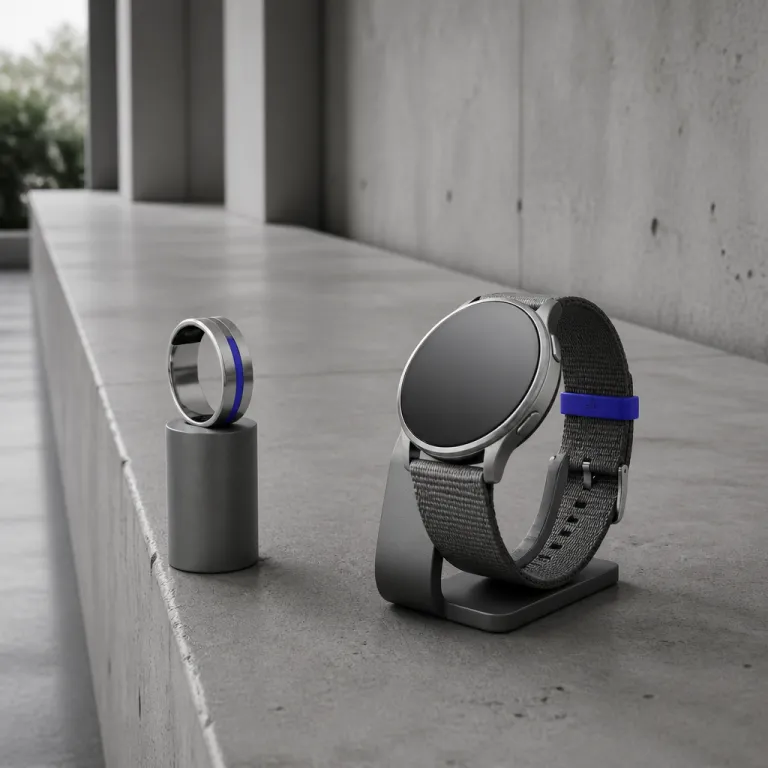
Why pairing a smart ring and watch together is not just gadget stacking
Wearing a smart ring and watch together can look excessive at first glance. For many people focused on long term health, this pairing quietly solves problems that a single device never quite handles, especially around sleep, recovery and all day comfort. The key is understanding what the ring on your finger does best and what the watch on your wrist actually adds in real life.
A smart ring such as Oura Ring, Ultrahuman Ring Air or a future Galaxy Ring sits on the finger where blood vessels are closer to the skin, so optical sensors can track heart rate and heart rate variability with more stability during sleep. Several validation studies have reported lower motion artefacts and tighter agreement with ECG for finger based HRV during the night compared with wrist sensors, especially in side sleepers. For example, Kinnunen et al. (2020, Biomed Eng Online) and de Zambotti et al. (2017, Behav Sleep Med) found that finger based PPG from devices similar to Oura tracked nocturnal HR and HRV within a few milliseconds of ECG in resting conditions. That same ring is almost invisible in a meeting, does not buzz with every app notification and usually offers better battery life than a bright screen watch, with many rings lasting four to seven days per charge, which makes it ideal for continuous health tracking. A smartwatch like an Apple Watch, Garmin Forerunner, Galaxy Watch or Watch Ultra shines when you start a workout, because it gives you live pace, heart rate zones, GPS maps and the ability to dismiss alarm alerts or calls without touching your phone.
When you use a smart ring and watch together, the ring quietly collects health data such as resting heart rate, sleep patterns, sleep heart trends and skin temperature changes, while the watch focuses on active fitness tracking during the day. That division of labour means the watch battery is not drained by constant overnight sleep tracking, and the ring sensors are not confused by wrist movement during interval training. For a health optimizer who cares about nuanced health tracking more than step trophies, this two device strategy can feel less like duplication and more like finally getting the right tool for each job.
How rings and watches split the work of health and fitness tracking
Smart ring vs smartwatch sleep tracking and recovery data
The smartest way to use a smart ring and watch together is to assign each device a clear role. Think of the ring as your passive health tracking specialist and the watch as your active fitness and notification hub during the day. Once you stop asking one device to do everything, both the ring and the watch suddenly feel more accurate and less annoying.
On the finger, smart rings such as Oura, RingConn or a Samsung Galaxy Ring prototype can focus on sleep tracking, overnight heart rate, HRV and skin temperature without the distraction of a bright display. Peer reviewed comparisons have found that finger based PPG can track nocturnal HRV within a few milliseconds of ECG in resting conditions, which is good enough for most recovery scores. Kinnunen et al. (2020) and de Zambotti et al. (2017) both reported that finger worn sensors showed tighter agreement with ECG derived HRV than typical wrist based wearables during stable sleep. That ring can feed health data into a central health app such as Apple Health, Google Fit or Samsung Health, where it sits alongside your workout sessions from a Garmin, Apple Watch or Galaxy Watch. On the wrist, a training focused watch like a Garmin Forerunner 265, a Fenix, an Apple Watch Ultra or a Samsung Galaxy Watch can track runs, rides and swims with GPS, while you glance at pace, heart rate and lap time without fumbling for your phone.
Comparison table: smart ring and smartwatch roles, sensors and limits
Some ecosystems already make this ring watch partnership smoother, because the apps talk to each other rather than creating data silos that you will never fully trust. Oura can export sleep and recovery scores into Apple Health, which your Apple Watch and other devices can read, while Garmin Connect can import ring data through third party Connect IQ apps so that your training load reflects both workouts and sleep. If you are comparing the broader economics of premium tracking platforms and subscriptions, an analysis of the real value behind Whoop style business models can help you judge whether paying for multiple devices and services actually fits your budget and priorities.
| Device type | Typical sensors | Typical battery life | Best use cases | Key limitations |
|---|---|---|---|---|
| Smart ring (e.g., Oura Ring, Ultrahuman Ring Air, RingConn) | PPG heart rate, HRV, skin temperature, accelerometer | About 4–7 days per charge (Oura Ring battery life is usually quoted around 4–6 days; Ultrahuman and similar rings often claim up to a week) | Sleep tracking, nightly HRV, resting heart rate, subtle temperature trends, discreet 24/7 wear | No display for live pace or GPS, limited workout controls, depends heavily on app quality |
| Smartwatch (e.g., Apple Watch, Garmin Forerunner, Galaxy Watch, Fenix) | PPG heart rate, GPS, barometer, accelerometer, gyroscope, sometimes ECG and SpO2 | Roughly 18–36 hours for Apple Watch, 2–3 days for Galaxy Watch, and about 6–14 days for Garmin Fenix in smartwatch mode, based on manufacturer specifications | Structured workouts, real time heart rate and pace, navigation, notifications, safety features | Less comfortable for sleep, shorter battery life with GPS, more frequent charging and alerts |
When doubling up is overkill and when it genuinely helps
Not everyone needs a smart ring and watch together, and for many casual users one good device is plenty. If you only glance at your health app once a day, rarely track structured workouts and mostly care about step counts, a single midrange Fitbit, Garmin or Galaxy Watch will cover your needs without adding another device to charge. In that case, buying both a ring and a watch mostly adds cost, complexity and more notifications to dismiss alarm fatigue rather than better health tracking.
Where the ring plus watch combo shines is with people who push their bodies or their schedules hard and want their health data to keep up. Triathletes often pair a Garmin Forerunner or Fenix with an Oura Ring or Ultrahuman ring, because the watch excels at interval sessions, open water swims and bike power metrics, while the ring gives more stable nocturnal heart rate and HRV to guide recovery. Small studies in endurance athletes have shown that nightly HRV trends from finger based sensors correlate well with changes in training load and perceived fatigue, which makes them useful for deciding when to back off. For instance, research by Plews et al. (2013, Int J Sports Physiol Perform) and Bellenger et al. (2016, Sports Med) reported that HRV guided training adjustments could track fatigue and performance changes in endurance sports. Shift workers, new parents and people with insomnia also benefit, since a comfortable ring on the finger can track fragmented sleep, sleep changes and sleep heart patterns without the bulk of a watch pressing against the wrist all night.
There is a cost reality here, because a premium smart ring plus a capable watch can rival or exceed the price of a single high end device such as a Fenix or Watch Ultra. Before you commit, it is worth reading critical analyses of why many smart rings will struggle to survive as a category, so you understand the risks of buying into a small brand with limited software support. The goal is not to collect rings and watches for their own sake, but to pay once for a setup that will still feel useful and reliable several years from now.
Managing data conflicts, platforms and battery life with two devices
Running a smart ring and watch together means you will sometimes see clashing advice from different apps. One device might say you are primed for a hard interval session, while the other warns that your sleep tracking shows poor recovery and your heart rate variability is still suppressed. The trick is to understand what each device measures well and to decide in advance which health app gets the final say for specific questions.
Finger based smart rings tend to win for overnight metrics such as resting heart rate, HRV, sleep stability and skin temperature trends, because the sensors sit closer to arteries and are less disturbed by movement. Wrist based watches such as Apple Watch, Garmin or Galaxy Watch usually win for real time heart rate during workouts, GPS accuracy and practical features such as the ability to dismiss alarm prompts, handle calls and show navigation cues. When the ring says you are recovered but the watch flags high training load, many experienced athletes treat the ring as the authority on recovery and the watch as the authority on session quality, then adjust the day accordingly.
Battery life is another reason people split duties between a ring and a watch, because each device can be optimized for its strongest role. A ring with no display can often run for several days while continuously tracking sleep, health data and low intensity activity, so you only need to charge it briefly during a shower. Typical figures are around four to six days for many smart rings, compared with roughly 18 to 36 hours for an Apple Watch, two to three days for a Galaxy Watch and up to a week or more for a Garmin Fenix in smartwatch mode. These estimates come from manufacturer battery life specifications and independent reviews that test continuous heart rate and mixed GPS use. That frees your watch battery to focus on bright screens, GPS and frequent wrist raises, and if you plan to swim or surf with your watch it is worth reading a detailed guide on what 5 ATM versus 10 ATM water resistance really means before trusting any device in the ocean.
Who should stick to one device and which single trackers come closest
Some people are better served by choosing one excellent tracker rather than juggling a smart ring and watch together. If you hate charging gadgets, dislike wearing anything on your finger and mainly want simple fitness tracking with occasional sleep insights, a single Garmin, Fitbit or Galaxy Watch is easier to live with. The same applies if you find health data stressful, because two apps with different readiness scores can nudge you into overthinking every rest day.
Several all in one devices try to cover both deep health tracking and serious sport features, and they come closer every generation. A Garmin Fenix or Forerunner 965 combines long battery life, robust GPS, training load metrics and decent sleep tracking, while an Apple Watch Ultra or a high end Samsung Galaxy Watch offers rich apps, safety features and a bright screen that makes it easy to track pace and heart rate during workouts. None of these watches yet match the comfort and nocturnal stability of the best smart rings for sleep heart metrics or subtle skin temperature shifts, but they are good enough for many people who prefer one device on the wrist.
If you are drawn to the idea of a ring watch pairing but unsure about long term support, it is worth checking how well each brand integrates with Apple Health, Google Fit or Samsung Health before buying. A Samsung Galaxy Ring, Oura Ring or RingConn that syncs cleanly into those platforms will feel more future proof than hardware that locks your health data into a weak app with limited exports. In the end, the right choice is not about owning the most smart rings or the flashiest watch, but about picking the device or devices that quietly help you sleep better, move more and make calmer decisions about your health every single day.
FAQ
Is wearing a smart ring and a smartwatch at the same time safe for my health ?
For most people, wearing a smart ring on the finger and a watch on the wrist is considered safe, because both devices use low power optical sensors and Bluetooth signals that fall well below international exposure limits. Published measurements of Bluetooth wearables show power levels many times lower than typical smartphones and Wi Fi routers. If you have a medical implant or specific concerns about electromagnetic fields, your cardiologist or device manufacturer is the best source of personalized advice. Skin irritation is usually a bigger practical issue than radiation, so choosing the right ring size, cleaning the device regularly and giving your skin short breaks can prevent most problems.
Will a smart ring replace my fitness watch eventually ?
A smart ring is unlikely to replace a full fitness watch for people who rely on real time workout feedback, GPS maps and on wrist controls. Rings excel at passive health tracking such as sleep, resting heart rate and skin temperature, but they cannot yet show pace, distance or navigation cues during a run or ride. For many health focused users, the most realistic future is a ring handling 24/7 health data and a simpler watch reserved for exercise sessions.
How do I choose which app to trust when my ring and watch disagree ?
The simplest approach is to assign each health app a clear domain, such as trusting the ring’s app for sleep and recovery and the watch’s app for workout quality and training load. When the numbers conflict, look at trends rather than single day scores, because one bad night or one hard session rarely defines your overall health. If constant disagreement stresses you, consider turning off some readiness scores and focusing on a few core metrics such as resting heart rate, HRV and weekly active minutes.
Do I need a premium subscription for both my smart ring and my watch ?
Many smart rings and some watches lock advanced insights such as detailed sleep staging, readiness scores or long term health trends behind paid subscriptions. Before you subscribe twice, check whether exporting data into a central platform such as Apple Health, Google Fit or Samsung Health already gives you the graphs and summaries you care about. In many cases, paying for one premium service and using the other device in its free mode offers most of the value without doubling your ongoing costs.
What is the best combo for someone focused mainly on sleep and stress ?
If sleep and stress are your top priorities, a comfortable smart ring paired with a simple, reliable watch is usually the most balanced setup. The ring can handle detailed sleep tracking, HRV and skin temperature trends, while the watch focuses on gentle activity tracking, heart rate during walks and basic notifications. Look for a ring with strong battery life and a health app you enjoy using, then choose a watch that feels comfortable enough to wear all day without tempting you to check your wrist every few minutes.
Sources
Oura documentation; Apple Watch health features overview; Garmin training and recovery metrics guide; Kinnunen H et al., “Feasibility of wrist and finger PPG-based nocturnal HR and HRV assessment,” Biomed Eng Online, 2020; de Zambotti M et al., “Measures of sleep and cardiac functioning during sleep using a multi-sensor ring,” Behav Sleep Med, 2017; Plews DJ et al., “Training adaptation and heart rate variability in elite endurance athletes,” Int J Sports Physiol Perform, 2013; Bellenger CR et al., “Monitoring athletic training status through autonomic heart rate regulation,” Sports Med, 2016; peer reviewed studies on finger versus wrist photoplethysmography accuracy; published battery life specifications from major wearable manufacturers.