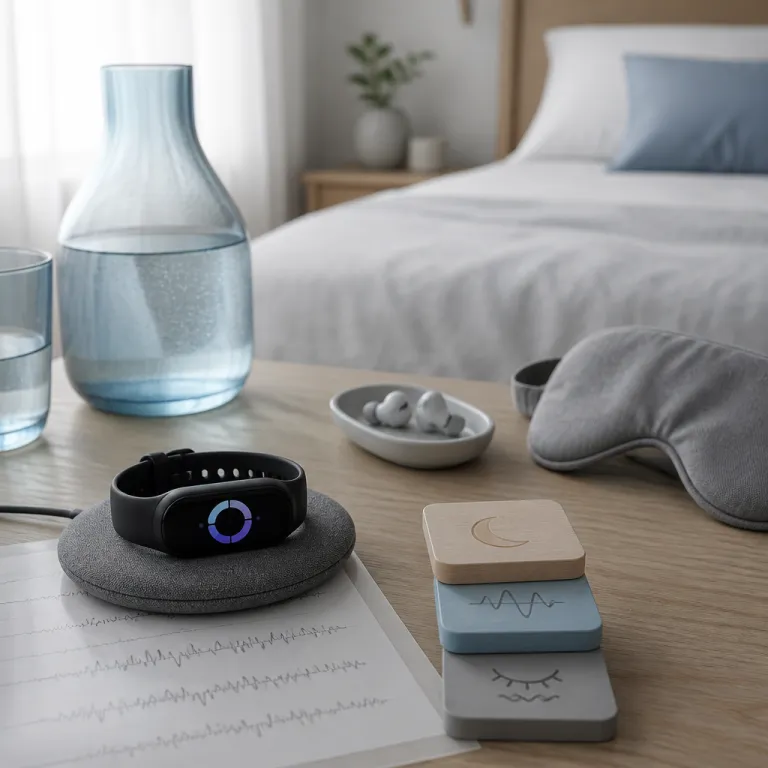
Sleep stages explained in a wearable world
Your fitness tracker turns a messy night of sleep into neat coloured bars. Those bars represent each sleep stage, and understanding them is the only way to make sense of any sleep stages explained wearable chart. When you know what light sleep, deep sleep and REM sleep actually do, the graph stops being a guilt trip and starts becoming a practical health tool.
Every normal sleep cycle lasts roughly ninety minutes and contains several stages that repeat four to six times per night. In a typical sleep cycle you spend about half the night in light sleep, around one fifth in deep sleep and another fifth in REM sleep, with brief sleep wake moments that you rarely remember. Wearable devices like a Fitbit, an Apple Watch, an Oura Ring or a basic sleep tracker try to classify each sleep stage by combining heart rate, wrist movement and sometimes breathing data.
Clinical sleep laboratories use polysomnography, usually shortened to PSG, which measures brain activity, eye movement and muscle tone directly. Your consumer sleep tracker does not see your brain, so it guesses each stage from patterns in heart rate and movement instead. That is why sleep stages explained wearable graphs are helpful trends, not medical diagnoses, and why comparing them to full PSG reports will always show gaps.
Most modern sleep trackers rely on a green light sensor called PPG to track heart rate and heart rate variability all night. They combine that heart data with accelerometer movement data to estimate when you are in light sleep, deep sleep, REM sleep or fully wake. This process is called stage classification, and it is the reason your tracker can show colourful sleep stages instead of a single total sleep number.
Brands use different stage classification algorithms, so a Fitbit, an Apple Watch and an Oura Ring can label the same night differently. Garmin, Oura and Fitbit devices that combine PPG with motion usually match PSG stage classification around eighty percent of the time, while older accelerometer only devices can overestimate deep sleep by ten to twenty percent. That gap matters when you are trying to judge sleep quality from a single night rather than from long term sleep tracking trends.
What light, deep and REM sleep actually do for your body
Light sleep is the on ramp of every sleep cycle, and it takes up the largest share of your night. During light sleep your brain activity slows slightly, your muscles relax and your heart rate drifts down, but you can still wake easily from noise or movement. On most sleep trackers light sleep looks unremarkable, yet it is the glue that holds your sleep stages together and lets you move smoothly between them.
Deep sleep is where the heavy repair work happens, especially for your muscles, immune system and metabolic health. In deep sleep your brain activity shows slow waves, your heart rate and breathing rate hit their lowest point and body movement almost disappears, which makes it easier for a wearable device to spot this sleep stage. Deep sleep is concentrated in the first half of the night, so cutting your sleep short at the start can steal more deep sleep than you realise.
REM sleep, named for the rapid eye movements that define it, is when your brain runs hot again. During REM sleep your brain activity looks almost like wake on a PSG chart, your heart rate becomes more variable and your muscles are mostly paralysed to stop you acting out dreams. This stage is crucial for memory, emotional processing and creativity, and it tends to dominate the second half of your sleep cycle.
Most people feel groggy when an alarm rips them out of deep sleep in the middle of a cycle. You usually feel more refreshed when you wake from light sleep or at the end of a REM sleep period, because your brain is already closer to wake and your heart rate has started to rise naturally. That is why some sleep trackers and sleep tracking apps offer smart alarms that try to time your wake window to a lighter sleep stage.
Wearable devices estimate these stages by watching how your heart rate, movement and sometimes breathing change across the night. When your tracker sees very low heart rate, almost no movement and stable breathing, it labels that block as deep sleep, while more variable heart rate and tiny bursts of movement often signal REM sleep. Light sleep and brief sleep wake moments fill the gaps between those anchors, which is why the exact minutes of each stage can shift from one device to another.
If you care about sleep quality rather than just total duration, focus on the balance between light sleep, deep sleep and REM sleep over several weeks. A healthy pattern usually shows more deep sleep in the first half of the night and more REM sleep in the early morning, with short wake periods that you may not remember. When your sleep tracker shows long wake gaps, very fragmented stages or almost no deep sleep, that is a sign to review your habits or speak with a clinician who can order PSG testing.
For practical tips on improving sleep quality, including how joint support can reduce night time movement, you can read this guide on how a wrist brace can improve your sleep quality. Reducing pain and micro movements can help your wearable device see cleaner stage classification and more stable heart rate patterns. That in turn makes your sleep stages explained wearable graphs more reliable and easier to act on.
Why your tracker is probably wrong about the exact minutes, but still useful
Consumer sleep trackers are not mini sleep laboratories, and they never will be. A PSG setup uses electrodes on your scalp to read brain activity, sensors near your eyes to track rapid eye movements and belts on your chest to measure breathing, while your wearable device only sees heart rate and movement. That is why every expert treats sleep stages explained wearable charts as educated guesses rather than precise medical data.
Accelerometer only devices, including many older budget models, mainly watch wrist movement to decide whether you are in sleep or wake. When your arm stays still for long periods these devices often assume deep sleep, which is why they can overestimate deep sleep by ten to twenty percent compared with PSG measurements. You might feel exhausted after a restless night while your basic sleep tracker proudly reports huge blocks of deep sleep that never really happened.
More advanced wearables such as the Oura Ring, recent Fitbit models and the Apple Watch use both PPG heart rate sensors and motion tracking to improve stage classification. These devices look at how your heart rate drops into a nightly valley, how heart rate variability changes across each sleep cycle and how your movement patterns shift between light sleep, deep sleep and REM sleep. In research comparisons they usually match PSG stage classification around eighty to eighty five percent of the time, which is good enough for trends but not for diagnosing sleep disorders.
Different brands use different algorithms, so comparing your Garmin or Fitbit sleep stages to your partner’s Oura sleep stages is like comparing two weather apps that use different satellites. One device might label a borderline block as light sleep while another calls it REM sleep, even though your underlying brain activity was the same. The useful comparison is you versus your own baseline, not you versus someone else or versus another tracker.
Focus on patterns that repeat across many nights, such as consistently short deep sleep, very low REM sleep or frequent long wake periods. If your sleep tracker shows that your deep sleep shrinks whenever you drink alcohol late, or that your REM sleep collapses after heavy evening screen time, that pattern is more trustworthy than any single number. Adults over forty often see deep sleep fall by one to two percent per decade, so a slow decline in deep sleep on your wearable device can reflect real ageing rather than a sudden problem.
Hydration, temperature and exercise timing also shape your sleep stages and your sleep efficiency, which is the ratio of time asleep to time in bed. For a deeper look at how body signals are tracked in fitness, including hydration alongside heart rate and movement, see this explainer on how HDrop is changing the way we track hydration in fitness. The same logic applies to sleep tracking, where better sensors and smarter algorithms slowly narrow the gap between consumer sleep devices and PSG without fully closing it.
The stage you are most likely missing and how to protect it
Most people who wear a sleep tracker worry first about total sleep time. The more revealing question is which sleep stage you are consistently short on, because missing deep sleep or REM sleep has very different effects on your body and brain. Sleep stages explained wearable graphs can highlight those deficits long before you feel fully burnt out.
Deep sleep is the stage most adults start to lose after forty, often dropping by one to two percent per decade. When deep sleep shrinks, your physical recovery, immune resilience and glucose regulation can all suffer, even if your total sleep still looks acceptable. On a wearable device that often shows up as shorter deep sleep blocks in the first half of the night and more time stuck in light sleep instead.
To protect deep sleep, treat the first half of your night as sacred recovery time. Go to bed at a consistent hour, keep your bedroom cool around eighteen degrees Celsius and avoid heavy meals or intense exercise in the last two hours before sleep, because both can keep your heart rate elevated and delay deep sleep. Limiting caffeine after mid afternoon also helps your brain slide into deep sleep more easily during the first sleep cycle.
REM sleep is especially vulnerable to alcohol and irregular schedules. Even moderate evening drinking can suppress REM sleep on the first night and trigger a REM rebound on the next, which your sleep tracker may show as wild swings in REM percentages and more fragmented sleep wake patterns. If your wearable device regularly reports very low REM sleep after social evenings, that is your cue to move drinks earlier or reduce the amount.
Light sleep usually takes care of itself, but very fragmented light sleep with frequent wake periods can wreck sleep quality. When your tracker shows lots of short wake episodes, look for triggers such as late screen time, bedroom noise, pets on the bed or untreated pain that increases movement and heart rate spikes. Small changes like blackout curtains, earplugs or a different mattress can reduce movement and help your device record smoother sleep cycles with better sleep efficiency.
If you are choosing a new tracker mainly for sleep tracking, prioritise comfort and battery life over exotic metrics. A slim Oura Ring or a soft band on a Fitbit Charge will usually give more reliable sleep data than a bulky sports watch you keep taking off, even if the larger device offers advanced heart rate graphs and training metrics. For a deeper dive into serious training wearables that still handle sleep well, you can browse this guide to refined fitness watches for men who take training seriously, then cross check which models balance sleep tracking with all day comfort.
Turning your nightly graph into smarter habits
A sleep stages explained wearable chart is only useful if it changes what you do tomorrow. Start by tracking your average bedtime, wake time and total sleep over at least two weeks, then look at how your deep sleep, REM sleep and light sleep percentages shift with different habits. You are looking for simple cause and effect patterns, not perfection.
Pick one lever at a time, such as moving caffeine earlier, dimming screens an hour before bed or keeping your bedroom cooler. Watch how your sleep tracker responds over several nights, especially whether deep sleep in the first half of the night grows and whether REM sleep in the early morning becomes less fragmented. If your heart rate stays lower and your sleep efficiency improves, you have found a habit worth keeping.
Use your wearable device to spot social jet lag, which is the gap between your weekday and weekend sleep schedules. Large swings in bedtime and wake time can scramble your internal clock, leading to more time in light sleep and less predictable deep sleep and REM sleep across each sleep cycle. Your tracker’s data can show whether a slightly earlier weekend night still gives you enough recovery without wrecking Monday.
Pay attention to how you feel, not just to the numbers. If you wake refreshed, maintain focus and feel emotionally stable, that subjective sleep quality matters more than whether your device reports fifteen or twenty percent REM sleep on a given night. When your lived experience and your sleep tracker data disagree consistently, trust your body first and use the device as a prompt to investigate, not as a judge.
Remember that no consumer sleep device can see brain activity directly, so every stage classification is an estimate built from heart rate and movement. The value lies in trends, in how your sleep wake pattern shifts when you change your behaviour, not in chasing a perfect deep sleep score. In the end it is not the step count or the sleep graph that changes your health, but what you choose to do with both.
FAQ
How accurate are sleep stages on wearables compared with a sleep lab ?
Wearables that combine PPG heart rate sensors with accelerometers, such as the Oura Ring, recent Fitbit models and the Apple Watch, usually match PSG stage classification around eighty to eighty five percent of the time. Accelerometer only devices are less accurate and often overestimate deep sleep by ten to twenty percent. For diagnosing sleep disorders you still need PSG in a clinical sleep laboratory, but for tracking trends over time a good consumer sleep tracker is usually sufficient.
Why does my tracker say I had lots of deep sleep but I feel exhausted ?
Many trackers misclassify long periods of stillness as deep sleep, especially if they rely mainly on movement rather than detailed heart rate patterns. You might lie awake but motionless, and the device logs that as deep sleep even though your brain activity stayed in a wake state. Trust your daytime functioning first and use the data as a rough guide, not as proof that your sleep quality was perfect.
Can I compare my sleep stages with someone using a different brand ?
Comparing sleep stages between different brands is unreliable because each company uses its own algorithms and thresholds. A block that one device labels as light sleep might be called REM sleep or even wake by another tracker, even when the underlying physiology is the same. It is more meaningful to compare your own data over time on a single device than to compare with a partner or friend using another brand.
Which sleep stage should I focus on improving first ?
For most adults, especially after forty, protecting deep sleep in the first half of the night brings the biggest payoff for physical recovery and metabolic health. If you drink alcohol regularly or keep very irregular hours, REM sleep may also need attention, because both habits can suppress REM sleep and fragment your sleep cycle. Light sleep usually adjusts automatically when deep sleep and REM sleep are supported by consistent schedules, a cool dark bedroom and sensible caffeine timing.
Do smart alarms that wake me in light sleep really help ?
Smart alarms try to wake you during light sleep or at the end of a REM sleep period, based on heart rate and movement patterns. When they succeed you often feel less groggy because your brain is closer to wake, but the system is not perfect and can misjudge stages on some nights. Treat smart alarms as a comfort feature rather than a guarantee, and keep your main focus on getting enough total sleep with regular bed and wake times.