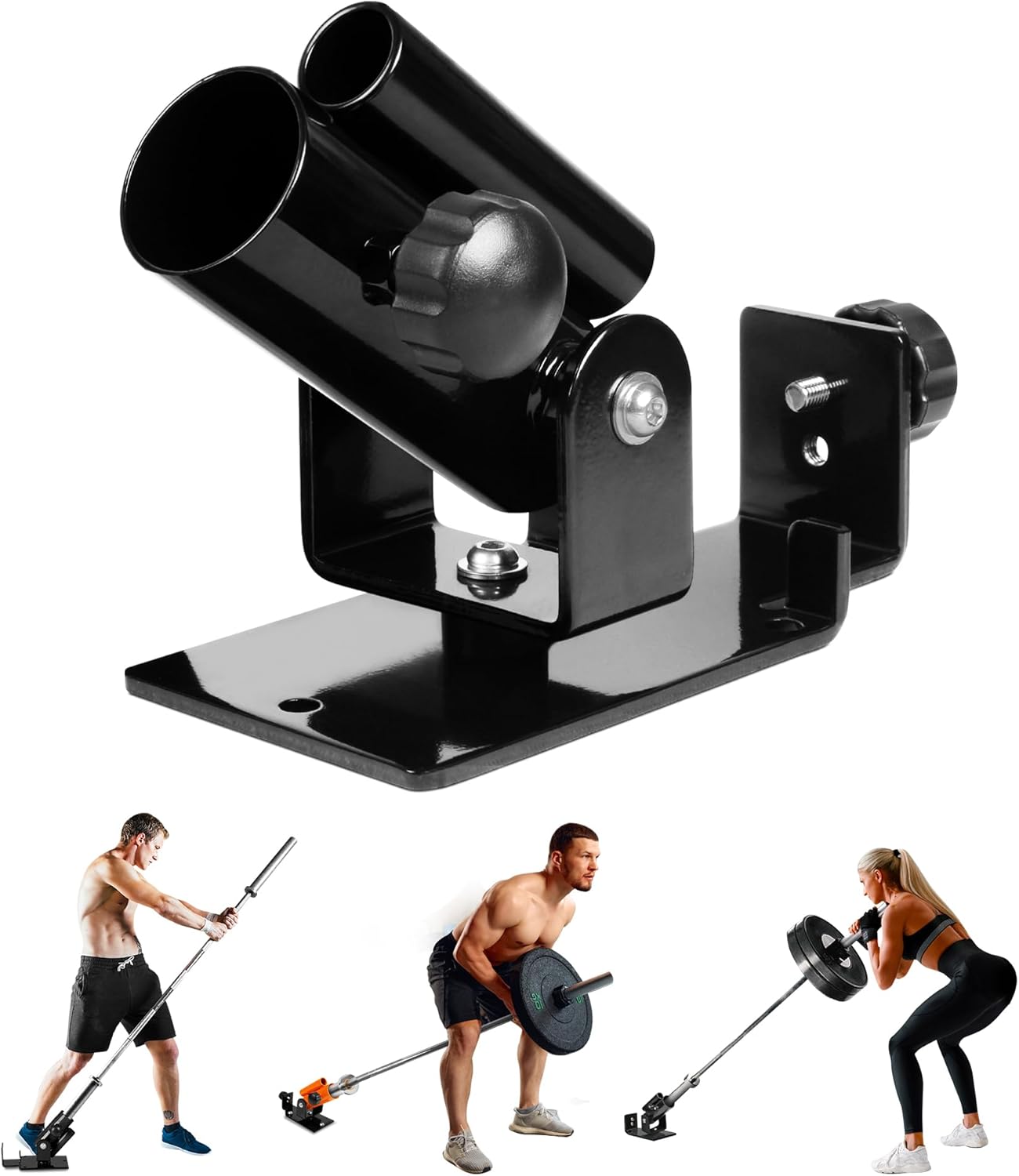
Summary
Editor's rating
Value for money: where it makes sense and where it doesn’t
Design: compact, functional, a bit of play in the swivel
Materials and build: heavy enough, not bulletproof
Durability and long-term feel
Real-world performance and space constraints
What you actually get out of the box
Effectiveness in actual training
Pros
- Compact, simple landmine base that works well for rows, presses and rotations
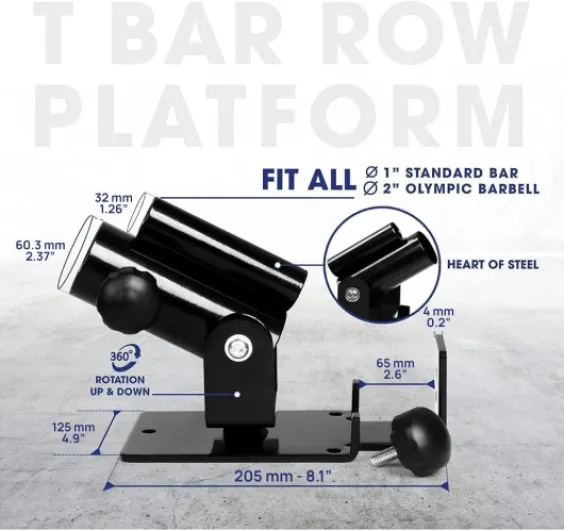
- Supports both standard and Olympic bars with a smooth enough 360° swivel
- Good value for money compared to more expensive landmine attachments
Cons
- Works best only on 2x2" frames or when bolted; can shift if the anchor isn’t heavy enough
- Some play in the joint and basic hardware, not ideal if you want a rock-solid, premium feel

Specifications
View full product page →| Brand | Yes4All |
A cheap way to add landmine work to a home gym
I picked up the Yes4All T Bar Row / landmine platform because I wanted to add rows, presses and some rotation work to my garage setup without dropping a bunch of money on a fancy branded unit. I’ve used it for a few weeks now with an Olympic bar, mainly for rows, presses and some belt squat experiments. I’m not a commercial gym owner, just a regular guy with a basic rack, some plates and a concrete floor.
First impression: it’s compact, fairly heavy for the size, and the whole thing feels more solid than the price suggests. It’s not some precision-machined piece of art, but it clearly aims at being functional rather than pretty. The swivel has a bit of play, but once you start lifting you don’t really notice it. The bar sits securely enough that I never felt like it was going to pop out or jump around on me.
I mainly used it in two ways: wedged under a heavy rack leg, and bolted to a scrap board that I can move around. Both setups worked, but they each have pros and cons that I’ll get into. If you’re expecting something that behaves like a commercial gym landmine welded to a huge base plate, you’ll see the differences pretty fast. If you just want a way to stick a bar in a pivot and start rowing, it’s fine.
Overall, after a few weeks of sessions, my feeling is pretty simple: it’s a budget landmine platform that works, with some quirks. The adjustments and mounting options are handy, the swivel range is good, and for home use with normal weights it feels safe. It’s not perfect, and you do need the right place and equipment to mount it properly, but for the price it’s hard to complain too much.
Value for money: where it makes sense and where it doesn’t
For the price, this Yes4All platform is good value for money if what you want is a simple way to do landmine exercises at home. You’re paying a fraction of what some branded landmine units cost, and in return you get a tool that basically does the same job: it holds a bar in a pivot. It’s not pretty, it’s not perfect, but it’s functional, and that’s enough for a lot of home lifters.
Where the value really shows is if you already have:
- A 7-foot barbell you’re willing to dedicate to landmine work during sessions
- A rack or machine with 2x2" tubing and decent weight to anchor it
- Enough space to use the full length of the bar without rearranging your whole gym every time
If you tick those boxes, you basically pay a modest amount and unlock a bunch of new movements: rows, presses, rotations, some leg work. Compared to buying a full T-bar row machine or a fancier landmine base, that’s pretty hard to argue with. The Amazon rating (around 4.7/5 with a lot of reviews) lines up pretty well with my experience: people seem to get what they expected.
On the downside, if you don’t have the right mounting point or you’re in a very tight space, the value goes down. You might end up buying extra lumber, hardware, or even rearranging your layout just to make it work, and at that point the "cheap" solution becomes more of a project. Also, if you’re super picky about build tolerances and want something rock solid with zero play, you’ll probably be happier spending more on a higher-end landmine attachment.
Design: compact, functional, a bit of play in the swivel
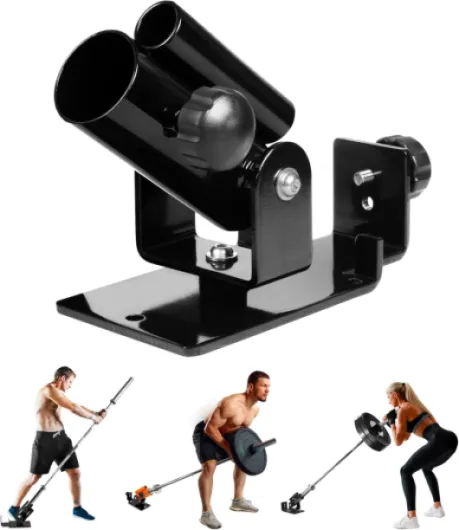
The design is pretty straightforward: flat base on the ground, vertical bracket, then a two-part tube that lets the bar move up/down and side-to-side. The whole idea is to let you do 360° rotation plus vertical movement, and in that sense, it works. I never hit any weird sticking points in the range of motion doing rows, presses or rotations – it follows you smoothly enough.
There is some slop in the joint, like a few Amazon reviewers mentioned. The swivel isn’t perfectly tight or perfectly square, and if you wiggle the empty bar you can feel a bit of play. When you’re actually lifting with some weight on the other end, it doesn’t really matter. It’s not a precision instrument, it’s a hinge for a barbell. For me it was more of a cosmetic annoyance than a real training issue.
The clamp system for attaching it under a rack leg is simple: you slide the base under the 2x2" frame, then tighten a handled bolt so it presses against the metal. It works, but because the bolt end is just raw metal, it can leave marks or scratches on your rack over time. If you’re picky about your equipment looking pristine, you might want to put a little rubber pad or tape between the bolt and the rack.
One design thing to highlight: it’s not a full "T-bar" machine by itself. People sometimes confuse the name. This is only the landmine base. If you want to do chest-supported T-bar rows or those old-school narrow-grip rows, you either use a separate V-handle over the bar or buy a specific T-bar handle attachment. So in terms of design, it’s a basic pivot point, not an all-in-one row station, which is fine as long as you know that going in.
Materials and build: heavy enough, not bulletproof
The platform is made of alloy steel with an e-coated finish. In the hand, it feels solid for home use. The base plate has a decent thickness, and the tube that holds the bar doesn’t feel flimsy. I’ve used it with up to around 3–4 plates per side on landmine rows, and at no point did I feel like the metal was flexing or about to give up. The stated 880 lb weight limit feels a bit optimistic for what a normal person will ever put on a landmine anyway, but the structure seems strong enough for anything realistic.
The finish is decent. It’s not pretty, but it’s uniform and so far has resisted scratches reasonably well. Some contact points – like where the bar slides in – will inevitably get scuffed, but that’s normal. The knobs/handled bolts are basic, with plastic handles. They work fine, but they don’t scream high-end. If you crank them down hard, they hold, but I wouldn’t go crazy torquing them every session because they feel like the weak point long-term.
One thing to keep in mind: the ends of the bolts are bare metal. On the rack side, that can chew up paint. On the bar side, tightening it down too hard will mark your bar sleeve. Personally, I don’t care much about cosmetic damage on a beater bar, but if you’re using an expensive bar with nice sleeves, I’d either avoid clamping it or put some kind of buffer (piece of rubber, tape, whatever) between the bolt and the bar.
Overall, the materials are what I’d call "good enough" for a home gym: pretty solid, nothing fancy, but it holds up. Compared to some more expensive landmine units I’ve seen in commercial gyms, you can tell where they saved money, but for the price bracket it’s in, the steel and finish feel totally acceptable. If you treat it like a tool rather than a showpiece, you’ll probably be fine with it.
Durability and long-term feel
I obviously haven’t had this thing for years, but after a few weeks of regular use (3–4 sessions per week), there are a few signs of how it will age. The steel itself feels robust. No bending, no worrying noises, no cracks in the welds. The finish has started to show some scuffs where the bar slides in and out, which is normal. Nothing is flaking off or rusting yet, even in a slightly humid garage.
The parts I’m a bit more cautious about long term are the plastic-handled bolts and the joint. The bolts do their job, but they don’t feel like something you’d find on commercial-grade gear. If you’re constantly tightening and loosening them to move the unit around or swap bars, I could see the plastic handles eventually cracking or the threads wearing down. For me, once I found a good spot, I just left it there, which should help them last.
The joint itself has some play from day one, and I don’t expect that to improve. It might get a little looser over time, but because it’s not a high-speed moving part, I don’t think it will suddenly fail. Worst case, you end up with a bit more wobble in the empty bar, which most people can live with. If you keep it reasonably clean and don’t leave it sitting in water or outside, it should hold up fine for a home gym.
Given the price point, I’d say durability is decent. It’s not built like a tank, but it doesn’t feel like disposable junk either. If you’re a heavy user doing landmine work several times a week, I’d still expect a few solid years out of it. For occasional use, probably much longer. Just don’t expect it to look pretty forever – it’s going to get scratched and dinged, and that’s kind of the deal with this type of hardware.
Real-world performance and space constraints
Performance-wise, the platform is smooth enough under load. Once you put some plates on the bar, the little bit of looseness in the joint disappears and the bar tracks cleanly. I never had it bind up at weird angles, even doing rotational stuff like landmine twists. It’s not buttery or anything like that, but for a cheap hinge it works just fine. The big plus is that you can move from rows to presses to rotations without fiddling with the base – the swivel just follows you.
One thing you absolutely need to think about is space. A standard 7-foot Olympic bar plus the width of whatever you’re mounting this to eats a lot of floor. For rows and presses, you need room both in front of and behind the base. If you’re doing landmine squats or box squats, you need even more room behind you for the bench or box. In my garage, it was fine, but I can see this being annoying in a tight apartment setup or a crowded corner.
The other performance detail is how picky it is about the frame size it clamps to. It’s clearly designed around 2x2" tubing. On my rack with 2x3" base tubing, it didn’t seat perfectly, and I could feel a bit of wiggle. When I tried it on a lighter piece of gear, the whole unit shifted when I went heavier on landmine squats. Once I found a heavy enough machine and clamped it there, it behaved like it should. So performance is good, but only if you meet its mounting conditions.
In short, when you give it a solid anchor and enough room, it performs well for home use: smooth pivot, no scary moments, and it handles typical training loads without complaint. If your space is cramped or your rack doesn’t have 2x2" legs, you’ll need to be a bit creative to get the same result, like bolting it to a board and weighing it down with plates.
What you actually get out of the box
Out of the box, the Yes4All platform is basically one compact unit: a flat base plate that slides under a rack leg or can be bolted down, and the swivel tube where you stick your bar. Mine didn’t come with anything fancy: just the steel piece, the knobs/bolts, and some basic hardware for mounting if you want to drill into the floor or a board. No bar, no handles beyond the knobs, so don’t expect a full T-bar row station – this is just the pivot point.
The base is small: around 10 inches long and a bit over 5 inches wide. That’s nice if you’re tight on space, because it doesn’t hog the floor. The sleeve section is long enough to give the bar some support without feeling wobbly, and it supports both 1" and 2" bars. In practice, I only used a standard 7-foot Olympic bar, and it slid in easily. There’s a knob to tighten the bar in place if you want it locked down a bit more.
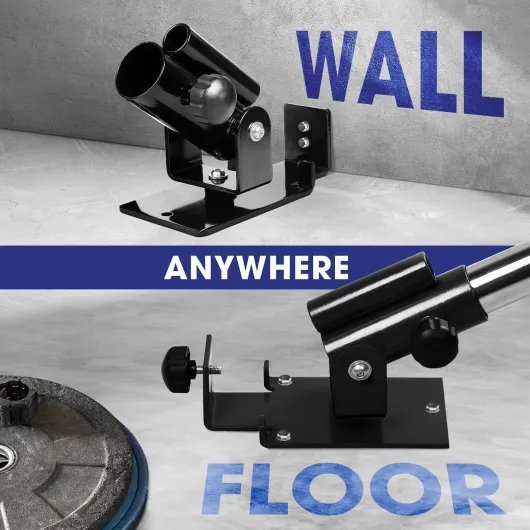
Where it gets a bit more interesting is how you mount it. You can:
- Slide it under a rack or plate tree with 2x2" tubing and clamp it with the knob.
- Bolt it to the floor or a platform using the pre-drilled holes.
- Screw it to a board or some scrap wood and then weigh that down with plates or put it under a heavy machine.
So on paper it’s pretty flexible. In real life, you quickly find out that the stability depends a lot more on what you attach it to than on the platform itself. If the thing you mount it to is light or has weird dimensions, it can shift when you start loading up heavy landmine rows or squats. That’s not really the product’s fault, but it’s something to think about before you buy it.
Effectiveness in actual training
In practice, the platform does what I bought it for: it lets me do landmine rows, presses, twists and some leg work without worrying about the bar sliding around or wrecking my walls. Compared to the classic "stick the bar in the corner" method, this is just more controlled and repeatable. The 360° swivel makes angled rows and presses feel smoother because the bar tracks with you instead of grinding into a wall or plate.
For upper back work, it’s solid. Landmine rows with a V-handle over the bar feel great, and the pivot point is low enough that you can load it decently without the angle getting too weird. I also tried single-arm landmine rows holding the bar itself, and that worked just fine. For presses, I did standing landmine presses and half-kneeling presses. The movement path felt natural, and I didn’t notice any catching or sticking, even when I moved from straight-ahead presses to more diagonal patterns.
Where you start to see the limits is with heavier leg stuff like landmine squats or belt squats if your base isn’t rock solid. When I attached it to a lighter piece of equipment, the whole thing wanted to shift if I got aggressive with the reps. Once I mounted it to something heavier, that problem went away. So the effectiveness for heavy work depends a lot on what you bolt it to. The unit itself isn’t really the bottleneck; the anchor is.
Compared to just jamming the bar into a corner, the only real "performance" gain is that you don’t chew up your walls or your bar and you get a cleaner pivot. For me, that’s enough. It doesn’t magically make the exercises better, but it makes them more convenient and consistent. If you’re already doing landmine work, you’ll feel right at home. If you’re new to it, this gives you a stable way to start without improvising with towels and corners.
Pros
- Compact, simple landmine base that works well for rows, presses and rotations
- Supports both standard and Olympic bars with a smooth enough 360° swivel
- Good value for money compared to more expensive landmine attachments
Cons
- Works best only on 2x2" frames or when bolted; can shift if the anchor isn’t heavy enough
- Some play in the joint and basic hardware, not ideal if you want a rock-solid, premium feel
Conclusion
Editor's rating
Overall, the Yes4All T Bar Row / landmine platform is a pretty solid budget option for adding landmine work to a home gym. It’s compact, does the basic job well, and feels safe under typical home training loads. The swivel has some play and the hardware is basic, but once you’re actually lifting, those small flaws don’t really get in the way. If you just want a pivot for rows, presses and some rotational work without spending a lot, it’s hard to be upset with what you get.
I’d say it’s a good fit for people who already have a barbell, some space, and a rack or heavy machine with 2x2" tubing, and who are okay with something that’s functional rather than perfect. It also suits lifters who are used to DIY-style setups and don’t mind a few scratches or a bit of looseness as long as the thing doesn’t fail under load. On the other hand, if you’re limited on space, super picky about build quality, or want a true T-bar row machine out of the box, this isn’t it. You’ll need extra handles and maybe some creative mounting to get the most out of it.
For me, it sits in that "nothing special but effective" category. It’s not the nicest piece of gear in my garage, but I use it regularly and it hasn’t given me any real trouble. As long as you’re clear about what it is – a simple landmine base, not a full machine – it offers good value and expands your training options without wrecking your budget.