Summary
Editor's rating
Value for money: good tracker, but be aware of the subscription angle
Small, discreet design that doesn’t scream ‘smartwatch’
Battery life: realistically close to the 10 days they promise
Comfort: light enough to forget, but not perfect for everyone
Durability and reliability: tough enough, with a few quirks
Tracking performance: good for basics, not a lab instrument
What the Inspire 3 actually offers in real life
Pros
- Light and comfortable to wear 24/7, good for smaller wrists
- Battery realistically lasts about a week between charges
- Tracks daily basics (steps, heart rate, sleep, simple workouts) reliably enough for normal use
Cons
- Many advanced features locked behind Fitbit Premium subscription
- Setup and account linking with Google can be annoying and raises privacy concerns
- No built-in GPS and occasional software/sync quirks reported by some users

Specifications
View full product page →| Brand | Fitbit |
A simple tracker for people who don’t want a full smartwatch
I’ve been using the Fitbit Inspire 3 on my wrist pretty much 24/7 for a few weeks. I’m not some hardcore athlete, I just wanted something to track steps, sleep, heart rate and give me a nudge to move. I didn’t want a chunky smartwatch or to charge something every couple of days. On paper, the Inspire 3 fits that role nicely: small, light, and focused on basics.
Right away, the thing that stood out was how light it is. It honestly feels more like a rubber bracelet than a watch, which is good if you hate feeling gadgets on your wrist all day. The color screen is small but clear enough for quick glances, and it survives showers and swimming without drama. I’ve banged it on a few door frames and it didn’t complain.
That said, it’s not perfect. The whole Google/Fitbit account setup is more of a headache than it should be, especially if you’re not into creating extra accounts and digging through privacy settings. Also, a lot of the “cool” features they advertise (detailed sleep stuff, readiness scores, etc.) are tied to Fitbit Premium, which is basically a subscription. You get a trial, but after that it’s more money each month if you want the full experience.
Overall, my feeling is that the Inspire 3 is a pretty solid basic tracker that gets the main jobs done: steps, heart rate, sleep, simple workouts. It’s not fancy, and it’s not the most powerful gadget out there, but if you just want a light band that tracks your daily activity and doesn’t die every two days, it does the job. You just have to accept the Google ecosystem and the push toward Premium.
Value for money: good tracker, but be aware of the subscription angle
Price-wise, the Inspire 3 sits in that mid-range fitness band category. It’s more expensive than the super cheap $20–30 no-name trackers on Amazon, but cheaper than big smartwatches from Apple, Samsung, or Garmin. For the money, you get decent build quality, a brand with a long history in fitness tracking, and a very complete app with lots of graphs and stats.
Compared to the cheaper knock-off bands, the Inspire 3 gives you more reliable tracking, a better app, and generally smoother syncing. One Amazon reviewer said they upgraded from a cheap $29.99 tracker and noticed the difference in how it tracks swimming and workouts, plus the fact that it integrates with their health insurance rewards program. That’s a real point: Fitbit is recognized by a lot of health programs and apps, while generic brands usually aren’t.
The catch with value is Fitbit Premium. You get 6 months free, which is nice to test all the features (Sleep Profile, Readiness Score, more detailed analytics, guided sessions, etc.). But after that, if you want to keep those extras, you’re paying a recurring fee. If you don’t care about that and just want basic stats, you can ignore Premium after the trial and still have a perfectly usable tracker. Just be honest with yourself: are you actually going to use the advanced stuff long-term, or is it just “cool for two weeks” and then forgotten?
Overall, I’d say the Inspire 3 is good value if: you want a small, reliable brand-name tracker, you like the Fitbit app, and you’re okay either skipping Premium after the trial or paying for it because you really use the extra data. If you just want steps and simple heart rate without caring about the app ecosystem, you could get away with something cheaper. If you want big-screen smartwatch features, spend more and go that route. This sits nicely in the middle: not cheap junk, not a full-blown smartwatch, just a solid little band at a fair price.
Small, discreet design that doesn’t scream ‘smartwatch’
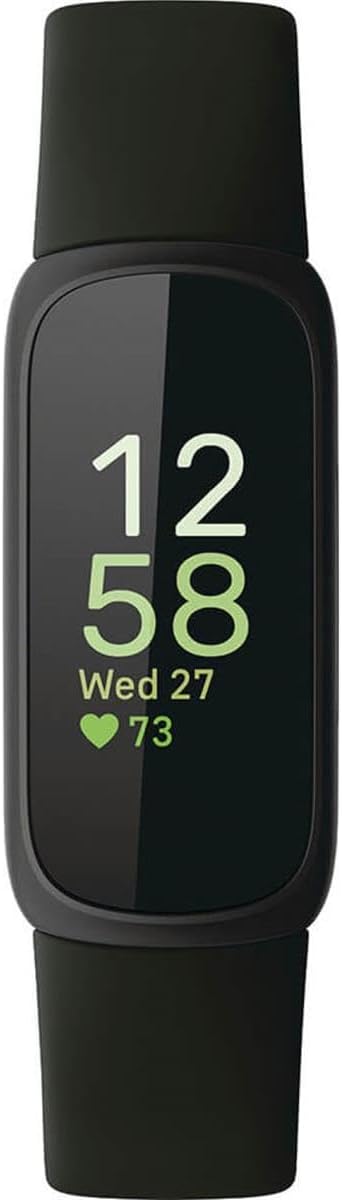
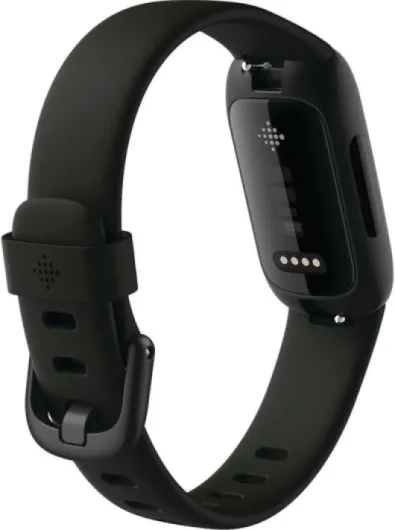
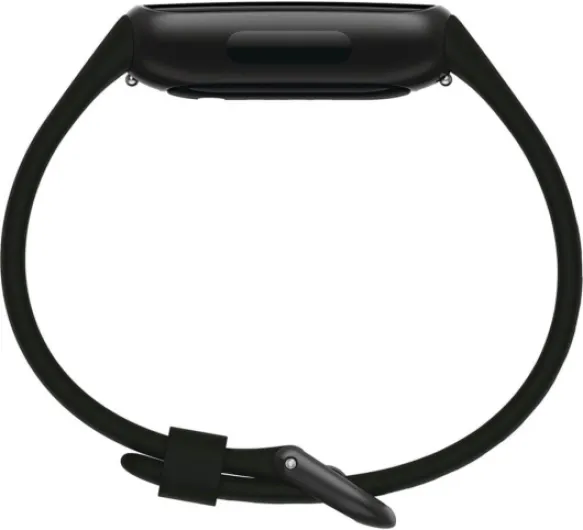
Design-wise, the Inspire 3 is very simple: a small, rectangular pill-shaped tracker with a color screen and a silicone band. If you’ve ever seen a classic fitness band, this is exactly that. No metal frame, no rotating crowns, no big bezels. It looks more like a slim bracelet than a watch, which I like because it doesn’t catch on clothing as much and it doesn’t stand out in the office or at the gym.
The screen is tiny (0.76 inches) but bright enough indoors and just okay outdoors in strong sunlight. Don’t expect to read long messages comfortably; it’s more “see who texted you” than “read a full conversation.” Swiping through menus is straightforward, though the narrow screen means you sometimes fat-finger swipes and taps. For basic navigation it’s fine, but it’s not the kind of screen you want to fiddle with for long.
One thing I appreciate: it comes with both small and large bands in the box, so you don’t have to guess your size. The default band uses a simple pin-and-tuck style, which feels secure enough for normal use and workouts. If you don’t like the basic look, there are tons of third‑party bands online: fabric, metal mesh, leather, ankle straps, you name it. That’s handy if the stock band annoys your skin or you want something that looks a bit less plasticky.
Overall, the design is plain but practical. It’s not a fashion piece, it’s a tool. If you want a big watch face, this isn’t it. If you want something that mostly disappears on your wrist and just does its job, the Inspire 3’s design fits that role. Just keep in mind the small screen is best for quick glances, not long interactions.
Battery life: realistically close to the 10 days they promise
Battery life is one of the main reasons to pick something like the Inspire 3 over a full smartwatch, and here it does pretty well. Fitbit claims up to 10 days, and in real use I got around 7–9 days depending on how many features I had turned on. With always-on display off, basic notifications, all-day heart rate, sleep tracking, and a few workouts per week, I was comfortably charging it about once a week.
If you start enabling more stuff like brighter screen, more frequent notifications, and a lot of workout tracking with connected GPS, the battery dips faster, but still way better than a typical smartwatch that needs charging every 1–2 days. For me, the sweet spot was just letting it do its thing with default settings and charging when it hit around 20%. I never had it die on me during the day once I got into a routine.
Charging itself is pretty quick. You clip the proprietary charger on, and in about an hour or so you’re back to a high percentage. It’s not instant, but it’s fast enough to top up while you shower and get ready, or during a short break. The only downside is the classic Fitbit issue: lose the charger and you’re stuck until you buy another one, since it’s not a standard cable. So it’s worth keeping a spare if you travel a lot or are prone to misplacing cables.
Overall, the battery is one of the strong points of this device. You don’t have to think about it constantly, and that alone makes it easier to wear it all the time and actually get consistent data. If you’re tired of daily charging, this is a nice change of pace. Just don’t expect a full 10 days if you’re hammering all the features at once; real-world is more like a solid week, which is still good.
Comfort: light enough to forget, but not perfect for everyone
Comfort is honestly one of the Inspire 3’s strong points. It’s super light and slim, so after a while you mostly forget it’s on your wrist. Compared to bulkier smartwatches, this is much easier to sleep with. I wore it day and night, including showers and workouts, and it never felt like a brick strapped to my arm. If you hate the feeling of big watches, this is much easier to live with.
The included silicone band is soft but a bit basic. It’s fine for most people, but depending on your skin, it can get a bit sweaty or slightly irritating in hot weather, especially if you wear it tight for accurate heart rate tracking. I sometimes loosened it a notch when I was just sitting around to give my skin a break. One Amazon reviewer mentioned using an ankle strap instead, which is actually a neat workaround if you find wrist-wearing uncomfortable at night. I tried a cheap third-party band and it did help with long-term comfort.
Sleeping with it is mostly okay, but not perfect. If you’re a side sleeper and your wrist ends up under your head or pillow, the stock band can dig in a bit. It’s not painful, just a bit annoying. I wouldn’t say it kept me awake, but I did notice it sometimes and had to adjust it. Switching to a softer or fabric band would probably fix that for most people. The good thing is, the device itself is so light that most of the comfort issue comes from the band, not the tracker.
In terms of fit, having both S and L bands in the box is helpful. It worked well on smaller wrists, and the band holes give enough adjustment range to get it snug without cutting off circulation. Overall, comfort is pretty good, especially for all-day wear. It’s not perfect for every sleeping position with the stock band, but with a different strap or an ankle setup, it can be very easy to live with 24/7.
Durability and reliability: tough enough, with a few quirks
In terms of physical durability, the Inspire 3 holds up well for a small plastic tracker. It’s water resistant to 50 meters, so showers, washing dishes, and regular swimming are fine. One Amazon user even mentioned accidentally running it through the washing machine and it survived, which lines up with how rugged these little bands can be. I’ve worn it in the rain, during sweaty workouts, and in the shower with no problems so far.
The screen doesn’t scratch easily in normal use, though if you’re rough with your hands (construction, mechanical work, etc.), you might want a cheap screen protector just in case. The band pins feel secure and I never had it fall off unexpectedly. The silicone band itself will probably show some wear over long-term use (like any rubber band), but replacements are cheap and easy to find.
Where things get a bit shaky is software reliability. Some people report random freezes or the device going blank after charging, like one reviewer who thought theirs had died after 7 months, only for it to randomly come back to life later. That kind of behavior is annoying because it makes you doubt the device, even if it works fine 99% of the time. I personally didn’t get any full-on crashes, but I did have one or two moments where syncing to the app was slow or required restarting Bluetooth.
Overall, I’d say the Inspire 3 feels pretty sturdy for daily life and casual sports, and the water resistance is genuinely useful. The hardware seems solid; the main weak spots are more on the software/app side and the occasional weird behavior after charging that some users report. If you’re okay with the occasional reboot or sync hiccup, it should hold up fine. If you want something absolutely rock-solid with zero quirks, you might get annoyed by those rare glitches.
Tracking performance: good for basics, not a lab instrument
For everyday use, the Inspire 3’s performance is good enough for normal people. Step tracking lines up pretty well with what I expect. I did a few tests counting steps over known distances and it was in the same ballpark as my phone and another fitness band. It might be off by a bit here and there, but nothing crazy. For daily goals like 8,000–10,000 steps, it’s totally fine.
The heart rate tracking is decent for steady activities like walking, easy runs, or general gym sessions. Resting heart rate trends look believable and respond to things like bad sleep or a hard workout the day before. During interval workouts or very quick changes in intensity, it sometimes lags a bit or smooths out spikes, which is normal for wrist-based sensors. If you’re doing serious training and need super accurate HR data, you’d still be better off with a chest strap, but for casual fitness it gets the job done.
Sleep tracking is where things get a bit more “ballpark” than precise. It does a nice job of showing when you fell asleep, when you woke up, and how restless you were, but I wouldn’t treat the exact minutes of deep/REM as absolute truth. I had nights where I knew I was awake in bed and it thought I was still in light sleep. That said, the overall sleep score and general trends (good night vs bad night) match how I felt in the morning, so as a general indicator it’s useful. With Premium you also get a monthly Sleep Profile, but that’s more for people who love data than something you truly need.
Workout modes are straightforward: you pick the exercise (walk, run, bike, swim, etc.) and it tracks duration, heart rate zones, and estimated calories. It can also auto-detect some activities like walks and runs, which actually works surprisingly well most of the time. Just remember there’s no built-in GPS, so if you want accurate pace and route maps, you need your phone with you. Overall performance: solid for casual tracking, not meant to replace medical devices or pro-level sports watches.
What the Inspire 3 actually offers in real life
On paper, the Fitbit Inspire 3 packs a lot into a tiny band. You get 24/7 heart rate tracking, step counting, sleep tracking with a daily sleep score, stress management score, SpO2 (blood oxygen) tracking, menstrual tracking, and about 20+ exercise modes. There’s no built-in GPS, but it can use your phone’s GPS if you bring it along. It also shows notifications from your phone (calls, texts, app alerts) and has basic stuff like timers and alarms.
In daily use, the features that actually matter (at least for me) are: steps, heart rate, sleep, and simple workouts like walks and gym sessions. The app gives you graphs for all of that: resting heart rate trends, time in heart rate zones, sleep stages (light, deep, REM), and how many Active Zone Minutes you hit each day. It also throws you a Daily Readiness Score and Stress Management Score, but these feel more like “nice extra numbers” than something I really rely on. They’re cool at first, then you kind of stop obsessing over them.
One important thing: a lot of the advanced insights, like the detailed Sleep Profile and some of the deeper analytics, are locked behind Fitbit Premium. You get a 6‑month trial, which is nice to test it out, but then it becomes a subscription. If you’re the type who likes detailed sleep breakdowns and guided workouts or mindfulness sessions, you might use it. If you just want steps and basic sleep info, you can probably skip the subscription once the trial ends.
So in practice, the Inspire 3 is a basic health and fitness tracker with a few extra bells and whistles you may or may not care about. The core tracking is there and works fine. The more advanced stuff feels more like “bonus content” designed to justify Premium, not something everyone needs. If you go into it expecting a simple tracker first, and a data nerd toy second, you’ll have more realistic expectations.
Pros
- Light and comfortable to wear 24/7, good for smaller wrists
- Battery realistically lasts about a week between charges
- Tracks daily basics (steps, heart rate, sleep, simple workouts) reliably enough for normal use
Cons
- Many advanced features locked behind Fitbit Premium subscription
- Setup and account linking with Google can be annoying and raises privacy concerns
- No built-in GPS and occasional software/sync quirks reported by some users
Conclusion
Editor's rating
The Fitbit Inspire 3 is a straightforward fitness tracker that does the basics well: steps, heart rate, sleep, and simple workouts. It’s light, comfortable for most people, and the battery life is genuinely good, with about a week between charges in real use. If you want something you can wear all day and night without feeling like you’ve strapped a brick to your wrist, this fits the bill. It’s also water resistant enough to handle showers and swimming without worry.
Where it’s less impressive is the whole Google/Fitbit ecosystem and the push toward Fitbit Premium. Setup can be more annoying than it should be, especially if you don’t already use a Google account or care about all the privacy toggles. A lot of the “fancier” features they advertise are tied to a subscription, which might feel like too much if you only wanted basic tracking. There are also occasional reports of software quirks, like freezes after charging, even though the hardware itself seems tough enough for daily use.
If you’re someone who wants a small, no-nonsense tracker mainly for steps, heart rate, and simple sleep tracking, and you don’t care about having a big smartwatch screen, the Inspire 3 is a good fit. It’s also a good option if your health insurance or rewards program works with Fitbit. On the other hand, if you hate subscriptions, don’t want to deal with Google accounts, or need super accurate training data with built-in GPS, you should probably look at other brands or higher‑end models. For everyday users who just want a reliable band that gets the job done, it’s a solid choice, as long as you go in with realistic expectations.