

What does 15,000 steps mean for your daily activity
Understanding the Impact of 15,000 Steps on Your Daily Routine
Walking 15,000 steps in a day is a significant achievement for most people. It goes well beyond the typical daily recommendation of 10,000 steps, which is often cited as a benchmark for maintaining good health. But what does this number really mean in terms of distance, calories burned, and overall fitness?
On average, 15,000 steps can translate to roughly 6.5 to 7.5 miles, depending on your stride length. The exact distance covered varies from person to person, as factors like height, gender, and walking speed all play a role in your step-to-mile conversion. For example, the average stride length for a man is about 2.5 feet, while for a woman, it’s closer to 2.2 feet. This means the number of miles you walk with 15,000 steps can differ based on your unique stride.
- Average stride length: Impacts how many miles your steps add up to
- Calories burned: Walking 15,000 steps can help burn a substantial number of calories, supporting weight management and cardiovascular health
- Daily activity: Reaching this step count often means you’re staying active throughout the day, which is linked to better fitness and lower health risks
If you’re curious about how your step count compares to even higher activity levels, you might find this guide to 20,000 steps in miles helpful for perspective.
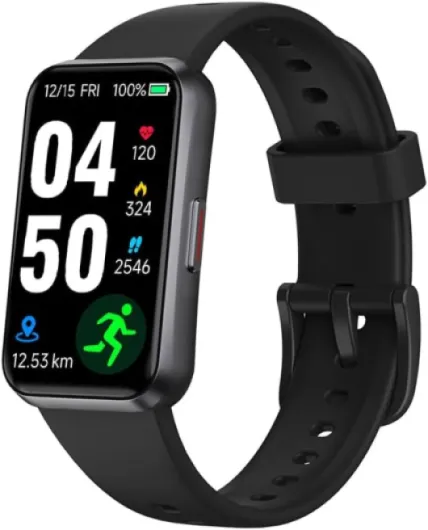
Fitness trackers make it easier to monitor your steps, distance, and calories burned. They use built-in sensors and algorithms to estimate your daily movement, but understanding how these devices calculate distance and how to improve their accuracy can help you get the most out of your fitness journey. In the next sections, we’ll look at how fitness trackers convert steps to miles, what affects your step-to-mile conversion, and how to estimate your stride length for more precise tracking.

How fitness trackers calculate distance from steps
How Do Fitness Trackers Turn Steps Into Miles?
Fitness trackers have become a popular tool for monitoring daily activity, but many people wonder how these devices convert the number of steps into miles. The process relies on a combination of sensors and algorithms to estimate the distance you walk each day. Here’s how it works:
- Step Counting: Trackers use motion sensors to detect each step you take. The total number of steps is recorded throughout the day.
- Stride Length Estimation: To convert steps into miles, the device needs to estimate your stride length — the distance covered in one step. Many trackers use your height, gender, and sometimes age to calculate an average stride length. For example, the average stride length for men is often around 2.5 feet, while for women it’s closer to 2.2 feet. However, these are just averages and may not reflect your personal stride.
- Distance Calculation: The tracker multiplies the number of steps by your estimated stride length to get the total distance walked. For instance, if you take 15,000 steps with an average stride length of 2.3 feet, you would cover about 6.5 miles. The formula is: Distance (miles) = (Steps × Stride Length in feet) ÷ 5,280.
- Calories Burned: Many devices also estimate calories burned based on your steps, distance, and sometimes heart rate. This can help you understand the impact of your daily walking on your overall health.
It’s important to note that the accuracy of these calculations depends on how closely your actual stride length matches the tracker’s estimate. If you want more precise results, you can manually enter your stride length into your device’s settings. This is especially useful if your walking style or pace differs from the average.
For those interested in the science behind these measurements, you can read more about how body composition and movement are tracked in the article on DEXA scan accuracy for tracking body composition.
Understanding how your fitness tracker converts steps to miles helps you get the most out of your device and supports your health goals. If you want to improve accuracy, consider measuring your own stride length, as discussed in the next section.
Factors that affect your step-to-mile conversion
Why your step count doesn’t always equal the same distance
When you check your fitness tracker after a long walk, you might wonder why 15,000 steps can mean different distances for different people. The conversion from steps to miles isn’t as simple as plugging numbers into a calculator. Several factors influence how many miles you actually cover with your daily step count.
- Stride length: The most important factor is your stride length, which is the distance you cover with each step. People with longer legs usually have a longer stride, so they travel farther with each step. The average stride length for a man is about 2.5 feet, while for a woman, it’s closer to 2.2 feet. But these are just averages—your own stride could be different.
- Walking speed and style: Your walking pace and style can also affect your step length. For example, brisk walking usually means longer steps, while a leisurely stroll might shorten your stride.
- Terrain and footwear: Walking uphill, on uneven ground, or in certain shoes can change your step pattern, impacting the total distance covered for the same number of steps.
- Device accuracy: Fitness trackers use built-in sensors and algorithms to estimate distance. Some rely on your height and gender to guess your stride length, while others let you enter your own measurements for better accuracy. If you want to understand more about how these devices measure your activity, check out this guide on fitness tracker accuracy.
Because of these factors, the conversion from steps to miles can vary. For example, 15,000 steps might equal about 6.5 to 7 miles for someone with an average stride, but the number can be higher or lower depending on your unique measurements. Using a steps to miles converter or a miles calculator can help, but personalizing your stride length gives you the most accurate results.
Remember, even small differences in step length add up over thousands of steps each day. That’s why understanding your own stride and how your tracker calculates distance is key for tracking your fitness and calories burned accurately.
Estimating your own stride length for better accuracy
Finding Your Personal Stride Length for Accurate Step Tracking
When you want to know how many miles you walk in a day, your stride length is a key factor. Fitness trackers use your stride length to convert steps into distance, but the default settings often use an average stride. This can lead to errors in your miles conversion, especially if your stride is longer or shorter than the average.
Stride length is the distance you cover with each step. For most people, the average step length is about 2.1 to 2.5 feet. However, this varies based on height, gender, and walking style. For example, a man’s average stride length is usually longer than a woman’s. If you want to convert steps to miles more accurately, it’s best to measure your own stride length instead of relying on general averages.
- Measure a known distance: Find a track or use a tape measure to mark out 20 or 50 feet.
- Walk at your normal pace: Count the number of steps it takes to cover the distance.
- Calculate your stride length: Divide the total distance (in feet) by the number of steps. For example, if you walk 50 feet in 20 steps, your stride length is 2.5 feet.
Once you know your stride length, you can update your fitness tracker settings or use a miles calculator or steps-to-miles converter for more accurate results. This helps you get a better estimate of how many miles your daily steps represent, and can even improve the accuracy of calories burned calculations.
Remember, your stride length can change depending on your pace. Walking steps are usually shorter than running steps. For the most precise conversion, measure your stride for the activity you do most often. This small adjustment can make a big difference in your health tracking and help you reach your fitness goals with confidence.
Common mistakes when tracking steps and distance
Common pitfalls when tracking your steps and distance
Fitness trackers have made it easier than ever to monitor your daily steps, miles, and calories burned. But even with advanced technology, there are some frequent mistakes that can affect the accuracy of your step-to-mile conversion and overall distance tracking. Here are some of the most common issues to watch out for:
- Incorrect stride length settings: Many trackers use an average stride length to estimate distance. If you haven’t measured your own stride length in feet, the device may overestimate or underestimate how many miles you actually walk each day. This is especially true if your stride is shorter or longer than the average step length for a man or woman.
- Wearing the tracker incorrectly: Placement matters. Wearing your device on your non-dominant wrist or too loosely can cause it to miss steps or count extra movements as steps, affecting your steps-to-miles conversion.
- Non-walking movements counted as steps: Activities like brushing your teeth, driving, or even moving your arms while sitting can sometimes be counted as steps. This inflates your daily step number and can mislead your miles calculator or converter.
- Ignoring calibration: Some fitness trackers allow you to calibrate for your personal stride length or walking style. Skipping this step means relying on generic averages, which may not match your actual walking steps or distance covered.
- Not updating personal data: Your height, weight, and age can influence stride length and calories burned calculations. If your profile isn’t up to date, the tracker’s estimates for miles, steps, and calories may be off.
- Assuming all steps are equal: Walking pace, terrain, and even footwear can affect your stride and the number of steps per mile. For example, walking uphill or on uneven ground may shorten your stride, changing the steps-to-miles conversion.
To get the most accurate results, take time to measure your stride length, regularly update your personal data, and be mindful of how you wear your tracker. Using a reliable steps-to-miles calculator or converter can also help you better understand your daily distance and health progress.
Tips to maximize the accuracy of your fitness tracker
Simple ways to improve your tracker’s accuracy
Getting the most out of your fitness tracker means making sure your steps, miles, and calories burned are as accurate as possible. Here are some practical tips to help you get closer to your real numbers every day :
- Set your stride length manually. Many trackers use an average stride length, but your actual stride can be quite different. Measure your stride length in feet (see earlier advice on how to do this) and enter it into your device settings. This helps convert steps to miles more precisely.
- Wear your tracker correctly. Make sure your device is snug on your wrist or clipped as recommended by the manufacturer. A loose fit can lead to missed steps or inaccurate distance conversion.
- Update your personal info. Enter your height, weight, and age accurately. These details affect step length, calories burned, and distance calculations. The more precise your data, the better your tracker’s estimates.
- Calibrate your tracker. Some devices let you calibrate by walking a known distance and letting the tracker learn your step pattern. This can improve the conversion between steps and miles, especially if your stride is longer or shorter than average.
- Check for software updates. Manufacturers often release updates that improve step counting, distance conversion, and calories burned algorithms. Keeping your device up to date ensures you benefit from these improvements.
- Be mindful of non-walking movements. Activities like driving, cooking, or even waving your arms can sometimes be counted as steps. If your tracker allows, review and edit your activity log to remove obvious errors.
Using calculators and converters for better insight
If you want to double-check your results, use an online steps-to-miles calculator or a stride length converter. These tools can help you see how many steps equal a mile for your specific stride length, or estimate calories burned based on your walking steps and distance. Remember, the number of steps per mile depends on your stride length, which can vary between a man average and a woman average, or even from day to day.
Keep your health goals in focus
Fitness trackers are great for motivation, but remember that no device is perfect. Use your tracker as a guide to help you walk more steps, convert those steps to miles, and keep an eye on your calories burned. Over time, you’ll get a better sense of your average step length, daily distance, and overall health progress.