Summary
Editor's rating
Is it worth the money without a subscription?
Looks more like jewelry than a gadget
Battery life: the 10-day claim is close, but with conditions
Surprisingly easy to forget on your finger (most of the time)
Titanium build: tough, light, and skin-friendly (at least for me)
Daily abuse test: keys, gym, water, and random knocks
Tracking accuracy: decent overall, with a few quirks
What this JKLY smart ring actually does (and doesn’t do)
Pros
- Comfortable to wear 24/7, especially for sleep, and much less intrusive than a watch
- No subscription fees and full feature access in the app with a one-time purchase
- Battery realistically lasts about 8–10 days with quick recharging
Cons
- No screen, notifications, or smart features like payments or music control
- Heart rate and workout tracking are less precise during intense exercise compared to good sports watches

Specifications
View full product page →| Brand | JKLY |
A fitness tracker that doesn't scream 'fitness tracker'
I’ve been wearing fitness watches for years, and honestly, I was getting tired of the big chunk of plastic on my wrist. So I picked up this JKLY smart ring in Goldsilver, size 7, to see if a ring could actually replace my usual watch for sleep, heart rate, and daily tracking. I’ve used it every day and night for about two weeks, showers included, and only took it off to charge it once.
My main expectation was simple: does it track the basics correctly without being annoying? I don’t care about fancy animations or badges; I just want decent heart rate, sleep, steps/activity, and ideally not having to charge it every other day. The brand pushes the whole “no subscription, free app forever” angle, which is honestly a big reason I tried it, because I’m fed up with paying monthly just to see my own sleep data.
Right away, it felt different from a watch. You almost forget it’s there, which is both good and bad. Good because it’s discreet; bad because I kept checking my wrist for stats, then remembered everything’s in the phone app. So if you’re used to glancing at your wrist, you’ll have to change that habit. No screen, no vibrations, no notifications. It really is just a passive tracker.
In this review, I’ll go through how it did in daily life: design, comfort, performance, battery, durability, and value for money. It’s not perfect, and there are a couple of small annoyances, but it does some things better than my usual smartwatch, especially for sleep and not being in my face all the time.
Is it worth the money without a subscription?
The big selling point for this ring is no subscription, free app forever. A lot of competing smart rings and watches now charge a monthly fee if you want full sleep and readiness data. Over a year or two, those fees add up fast. With this one, you pay once and that’s it. For me, that’s a big plus, because I’m tired of renting features that should be basic.
In terms of value, you have to compare it to both smartwatches and other rings. Against a mid-range smartwatch, you’re basically trading
- Pros: better comfort for sleep, longer battery, more discreet look, no notifications to distract you
- Cons: no screen, weaker workout metrics, no smart features like payments or music control
Compared to other smart rings, the hardware and features are in the same ballpark: heart rate, sleep, SpO2, temp, stress, etc. The difference is really the subscription side and maybe slightly simpler software. The app here feels less polished visually than some bigger brands, but it does the core job without locking anything behind a paywall. So you’re basically paying for a one-time tool rather than an ongoing service.
Overall, I’d say the value is pretty solid if you specifically want a low-profile health tracker with no ongoing cost. It’s not the cheapest gadget out there, and there are better options for hardcore athletes, but for everyday users who want continuous health insights without another monthly bill, it makes sense. Just be honest with yourself: if you know you’ll miss having a screen and smartwatch features, you might be happier with a traditional watch instead.
Looks more like jewelry than a gadget
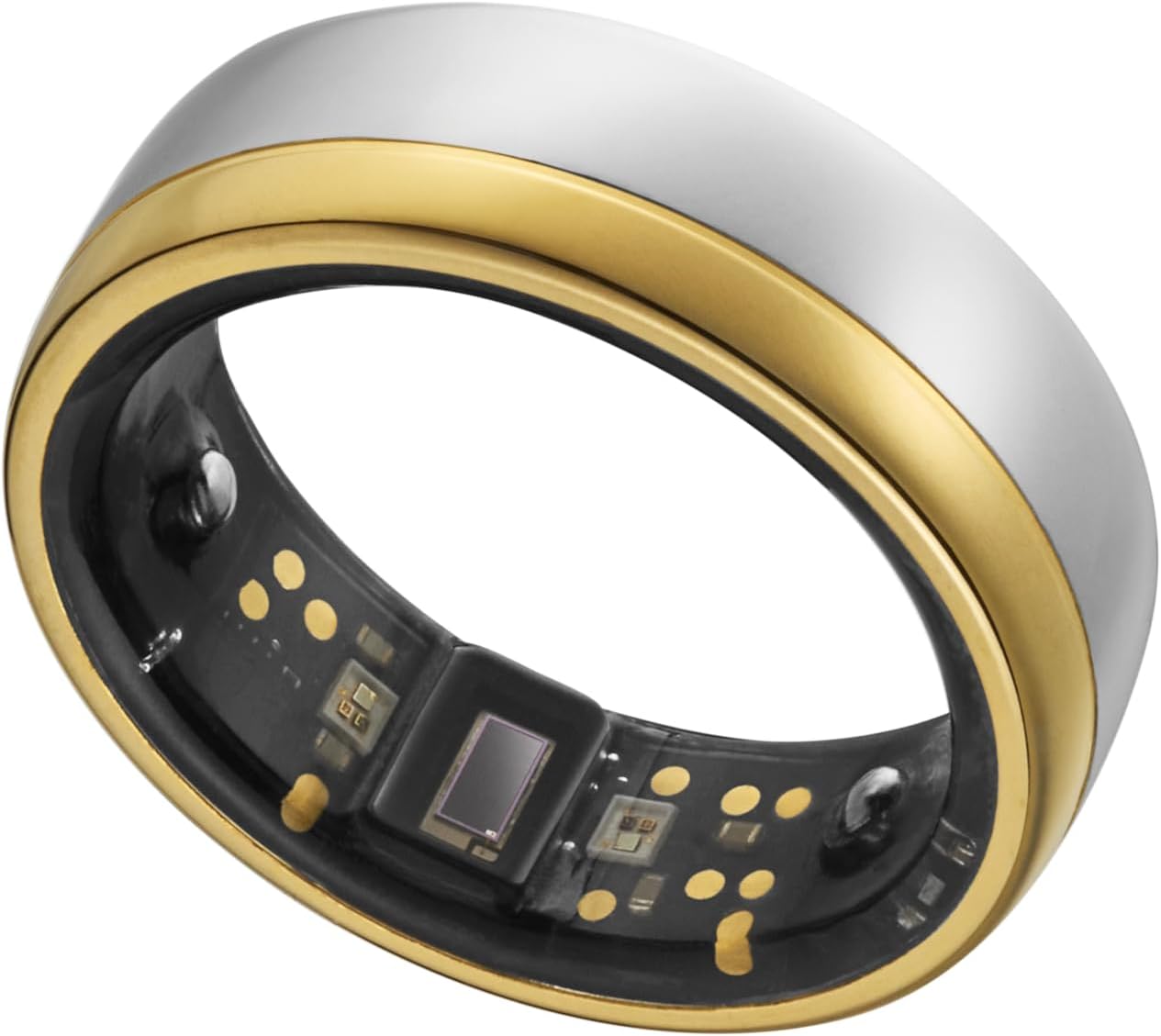
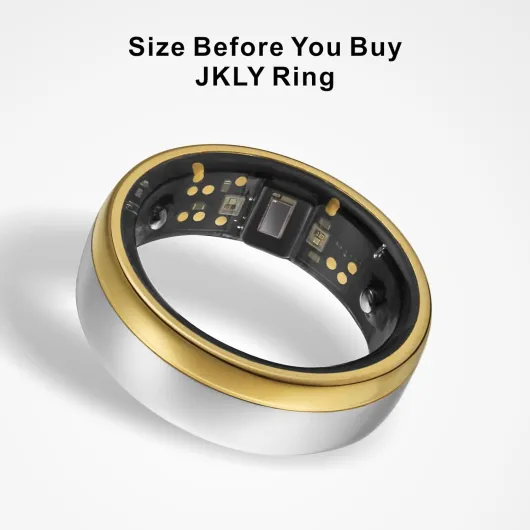
Design-wise, the ring is pretty low-key. The Goldsilver color is basically a light gold with a bit of silver tone, so it doesn’t scream tech. From a distance, it just looks like a simple metal band. Up close, you can see it’s slightly thicker than a normal ring, but not crazy. There’s no logo screaming on the outside, which I appreciate. It sits flush enough that it didn’t snag on my pockets or clothes much.
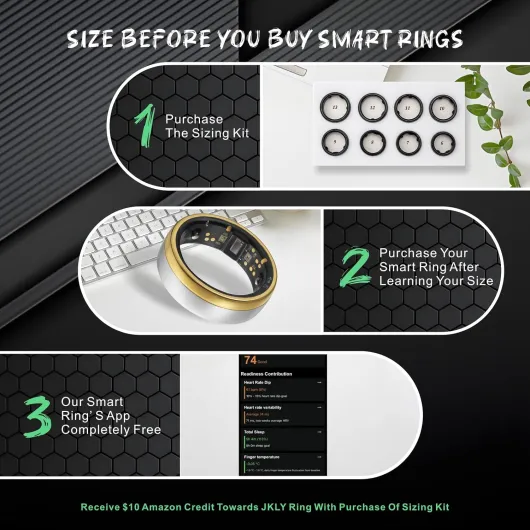
The inside of the ring is where all the tech is: sensors, little green LEDs for heart rate, and the charging contacts. It’s slightly rounded inside, so it slides on and off fairly easily once you’ve got the right size. They push the idea of using a sizing kit first, and I get why: if it’s too loose, the sensors will give messy data; too tight, and it’ll be annoying to wear all day. I went with my usual ring size and it was okay, but if you’re between sizes, I’d honestly use their kit.
One thing to note: it’s thicker than a wedding band, so if you already wear rings on the same hand, you might feel it a bit when your fingers are close together. I wore it on my index finger as they recommend, and that felt the most natural for me. On the ring finger, I sometimes felt it press when gripping weights at the gym, but nothing dramatic. It does look a bit chunky if you have very thin fingers, so keep that in mind.
Overall, the design is pretty solid and discreet. It’s not jewelry-level fancy, but it doesn’t look like a toy either. If you’re tired of plastic wristbands, this is a nice change. Just remember: no display means you’ll be opening the app more often if you like checking your stats during the day.
Battery life: the 10-day claim is close, but with conditions
The brand claims up to 10 days of battery, and I tried to push it to see how close it gets. With 24/7 wear, all sensors on (including continuous heart rate and temp), one or two short tracked workouts per day, and checking the app a few times daily, I got around 8–9 days before it dropped under 10% and I decided to charge it. So not the full 10 days, but not far either.
On a lighter week, where I did fewer tracked workouts and opened the app less, it did get basically to the 10-day mark. So the claim is realistic if you’re not constantly syncing or recording long sessions. Compared to my smartwatch that needs charging every 2–3 days, it’s a big relief. You can easily go through a work week and a weekend trip without even thinking about the charger.
Charging itself is simple: you drop it on the included charger (a little dock), and it goes from almost empty to full in about 60–80 minutes in my case. I usually just charged it while showering and getting ready in the morning once it got low, and that was enough. The charger is small but not super travel-friendly on its own because if you lose it, you’re stuck. It’s one of those proprietary shapes, not USB-C direct on the ring, so you’ll want to keep track of it.
In practice, the no-screen, no notifications design clearly helps battery life. If you’re used to daily charging with a watch, this feels pretty freeing. Just don’t expect miracles if you’re constantly opening the app or doing GPS-linked workouts every day. Still, overall, battery performance is one of the strong points of this ring.
Surprisingly easy to forget on your finger (most of the time)
Comfort was the part I was most worried about. A ring you’re supposed to wear 24/7 sounds annoying on paper. After the first day, though, I got used to it pretty fast. The inside is slightly curved and the weight is low, so once it’s on the right finger and positioned well, you mostly forget it’s there. For me, the index finger was the sweet spot, as the brand suggests. On the middle finger, it sometimes felt tight when I made a fist.
Sleeping with it was fine. I usually hate sleeping with watches because they dig into my wrist or get caught in the sheets. With this ring, I barely noticed it at night. The only minor thing is if you tuck your hand under your head, you can feel the ring press a bit, but nothing painful. No marks in the morning, and no swelling issues for me. If your fingers tend to swell a lot at night or in heat, you’ll want to pay attention to sizing.
During workouts, it was mostly okay. For running and cycling, zero problem. For weightlifting, especially with dumbbells or pull-ups, I could feel the ring press against the bar. It didn’t hurt, but it’s there. I ended up adjusting my grip slightly to avoid pressing directly on it. If you do heavy lifting or climbing, you might find it annoying and could consider taking it off for those sessions, but then you lose continuous data.
Overall, in daily life (typing, driving, cooking, showering), comfort was pretty solid. Much less intrusive than a smartwatch for me. It’s not like you fully forget it forever, but after the first couple of days you only really notice it in specific situations like gripping heavy stuff or when your hands get really cold and shrink a bit.
Titanium build: tough, light, and skin-friendly (at least for me)
The ring is made from aerospace-grade titanium, which sounds like marketing, but in practice it just means it’s light and doesn’t feel cheap. Compared to stainless steel watches I’ve used, this is noticeably lighter. After a few hours I stopped noticing the weight. The finish on the Goldsilver version has a slight shine but not mirror-level, so fingerprints aren’t a big problem.
They also claim it’s hypoallergenic and good for sensitive skin. I have mildly reactive skin and some cheap metal watches give me a rash after a few days. With this ring, wearing it 24/7 (including nights and sweaty workouts), I didn’t get any redness or itching. The inside stays fairly smooth; there are no sharp edges around the sensors. I did make sure to rinse it under water after heavy sweating, just in case.
Waterproofing is rated IP68, and I did showers, dishwashing, and a couple of short swims with it on. No issues so far: no fogging, no weird behavior, no corrosion on the charging contacts. I wouldn’t take it deep diving, but for normal daily water exposure, it handled it fine. It’s nice not to have to think about taking it off every time you wash your hands.
In terms of finish durability, after about two weeks I can see very light micro-scratches if I look under strong light, mainly from rubbing against metal gym equipment and keys. Nothing dramatic, and you really need to look closely. If you’re super picky about keeping it pristine, you’ll probably stress over it, but realistically, it holds up better than most coated metal watch bezels I’ve had. For everyday use, the materials feel well chosen: light, tough enough, and friendly to skin.
Daily abuse test: keys, gym, water, and random knocks
Over roughly two weeks, I didn’t baby this ring. I wore it while carrying grocery bags, moving a couple of boxes, doing gym sessions, washing dishes, and showering. The titanium shell and IP68 rating handled all of that without any functional issues. No moisture problems, no weird behavior after hot showers, and the sensors kept working fine.
Visually, as I mentioned earlier, there are a few tiny scratches if you look closely under the right light. Most of them are from bumping it against metal bars at the gym or scraping against a door handle. This is normal for any metal ring. The good thing is that the finish hides them pretty well. From normal viewing distance, it still looks clean. The inside area with the sensors stayed intact, no peeling or cracking around the LEDs.
The charging contacts also held up fine. Some wearables start to show oxidation or discoloration there after being exposed to water and sweat, but so far these still look clean. I did make a habit of quickly rinsing and drying the ring after heavy sweating or swimming, which probably helps. I also didn’t notice any loosening or warping; the ring shape stayed stable and didn’t deform.
From a durability point of view, I’d say it feels reliable for normal everyday use. If you work in a very hands-on job (construction, mechanics, etc.), I’d probably take it off during heavy tasks just to avoid hitting it constantly. But for office, casual, and gym life, it seems like it can take a fair amount of abuse without falling apart.
Tracking accuracy: decent overall, with a few quirks
I compared the ring’s data against my usual Garmin watch and a basic finger pulse oximeter for a few days. For resting heart rate, the numbers were very close: usually within 1–3 bpm difference. During steady activities like walking or light jogging, the heart rate curves in the app matched my watch reasonably well. During high-intensity intervals, the ring lagged a bit and sometimes under-reported peaks by 5–8 bpm, which is pretty typical for optical sensors on fingers or wrists.
Sleep tracking was actually the part I liked the most. It picks up sleep and wake times quite accurately, even on nights where I woke up briefly. The breakdown into light, deep, and REM is always a bit of a guess with these devices, but the overall pattern made sense: bad nights felt bad in the score, good nights matched how I felt. Morning readiness / stress-type scores also lined up with my energy levels. On days with poor sleep and high stress, the app clearly showed elevated resting heart rate and more “stress” periods during the day.
SpO2 readings were in the same ballpark as my fingertip oximeter, usually between 96–99% at rest. I wouldn’t use it as a medical device, but it’s fine as a rough indicator. The temperature tracking is more about trends than absolute numbers: it shows variation compared to your baseline. I saw a clear bump on a day when I felt like I was catching a cold, which actually matched how I felt. So for trend tracking, it’s helpful.
Activity and step counting were okay but not perfect. Steps were usually a bit lower than my wristwatch, maybe by 5–10% on some days. For casual tracking, that’s fine. For serious training, I’d still rely on a dedicated sports watch. Overall, performance is good enough for everyday health monitoring, but if you’re a hardcore athlete obsessed with exact training metrics, this ring alone won’t fully replace a high-end sports watch.
What this JKLY smart ring actually does (and doesn’t do)
On paper, this ring tries to cover a lot of ground. It tracks 24/7 heart rate, sleep, stress, SpO2, activity, temperature, and workouts. It also claims to monitor more than 50 metrics in the background, but as a user you mostly see simplified stuff in the app: heart rate graphs, sleep stages, readiness-style scores, stress levels over the day, that kind of thing. It connects to your phone via Bluetooth and uses your phone’s GPS if you record runs or walks.
There is no screen and no notifications. So if you want something that shows messages, calls, or music controls, this is not it. It’s basically a silent data collector that sends everything to the app. In practice, that makes it feel more like a health gadget than a smartwatch. Personally, I liked not being buzzed all the time, but some people will probably miss those smart features.
The app (I used it on Android) is pretty straightforward: home screen with your day overview, separate tabs for sleep, readiness/stress, and activity. No paywall, no trial pop-ups, which is nice. You create an account, pair the ring once, and then it syncs when you open the app. Sync speed is okay, usually under 10–15 seconds after opening. The app layout is a bit basic visually, but it’s clear enough, and the graphs are easy to read. I’d say it’s more functional than pretty.
In day-to-day use, the main thing this ring gives you is a daily picture of how recovered you are, how well you slept, and how active you’ve been. You won’t get the same level of workout detail as with a big sports watch, but for general health monitoring it covers the main points. If you’re expecting coaching plans or guided workouts, you’ll be disappointed. If you mainly want to know “did I sleep okay?” and “am I stressed or fine today?” it gets the job done.
Pros
- Comfortable to wear 24/7, especially for sleep, and much less intrusive than a watch
- No subscription fees and full feature access in the app with a one-time purchase
- Battery realistically lasts about 8–10 days with quick recharging
Cons
- No screen, notifications, or smart features like payments or music control
- Heart rate and workout tracking are less precise during intense exercise compared to good sports watches
Conclusion
Editor's rating
After wearing the JKLY smart ring day and night, my take is pretty straightforward: it’s a good fit for people who want health tracking without living with a screen on their wrist. It handles the basics well—resting heart rate, sleep, stress trends, temperature variation—and the battery life is long enough that you stop thinking about it. The no-subscription approach is a big plus in a world where everyone wants a monthly fee for simple sleep graphs.
It’s not perfect. Workout tracking is basic, heart rate can lag a bit during intense intervals, and you give up all the usual smartwatch perks: notifications, music controls, contactless payments, and so on. The app is functional but not fancy. If you’re a serious athlete or you like constantly interacting with your wearable, this ring alone will feel limited. On the other hand, if you mostly care about sleep, recovery, and general daily health data, it gets the job done in a low-profile, comfortable way.
I’d recommend it to people who are tired of bulky watches, sleep with their tracker, and want something that just quietly logs data without nagging them or charging them monthly. I’d skip it if you’re looking for a full smartwatch replacement, or if you obsess over ultra-detailed training metrics. As a discreet health companion with a one-time cost, it’s a pretty solid option.